Platform operators

News

Shortly before the Berlin state election, the mobility platform Bolt is distributing 1,000 free doner kebabs. While the company is mobilizing against planned minimum prices in the taxi and rental-car sector, the Federal Association of Taxi and Rental Cars speaks of a political advertising campaign with a questionable message.

News

The TMV has placed its demands for a reform of the passenger transport law in the Bundestag. In a conversation with the Green Party MP Victoria Broßart, the focus was mainly on platform ride-hailing cars, the cash-register requirement, and the economic situation of the operators.

News

A study commissioned by the car rental lobby portrays German taxi fares as overpriced and calls for more price competition. But the comparison omits central cost factors. Those who only look at the fare overlook why taxis in Germany operate differently than many platform models.

News

Five years after the reform of the Passenger Transport Act (PBefG), the BVTM (Federal Association of Taxi and Rental Cars) advocates targeted further development of the legal framework. Central to this are digital matchmaking platforms, stronger enforcement of existing regulations, and greater leeway for municipalities.

News

Platform economy, competition distortions and the question of how mobility in rural areas can be secured: The VSPV is seeking to join forces with an influential partner of the German economy, the German Chamber of Industry and Commerce (DIHK).

News

The ride-hailing company is reducing its global workforce by around ten percent and streamlining the leadership structure. In parallel, the multi-billion-dollar bid for Delivery Hero is under way.

News

A nationwide strike brings taxi traffic to a standstill in many areas on August 27. The taxi union Uritaxi is not participating in the strikes and is pursuing negotiations instead of industrial action.

News

The planned reform of the cash-register regulations is intended to make tax evasion more difficult and to improve the traceability of business transactions. In the taxi and rental-car industry, the plan is generally welcomed. But even before the legislative process is completed, a new conflict is looming.

News

The Fürstenfeldbruck Taxi Radio Cooperative e.G. urges the district office to examine the introduction of a minimum fare for rental cars. The appeal is addressed to District Administrator Thomas Karmasin. Link to the petition at the end of the article!

News

While platform providers like Uber have long since established themselves in many German cities, their expansion in Rhineland-Palatinate is still at a comparatively early stage. It is precisely there that the MOLO Mobility Association sees an opportunity.

News

The second bellwether trial in the US mass tort case over alleged sexual assaults also ends in a defeat for Uber. The renewed finding that Uber can be held liable for the conduct of a driver placed by Uber strengthens the position of the now nearly 4,000 plaintiffs.

News

(dpa/lnw) The administrative court regards Cologne's taxi fare regulations as likely illegal. The city is opposing this and is appealing to the Higher Administrative Court.

News

Why the platform economy in the car rental market still fails to live up to its own rules – and why the return obligation is more relevant than ever. A short story from the capital.

News

The evaluation of the modernization adopted in 2021 is facing criticism from the Federal Association of Taxi and Rental Cars. The association demands, among other things, new guidelines for rental cars, minimum fares, and card payments.

News

Toyota announces in a recent press release that it intends to intensify its partnership with Uber. The offering is targeted at central European markets and builds on the high popularity of Toyota models in the European ride-hailing segment, according to the automaker. It's a pity that Toyota's engagement in taxis, however, seems to be waning – so far the Japanese have not booked a stand at this year's taxi trade fair in Cologne!

News

Fewer and fewer people are taking taxis - but anyone who concludes that Uber & Co. are only bit players in the crisis is missing the point. In the article "Taxi Crisis in Germany: Is Uber Really to Blame?" the FAZ mainly attributes societal changes as the cause. Why platforms with price pressure, social dumping, and questionable business models nevertheless play a central role.

News

From the former announcements about how quickly autonomous driving and especially driverless taxis were supposed to enrich our daily lives, not much has remained, especially in Europe. Now Waymo also wants to take off in Europe – and is becoming a threat to traditional taxis.

News

Anyone who believed that the dispute over the return obligation had been settled for the time being by the ruling of the Federal Court of Justice might have been mistaken. Not even a month after the Karlsruhe judges confirmed the regulation, there is already discussion about new models that could significantly mitigate its practical consequences.

News

Sometimes a personnel decision tells more about an industry than any market analysis. Thomas Mohnke is such a case: about the Uber-satrap in Germany – and the new owner of the venerable Taxi Frankfurt eG.

News

By now, in the tranquil district south of the federal capital, there is one rental car for every 111 inhabitants. Such figures, at first glance, seem like a statistical outlier, but they are in fact an alarming signal of bureaucratic inaction and administrative failure.

News

The challenges facing the taxi and rental car industry are not getting any smaller. Platform providers are pushing into the market, the discussion about the return-to-base requirement occupies courts and authorities, in the patient-transport sector payments are increasingly under pressure, and at the same time digitalization is changing the rules of the game for the industry. Those seeking guidance at the moment could find it in Bamberg at the end of June.

News

The discussion about Uber, Bolt, Lieferando and other platform companies was long dominated by a simple narrative. Here the digital future, there the regulated industries. Here innovation, there bureaucracy. But while politics and the public for years had mainly focused on questions of market access, the return-to-work obligation, or bogus self-employment, a different aspect is now coming into focus: the power of algorithms.

News

A municipal study is sparking new debates about Uber, rental cars, and competition in passenger transport. On Monday, the taxi industry intends to publicly press its demands.

News

Five years are a long time in the mobility industry. When the reform of the Passenger Transport Act (PBefG) came into force in August 2021, the political goal was clear: New mobility providers should receive a legal framework without upending the existing taxi and rental-car trade.

News

There are telephone numbers that in a city are almost as well known as the area code. In Frankfurt, 23 00 01 belonged to it. Those who used to need a taxi would reach for the phone. Today, ordering a taxi is only a swipe on the smartphone—and the taxi dispatch center is in Uber's hands.

News

The debate about the return obligation for rental cars is currently on everyone's lips. At the beginning of June, the BGH reinforced the existing distinction between taxi and rental-vehicle traffic. In an ntv interview, car expert Stefan Bratzel from CAM reiterated the platform operators' argument that the return obligation is "old hat".

News

The discussion about fair competitive conditions between the taxi and rental-car industries in Dortmund moves to the next round. After legal uncertainties had caused delays for months, the city administration is now presenting a revised proposal for higher taxi fares and minimum prices in the rental-car sector.

News

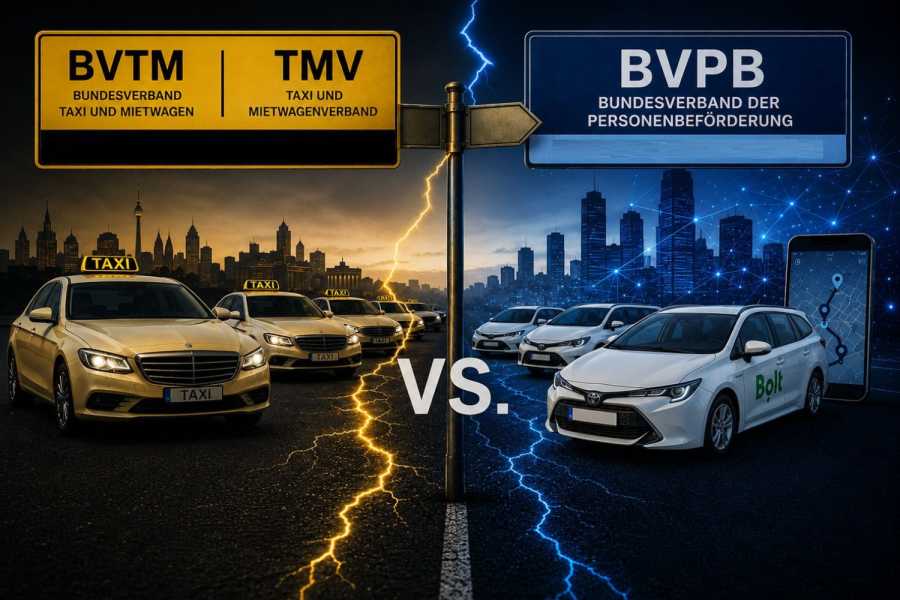
The Association of Private Commercial Road Passenger Transport in North Rhine-Westphalia handed Federal Transport Minister Patrick Schnieder a position paper on the revision of the Passenger Transport Act last week. In it, the association, according to its own statements, outlines a concept for a functionally differentiated, digitally coordinated and EU-law-compliant regulation of on-demand transport. At the same time, it clearly distances itself from the newly founded Federal Association of Passenger Transport.

New association with clear demands

The Federal Association of Passenger Transport, currently being formed, presents itself publicly as the representative of a modern market order. According to the VSPV, however, it is not an established industry association, but the initiative of a single market participant. Its founder reportedly comes from parcel logistics, operates a rental car fleet brokered via the Bolt platform, and, according to his own statements, takes over taxi companies almost daily.

News

In the Berlin House of Representatives, a motion will be discussed in early June, in which the SPD and CDU press for changes to the Passenger Transport Act. The focus is on digital oversight, greater market transparency, and stricter rules for platform-mediated ride-hailing traffic.

News

The taxi should be strengthened as part of public service provision, and digital ride-hailing platforms should be clearly brought under regulatory responsibility.

News

At Mercedes-Benz Deutschland's Entrepreneurs' Day in the Berlin Airport Center, it wasn't just about vehicles and fleet solutions. The focus of many conversations was also the future of the taxi and rental-car trade in the capital region.

News

A recent TV report by Hessenschau on social fraud in app-mediated ride services once again highlights the substantial extent of abuses in the platform-based car rental sector. The BVTM calls for stricter regulation and minimum fares.

News

Many media outlets do not distinguish clearly enough between taxi and rental car. Thus the "Express" from Cologne reports on inspections of taxis and rental cars, but in the teaser it says, however, that the police had discovered serious deficiencies in taxi inspections.

News

The fault lines in the German passenger transport market have for years run along clear lines: here the classic taxi trade with fare regulation, an obligation to operate and strict regulation, there the platform economy with algorithmic pricing, flexible business models and aggressive expansion. Now, on the side of platform supporters, for the first time a dedicated association is forming – founded precisely by an entrepreneur who comes from parcel logistics.

News

The taxi trade is confronted with plummeting revenues, disputes over patient transport, rising fuel costs, platform pressure and digitization. The TMV aims to push back against this and therefore invites at the end of June to Bamberg for the "Think Tank 2026." In doing so, the association deliberately focuses on discussion rather than the usual panel routine.

News

In Frankfurt am Main the protest is now rolling through the city on a weekly basis. With as many as three demonstrations within two weeks, the taxi industry plans to increase the pressure on politicians and public administration. At the center is a demand that the industry has been raising for years: a minimum fare for taxi traffic – abbreviated MBE.

News

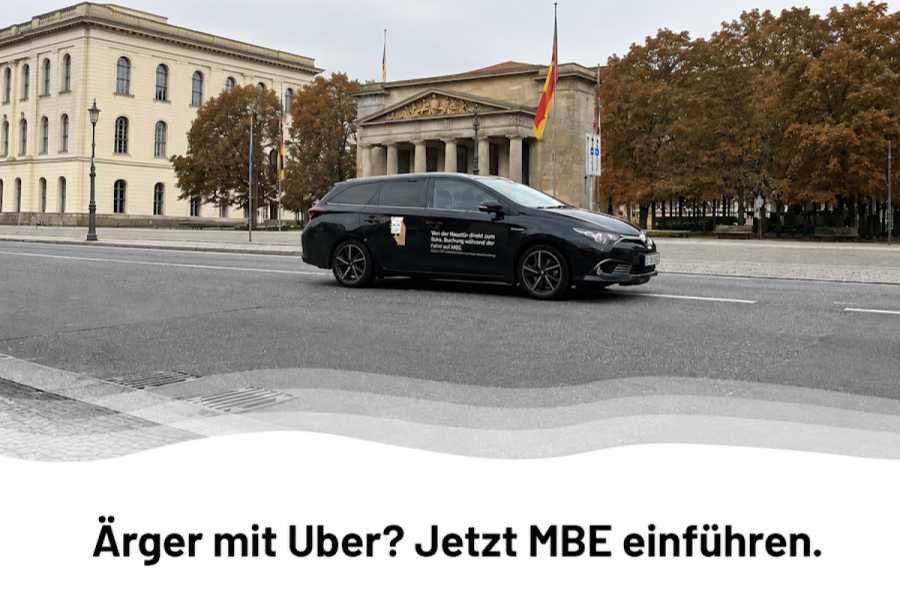
Is the market in your municipality still functioning under fair rules – or has it long since become nothing but price dumping? Are you having trouble with Uber & Co.? This question is posed by the Federal Association of Taxi and Rental Cars (BVTM) in a letter to cities and municipalities - and provides the solution right away: MBE!

News

At the members' meeting of the Bavarian taxi and rental-car companies' state association LBVTM) in Ingolstadt, the industry described its economic situation in sober terms – and at the same time warned of further growing pressure. Association head Thomas Kroker appealed to the companies to set aside internal conflicts and to present a united front to policymakers and international platform providers.

News

Since the launch of the digital dispatching service in April 2011, around 60 million kilometers have been covered in Frankfurt via the app. 84 percent of trips now take place on weekdays, and almost 90 percent are paid cashlessly.

News

The Taxi and Rental Car Association Germany (TMV) expressly welcomes the Munich City Council's current decision to introduce minimum transportation charges (MBE) for rental cars as well as the adjustment of taxi tariffs.

News

The district administration committee of the Munich City Council yesterday and the plenary assembly today gave the green light for the introduction of minimum fare charges (MBE) for rental cars, thereby bringing a years-long struggle of Munich's taxi trade for fair competition conditions to a decisive turning point.

News

(dpa/tk) The dispute between the city of Munich and the taxi competition from Bolt or Uber had long smoldered. Now the city council has spoken with a firm hand and decided minimum prices for Uber & Co. from July 2026.

News

The debate about minimum prices for rental cars has reached a new phase in Munich. What had long been discussed, postponed and weighed up legally is now taking concrete form. The city wants to reorganize competition in the on-demand transport sector - Freenow by Lyft welcomes the decision.

News

The Federal Association of Taxi and Rental Cars e.V. (BVTM) welcomes the published general directive of the City of Cologne regarding the introduction of minimum fares in the rental-car sector with great pleasure. Cologne would send a 'powerful signal'.

News

When around 100 taxis are in motion today in Karlsruhe, it's not just about visibility. The demonstration in front of the town hall is a sign of an industry whose economic basis is increasingly being questioned.

News

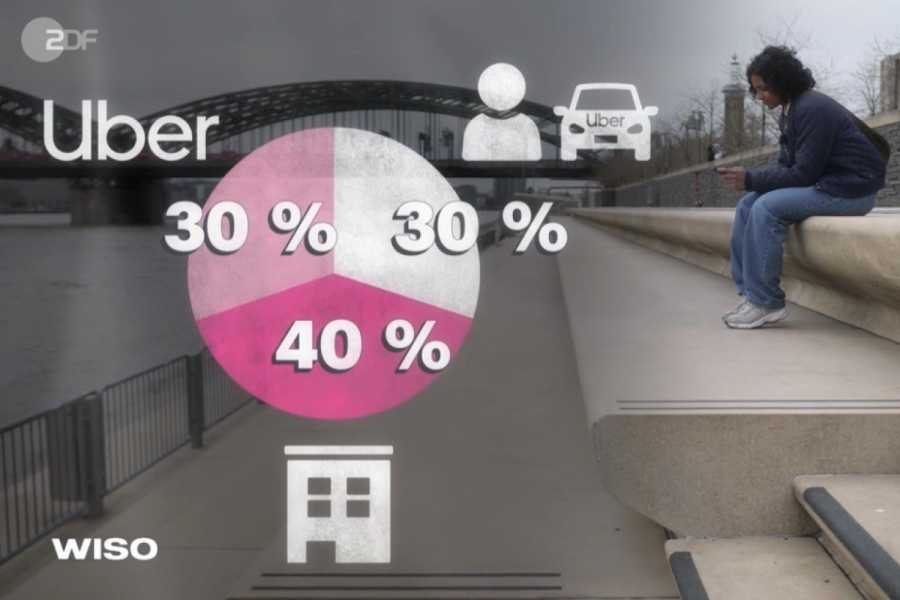
The current ZDF reportage “WISO Deals: The Deals of Uber” (link at the end of the article) lays bare what the taxi industry has criticized for years: Uber's business model only works at the expense of others. The Federal Association of Taxi and Rental Cars feels vindicated by the investigation and calls for decisive political action.

News

Around 1,000 rental cars withdrew from the platform for 24 hours. Accompanying this, entrepreneurs and drivers gathered at the Greenlight site to discuss the commission rate.

News

In the middle of last year, Munich's former mayor Dieter Reiter unexpectedly let the decision for minimum prices for rental cars in Munich, which had already been deemed certain, fall through. “Mobility must not become any more expensive,” said Reiter — an argument that seemed to be dictated directly by the platform operators. Mayor Reiter has been voted out — now fair competition can take hold in Munich.

News

The FDP parliamentary group criticizes the transport authority's plans to introduce a minimum transport charge for rental cars. From the Liberals' perspective, rising prices threaten customers. Thomas Kroker from TMV speaks plainly.

News

The market for ride services continues to shift toward high-margin offerings. Now Uber is targeting an established premium provider: The US-based group acquires the Berlin-based chauffeur service Blacklane for a mid three-digit million amount.

News

In Essen, policymakers are currently trying something that has been demanded for years in the taxi trade: fair competitive conditions. Minimum prices for platform providers such as Uber or Bolt should prevent rides from being systematically offered below the taxi fare. An instrument against a market that has fallen out of balance.

News

Fifteen years after the launch of a seemingly inconspicuous application: what began in 2011 under the name mytaxi has today become part of everyday life in Munich as Freenow. An assessment of the company shows how closely the business is intertwined with the city—and where the development did not proceed without tensions.

News

The starting point of the VSPV's press release is a demand by the FDP district chairman Léon Beck. In an interview with WDR, he argued in favor of making taxi tariffs more flexible — effectively lowering them — and not to view platform providers such as Uber as a problem any longer. The taxi, according to Beck, may be an 'outdated business model'.

News

With minimum transport fares and a tariff corridor of minus 20 to plus 20 percent, the city is reacting to market distortions. An evaluation after one year is planned.

News

When Uber is currently publishing contributions from users, the aim is to create closeness. They are personal stories, concrete life situations: the nurse on call, the retiree with limited mobility, the woman on her way home at night. These voices move people—and set the mood.

News

If a platform provider uses its own app to warn about political decisions, that's more than a technical update. With the new option "UberTeuert" Uber stages in Cologne a kind of real-world laboratory: Users see prices that could apply in the future should a minimum charge for rental cars be introduced. The message is clear – and it is pointed.

News

At both terminals, dedicated pickup zones are being established. According to the provider, the ride into the city costs on average up to €36 cheaper than the taxi flat rate.

News

In cooperation with the local taxi association, the mobility provider integrates the Werdenfelser Land into its app. Passengers can now book taxis digitally and track them in real time.

News

Digital platforms have transformed passenger transport; a ride can now be ordered with just a few clicks, prices appear immediately on the smartphone. For many passengers, this creates the impression that a binding service has been booked. But it is precisely at this point that a discussion begins, which has now also reached politics.

News

Dortmund aims to reorganize competition in its passenger transport market. Two central steps are planned: an adjustment of taxi tariffs and minimum prices for ride-hailing platforms such as Uber or Bolt. The city justifies this with a simple argument: Without regulation, the traditional taxi sector faces going under—and with it reliable mobility for all.