Ihr kostenloser Branchen-Newsletter

Lassen Sie sich von unseren Fachjournalisten einmal wöchentlich über die wichtigsten aktuellen Entwicklungen der Taxi-Branche informieren, bequem direkt in Ihre Mailbox.
Aktueller Termin

Meist gelesen
Danger to the taxi industry - Waymo steps on the gas in ride-sharing

The announcements are vaguer than ever – and so are the advances. Yet companies like Waymo, Baidu and Hyundai want to roll out ride-hailing services worldwide in the coming years. In San Francisco you can see the white Jaguar I-Pace autonomously cruising around for years – unless faulty traffic lights or flooded streets throw a wrench into the works. In U.S. cities such as Phoenix, Austin, Atlanta or Los Angeles, companies such as Zoox and, in particular, Waymo have already expanded their ride-sharing offerings, and tech giant Baidu has extended its offering of autonomous taxis into Chinese megacities such as Wuhan, Guangzhou or Beijing. Tesla is lagging behind and is currently testing its planned autonomous taxi in Austin, Texas, to gain experience for deployment at scale.


The Myth of the Aging Taxi Trade
In Europe and especially in Germany, the prospects for autonomous taxis have thus far been bleak. From the perspective of platform operators, these are questionable state interventions, including the latest Supreme Court ruling on the return obligation. This is said to unduly strengthen the allegedly aging taxi trade. Thus, a deliberate attempt is being made to push ride-service providers like Uber out of the market.
Dass Plattformbetreiber wie Uber und Bolt das autonome Fahren forcieren, ist nachvollziehbar. Schließlich verfügen sie über enorme finanzielle Ressourcen und können in das autonome Fahren investieren. Es kommt diesem Geschäftsmodell zugute, auf die meist prekär bezahlten Fahrer gänzlich zu verzichten, um den Gewinn der Unternehmen langfristig weiter zu steigern. Die in diesem Zusammenhang geäußerte Kritik am Taxi-Gewerbe verfängt jedoch nur, wenn man die besondere Rolle des Taxis als Teil der öffentlichen Versorgung außer Acht lässt.
Waymo & Co. expand
“Meanwhile Waymo alone in the USA operates a fleet of about 2,500 autonomous vehicles in five metropolitan areas. These robotaxis account for about 250,000 paid rides per week, that's 14 million rides per year,” explains Professor Andreas Herrmann, director of the Institute for Mobility at the University of St. Gallen, “and there is already talk that not only additional US cities should be developed, but also London, Tokyo and some German cities. The more of these self-driving taxis are in operation and the more often they are booked, the cheaper the fares will be.”
Automakers have been caught between the front lines for years and have to deal with the legal framework here at home as well as with infrastructure and the stubborn regulation by authorities. But international pressure is growing, especially from the United States and China. Europe has long since lost its foothold in ride-sharing and driverless taxis. While here tentative test operations run at development levels, everyday operations in North America and China are taking off in tandem. In particular, Waymo aims to ignite the next level through its large-scale cooperation with Hyundai Motor Company. In Austin or San Francisco, the mostly aging Jaguar I-Pace vehicles, with the well-known sensor array, are on the road to operate driverlessly in everyday life, whereas Waymo is gradually switching to the current Hyundai Ioniq 5. For this, the sixth generation of the so-called Waymo Driver will be embedded into the South Korean automaker's electric models – meaning the vehicles will be fully autonomous in everyday life and can transport passengers to their desired destination after a booking via smartphone – without a driver.
Hyundai Ioniq 5 as the base model
Currently, the Ioniq-5 models are manufactured at the American metaplant of Hyundai Motor Group in Georgia, and will gradually supplement the Jaguar models, which the Indian-British automaker has long since removed from its lineup. The first Ioniq 5s have already been on test runs on tour since the turn of the year.
„We are very pleased about the partnership with Hyundai as we advance our mission to be the most trusted driver in the world,“ says Tekedra Mawakana, CEO of Waymo, “Hyundai's focus on sustainability and a strong roadmap for electric vehicles makes Hyundai a great partner for us, as we can make our fully autonomous service accessible to more drivers in more places.”
Waymo had inquired with a variety of auto manufacturers for a new carrier vehicle and found significantly more choice than six years ago, when hardly any companies could provide a corresponding electric model. Two years ago, the Alphabet subsidiary ultimately chose the Koreans, who equipped their Ioniq 5 with specific modifications such as electric doors or redundant hardware.
„The transformative technology of Waymo improves road safety where they operate, and the Ioniq 5 is the ideal vehicle to scale this further,” underscores Hyundai CEO José Muñoz, “the team in our new production facility is ready to supply a substantial number of vehicles for the Waymo One fleet as it grows. Importantly, this is the first step in the partnership between the two companies, and we are actively exploring additional opportunities for collaboration.”
800-volt onboard network promises short charging times
Through the new platform and sensor technology there are not only more possibilities for real-time connectivity, but also an 800-volt onboard network that significantly reduces charging times and downtime. Inside, the electric Hyundai Ioniq 5 also offers more space for luggage and people than the previous Jaguar I-Pace.
„We recently announced the launch of the Autonomous Vehicle Foundry business unit at Hyundai Motor Company to provide global autonomous-driving companies with vehicles capable of implementing SAE level four or higher autonomous driving technology,“ explains Chang Song, head of Hyundai's Advanced Vehicle Platform, “there is no better partner for our first agreement in this initiative than the industry leader Waymo.”
Waymo is not relying solely on Hyundai and the Ioniq 5. General Motors also intends to bring autonomous vehicles into the Waymo fleet, which is to be gradually expanded to more and more US cities.
Driverless cars cheaper in variable costs
In German metropolises there is still little happening when it comes to driverless driving. In Hamburg, at VW’s subsidiary Moia, there is still a safety driver on board, and in Munich a project is just starting, in which Uber, Nvidia and the startup Autobrains are jointly testing autonomous taxi services. Professor Andreas Herrmann:
„Since robotaxis require no driver, they are by variable costs hardly to be beaten by traditional taxis anyway. Therefore: if it succeeds in keeping the robotaxis as fully utilized as possible, a cost dynamic arises that makes this service particularly attractive. No wonder, then, that Waymo is pushing ahead.”
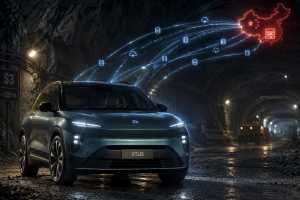
China is also ahead here, because years ago the Chinese government under President Xi Jinping emphasized that the country intends to take global leadership not only in alternative propulsion but especially in driver assistance and autonomous driving. This has long since happened, not least through multi-billion-dollar investments in infrastructure as well as support for domestic companies working in areas such as software and sensors.
Market leaders are currently, by a wide margin, Didi Chuxing, which took over Uber's China business in 2016, and Amap, which combine various ride-share services in one app. T3 Chuxing is present in many of the metropolises and works similarly to Hyundai/Uber with automakers FAW, Dongfeng and Changan. Cao Cao goes one step further and belongs as a ride-hailing service solely to the automaker Geely, which is also involved with brands such as Mercedes, Volvo, Lotus or Polestar.
What does that mean for taxi?
The taxi associations — led by BVTM (Federal Association of Taxi and Rental Cars) — are open to autonomous taxis and of course want to have a say in regulation. The robotaxi market will, however, likely be dominated by international companies that have the financial resources to purchase and operate the enormously expensive vehicles. The typically small-scale taxi trade is at risk here (again) of being left behind.
In cooperation with: Stefan Grundhoff; press-inform
Content automatically translated.




Taxi-Fahrzeuge (Pkw) , Taxi-Newsletter, Taxameter, Taxi-Fahrer , BZP – Deutscher Taxi- und Mietwagenverband , Straßenverkehrsordnung (StVO) , Krankenbeförderung , Weiterbildung , Taxi-Konzessionen , Verkehrspolitik , Mietwagenbranche , Taxi-Apps , Berufskraftfahrer-Qualifikations-Gesetz BKrFQG) , Taxizentralen , Personal, Gehälter, Arbeitsschutz , Wirtschaftsnachrichten , Werbung , Taxi-Folierung , Taxi-Umrüster , Straßenverkehr , Elektromobilität, Taxifuhrpark und -flottenmanagement , Taxi-Versicherungen , Hybrid, Diesel, Erdgas , Taxi-Magazin