VISION mobility kostenlos Probelesen

Die Zeitschrift VISION mobility richtet sich an mobilitätsbegeisterte Menschen bzw. Flottenmanager und begleitet den Technologiewandel in Sachen Automotive und Mobilität.
Aktueller Termin

Meist gelesen
Taxi vs. platform giants: EU intervenes in the black-box algorithms of Uber & Co.
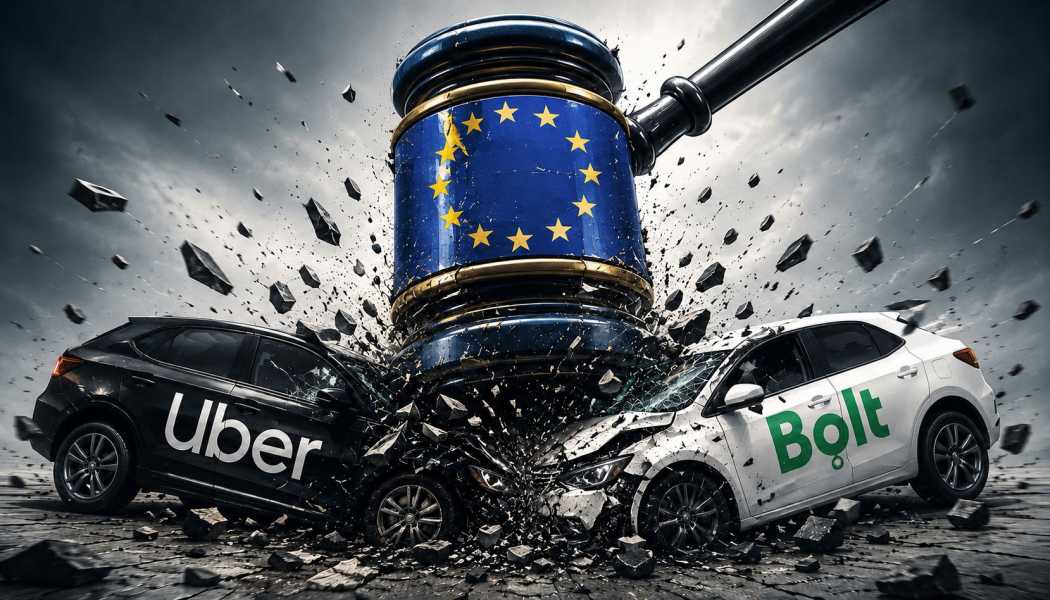
With the new EU directive on platform work the debate could fundamentally shift. For the first time, not only the business models of the platforms but also their digital control mechanisms come under the scrutiny of lawmakers. For the taxi and hire-car industry this is far more than a marginal note in labor law. It could finally mark the beginning of a discussion that reevaluates the competition between platforms and traditional transport operators.
Black box on the smartphone - when the app is the boss
Today, drivers working via a platform receive their assignments not from a dispatcher, but from an app. Which ride is offered, how high the remuneration is, which commission is retained, and why certain drivers are treated preferentially, often remains hidden. Especially in the ride-hailing market, this lack of transparency has been criticized for years. Uber states that it retains on average about 25 to 30 percent of the fare. Independent investigations from the United States, however, for the year 2025, sometimes yield substantially higher figures. There, average take rates around 40 percent are reported, in some cases even deductions of up to 65 or 70 percent of a single ride.
For drivers, it is often not clear why the same route yields different earnings in the morning than a few hours later. The decisions arise in systems whose logic neither drivers nor authorities can fully understand. It is exactly this opacity that forms the foundation of the so-called algorithmic management.
Invisible Disposition and 'Behavioral Nudging'
In the traditional taxi business, control is visible. An operator gives instructions, a dispatch center arranges rides, and a fare is publicly available. Responsibilities are clear.
Platform companies, by contrast, have created a new form of work organization. Control is carried out through software.
Because independent drivers may not be instructed as employees, apps take on the role of the digital motivator. They use bonus programs, leaderboards, demand indicators, time-limited surcharges, or warnings. Those who stay online longer, accept more orders, or drive at certain times receive incentives.
Occupational scientists refer to it as 'Behavioral Nudging'. It refers to behavioral steering through psychological and financial incentives.
More recent studies suggest that the systems no longer merely map supply and demand. They analyze individual behavioral patterns. Earlier working hours, acceptance rates, reactions to bonus promotions, or typical breaks can be analyzed. On this basis, incentives can be tailored more precisely to individual drivers.
The app does not explicitly say: 'Drive now.'
However, it shapes the framework in such a way that the economically sensible decision often leads precisely in the desired direction.
Brussels Takes Platforms in Its Sights
With the EU directive on platform work, the European Union aims to open this black box for the first time. By the end of 2026, member states must implement the provisions into national law. The directive requires, among other things, the disclosure of essential decision parameters. Fully automated sanctions without human oversight should be prohibited. In addition, the processing of emotional or psychological data is restricted. For platform companies, this represents a deep intrusion into their current mode of operation.
However, the real disruptive potential lies elsewhere.
Crucial: The burden of proof is shifting
Until now, drivers often had to prove that, despite formal self-employment, they are actually treated as employees. That was often nearly impossible in practice.
The new directive partially reverses this relationship.
If there are facts indicating algorithmic monitoring, performance evaluation, or control of the work, a legal employment relationship can be presumed in the future. Then it is up to the platform company to prove the opposite. Accordingly, a labor-law debate suddenly becomes a question of documentation. The more transparent the algorithms must be, the easier it becomes to prove their steering effects in court.
For platform companies this could have significant consequences. Employees would be entitled to minimum wage, vacation, paid sick leave, and other labor-law protections.
Why this is also relevant for the taxi trade
At first glance, it may seem to be a conflict between platforms and their drivers. In fact, the discussion also touches on the competitive conditions in passenger transport. For years, taxi companies have criticized that platform providers expand their market position not only through digital mediation but also through an almost complete control over their affiliated drivers.
The difference is remarkable.
Taxi companies employ drivers either directly or are subject to clear labor-law requirements. Platforms, by contrast, could so far argue that they are merely mediators of self-employed entrepreneurs. The more it becomes evident that algorithms control working hours, pay, order acceptance and performance evaluation, the harder it becomes to maintain this separation.
Thus, the question inevitably arises whether the same economic functions should also be subject to the same regulatory requirements.
Limits of Control – and a possible European 'patchwork'
Nevertheless, it remains open how effective the new rules will actually be. The directive obliges member states to implement, but leaves them many details. Controls, fines, and enforcement mechanisms are regulated nationally. Experts are already warning of a European patchwork. Platform companies could relocate their technical structures and registered offices to countries that take a less strict approach to enforcement.
Spain is regarded as a pioneer in this regard. There, the so-called Rider Law has, since 2021, largely required platforms to employ their couriers as permanent staff. The responses of the companies were mixed. While Deliveroo left the Spanish market, other providers looked for new organizational forms.
France, in turn, was among the states that had long opposed the European reversal of the burden of proof. Germany also showed restraint during the legislative process. The real test, therefore, begins only with national implementation.
Debate on Market Power
For the taxi sector, the development nevertheless opens an interesting perspective. In recent years, the political debate has often focused on individual regulations such as the return-to-base obligation or tariff provisions. The platforms were able to present themselves successfully as technological innovators.
For the new debate, however, the focus shifts. Now it is about market power, data sovereignty, and the question of how strongly software may influence the behavior of workers. The more intensively authorities, courts, and legislators examine the mechanisms of algorithmic management, the clearer it becomes that platform companies are not merely neutral intermediaries. They organize work, set incentives, monitor performance, and influence economic decisions.
And for the taxi industry, this is an opportunity. Not because algorithms will disappear. The directive does not abolish them. But it makes them legally challengeable for the first time. Thus a facet comes to the fore that taxi operators have been raising for years: the question of whether digital platforms are actually merely intermediaries – or have long since become the actual actors in the transport market. The answer to that will in the future no longer be formulated solely by marketing departments. Increasingly, employment courts, supervisory authorities, and lawmakers will decide on it.
And that is precisely where the real significance of the EU platform directive could lie.
Content automatically translated.



Taxi-Fahrzeuge (Pkw) , Taxi-Newsletter, Taxameter, Taxi-Fahrer , BZP – Deutscher Taxi- und Mietwagenverband , Straßenverkehrsordnung (StVO) , Krankenbeförderung , Weiterbildung , Taxi-Konzessionen , Verkehrspolitik , Mietwagenbranche , Taxi-Apps , Berufskraftfahrer-Qualifikations-Gesetz BKrFQG) , Taxizentralen , Personal, Gehälter, Arbeitsschutz , Wirtschaftsnachrichten , Werbung , Taxi-Folierung , Taxi-Umrüster , Straßenverkehr , Elektromobilität, Taxifuhrpark und -flottenmanagement , Taxi-Versicherungen , Hybrid, Diesel, Erdgas , Taxi-Magazin