


VISION mobility kostenlos Probelesen

Die Zeitschrift VISION mobility richtet sich an mobilitätsbegeisterte Menschen bzw. Flottenmanager und begleitet den Technologiewandel in Sachen Automotive und Mobilität.
Aktueller Termin

Meist gelesen
VSPV and DIHK pool their forces for fair competition in the taxi and rental-car industry.
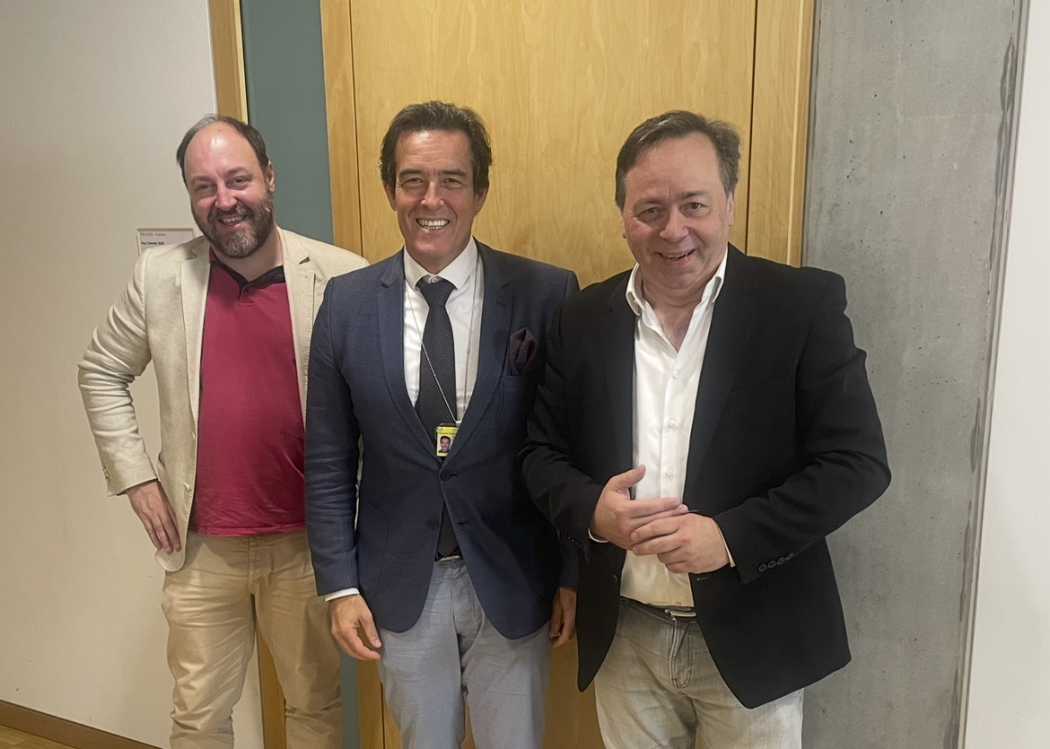
During talks in Berlin, VSPV managing director Sascha Waltemate and Patrick Meinhardt, General Authorized Signatory and head of the federation's Berlin office, agreed on closer cooperation with the DIHK. Previously, the two had already arranged a cooperation with Manja Schreiner, the chief executive of IHK Berlin and former Berlin transport senator.
For the VSPV (Association of Private Commercial Street Passenger Transport in North Rhine-Westphalia), the capital plays a special role in this context.
“It is of nationwide interest that in Berlin the handling of taxis and rental cars becomes exemplary and thereby also radiates to the other regions. Manja Schreiner, as Berlin's transport senator with a clear line, has declared war on the 1,700 illegal rental cars and opened the way for a tariff corridor. Now the federal capital must finally bravely also adopt the minimum tariffs,” Waltemate and Meinhardt explain.
Platform economy: a Europe-wide topic
However, the association does not see the IHK organization merely as a partner at the state level. From the VSPV's perspective, important direction-setting decisions are increasingly being made at the European level. In particular, initiatives around the platform economy would have impacts on the taxi and rental car sector. Therefore the association representatives also sought exchange with Volker Treier, a member of DIHK's executive management and responsible for the areas of International Affairs, the European Union and Foreign Trade Chambers. The former DIHK chief economist is regarded as one of the most prominent experts on German and European economic policy.
Treier emphasized the common interests of the SME sector and the chamber organization: “DIHK and the SME sector are the natural allies. And here we place our first emphasis on the extent to which the framework conditions of competition are fair and the rules of our social market economy are observed. Here the mobility sector in Germany, Europe and internationally plays a central role. All the more we are pleased to maintain the close contact with the VSPV as a dynamic mobility association.”
Tariff Corridor and Minimum Tariff
Content-wise, the VSPV brought several core demands into the talks. These include the introduction of tariff corridors and minimum tariffs in rental-car traffic, which, from the association's perspective, are intended to ensure comparable competitive conditions. The association also promoted the concept of the public-transport taxi, which, particularly in regions with weaker local public transport offerings, should close mobility gaps. In addition, the VSPV calls for modernization of the Passenger Transport Act. For both sides, the meeting marks the start of a closer exchange.
Content automatically translated.„This is the start of a further intensive cooperation. The transport committees of the IHKs are precisely the place where sensible mobility policy is created from practice. VSPV and DIHK are jointly fighting for a fair competition in the taxi and rental-car industry“, said Waltemate and Meinhardt.



Taxi-Fahrzeuge (Pkw) , Taxi-Newsletter, Taxameter, Taxi-Fahrer , BZP – Deutscher Taxi- und Mietwagenverband , Straßenverkehrsordnung (StVO) , Krankenbeförderung , Weiterbildung , Taxi-Konzessionen , Verkehrspolitik , Mietwagenbranche , Taxi-Apps , Berufskraftfahrer-Qualifikations-Gesetz BKrFQG) , Taxizentralen , Personal, Gehälter, Arbeitsschutz , Wirtschaftsnachrichten , Werbung , Taxi-Folierung , Taxi-Umrüster , Straßenverkehr , Elektromobilität, Taxifuhrpark und -flottenmanagement , Taxi-Versicherungen , Hybrid, Diesel, Erdgas , Taxi-Magazin







