2 Ausgaben kostenlos für Sie

Fachmagazin taxi heute: Ihr Zugang zu exklusiven Inhalten rund um die Taxi- und Mietwagenbranche.
Aktueller Termin

Meist gelesen
Finally! Fixed prices for minimum fares for rental car rides in Munich are coming!

The core of the decision is binding price floors for chauffeur-driven rental cars. A base price of 5.13 euros is provided, as well as a minimum charge of 2.43 euros per kilometer for the first seven kilometers. Thereafter, trips may not be offered for less than 2.25 euros per kilometer. The city council still has to approve the decision, but the political direction is thus clearly set.
The Commission thus follows a demand from the taxi sector, which has been pointing to the structural imbalance in competition for years. While taxis are regarded as part of public service of general interest, must be available around the clock, and also undertake unprofitable journeys, rental-car platforms operate without these obligations – and, up to now, without downward price binding. Exactly here lay the conflict: the charges from Uber & Co. were in the past sometimes up to 40 percent below taxi tariffs. A classic price competition, which, however, is not based on comparable obligations.
"The competitive disadvantage must go away"
For the taxi companies, the decision is a long-awaited step. Thomas Kroker, a member of the executive board of Taxi München eG, puts it plainly:
“Of course the decision is entirely in our interest,” he says. “The competitive disadvantage must go away. The taxi industry is not doing well anyway, and if a ride to the airport costs us 100 euros, with Uber 50, we cannot compete there.”
The statement describes less a market mood than a structural shift. Taxis are subject to fixed tariffs, while platform providers until now could use dynamic pricing — to the detriment of incomes in the taxi business and to the detriment of a viable operating model.
Political process without result
The decision is the result of a lengthy political process. The district administration department had already proposed a move for minimum prices last year. The city council then rejected it unexpectedly. Mayor Reiter had then triggered the shift in opinion within the SPD faction. Thus all parties were asked to develop a joint model by June 30 — for example in the form of a price corridor. According to the administration, these talks have now ended without result. In the end, only the regulatory intervention by the Commission remained.
Criticism from the platform economy
Resistance, as expected, comes from Uber. Spokesperson Klaus Gorny speaks of an abrupt shift in course: "We are surprised that the constructive talks we had at the round table with the city are now to be ended abruptly and before the deadline set, in favor of a legally highly questionable market intervention," he says. The minimum prices would primarily have the effect that "the lives of Munich residents would become even more expensive." Specifically, Uber expects an increase of an average of 12 euros per ride.
The taxi service is also being readjusted
Additionally, fixed prices will be cheaper. A ride from the airport to the main train station should cost 96 euros in the future instead of currently 106 euros. The adjustment signals: The taxi must also recalibrate within the tension between regulation, demand and competition — but within a clearly defined system of public responsibility.
A market - two logics
The city's decision makes the fundamental difference visible: Taxis are part of the municipal provision of essential services, ride-hailing platforms part of a largely unregulated brokerage model. While one system organizes supply security, the other optimizes price and demand in real time — often bypassing legal requirements such as the return-to-base obligation or lack of transparency in social security contributions.
The minimum prices strike exactly at this interface. They are not a prohibition of the platforms, but a return to a price-comparable playing field. The city council's pledge seems, after the election, with new majorities, to be a mere formality. Politically, the course is already set—and it marks a clear attempt to limit the logic of pure price competition in road traffic.
Content automatically translated.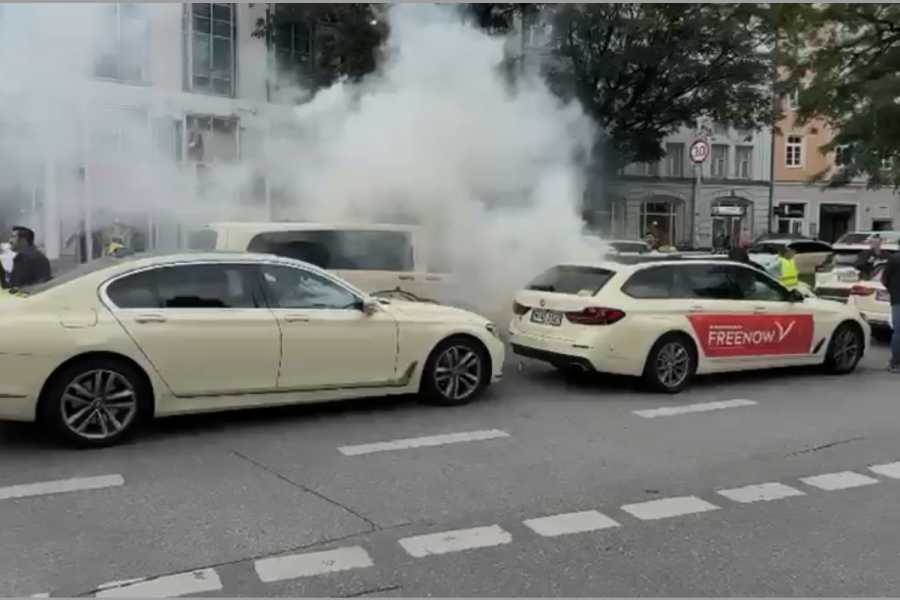


Taxi-Fahrzeuge (Pkw) , Taxi-Newsletter, Taxameter, Taxi-Fahrer , BZP – Deutscher Taxi- und Mietwagenverband , Straßenverkehrsordnung (StVO) , Krankenbeförderung , Weiterbildung , Taxi-Konzessionen , Verkehrspolitik , Mietwagenbranche , Taxi-Apps , Berufskraftfahrer-Qualifikations-Gesetz BKrFQG) , Taxizentralen , Personal, Gehälter, Arbeitsschutz , Wirtschaftsnachrichten , Werbung , Taxi-Folierung , Taxi-Umrüster , Straßenverkehr , Elektromobilität, Taxifuhrpark und -flottenmanagement , Taxi-Versicherungen , Hybrid, Diesel, Erdgas , Taxi-Magazin