


2 Ausgaben kostenlos für Sie

Fachmagazin taxi heute: Ihr Zugang zu exklusiven Inhalten rund um die Taxi- und Mietwagenbranche.
Aktueller Termin

Meist gelesen
Uber wins against London's black-cab drivers: the court dismisses a damages claim worth more than 340 million pounds.
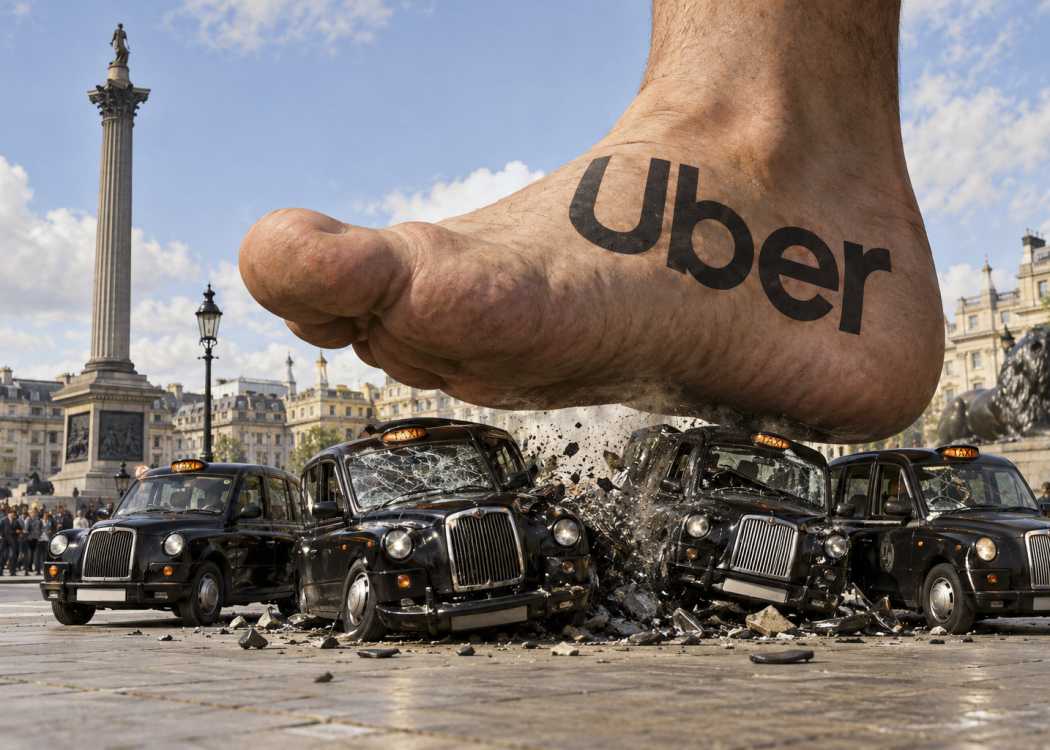
It's a legal win for Uber, but not a merits-based acquittal. The London High Court on 19 October 2026 dismissed two interconnected damages claims against the ride-hailing operator. Together they had a claim value of around £340 million, equivalent to about €390 million. The crucial point was not whether Uber had actually provided the London transport authorities with false information. Rather, the court held that the plaintiffs had sued too late.
A victory after twelve years of dispute
For the traditional taxi industry in the United Kingdom, this is a serious setback. Around 13,000 drivers of the famous black London taxis, the so-called Black Cabs, had joined the suit. They sought in total just under £200 million in damages. Two now-defunct rental-car companies demanded a further roughly £140 million. At the heart of the case was Uber's entry into London in 2012. The claimants accused the company of making misleading and untrue statements to Transport for London (TfL), the authority responsible for transport, when applying for its operating licence. As a result, Uber had gained a competitive advantage and economically harmed the traditional trade.
Uber denied the allegations. The company also argued that the lawsuits had been filed outside the statutory limitation period. This objection now proved decisive.
The deadline proved to be the decisive obstacle
Under British law such claims must in principle be brought within six years. In cases of alleged fraud or deliberate concealment, the start of the limitation period can shift – namely when the affected parties actually discover the facts or could have discovered them with reasonable diligence. That is exactly what both sides argued. The taxi drivers argued that crucial information only became known at a hearing on Uber's renewed licence in June 2018. They filed their lawsuits in 2024. Uber countered that the plaintiffs had already had enough information earlier to take legal action.
Judge Simon Birt followed the company's argument. In his view, the plaintiffs could have recognised the alleged breach of law before 2018. Accordingly, the claims were time-barred at the time the lawsuit was filed. The court dismissed them in full, without examining the allegations on the merits. This is a significant difference: the decision does not confirm that Uber acted correctly in licensing. It states that the plaintiffs did not bring their claims to court in time.
A conflict that has changed the taxi market
The lawsuit dates back to a time when Uber fundamentally changed the business model of passenger transport. The app made it possible to book rides via smartphone, to bring drivers and passengers together digitally, and to display prices immediately. For many customers, booking became easier as a result. For traditional taxi operators, competition also intensified. In London this applied to an industry with a special status. Black cab drivers must pass a demanding local knowledge test and are allowed to use the designated taxi ranks. Uber, by contrast, entered with a digital brokerage model based on licensed private-hire vehicle drivers. The two systems are subject to different rules—and it is precisely these differences that have been the subject of political and legal disputes for years.
The lawsuit aimed to determine whether Uber, through the allegedly misleading information during licensing, had gained an improper advantage. With the current decision, this question remains unanswered. For the affected drivers, this means they will not receive any damages from this proceeding.
Uber closes a chapter – the taxi industry does not
Uber welcomed the ruling. A company spokesman said that the complete dismissal of the lawsuits would put older legal disputes permanently in the past. The plaintiffs' representatives from RGL Management, however, were disappointed and said they would consider further legal options. Whether an appeal will be filed remained open at first. Reuters
The outcome is also noteworthy for this reason, because Uber has now been trying to work more closely with traditional taxi drivers. In London, Black-Cab drivers can sign up to the platform's dispatching service. What was once seen as an attack on the traditional taxi trade is thus at least partly becoming a business model in which both sides cooperate. However, that does not eliminate the fundamental conflicts. Questions about fair competition, the oversight of dispatch platforms, and the obligations of licensed providers remain relevant.
The London drivers have lost in court, without their central allegations having been fully examined. Uber can put the lawsuit aside for now. The larger conflict between digital dispatch and the traditional taxi trade is thus not decided.
Content automatically translated.


Taxi-Fahrzeuge (Pkw) , Taxi-Newsletter, Taxameter, Taxi-Fahrer , BZP – Deutscher Taxi- und Mietwagenverband , Straßenverkehrsordnung (StVO) , Krankenbeförderung , Weiterbildung , Taxi-Konzessionen , Verkehrspolitik , Mietwagenbranche , Taxi-Apps , Berufskraftfahrer-Qualifikations-Gesetz BKrFQG) , Taxizentralen , Personal, Gehälter, Arbeitsschutz , Wirtschaftsnachrichten , Werbung , Taxi-Folierung , Taxi-Umrüster , Straßenverkehr , Elektromobilität, Taxifuhrpark und -flottenmanagement , Taxi-Versicherungen , Hybrid, Diesel, Erdgas , Taxi-Magazin





