VISION mobility kostenlos Probelesen

Die Zeitschrift VISION mobility richtet sich an mobilitätsbegeisterte Menschen bzw. Flottenmanager und begleitet den Technologiewandel in Sachen Automotive und Mobilität.
Aktueller Termin

Meist gelesen
Uber, tenders and patient transport: taxi industry demands fair competition
The challenges facing the taxi and rental-car industry come from different directions. While businesses struggle with rising personnel, vehicle and energy costs, digital platforms are fundamentally changing competition in many areas. At the same time, public contracting authorities face the task of tendering school, disability and medical transport services in a cost-effective manner, without jeopardizing long-term provision.
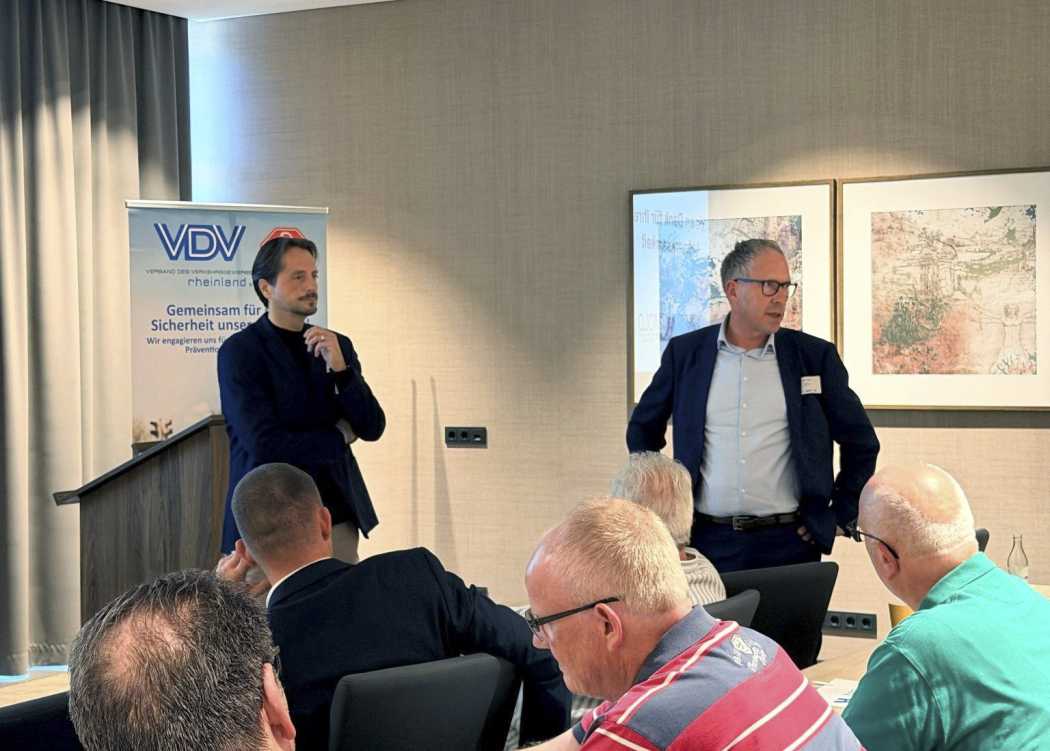
Against this backdrop, VDV Rheinland, together with the Association of the Transportation Industry Rheinhessen-Pfalz (VVRP), invited to Bad Kreuznach for the annual Taxi and Hire-Car Conference. Under the MOLO mobility umbrella association, entrepreneurs, permitting authorities, and representatives of state and federal associations came together. Even the opening made clear what mattered to the organizers. The heads of the specialist divisions, Ted Röhrig and Peter Scheffel, highlighted in particular the presence of numerous authorities.
“It is good that companies, associations and authorities are speaking directly with each other on these important issues. We need this exchange to understand the situation on the ground and to find practical solutions together,” they stated.
Fair procurement begins with the tender
Guido Borning, managing director of VDV Rheinland and of MOLO, focused on one area. In his view, the fairness of a competition is often decided long before the actual awarding of the contract.
Using the example of subsidised transport, for instance school or disabled transport, Borning described the difficulties faced by many small and medium-sized companies. When tenders are divided into very large lots, smaller regional companies often have little opportunity to submit bids independently. At the same time, competitive pressure arises when providers base their assumptions about working hours or operating costs.Borning therefore advocated a careful examination of unusually cheap offers.
“A cheap offer does not help anyone if the service cannot be reliably delivered over the long term,” he said. “The contracting authorities already have it in their hands when designing the tender to enable fair competition. This includes appropriate lot sizes and calculation bases that reflect the actual costs.”
A guidance document prepared by the Rhineland-Palatinate transport associations is intended to help public procurement authorities design tenders in a practical manner and to better evaluate economically viable bids.
Platform-mediated ride-hailing in focus
Borning's view on the growing market of platform-mediated ride-hailing services was also clear. Services like Uber are no longer just a metropolitan issue. Therefore, in the approval process, it must be checked precisely whether the legal requirements are met.
Among the central questions, from the associations' perspective, were, among other things, the existence of a functional operating base, adequate parking capacity, transparent operating procedures, and the plausibility of economic data. To this end, VDV Rheinland and VVRP have developed another handout that is based on the so-called Hamburg Model. The aim is to provide licensing authorities with concrete guidance to apply existing regulatory requirements consistently.
The minimum transport charges for rental cars are viewed by Borning as a possible instrument against ruinous price competition, but only once corresponding providers are already active on the market. “In Rhineland-Palatinate we still have the chance in many places to act earlier,” he said. “If licensing authorities thoroughly review applications and apply the rules consistently, they can prevent problematic developments. If a market has once become entrenched, it can only be brought under control again with great effort.”
Concern for the Future of Patient Transport
A further topic ran like a common thread through the event: the financing of patient transport. Heiko Nagel, managing director of the VVRP and MOLO, pointed to the planned regulations in the Contribution Rate Stabilization Act. The proposed cap on future increases in remuneration stands, from the associations' perspective, in clear tension with the actual cost development of the companies.
Rising wages, higher fuel prices, more expensive vehicles and insurance would already burden operators significantly today. If remuneration for patient transport could only rise to a limited extent in the future, economic problems would loom.
“Patient transport must still be economically viable for the operators. If costs continue to rise while remuneration is capped, we cannot automatically assume that there will continue to be enough vehicles and drivers available everywhere,” warned Nagel. “This is also about the security of patient transport.”
The associations have therefore already sent a strongly worded letter to the health insurers. Borning and Nagel made clear that they see this issue not as a short-term conflict, but as a structural danger to patient transport.
“We are doing everything to counteract this imbalance,” the two emphasized. “If we do not achieve any movement from the health insurers, we must bring the problems even more into politics and into the public. Because if more and more companies cannot offer patient transport on a cost-covering basis, ultimately the reliable transport of patients is at stake.”
BVTM advocates for a stronger role of taxis in public transport
With Michael Oppermann, the BVTM’s managing director of the Federal Association of Taxi and Hire Cars (BVTM) had also come to Bad Kreuznach. He reported on the association's political work in Berlin and urged that taxis be perceived more strongly as a component of public transport.
“Whoever discusses the future of public transport must consider taxis. They take on mobility tasks for local mobility that are often given too little attention in political concepts,” said Oppermann.
With an alternative public transport summit in November, the BVTM intends to bring this role more strongly into the political discussion.
The BVTM is also active with the Contribution Rate Stabilization Act. Together with other organizations, the BVTM has prepared a position statement and commissioned a legal opinion. This focuses, among other things, on the planned linking of remuneration increases to the development of the wage bill and questions the regulation from a constitutional-law perspective as well. In addition, Oppermann referred to the association's information work on current court decisions and developments in the competition with platform providers, as well as to the BVTM's annual symposium with the German Association of Cities.
Dialogue instead of parallel worlds
At the end of the conference, one impression remained above all: Many of the current challenges cannot be solved by politics alone or by companies alone. The organizers particularly evaluated the discussions between industry and permitting authorities as a success.
Especially in times of growing economic pressures and changing market structures, direct exchange seems more important than ever. Whether it is about non-emergency medical transports, tenders, or platform-based mobility — the central message of the conference was to identify problems as early as possible and to work together on solutions before they become entrenched.
Content automatically translated.





Taxi-Fahrzeuge (Pkw) , Taxi-Newsletter, Taxameter, Taxi-Fahrer , BZP – Deutscher Taxi- und Mietwagenverband , Straßenverkehrsordnung (StVO) , Krankenbeförderung , Weiterbildung , Taxi-Konzessionen , Verkehrspolitik , Mietwagenbranche , Taxi-Apps , Berufskraftfahrer-Qualifikations-Gesetz BKrFQG) , Taxizentralen , Personal, Gehälter, Arbeitsschutz , Wirtschaftsnachrichten , Werbung , Taxi-Folierung , Taxi-Umrüster , Straßenverkehr , Elektromobilität, Taxifuhrpark und -flottenmanagement , Taxi-Versicherungen , Hybrid, Diesel, Erdgas , Taxi-Magazin