VISION mobility kostenlos Probelesen

Die Zeitschrift VISION mobility richtet sich an mobilitätsbegeisterte Menschen bzw. Flottenmanager und begleitet den Technologiewandel in Sachen Automotive und Mobilität.
Aktueller Termin

Meist gelesen
Volkswagen and MOIA: Why the German robotaxi project could be coming to an end

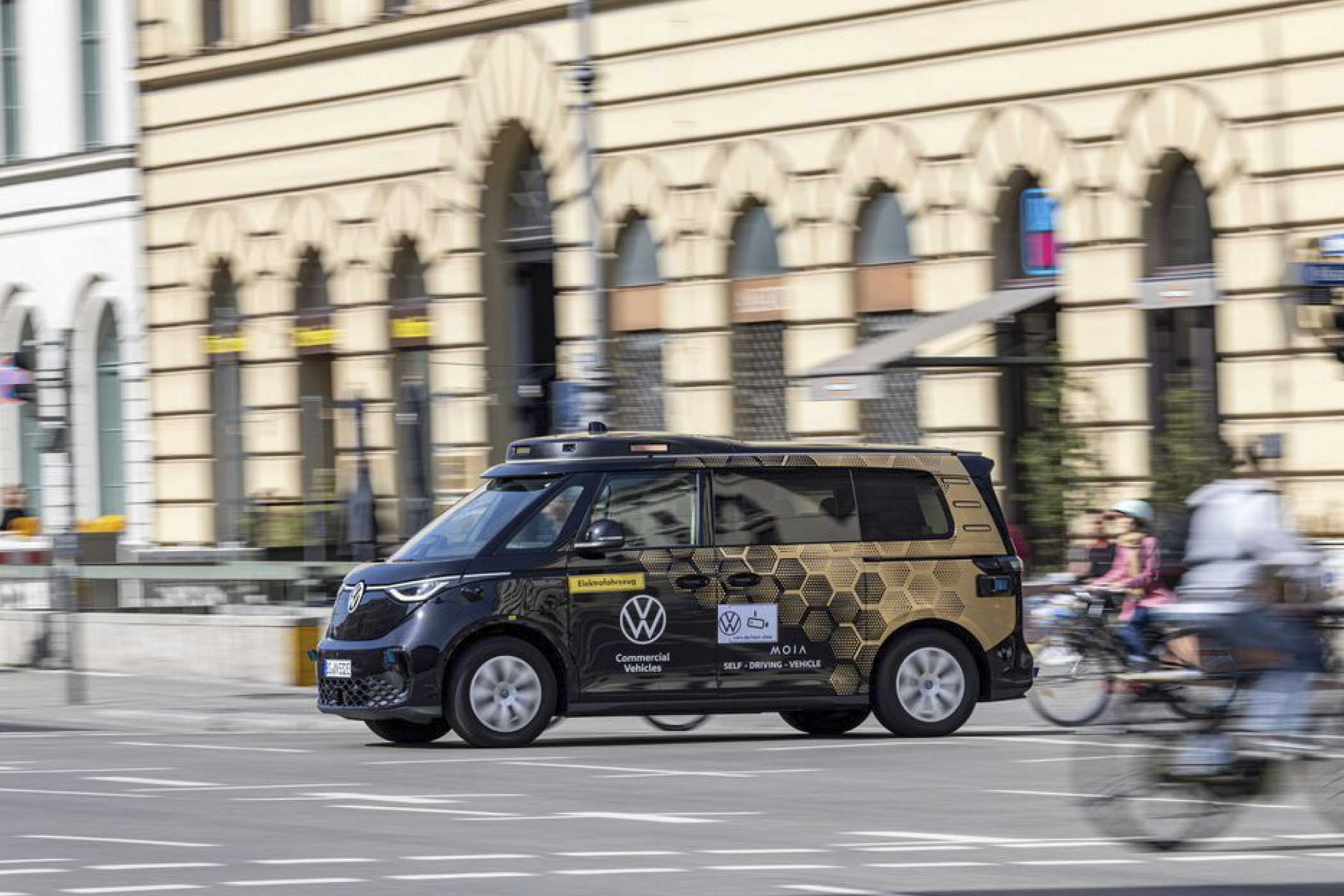
It is a peculiar scene that can be observed in Hamburg: An electric VW van drives through city traffic, recognizes traffic lights, cyclists and pedestrians, stops at intersections and makes its way through the streets. Only one thing is still missing for the grand vision of the Volkswagen Group: the certainty that the whole thing can also be run as a business. A safety driver is still on board. And while MOIA tests the operation with selected passengers, in Wolfsburg apparently there is consideration about whether the company should even have a future within the group.
WirtschaftsWoche reported at the end of September, citing an internal strategy paper, that Volkswagen is examining an exit from the robotaxi business. Heise also picked up the investigation. On the table are, according to reports, various possibilities, from bringing in new investors to a sale to liquidation. A final decision is not known. But even the fact that such a withdrawal is being considered tells a story about the difficulties of the German automotive industry to turn technological promises into a viable business model.
From automaker to mobility provider
MOIA should be more than just another subsidiary with an app. Volkswagen wanted to show that a car manufacturer not only sells vehicles but also can organize mobility. The service started in 2018 in Hamburg and initially relied on ride pooling: Several passengers share a ride, the software bundles their routes. The company thus gained experience in dispatching, fleet operation and dealing with fluctuating demand.
Der nächste Schritt sollte den Fahrer überflüssig machen – zumindest perspektivisch. Volkswagen Nutzfahrzeuge entwickelte dafür den ID. Buzz AD, eine für autonome Fahrdienste ausgelegte Version des elektrischen Bulli. Ursprünglich sollte der kommerzielle Einsatz bereits 2025 beginnen. Als Technologiepartner war zunächst Argo AI vorgesehen, an der Volkswagen und Ford beteiligt waren. Im Oktober 2022 zog sich Volkswagen aus der Finanzierung des Unternehmens zurück. Argo AI wurde anschließend abgewickelt. Für das Robotaxi-Projekt bedeutete das einen empfindlichen Rückschlag. Volkswagen setzte die Entwicklung mit Mobileye fort. Das israelische Technologieunternehmen liefert das System, mit dem das Fahrzeug seine Umgebung erfasst und Fahrentscheidungen umsetzt. MOIA wiederum sollte die Software für die Buchung und Disposition, das Flottenmanagement und den operativen Betrieb beisteuern. Aus Auto, Sensorik und App sollte ein fertiges Mobilitätsangebot werden.
Das Konzept klingt plausibel. Es ist aber anspruchsvoller, als einen Bus mit zusätzlichen Kameras und Rechnern auszustatten. Ein autonomer Fahrdienst muss auch dann funktionieren, wenn ein Fahrzeug blockiert wird, ein Fahrgast Hilfe benötigt oder eine Baustelle die geplante Route unbrauchbar macht. Was bislang ein Fahrer erledigt, verteilt sich nun auf Technik, Leitstelle und gegebenenfalls Personal vor Ort. Das System muss nicht nur fahren, sondern einen Betrieb organisieren.



Technology is moving ahead; the business can't keep up.
In July 2026 MOIA in Hamburg reached an important milestone. Selected, previously registered passengers have since been able to book rides with autonomous ID.-Buzz vehicles as part of the ALIKE research project. The offer is geographically limited and remains part of a test operation. A safety driver remains on board.
The launch occurred with substantial delay. According to NDR, initially ten autonomous minibuses were on the road in Hamburg, fewer than the originally planned 25. The originally targeted removal of the safety driver by the end of 2026 also now appears questionable. NDR also reported a test ride in which the safety driver had to intervene because the vehicle, when turning in rain, did not adequately account for a crosswalk with two pedestrians.This is not proof that autonomous driving generally does not work. It shows, however, how large the gap can be between a successful demonstration and a reliably operating system in the complex urban traffic. A human driver compensates for uncertainties with experience, attention and intuition. An autonomous system must technically detect, assess and safely handle such situations.
In addition, there is the economic question. The vehicles must be developed, approved, maintained and insured. Sensors and computers cost money, as does the infrastructure for monitoring and deployment planning. As long as people sit in the vehicle to intervene in an emergency, a substantial part of the hoped-for cost advantage is lost. Only when a fleet can be deployed reliably and at a larger scale without a safety driver does the economics change fundamentally.
Billions for an Open Bet
Volkswagen is under cost pressure. The group must prioritize its investments, solve its software problems, and at the same time finance the transition to electric vehicles. In this environment, autonomous driving is a particularly difficult bet: the expenditure is incurred today, while a commercially viable market has yet to emerge.
Following reports about internal exit scenarios, MOIA needs billions more to scale the business to a larger fleet. At the same time, Volkswagen has reportedly been seeking potential investors. According to media reports, talks with Uber and Lyft recently proved unsuccessful. Whether and in what form additional partners will join remains open.The problem is not only about financing. An external partner would have to be willing to contribute capital and technology without losing control over its own business. Volkswagen, in turn, would have to accept that a partner would have influence over vehicle selection, software, and operating model. Whoever bears a large part of the investment would, after all, want to have a say in how the fleet is deployed and how the costs are amortized.
The calculation is tricky. An autonomous ride-hailing service needs many vehicles to spread development and operating costs over enough trips. At the same time, demand in a region must be large enough for the vehicles to be fully utilized. A small fleet can function technically, but may remain economically unattractive. A large fleet, in turn, requires capital, permits, and an operation that runs reliably in everyday use.
While Wolfsburg calculates, others push ahead
The view across the Atlantic sharpens the contrast. Waymo, the robotaxi subsidiary of the Google parent Alphabet, already operates commercial autonomous ride-hailing services in several U.S. cities. In August 2026 the company announced that it planned to prepare such a service in Munich as well. Initially, trained staff drive at the wheel there; Waymo aims for a commercial launch by the end of 2027.
Volkswagen itself is also betting on the U.S. market. MOIA America and Uber are preparing the deployment of autonomous ID.-Buzz vehicles in Los Angeles. By the end of 2026, the first trips on the Uber platform are expected to begin there. For the validation phase, a fleet of more than 100 vehicles is planned, initially with human operators on board. In Florida, MOIA America has also, together with the provider Beep, started a first passenger operation with autonomous ID. Buzz, also still with staff on board.
These projects show that Volkswagen has not simply given up on the topic. But they raise a strategic question: Where should value creation lie in the future? With the vehicle manufacturer, with the software provider or with the platform that controls contact with the passenger? Uber brings the customer base and the booking infrastructure, Mobileye the driving technology, Volkswagen the vehicle. MOIA is supposed to connect these building blocks into a functioning overall system.
If that succeeds, Volkswagen could move from being a provider of an electric minibus to a supplier of a complete autonomous mobility solution. If not, the group risks becoming a supplier in a market whose rules are determined by others.
What this means for the taxi trade
For taxi companies, the development is more than just an industry-political sidebar. Autonomous shuttles could in the future take over parts of today’s business, especially standardized rides in densely populated areas. Feeder services to public transport, rides along fixed corridors, or a bundled on-demand service during periods of weak demand are conceivable. Driverless deployment could lower personnel costs and enable new operating models.
But this does not mean that taxis become obsolete. The everyday life of the business consists of far more than the ride from A to B: passengers need help boarding, with luggage or with orientation. Some trips can be bundled, others cannot. Also the responsibility in case of incidents, accessibility and dealing with people who do not use apps must be clarified. That is exactly why the debate should not be reduced to whether a robot drives better than a human. The crucial question is what service a city needs, who can reliably provide it, and at what cost. An autonomous minibus can be a sensible addition to public transport. It does not automatically replace every taxi, and certainly not every task that drivers currently perform.
The ALIKE project in Hamburg therefore adopts an approach that goes beyond a single brand: MOIA and Hamburger Hochbahn are testing different vehicle types and connecting them with existing booking systems. The federal government funds the project with 26 million euros over three years. The results should show whether autonomous on-demand offerings can complement public transport and later be transferable to other cities.
The future does not drive itself
Volkswagen has taken on with MOIA a demanding task. The group must not only bring an autonomous vehicle onto the road but establish an entire system of technology, operations, customer service and financing. That development lasts longer and costs more than planned, which is not surprising in such a technology field. What matters is whether it can become an economically viable offering.
A sale or the winding down of MOIA would not necessarily mean that Volkswagen abandons autonomous driving entirely. The group could focus on vehicles, software partnerships or individual markets. It would, however, give up part of its own claim to not only build the mobility of the future but to organize it itself. The irony is that MOIA is currently transporting its first passengers in autonomous vehicles. The technology is hitting the road, while the strategic patience in Wolfsburg appears to be waning. For the German automotive industry this is a warning signal: Whoever wants to tap new markets must not only invest boldly. They must also endure long enough to turn a trial into an operation.
An autonomous Bulli can eventually drive itself. The decision on where Volkswagen's journey goes must still be made by humans.
Content automatically translated.




Taxi-Fahrzeuge (Pkw) , Taxi-Newsletter, Taxameter, Taxi-Fahrer , BZP – Deutscher Taxi- und Mietwagenverband , Straßenverkehrsordnung (StVO) , Krankenbeförderung , Weiterbildung , Taxi-Konzessionen , Verkehrspolitik , Mietwagenbranche , Taxi-Apps , Berufskraftfahrer-Qualifikations-Gesetz BKrFQG) , Taxizentralen , Personal, Gehälter, Arbeitsschutz , Wirtschaftsnachrichten , Werbung , Taxi-Folierung , Taxi-Umrüster , Straßenverkehr , Elektromobilität, Taxifuhrpark und -flottenmanagement , Taxi-Versicherungen , Hybrid, Diesel, Erdgas , Taxi-Magazin