Ihr kostenloser Branchen-Newsletter

Lassen Sie sich von unseren Fachjournalisten einmal wöchentlich über die wichtigsten aktuellen Entwicklungen der Taxi-Branche informieren, bequem direkt in Ihre Mailbox.
Aktueller Termin

Meist gelesen
Toyota and Uber are expanding their collaboration – will the taxi industry be left behind?
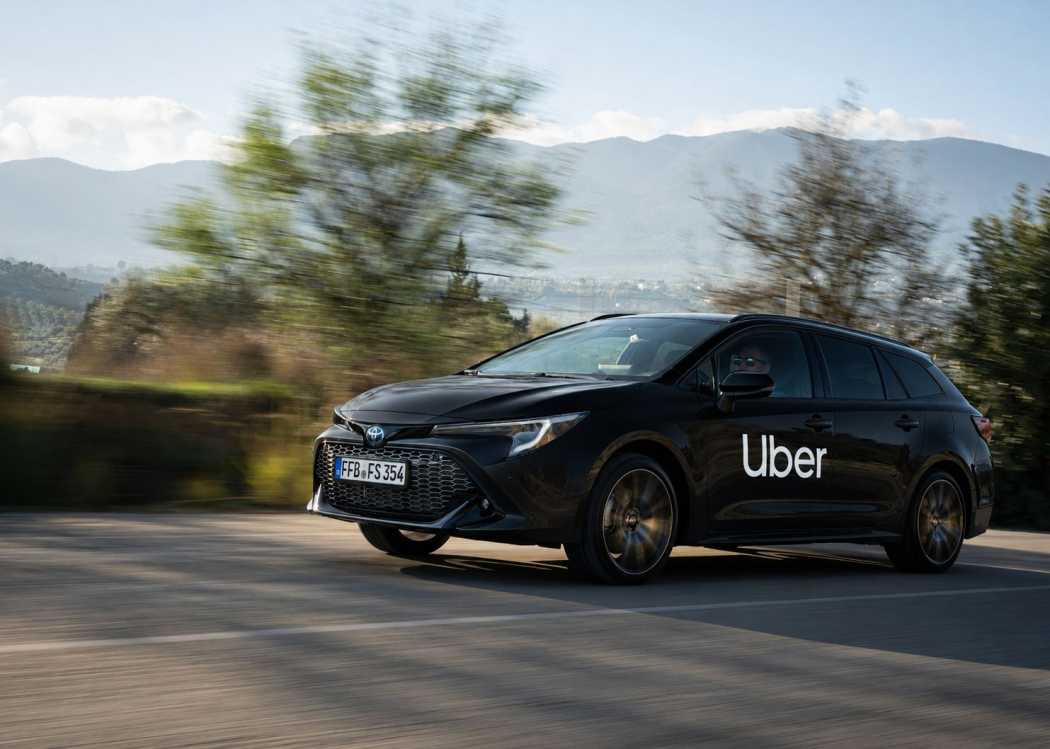
There was a time when Toyota belonged to the most reliable names in the German taxi industry. The Prius was for many entrepreneurs far more than a hybrid car. It was a symbol of efficiency, durability and an early entry into electrification. Later followed models such as the Corolla Touring Sports or the RAV4 Hybrid, which also established themselves in numerous taxi operations. Those who relied on a fuel-efficient and robust drivetrain could hardly avoid Toyota. Now the Japanese manufacturer is turning its attention more toward commercial passenger traffic. However, not toward the traditional taxi.
Europe-wide collaboration with Uber
Toyota Motor Europe has announced a new partnership with Uber. Together, the two companies want to make it easier for ride-hailing drivers and fleet operators in Europe to access electrified vehicles. The offering includes hybrid vehicles, battery-electric models, as well as certified pre-owned vehicles from the Toyota and Lexus brands. In addition, financing, leasing, and insurance solutions from the corporate group are also available.
The rollout begins in ten European countries. Germany is among the first markets. Drivers and fleet partners who operate via Uber are to gain access to a complete package in the future that combines vehicle, financing and insurance services.
At first glance this looks like a classic sales initiative by an automaker. But a closer look reveals a strategic decision that raises questions. For with this, Toyota strengthens precisely a market that has been in conflict with the taxi trade for years.
“Flexible” handling of laws and regulations
Platforms such as Uber or Bolt have fundamentally changed the market for individual passenger transportation. They arrange rides digitally, promise transparent prices, and rely on the simplest possible user experience. At the same time, for years there has been debate about the economic and social consequences of this business model. Taxi operators criticize not only the increasing competitive pressure. They point above all to unequal framework conditions. While the taxi trade is bound by tariff requirements, operating obligations and numerous municipal requirements, many rental-car companies operate markedly more flexibly. Added to this are countless cases of social dumping, misclassification as self-employed or violations of the return-to-base obligation. Courts and supervisory authorities have been dealing with corresponding procedures for years.
Against this background, the new partnership is noteworthy.
Toyota speaks of supporting a “gradual transition to lower-emission fleets.” Leonardo Carluccio, Vice President Sales at Toyota Motor Europe, emphasizes that ride-hailing drivers need vehicles that are “economical and operationally convincing.” Uber, in turn, sees in the collaboration the possibility to create “lower barriers to entry” for drivers and to accelerate electrification.
These are understandable goals. The decarbonization of transport is one of the major tasks for the coming years. Especially in urban passenger transport, electrified vehicles can make an important contribution. The question, however, is why Toyota concentrates its activities so heavily on platform-based mobility, while the taxi business in many regions of Europe is under significant economic pressure.
Hardly any other industry is better suited for electrification than the taxi industry. The vehicles cover high annual mileage, operate predominantly in cities, and have predictable deployment profiles. Many entrepreneurs have been dealing with alternative propulsion for years. At the same time, investment costs are rising. Especially smaller businesses face the challenge of reconciling high acquisition costs with shrinking margins.
Why not a Europe-wide partnership with taxi services?
The current initiative is aimed primarily at drivers and fleet partners of the platform economy. This is understandable from a corporate perspective. Uber continues to grow across Europe and aggregates substantial vehicle volumes. For manufacturers, this creates attractive sales channels. A framework agreement with a platform promises economies of scale that individual taxi companies can hardly offer.
Nevertheless, there remains a certain contradiction. Toyota has built its reputation in commercial passenger transport not least in the taxi market. Many entrepreneurs remember a time when the manufacturer specifically developed taxi packages, addressed industry-specific requirements, and sought direct exchange with the businesses. Today there is the impression that this customer group has lost strategic importance.
And yet the taxi industry is currently in a phase of fundamental change. The sector is investing in apps, digital dispatching, card payments, and alternative drivetrains. At the same time, it continues to undertake tasks that platforms often perform only to a limited extent: patient transport, school transport, accessible mobility, or the provision of rural regions. These functions are not always economically attractive. For the public mobility system, they remain indispensable nonetheless.
Therefore, it would be an important signal if manufacturers like Toyota did not concentrate their engagement exclusively on the platform economy. The transformation of mobility is not achieved solely through apps and digital intermediary platforms. It also needs companies that take long-term responsibility for infrastructure and the provision of essential public services.
Toyota bets on platforms
Toyota has the right products. The group's hybrid competence has long been considered mature. With battery-electric vehicles and the premium brand Lexus, the company also has interesting options for different use profiles.
With the new Uber partnership, the manufacturer has offered an answer as to how the Japanese will position themselves in the future. From the perspective of many taxi operators, however, it is likely to be unsatisfactory. Because while Toyota electrifies platform traffic, the traditional taxi business continues to wait for a signal that its importance for urban mobility will not be forgotten.
Content automatically translated.


Taxi-Fahrzeuge (Pkw) , Taxi-Newsletter, Taxameter, Taxi-Fahrer , BZP – Deutscher Taxi- und Mietwagenverband , Straßenverkehrsordnung (StVO) , Krankenbeförderung , Weiterbildung , Taxi-Konzessionen , Verkehrspolitik , Mietwagenbranche , Taxi-Apps , Berufskraftfahrer-Qualifikations-Gesetz BKrFQG) , Taxizentralen , Personal, Gehälter, Arbeitsschutz , Wirtschaftsnachrichten , Werbung , Taxi-Folierung , Taxi-Umrüster , Straßenverkehr , Elektromobilität, Taxifuhrpark und -flottenmanagement , Taxi-Versicherungen , Hybrid, Diesel, Erdgas , Taxi-Magazin