2 Ausgaben kostenlos für Sie

Fachmagazin taxi heute: Ihr Zugang zu exklusiven Inhalten rund um die Taxi- und Mietwagenbranche.
Aktueller Termin

Meist gelesen
RAV4 PHEV: Toyota strengthens bestseller with 22.7-kWh battery

With a clearly increased electric range and upgraded technology, the Toyota RAV4 enters its sixth generation. In particular, the plug-in hybrid is intended to appeal to new customers with up to 137 kilometers of electric range. The entry price for this variant is at least 49,990 euros.
More range and higher charging power
At the heart of the revised plug-in version is a battery with a capacity of 22.7 kilowatt-hours. According to the manufacturer, this corresponds to an increase of 30 percent compared with the previous model. The electric range thus rises from previously 75 to up to 137 kilometers.
The RAV4 plug-in hybrid can be charged with up to 50 kilowatts. In addition, a charging power of eleven kilowatts is possible. In addition to the familiar hybrid versions, the model is for the first time also available as a front-wheel-drive plug-in hybrid.


The powertrain combines a 2.5-liter four-cylinder gasoline engine with 105 kW and 143 hp as well as 221 N·m of torque with an electric motor delivering 150 kW and 204 hp. The system output is 200 kW, i.e., 272 hp. From a standstill, the SUV accelerates to 100 km/h in 7.5 seconds. The top speed is electronically limited to 180 km/h. The official fuel consumption is 1.3 liters per 100 kilometers and 12.2 kilowatt-hours. CO2 emissions are specified at 30 g per kilometer. The curb weight is 1,920 kilograms.
Updated interior and new software platform
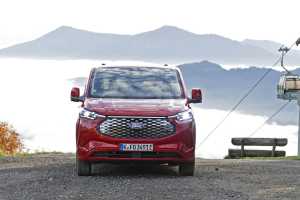
Visually, the 4.60-meter-long RAV4 remains a further development of its predecessor. More sharply styled front ends and new LED taillights define the exterior appearance.
Inside, Toyota introduces a new multimedia solution based on the ARENE software platform. According to the manufacturer, it features a processor four times faster and expanded storage. Functions such as improved connectivity, a voice assistant, over-the-air updates and a digital key are integrated. Two screens measuring 12.3 and 12.9 inches are available.
The instrument cluster has been lowered by four centimeters to improve outward visibility. Optional are two storage compartments for wireless charging of mobile phones as well as two USB-C ports, each delivering 45 watts.
Less trunk volume
The interior offers space for up to five adults. Also in the rear, people up to 1.90 meters tall should find sufficient room. The rear seatbacks can be folded down asymmetrically, creating a flat loading floor.
However, the cargo volume decreases from previously 490 to now 446 liters. A powered tailgate is standard.
Suspension further optimized
The fundamental switch to the TNGA architecture took place in 2019. This lowered the center of gravity and improved driving stability. In the current generation, the body has been stiffened further by changes to the mounting points of the suspension.
In addition, softer dampers are used to increase ride comfort. An electronically controlled braking system is intended to improve brake-force distribution in curves and thus support driving dynamics. (Source: Joaquim Oliveira, press-inform)
Content automatically translated.



Taxi-Fahrzeuge (Pkw) , Taxi-Newsletter, Taxameter, Taxi-Fahrer , BZP – Deutscher Taxi- und Mietwagenverband , Straßenverkehrsordnung (StVO) , Krankenbeförderung , Weiterbildung , Taxi-Konzessionen , Verkehrspolitik , Mietwagenbranche , Taxi-Apps , Berufskraftfahrer-Qualifikations-Gesetz BKrFQG) , Taxizentralen , Personal, Gehälter, Arbeitsschutz , Wirtschaftsnachrichten , Werbung , Taxi-Folierung , Taxi-Umrüster , Straßenverkehr , Elektromobilität, Taxifuhrpark und -flottenmanagement , Taxi-Versicherungen , Hybrid, Diesel, Erdgas , Taxi-Magazin