


VISION mobility kostenlos Probelesen

Die Zeitschrift VISION mobility richtet sich an mobilitätsbegeisterte Menschen bzw. Flottenmanager und begleitet den Technologiewandel in Sachen Automotive und Mobilität.
Aktueller Termin

Meist gelesen
Dalli – Dalli! How on-demand transport is displacing the taxi

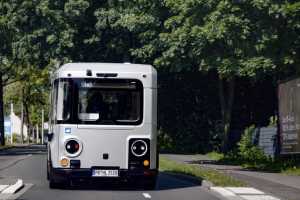
Dalli operates on the principle of ride-pooling: users book via an app or phone, specify start, destination, and time – the driverless vehicle picks up additional passengers along the way and groups rides efficiently. Since 2025, the service is available in the evenings and on weekends. It is operated by MWM Mobility Solutions as a pilot project on behalf of the district, including partial delivery of regional goods. The project ran from January to December 2022 with accompanying evaluation.
Social Added Value - Real or Staged?
An evaluation by the university on social participation analyzed feedback from users and non-users, stakeholder discussions, and user data. Conclusion: Dalli contributes positively to public services, especially in areas with patchy public transport connections. The added value is particularly evident among those with limited mobility, such as seniors or people without a car. The regional response is mixed: in places like Storkow and Beeskow, many citizens welcome the service as a genuine supplement – but local taxi operators are skeptical. They see Dalli as competition and demand stronger integration of existing taxi structures.
A view from the taxi perspective
- Displacement of existing orders: For taxi operators in rural areas, Dalli threatens to become direct competition if rides that would otherwise be booked via taxi are processed through the app. The decline in traditional orders is particularly threatening to the existence of smaller towns.
- Lack of integration into the public transport-taxi model. Legally, according to PBefG, the integration of local taxi companies would be sensible: The public transport-taxi according to Article 3 para. 2 VO (EC) 1370/2007 allows freedom from tenders and economic flexibility. The principle: local taxis keep the infrastructure stable. But Dalli relies on centrally controlled vehicles, without involving existing taxi companies.
- Promotion versus market distortion: The Dalli pilot was fully publicly funded, financed by the district initiative. While taxi operators have to sustain their operations themselves, Dalli is available free of charge and generates image gains as well as proximity to citizens – including media support during presentations or evaluations.
- Lack of transparency in cost structures: Users experience fixed prices and digitalization – but the cost model, operating times, capacity utilization, and profitability remain opaque. Without comparative figures, it remains unclear what effort is incurred by the district here – and how this structure can be connected with established businesses.
Taxi operators must be involved!
Without a doubt, Dalli is a capable on-demand component to combat regional mobility gaps – but under conditions: If the offer is solidified without involving taxi companies, structural displacement occurs. So far, a coordinated model that includes taxi companies as equal partners is missing.
The call bus currently threatens locally rooted businesses and potentially replaces jobs and system competence on site. However, a functioning public transport system must rely on the integration of taxi operators - rather than their exclusion. Political and municipal decision-makers are needed to maintain a locally stable taxi market. Because the mobility transition must not destroy local structures.
Content automatically translated.




Taxi-Fahrzeuge (Pkw) , Taxi-Newsletter, Taxameter, Taxi-Fahrer , BZP – Deutscher Taxi- und Mietwagenverband , Straßenverkehrsordnung (StVO) , Krankenbeförderung , Weiterbildung , Taxi-Konzessionen , Verkehrspolitik , Mietwagenbranche , Taxi-Apps , Berufskraftfahrer-Qualifikations-Gesetz BKrFQG) , Taxizentralen , Personal, Gehälter, Arbeitsschutz , Wirtschaftsnachrichten , Werbung , Taxi-Folierung , Taxi-Umrüster , Straßenverkehr , Elektromobilität, Taxifuhrpark und -flottenmanagement , Taxi-Versicherungen , Hybrid, Diesel, Erdgas , Taxi-Magazin







