VISION mobility kostenlos Probelesen

Die Zeitschrift VISION mobility richtet sich an mobilitätsbegeisterte Menschen bzw. Flottenmanager und begleitet den Technologiewandel in Sachen Automotive und Mobilität.
Aktueller Termin

Meist gelesen
Broken brake pedal in the luxury van: What the case reveals about China's EV boom
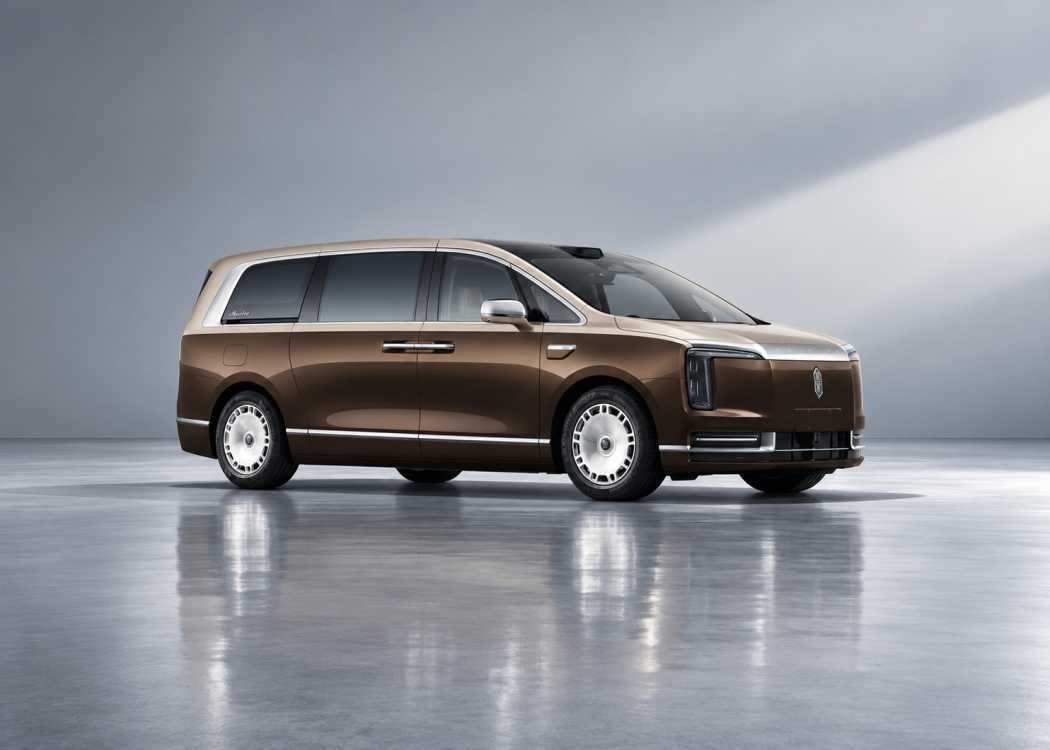
The case began with a video published by the Chinese car platform Dongchedi on October 8. In several emergency braking maneuvers from 100 km/h, the brake pedal mounts failed on three Maextro V800s. The heavy van could no longer be decelerated as intended via the foot brake pedal. The test on a closed-off track became a public concern for a manufacturer that positions its vehicles as technologically demanding luxury products.
When the component yields during braking
The Maextro V800 is a joint project of the Chinese automaker JAC and the technology company Huawei. JAC is responsible for vehicle development and production, Huawei contributes, among other things, electronics and software. The van entered the Chinese market in August 2026. Its prices range from roughly €102,000 to €135,000. By the end of September, more than 2,200 vehicles had already been registered in China. Such an incident weighs heavily, especially for a vehicle in this price range. On social media, a debate erupted about the allegedly broken plastic mounting bracket. Whether the material choice, the design, or another technical factor is actually responsible for the failure must be clarified by the investigation. Technical plastics are not inherently unsuitable for safety-critical components. What matters are the specific design, the load-bearing capacity, and protection against material fatigue and overload.
Authorities are investigating the case
Maextro initially responded with an offer to improve the mounting's design and to provide a free upgrade to vehicles that had already been delivered. The company did not initially announce a recall. It also stated that since deliveries began no corresponding cracks had been reported in customer vehicles. That is an important distinction: a fault in testing is not yet evidence that the same defect has already occurred in regular operation. It must, however, be taken seriously.
On October 15, three Chinese authorities stepped in: the Ministry of Industry and Information Technology (MIIT), the Cyberspace Administration of China (CAC) and the State Administration for Market Regulation (SAMR). They are to jointly clarify how the fractures occurred. The results are to be published at a later date. The case comes at a time when China's automakers are bringing new electric cars and digital features to market at a rapid pace. This pace has changed the industry. At the same time, the question grows as to whether development, testing and quality control can always keep pace. After the incident, stricter guidelines for the development and testing of new vehicle models were discussed in China.
The Maextro V800 is offered in China as a luxurious large-capacity van, and regular availability in Germany is therefore not connected. Nevertheless, the debate also concerns those businesses that are evaluating Chinese electric cars because of their equipment, range or price-performance ratio.
Be mindful of warranty and service availability
Whoever adds a new model to the fleet should not look only at screen size, charging power, and acquisition costs. Equally important are verifiable quality records, clear accountability for warranty and recalls, and a reliable service network. For a vehicle that daily covers many kilometers with passengers, a technical failure can mean more than just a workshop appointment: It costs revenue and, in the worst case, affects the safety of the occupants.
“China Speed” stands for short development times and rapid model changes. That can bring advantages when new technology becomes available more quickly. However, for safety-relevant components, different standards apply than for the next infotainment update. A brake pedal does not have to be innovative. It must work—even when the driver presses it hard. The Maextro case has not yet been finally resolved. Therefore it would be wrong to draw a verdict about Chinese cars in general from it. But it is correct to look closely. For progress is shown not by how quickly a new model hits the market, but also by how thoroughly a manufacturer identifies its weak points before the customers do.
Content automatically translated.


Taxi-Fahrzeuge (Pkw) , Taxi-Newsletter, Taxameter, Taxi-Fahrer , BZP – Deutscher Taxi- und Mietwagenverband , Straßenverkehrsordnung (StVO) , Krankenbeförderung , Weiterbildung , Taxi-Konzessionen , Verkehrspolitik , Mietwagenbranche , Taxi-Apps , Berufskraftfahrer-Qualifikations-Gesetz BKrFQG) , Taxizentralen , Personal, Gehälter, Arbeitsschutz , Wirtschaftsnachrichten , Werbung , Taxi-Folierung , Taxi-Umrüster , Straßenverkehr , Elektromobilität, Taxifuhrpark und -flottenmanagement , Taxi-Versicherungen , Hybrid, Diesel, Erdgas , Taxi-Magazin