


2 Ausgaben kostenlos für Sie

Fachmagazin taxi heute: Ihr Zugang zu exklusiven Inhalten rund um die Taxi- und Mietwagenbranche.
Aktueller Termin

Meist gelesen
Volkswagen pulls the plug on its alliance with Bosch in autonomous driving.
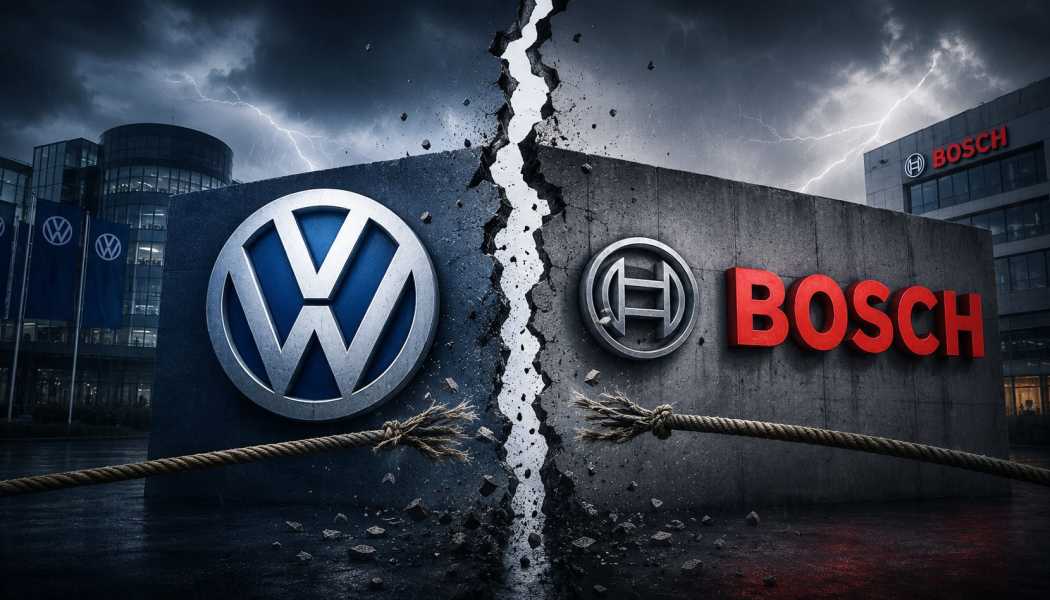
The collaboration between the Wolfsburg auto giant and the high-tech supplier appears to be coming to an end. According to multiple media reports, Volkswagen intends to terminate the so-called Automated Driving Alliance (ADA). With this, the group bids farewell to a project into which substantial funds have flowed since 2022 and which was originally conceived as an important building block of its own software strategy. For Volkswagen, the decision is more than a course correction. The Wolfsburg group has over decades adopted a structure that seems to hinder rapid innovation. The end of the cooperation with the Bosch group, long regarded as one of the most innovative companies in the industry, is a resounding defeat against the Chinese and American developers.
The long road to the digital catch-up
While manufacturers like Tesla are increasingly defining their vehicles through software and Chinese providers are increasingly relying on intelligent driver-assistance systems, traditional European manufacturers have long struggled with the integration of new digital technologies. Volkswagen responded to this by building the software subsidiary Cariad. It was meant to shape the group's digital future and reduce dependence on external suppliers.
Together with Bosch, the idea of a development partnership for driver assistance systems and automated driving emerged from it. More than 1,000 specialists worked on the corresponding solutions. The goal was to develop functions that go far beyond classic assistance systems and significantly relieve the driver in certain situations. But the expectations were not met.
Competitors Are Developing Faster
Especially in the area of modern driver-assistance systems, the development pace is high. Functions that just a few years ago were still regarded as future technology have now become commonplace in many places. Vehicles detect lane markings, automatically maintain distance, change lanes, or temporarily take over driving on certain sections of road.
In this environment, Volkswagen appears to have increasingly evaluated its own timetable with a critical eye. According to media reports, internal analyses concluded that the jointly developed technology did not reach the competitiveness that the group had originally hoped for. Whether this assessment is due solely to technical causes or whether economic considerations also play a role remains open.
From in-house developer to system integrator?
The decision also signals a fundamental strategic shift. Instead of developing central technologies in-house in the future, Volkswagen apparently intends to rely more on external partners. In recent years, the group has already expanded its collaboration with the Israeli specialist Mobileye. Added to this is the cooperation with the US company Rivian in software and electronics architectures.
Future systems for advanced driver-assistance systems will, according to media reports, no longer originate exclusively from in-house development. Instead, Volkswagen apparently is seeking a new partner whose solutions can be integrated into the vehicle fleet more quickly. For the automotive industry, that would not be an unusual development. Many manufacturers are increasingly focusing on integrating existing technologies rather than developing every component themselves.
Curb costs – accelerate development
The economic situation of the Wolfsburg-based group plays an important role here. Volkswagen is under significant cost pressure. At the same time, the shift to electromobility continues to demand substantial investments. In addition, rising development costs for software, battery technology and digital services are mounting.
Against this backdrop, many manufacturers are examining which projects should be run in-house in the long term and where external solutions appear more economical. The possible separation from Bosch fits into this picture. Rather than investing further years in a development whose market maturity is uncertain, Volkswagen could try to acquire existing technologies more quickly and adapt them to its own vehicles.
Hard setback for Bosch
Bosch is one of the world's leading automotive suppliers and has been investing for years in driver-assistance systems, sensors and automated mobility. The collaboration with Volkswagen was a significant reference project.
The development shows once again how strongly the balance of power in the industry is changing. For a long time, the German automotive industry was regarded as the technological pace-setter. Today, many impulses come from the software sector, from technology companies or new vehicle manufacturers. Development cycles are shorter, market requirements are changing faster, and strategic decisions often have to be made under tight time pressure.
Despite billions – investments, little progress at VW
Autonomous driving functions and intelligent driver-assistance systems are regarded as a building block of future mobility offerings. Platform companies, vehicle manufacturers and technology groups are investing billions in corresponding systems. The decision by Volkswagen, however, shows that even trillions in investments do not guarantee that technological leadership positions can be reached.
Content automatically translated.


Taxi-Fahrzeuge (Pkw) , Taxi-Newsletter, Taxameter, Taxi-Fahrer , BZP – Deutscher Taxi- und Mietwagenverband , Straßenverkehrsordnung (StVO) , Krankenbeförderung , Weiterbildung , Taxi-Konzessionen , Verkehrspolitik , Mietwagenbranche , Taxi-Apps , Berufskraftfahrer-Qualifikations-Gesetz BKrFQG) , Taxizentralen , Personal, Gehälter, Arbeitsschutz , Wirtschaftsnachrichten , Werbung , Taxi-Folierung , Taxi-Umrüster , Straßenverkehr , Elektromobilität, Taxifuhrpark und -flottenmanagement , Taxi-Versicherungen , Hybrid, Diesel, Erdgas , Taxi-Magazin







