Ihr kostenloser Branchen-Newsletter

Lassen Sie sich von unseren Fachjournalisten einmal wöchentlich über die wichtigsten aktuellen Entwicklungen der Taxi-Branche informieren, bequem direkt in Ihre Mailbox.
Aktueller Termin

Meist gelesen
Electric mobility works: VW ID. Buzz circumnavigates the world and sets a Guinness World Record.
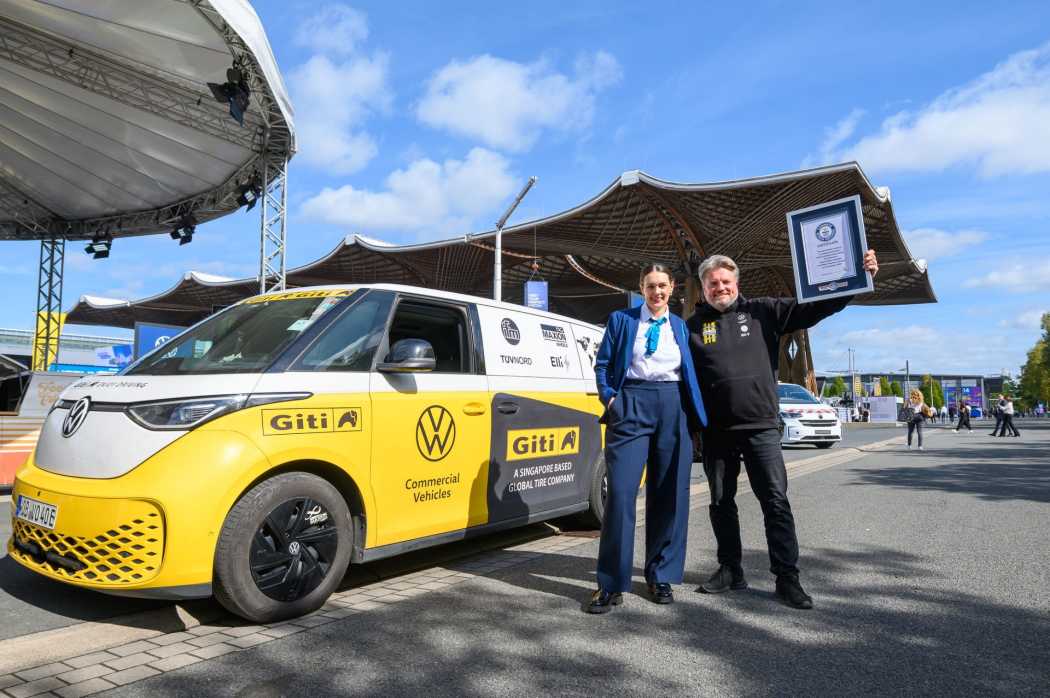
The discussion about electric mobility is often framed along the lines of range, charging times, and infrastructure. Rarely does the opportunity present itself to examine the everyday practicality of an electric vehicle under conditions that could hardly be more extreme. Exactly that has now been done by the Mannheim-based long-distance driver Rainer Zietlow—and in doing so, he has also set a Guinness World Record. After 445 days, 92 countries and 99,767 kilometers, Zietlow has returned to Hanover with a fully electric Volkswagen ID. Buzz. There, where the journey had begun in July 2025, it ended at the IAA Transportation 2026 with a Guinness World Records certificate. The category: "The most visited countries during a continuous journey in a fully electric vehicle." But the real record lies less in the number of countries than in the condition of the vehicle after its return.


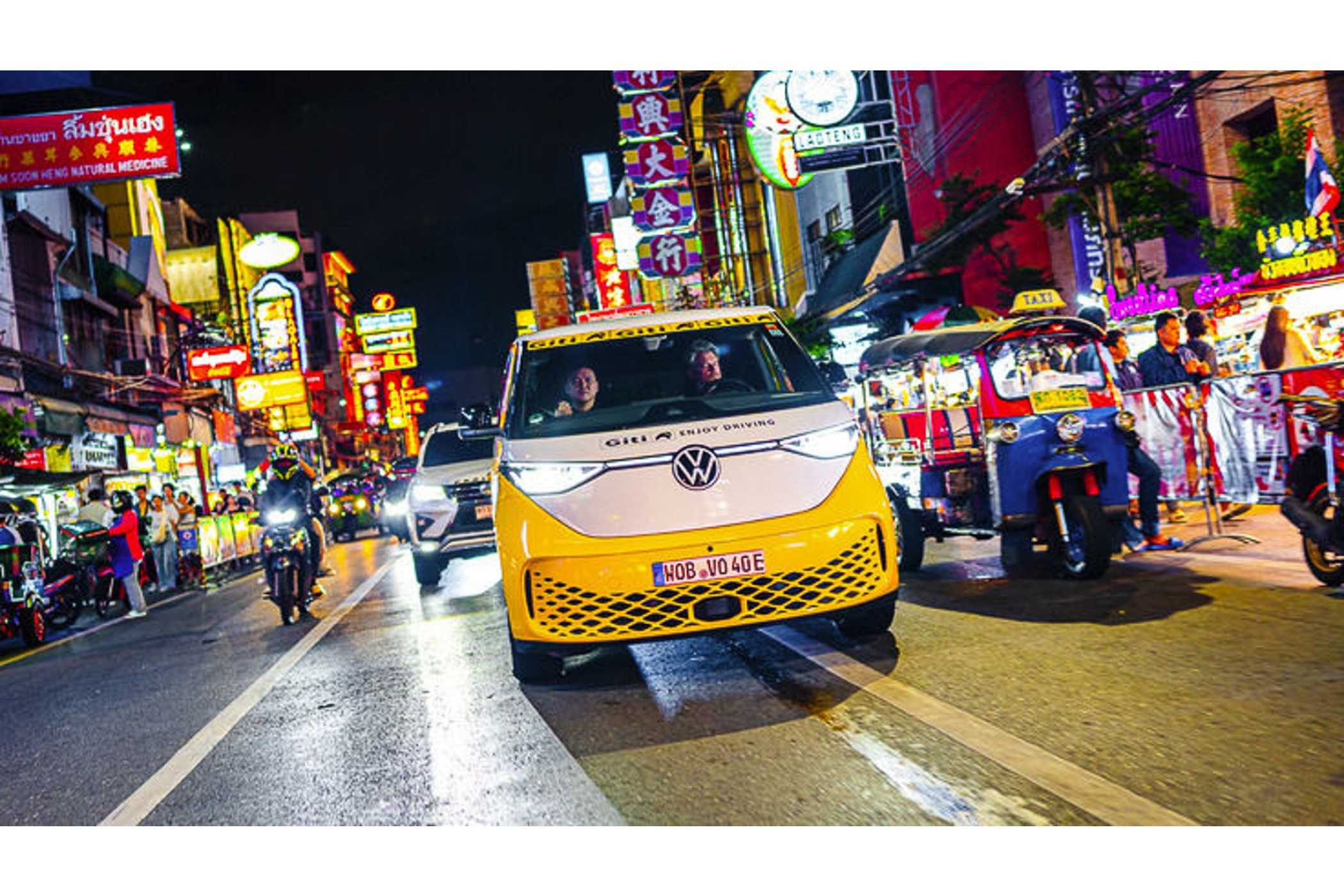







Around the world – without a workshop stop
Six continents, desert tracks, mountain roads, tropical heat and more than 300 charging sessions: The strain on people and machines was considerable. Nevertheless, the electric van recorded no technical faults during the entire journey. For Volkswagen Commercial Vehicles, this is the central message of the project. After the return, TÜV Nord inspected the vehicle and certified the high-voltage battery to a health state of 95.75 percent. Given the distance traveled, that is a figure that is likely to be noted in the debate about the long-term stability of electric vehicles.
Zietlow himself also sees this as the main message of his journey.
“That I never had any technical problems. That is the decisive point for me,” he says. “The world record was driven with an ID. Buzz in stock condition – that is exactly what buyers want to hear: It works!”
Power instead of oil changes
Zietlow has been involved in automotive long-distance projects for two decades. The tour with the ID. Buzz was, by his own account, his biggest undertaking so far. The difference between electric and combustion-engine vehicles was particularly striking.
“With the internal combustion engine, in many regions of the world you have sulfur or water in the diesel, several oil changes are necessary, and there is also the risk of engine overheating – all of that goes away with an electric vehicle,” he reports.
However, going electric cannot be done without planning either. The availability of charging points must be checked in advance. Those who take this into account will be well equipped with an electric car. This assessment gains weight because the route did not travel only through regions with dense charging infrastructure. Zietlow also travelled in parts of Africa, where public charging points are sometimes barely available.
The world charges at different speeds
His assessment of the global development of electric mobility is nuanced. While in countries such as Zambia or Tanzania there is practically no charging infrastructure, the situation has changed markedly elsewhere.
“Three years ago there weren’t many charging stations in Saudi Arabia; today it’s almost as good as in Germany,” says Zietlow.
South America is catching up as well. In particular, Brazil and Chile have made progress in expanding charging infrastructure. China, for its part, is already a step ahead in many areas.
One of the record holder's most unusual encounters occurred in Rwanda. At an altitude of around 2,000 meters, he encountered at an airport a fleet of ID. Buzz vehicles deployed there as shuttle taxis.
“That was almost surreal,” he recalls.
Also of interest to the taxi industry
For taxi operators, the world tour carries a message that goes beyond the record. The discussion of electric mobility in the commercial sector is often shaped by questions of battery longevity, failure risks, and operating costs. The tour provides at least a remarkable practical example. Almost 100,000 kilometers within 15 months roughly correspond to what many taxis cover in several years. That the vehicle completed this distance without technical faults and that the battery subsequently still showed a health level of over 95 percent should attract the attention of many entrepreneurs.
Of course, a single world trip does not replace a scientific long-term study. However, it shows that modern electric vehicles can now withstand stresses that just a few years ago seemed hardly imaginable.
A record with signaling impact
For Zietlow, the award is already his ninth Guinness record with a vehicle from the Volkswagen Group. Nevertheless, he attaches particular significance to this journey.
“This world record demanded a lot from the car. And the ID. Buzz delivered it—not on a circuit, but around the world.”
Whether one regards electric mobility as the future of the automobile or not – the journey provides an argument that is hard to dispute. A standard production electric vehicle has covered almost 100,000 kilometers across 92 countries, charged more than 300 times, changed continents 16 times by ship, and recorded no technical failure.
In a debate that is often shaped by assumptions and expectations, this is above all a practical example. Electric mobility can work—even if the journey takes you around the world once.
Content automatically translated.


Taxi-Fahrzeuge (Pkw) , Taxi-Newsletter, Taxameter, Taxi-Fahrer , BZP – Deutscher Taxi- und Mietwagenverband , Straßenverkehrsordnung (StVO) , Krankenbeförderung , Weiterbildung , Taxi-Konzessionen , Verkehrspolitik , Mietwagenbranche , Taxi-Apps , Berufskraftfahrer-Qualifikations-Gesetz BKrFQG) , Taxizentralen , Personal, Gehälter, Arbeitsschutz , Wirtschaftsnachrichten , Werbung , Taxi-Folierung , Taxi-Umrüster , Straßenverkehr , Elektromobilität, Taxifuhrpark und -flottenmanagement , Taxi-Versicherungen , Hybrid, Diesel, Erdgas , Taxi-Magazin