2 Ausgaben kostenlos für Sie

Fachmagazin taxi heute: Ihr Zugang zu exklusiven Inhalten rund um die Taxi- und Mietwagenbranche.
Aktueller Termin

Meist gelesen
Berlin taxi market: The impact of the licensing moratorium has yet to be felt.

The moratorium on new taxi licenses in Berlin, which has been in effect since mid-February, has so far not shown in a shrinking vehicle stock. As of August 3, the capital had just over 7,000 taxis registered, according to the Senate Department for Transport. That was around 400 vehicles more than at the start of the concession moratorium. The cause, however, is a timing catch-up effect for permits already issued previously.
According to the Senate Department, the added vehicles had already been approved before the moratorium came into effect. However, the companies only submitted them to the competent licensing authority later. Under federal statutory provisions, they have six months to do so. Accordingly, the vehicles appear in the statistics only with a time delay.
Catch-up effect to end in mid-August
The statistical catch-up effect is expected to end in mid-August. Only afterwards is the impact of the moratorium on permits likely to show in the stock figures. The measure is designed for one year and is intended to curb the existing oversupply on the taxi market, according to the Berlin Senate's assessment.
As justification for the intervention, the state government pointed to a decline in demand that has persisted for years, while the number of taxis has grown. This has made economically viable operation more difficult for many businesses. The Senate also sees the risk that the economic pressure could encourage violations of the law such as paying below the minimum wage or undeclared work.
Car rentals intensify competition
In addition to the number of taxi licenses, the industry is grappling with platform-mediated rental cars. While taxi fares are regulated municipally, rental-car platforms such as Uber and Bolt are not subject to the corresponding taxi fare rules.
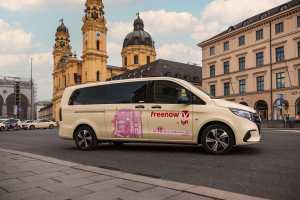
Berlin has been stepping up actions against illegally operating rental-car companies for several years. In the past, the Senate had the vehicle stock on the platforms Uber, Bolt and Free Now checked. Hundreds of vehicles were removed due to missing, expired or incorrect permits. The platforms broker the rides, while independent companies provide the transportation service. Free Now has since stopped mediating rental-car trips.
Permits from the Berlin Surroundings
A portion of rental car companies now have vehicles approved in surrounding counties such as Teltow-Fläming or Dahme-Spreewald and continue to deploy them in Berlin. The affected counties report a noticeable rise in applications for vehicle registrations.
At the same time, there is criticism of unmet legal requirements and forged documents. This development thus makes regulating a market that does not end at Berlin's state borders more difficult.
Minimum prices remain on the agenda
The taxi industry has long been calling for minimum prices for platform-mediated rental cars in Berlin. In such a model, their prices would only undercut the taxi tariff by a fixed percentage.
Munich, Essen and Cologne have already introduced corresponding regulations. In Essen and Cologne, however, the minimum prices were recently struck down by courts. The Berlin Senate continues to examine a corresponding regulation. In doing so, the administration takes into account the court decisions from other cities as well as the special market structures in the capital. (Source: Deutsche Presse-Agentur)
Content automatically translated.



Taxi-Fahrzeuge (Pkw) , Taxi-Newsletter, Taxameter, Taxi-Fahrer , BZP – Deutscher Taxi- und Mietwagenverband , Straßenverkehrsordnung (StVO) , Krankenbeförderung , Weiterbildung , Taxi-Konzessionen , Verkehrspolitik , Mietwagenbranche , Taxi-Apps , Berufskraftfahrer-Qualifikations-Gesetz BKrFQG) , Taxizentralen , Personal, Gehälter, Arbeitsschutz , Wirtschaftsnachrichten , Werbung , Taxi-Folierung , Taxi-Umrüster , Straßenverkehr , Elektromobilität, Taxifuhrpark und -flottenmanagement , Taxi-Versicherungen , Hybrid, Diesel, Erdgas , Taxi-Magazin