VISION mobility kostenlos Probelesen

Die Zeitschrift VISION mobility richtet sich an mobilitätsbegeisterte Menschen bzw. Flottenmanager und begleitet den Technologiewandel in Sachen Automotive und Mobilität.
Aktueller Termin

Meist gelesen
Taxi or Uber: How big are the price differences in Frankfurt and Berlin
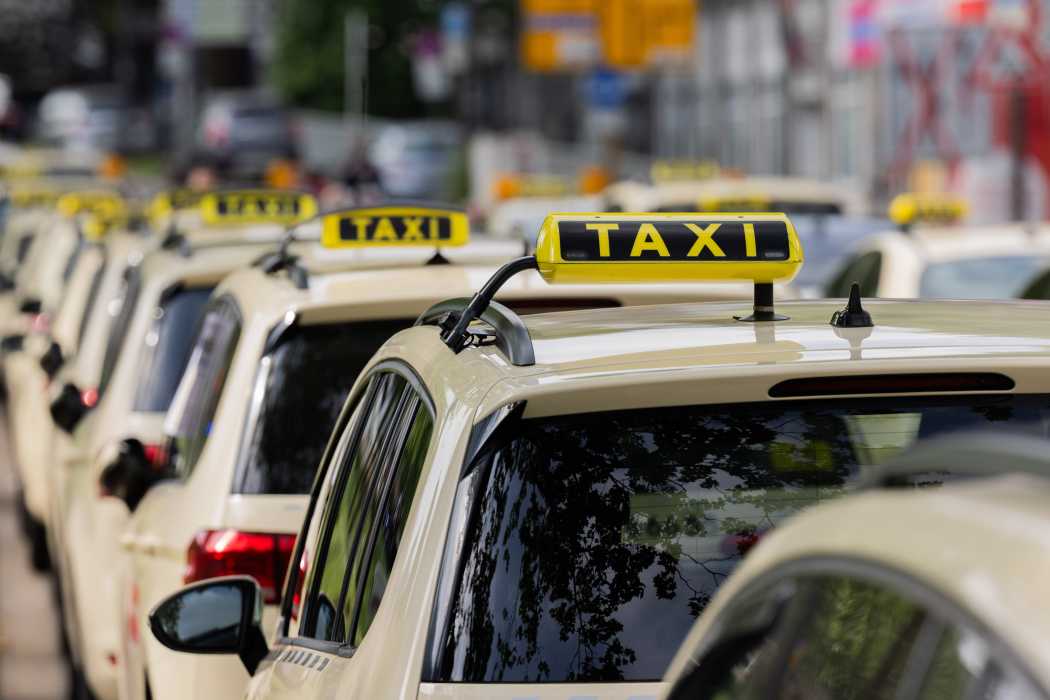
Price differences between taxis and ride-hailing cars mediated through platforms continue to fuel discussions in the passenger transport sector. A discussion paper from the Berlin Social Science Center (WZB) for Social Research sees the difficult economic situation of the taxi trade not solely as a consequence of price competition. The study also points to a need for improvement in digital booking, communication and payment.
Price differences for rides to the airport
How pronounced the impact of the different pricing models can be is shown by snapshots from early August. For a trip from Frankfurt Central Station to the airport, the taxi-booking platform Free Now quoted a fixed price of 38 euros. A rental car booked through Uber cost 26 euros for the same route at the time in question.
In Berlin, the difference was even greater. There, for the route from the Central Station to the airport, 60 euros for the taxi compared with a rental car price of 35 euros.
Behind the differences lie different rules for pricing. While taxi tariffs are regulated, rental-car platforms can set their prices depending on demand and time of day. The taxi industry sees this as a competitive disadvantage and has long been calling for tighter rules for platform providers.
Nearly 900 people surveyed
The discussion paper from the WZB Berlin Social Science Center is based on two non-representative surveys of passers-by and taxi passengers in the Rhine-Main region. In total, nearly 900 people participated in June.
More than 39 percent of respondents associated taxis directly with high costs or regarded them as too expensive. About two-thirds of those who, according to their own statements, generally do not use a taxi, could imagine using Uber or another ride-hailing platform.
In addition to price, digital processes play a role. Ride-hailing platforms are familiar to many users from abroad and are used especially by younger people. Among the properties regarded as relevant by the respondents are digital ordering and a transparent, cashless billing.
Digital dispatching with room for improvement
The study therefore also sees a need for action in the digitalization of the taxi trade. Digital dispatch channels are not yet available nationwide. Also fixed taxi prices, by which passengers know the costs before the ride begins, are currently available only in some cities.
An example of the stronger digitalization of taxi dispatching is Free Now. The platform, which has since become part of the US mobility provider Lyft, has for several years been dispatching taxi rides exclusively. According to the company, digital booking and cashless payment are no longer limited to big cities. Corresponding demand also exists in smaller towns as well as in vacation and leisure regions.
Minimum prices remain controversial
Parallel to digitalization, the debate over price regulation continues. Free Now and representatives of the taxi industry advocate restricting the pricing of ride-hailing platforms more strongly. The background is that taxi companies, due to regulated tariffs, cannot adjust their prices to demand to the same extent.
According to these proposals, ride-hailing platforms would be allowed to undercut taxi prices by only up to a fixed percentage. Munich, Cologne, Essen and Dortmund have already introduced or are planning such minimum-price regulations. Competitors, by contrast, doubt the legal admissibility of regulation that is intended to protect another industry.
Courts examine concrete regulations
Courts in Leipzig, Essen and Cologne have already repealed minimum price regulations. According to the decisions mentioned in the source text, the instrument of a minimum price was not fundamentally ruled out. What was criticized was mainly the on-site design of the regulation.
The Administrative Court of Cologne criticized, among other things, the procedure for introducing the regulation there. The Cologne mayor had enacted the measure without adequate involvement of the city council.
Munich records higher demand
In Munich the minimum price has been in place since early July. Free Now subsequently reported, according to its own statements, a clear increase in new customers. In the night-time business, demand rose by six percent. This period is regarded as a market segment in which ride-hailing platforms have a strong position.
However, the development so far does not allow any statement about whether the economic situation of the taxi trade in Munich has sustainably improved. The available numbers merely show the development of demand on the platform after the introduction of the minimum price. (Source: dpa)
Content automatically translated.


Taxi-Fahrzeuge (Pkw) , Taxi-Newsletter, Taxameter, Taxi-Fahrer , BZP – Deutscher Taxi- und Mietwagenverband , Straßenverkehrsordnung (StVO) , Krankenbeförderung , Weiterbildung , Taxi-Konzessionen , Verkehrspolitik , Mietwagenbranche , Taxi-Apps , Berufskraftfahrer-Qualifikations-Gesetz BKrFQG) , Taxizentralen , Personal, Gehälter, Arbeitsschutz , Wirtschaftsnachrichten , Werbung , Taxi-Folierung , Taxi-Umrüster , Straßenverkehr , Elektromobilität, Taxifuhrpark und -flottenmanagement , Taxi-Versicherungen , Hybrid, Diesel, Erdgas , Taxi-Magazin