2 Ausgaben kostenlos für Sie

Fachmagazin taxi heute: Ihr Zugang zu exklusiven Inhalten rund um die Taxi- und Mietwagenbranche.
Aktueller Termin

Meist gelesen
Electric car death trap – or why emergency responders warn about retractable door handles
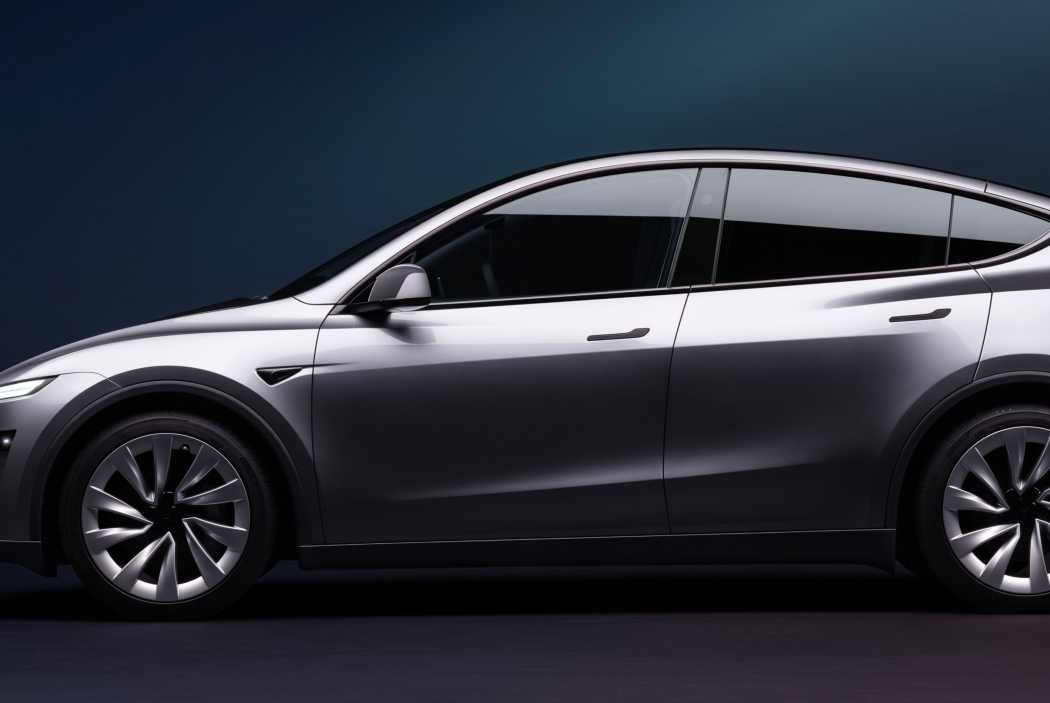
This incident highlights a weak spot in modern EV technology: flush, electrically deploying door handles. They primarily serve aerodynamics or design, but require power to operate. If the power supply is damaged after a crash — for example by a short circuit or a break in the vehicle’s electrical system — the handles can remain retracted, making it harder for first responders to access occupants.
What does ADAC say?
ADAC views the design with concern. In several publications it warns that such retractable door handles can cause a life-critical delay. In vehicle fires or when electrical circuits are severely damaged, the door cannot be opened from the outside — neither by bystanders nor by emergency services.
Even though Euro NCAP tests and other comparable crash tests have not, to date, documented negative results for vehicle models with retractable door handles, ADAC says there is a gap between laboratory scenarios and real-world crash conditions.
Cases in plain view
A particularly tragic incident from August 2022 in Brandenburg: Two teenagers burned to death after, following a crash, the rear doors of a Tesla Model S could not be opened—neither from the inside nor from the outside. An expert report found that the door handles had not extended due to a power failure.
The crash in Schwerte has now added a new dimension: A witness reports that he tried to pull children from the burning vehicle—but he, too, couldn’t reach the doors. The fire brigade was also unable to gain access.
Tesla under pressure in the U.S.
In the United States, Tesla’s retractable door handles are once again under pressure. The National Highway Traffic Safety Administration (NHTSA) has opened an investigation after 140 reports accumulated in recent years stating that the vehicles’ doors could not be opened from the outside. The primary model affected is the Model Y, the company’s best-selling vehicle.
According to the agency, the reports stem from nine specific complaints. Parents described situations in which they could not open the door to place a child in the rear seat or remove them from it. The apparent cause is the 12-volt battery: if it fails, the power-operated doors can no longer be used. While the vehicles have mechanical emergency releases inside, NHTSA points out that children often cannot reach or operate these levers.
US agency expands investigation
The US agency also points to feedback from first responders and relatives following fatal accidents in which doors remained blocked. If the suspicion is substantiated, the investigation could be expanded to other Tesla models.
Europe has not yet coordinated
The technology is also sparking debate in Europe. As early as March this year, the Federal Motor Transport Authority stated that it was advocating stricter regulations in international bodies. It is in talks especially with its Dutch counterparts, since approvals for Tesla in Europe are issued by the RDW testing authority there. Its approvals are valid EU-wide – including in Germany.
So far, German authorities have no legal basis to prohibit the use of the vehicles. Tesla may continue to deliver its models with the retractable handles. However, should new requirements be introduced, they would be binding for all manufacturers. The KBA emphasizes that it continues to engage at the European level to adapt the rules to technological developments.
Law, Standards, Demands
So far, however, there is no legal obligation to install such redundant mechanical systems in new cars. Current safety regulations address releases and door-opening forces after a crash, but not specifically whether doors can be manually released in the event of a power outage.
In China, there is apparently discussion about banning retractable door handles altogether. Fully retractable door handles are to be prohibited in future unless they have a mechanical emergency solution. Semi-retractable variants or traditional handles remain under discussion. A draft proposes making this regulation effective from July 2027.
What does this mean for the taxi industry?
For taxi operators and ride-service providers, this accident is not a distant one-off. Their vehicles must be quickly accessible in emergencies—whether due to injuries, traffic accidents, or technical failures. If, in future, car models used in taxi operations are equipped with retractable handles, this could mean:
- Driver training: Anyone operating such a vehicle should know how to mechanically unlock doors in an emergency.
- Equipment for emergency assistance: Emergency tools or aids may be necessary if doors won’t open; for instance, hammers or similar devices.
- Choice of vehicle models: Taxi operators may opt for vehicles whose door handles can be deployed without power, or that have clearly visible, easy-to-use mechanical emergency releases.
- Regulatory pressure: From the industry’s perspective, statutory safety requirements could be an advantage—they create reliability, accountability, and, in case of doubt, legal certainty.
How safe is a car when its electrical system fails?
It is worth considering requirements that go beyond current crash-test standards. For both manufacturers and policymakers, innovation must not come at the expense of accessibility and human life. For the taxi industry, it is important to stay vigilant—both when procuring new vehicles and in calling for clear standards.
Content automatically translated.





Taxi-Fahrzeuge (Pkw) , Taxi-Newsletter, Taxameter, Taxi-Fahrer , BZP – Deutscher Taxi- und Mietwagenverband , Straßenverkehrsordnung (StVO) , Krankenbeförderung , Weiterbildung , Taxi-Konzessionen , Verkehrspolitik , Mietwagenbranche , Taxi-Apps , Berufskraftfahrer-Qualifikations-Gesetz BKrFQG) , Taxizentralen , Personal, Gehälter, Arbeitsschutz , Wirtschaftsnachrichten , Werbung , Taxi-Folierung , Taxi-Umrüster , Straßenverkehr , Elektromobilität, Taxifuhrpark und -flottenmanagement , Taxi-Versicherungen , Hybrid, Diesel, Erdgas , Taxi-Magazin