2 Ausgaben kostenlos für Sie

Fachmagazin taxi heute: Ihr Zugang zu exklusiven Inhalten rund um die Taxi- und Mietwagenbranche.
Aktueller Termin

Meist gelesen
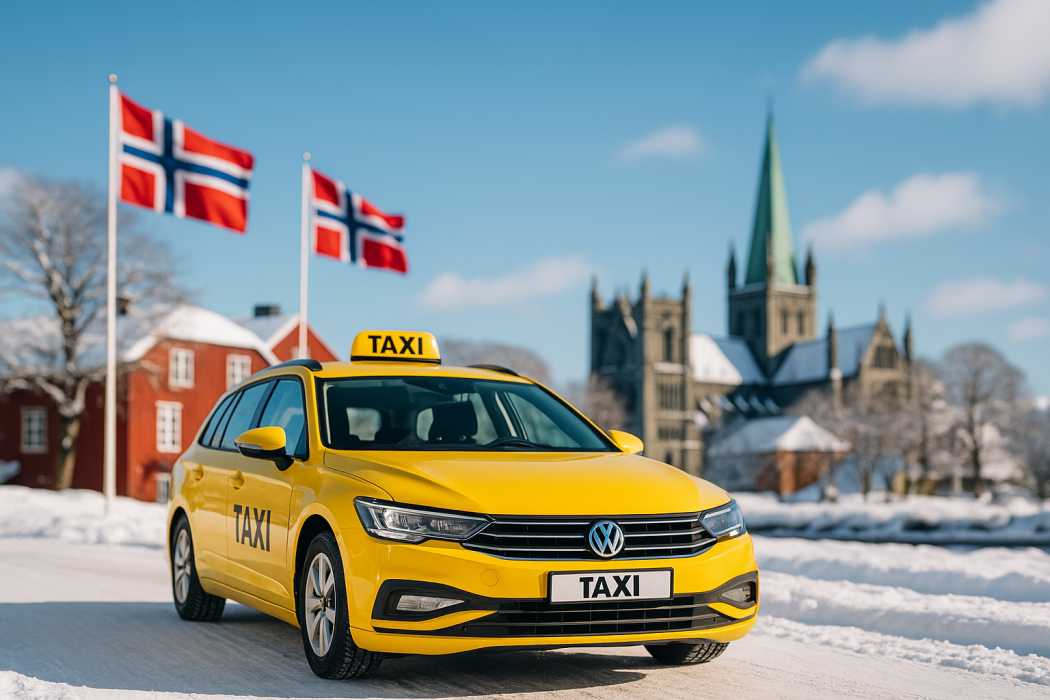
Agreement on cross-border taxi services between Finland and Norway takes effect in December 2025
The agreement on cross-border taxi traffic between Finland and Norway, concluded between the two countries, will take effect on 14 December 2025. With its entry into force, taxi transport between the two states will be officially enabled and a uniform framework for the conduct of such services will be established.
The agreement regulates the rights and obligations of taxi companies when trips cross the state border, improves regulatory oversight and strengthens cooperation between the two countries in the transport sector. It provides, among other things, that companies from both states can transport passengers in the other contracting state. Pickups in the neighboring country and return trips to the home state are also permissible, provided the trip was booked in advance. Transit trips through the other state to third countries are permitted, as long as no new passengers are picked up along the way.
The agreement was signed on 13 March 2025 in Oslo by Finnish Minister of Transport and Communications Lulu Ranne and Norwegian Minister of Transport Jon-Ivar Nygård. In Finland, the required national measures had to be completed before the entry into force. The provisions concerning the entry into force of the agreement and the accompanying law will be issued by government decree. (Source: December 2025, valtioneuvosto.fi/en/-/1410829/finland-norway-taxi-transport-agreement-to-enter-into-force-in-december)
Moia to deploy autonomous ID. Buzz shuttles to Oslo
VW's mobility service Moia will provide autonomous electric ID. Buzz AD shuttles in Oslo starting in spring 2026. For this, the company is working with the city's transport authority, Ruter, and the operator of autonomous vehicles, Holo.
The deployment is part of Ruter's strategy for sustainable mobility and builds on a pilot project for autonomous shuttles in the Oslo district of Groruddalen that has been running since 2023. Moia is simultaneously pursuing a strategic shift with the project: the VW subsidiary is evolving from a ride-pooling provider into a technology and systems provider for autonomous mobility services and will deliver a complete software and operations ecosystem in Oslo.
The ID. Buzz AD, the model intended for deployment, has been in series production since summer 2025, and was developed specifically for shared mobility offerings and features camera, lidar, and radar sensors. For Moia, the Oslo project marks an important step beyond the German market. At the same time, further test deployments are underway in Berlin, Munich, as well as in Austin and Los Angeles. Volkswagen aims to obtain EU type approval for the autonomous model by 2027. (Source: December 2025, electrive.com/2025/12/10/oslo-moia-develops-autonomous-electric-shuttle-service-for-ruter)
Norwegian taxi companies criticize Uber and Bolt's tax practices
Several actors in the Norwegian taxi industry argue in a piece on nettavisen.no that platform operators Uber and Bolt are withholding hundreds of millions of kroner in unpaid value-added tax from the state [100 million kroner corresponds to about 8.5 million EUR, editor's note]. Traditional taxi companies emphasize that, in contrast to the platforms, they have to remit value-added tax, and are therefore systematically disadvantaged on price, as customers usually choose the first available taxi or the cheapest app offer. The Norwegian Taxi Association also notes that competition has become significantly tougher since the liberalization of the taxi market in 2020, as more providers compete for the same market. According to the association, differing compliance with regulations and business models lead to competitive distortions to the detriment of traditional taxi providers.
On the other hand, the Oslo District Court rejected Bolt's lawsuit against the new regulatory framework for digital mobility platforms introduced in 2024. This framework includes, among other things, a mandatory reporting obligation and a meter requirement for platform operators. Bolt had criticized the regulations as disproportionate and not in line with EU law. The court, however, confirmed the legality of the Norwegian regulation. Industry associations now expect the authorities to enforce compliance with national rules more strictly. They point out that value-added tax payments from platform revenues are not booked in Norway but in foreign corporate structures. Therefore, the taxi industry calls for closer oversight by the tax authorities to level the playing field and prevent tax revenue losses. (Source: July 2025, nettavisen.no/okonomi/langer-ut-mot-uber-og-bolt-skylder-norge-hundrevis-av-millioner/s/5-95-2511423)
[Editor's note: The criticism refers, among other things, to the fact that trips by Uber and Bolt are not billed with Norwegian value-added tax because the revenues are booked through foreign corporate entities, for example in Estonia or another EU country. As a result, the tax is not due in Norway, leading to lower prices for the platform providers and to lost tax revenue for the state, since the services are performed and accounted for abroad.]
Taxi strikes spread to Bergen – criticism of the new airport system
More than 150 taxi drivers plan to go on strike at Bergen Airport Flesland from Thursday morning. The background is the same digital ordering system that has already triggered protests at Stavanger Airport. The system requires passengers to select their taxi from a vending-machine-style interface and displayed offerings sorted by price. The taxis must meanwhile stand on a more distant waiting area, and many drivers cannot set their own prices, as these are dictated by the respective call centers. Several drivers report substantial loss of earnings since the machines were introduced, while some companies regard the model as fairer. At Stavanger Airport, drivers had already gone on strike earlier in the week with similar arguments. The drivers in Bergen announce that they will continue their protest if necessary for an extended period. (Source: December 2025, finansavisen.no/transport/2025/12/09/8313411/taxi-oppror-har-spredd-seg-til-bergen-og-flesland-vi-vil-skape-mest-mulig-kaos)
At Stavanger's Sola Airport, a taxi strike on Tuesday morning led to an almost total absence of taxis, after Avinor closed the former "Kiss & Fly" area and introduced a new ordering system. Passengers must now book taxis via a vending-machine-style interface, while the vehicles stand on a distant waiting area and prices are centrally set. This caused confusion among travelers, as arriving taxis were turned away and pickups redirected. (Source: December 2025, vg.no/nyheter/i/Gx1wJV/taxi-kaos-paa-sola-flyplass-uoversiktlig)
Study: Norway's taxi market facing technological and sustainable transformation
According to a recent study by 6Wresearch, Norway's taxi market continues to connect traditional providers with modern ride-hailing services and is shaped by strict regulation as well as growing demand. Currently, the market is shifting strongly toward sustainable and digital solutions, including larger electric fleets, modern booking apps, and new on-demand offerings. At the same time, traditional taxi companies are coming under pressure from ride-hailing competition, regulatory requirements, and the costly switch to low-emission vehicles.
Growth potential arises from urbanization, rising incomes, and government support for climate-friendly mobility. The government is counting on clear rules and funding measures for electric vehicles to safeguard competition, quality, and sustainability. Overall, the outlook is considered positive: technology, sustainability, and new mobility forms are expected to drive further market growth, despite ongoing regulatory and competitive challenges. (Source: September 2025, 6wresearch.com/industry-report/norway-taxi-market)
Oslo pushes ahead with the switch to electric taxis
Norway continues to build its reputation as a leader in sustainable mobility: In particular, Oslo is pushing the switch to a fully electric taxi fleet to reduce CO₂ emissions and improve air quality in the capital. The transition is supported by government incentives such as tax relief, use of bus lanes, and the expansion of extensive charging infrastructure that helps taxi companies make the transition. The electrification of taxi traffic is part of Oslo's overarching "Zero Emission" strategy, which envisions climate-friendly urban development and additional infrastructure measures. Taxi companies are actively participating in expanding the electric-taxi fleets and see this as an important contribution to more sustainable urban mobility. The initiative is seen as a significant step on the path to cleaner, future-proof urban mobility in Norway. (Source: November 2025, oslo.taxi/norways-commitment-to-environmental-responsibility-and-the-future-of-electric-taxis-in-oslo/)
Taxi association warns about platform competition – parties divided on stricter regulation
Ahead of the Norwegian parliamentary election in early September 2025, regulation of platform services like Uber and Bolt also moved to the center of political debate. The Norwegian Taxi Association surveyed parties on six key issues before the election, including equal treatment of platform companies and traditional taxi call centers regarding taxes, licenses, and employer responsibility.
The responses reveal clear political fault lines: While Ap, SV, Rødt and Sp call for stricter rules and comprehensive controls — including, among other things, clear requirements for taximeters, qualifications and price caps — Høyre and Venstre emphasize technological openness, but nevertheless want to ensure that platforms do not exploit loopholes and meet the same obligations as traditional providers. MDG and KrF also support equal competitive conditions and point to the importance of fair regulation in the digital market.
The taxi association stressed that the previous government had implemented many improvements, but warns that a change of government could bring about renewed deregulation — with potential consequences for safety, credibility and the structure of the industry. (Source: September 2025, taxiforbundet.no/aktuelt/nyhetsarkiv/seks-sporsmal-t/)
Content automatically translated.


Taxi-Fahrzeuge (Pkw) , Taxi-Newsletter, Taxameter, Taxi-Fahrer , BZP – Deutscher Taxi- und Mietwagenverband , Straßenverkehrsordnung (StVO) , Krankenbeförderung , Weiterbildung , Taxi-Konzessionen , Verkehrspolitik , Mietwagenbranche , Taxi-Apps , Berufskraftfahrer-Qualifikations-Gesetz BKrFQG) , Taxizentralen , Personal, Gehälter, Arbeitsschutz , Wirtschaftsnachrichten , Werbung , Taxi-Folierung , Taxi-Umrüster , Straßenverkehr , Elektromobilität, Taxifuhrpark und -flottenmanagement , Taxi-Versicherungen , Hybrid, Diesel, Erdgas , Taxi-Magazin