Ihr kostenloser Branchen-Newsletter

Lassen Sie sich von unseren Fachjournalisten einmal wöchentlich über die wichtigsten aktuellen Entwicklungen der Taxi-Branche informieren, bequem direkt in Ihre Mailbox.
Aktueller Termin

Meist gelesen
IAA Mobility 2025: Nio ET9 – High-tech palanquin from China

What is happening beneath the bodywork is particularly exciting. With the so-called SkyRide Intelligent Chassis, Nio combines three technologies that together open a new chapter in chassis engineering: a fully electronic steer-by-wire system, rear-wheel steering, and a hydraulically active suspension.
The steer-by-wire system, developed with supplier ZF, replaces the mechanical link between the steering wheel and the front wheels with electronic signals. The steering ratio varies with speed—when parking, small inputs are enough; at 120 km/h, the feedback becomes firmer. Shocks from potholes or manhole covers are largely filtered out. Together with rear-wheel steering, which cuts the turning circle to 10.9 meters, the car is said to feel surprisingly nimble despite its length of 5.33 meters.


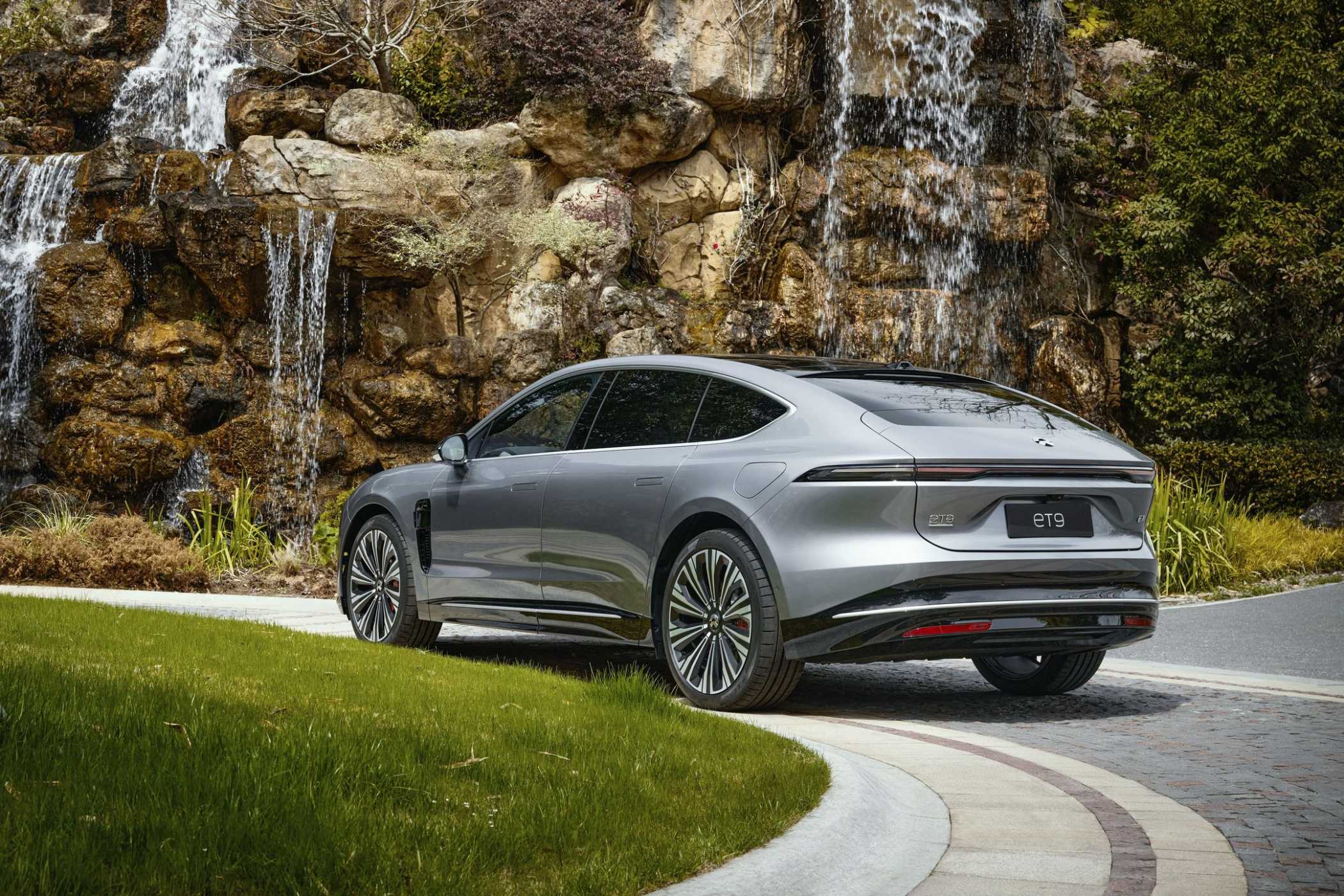

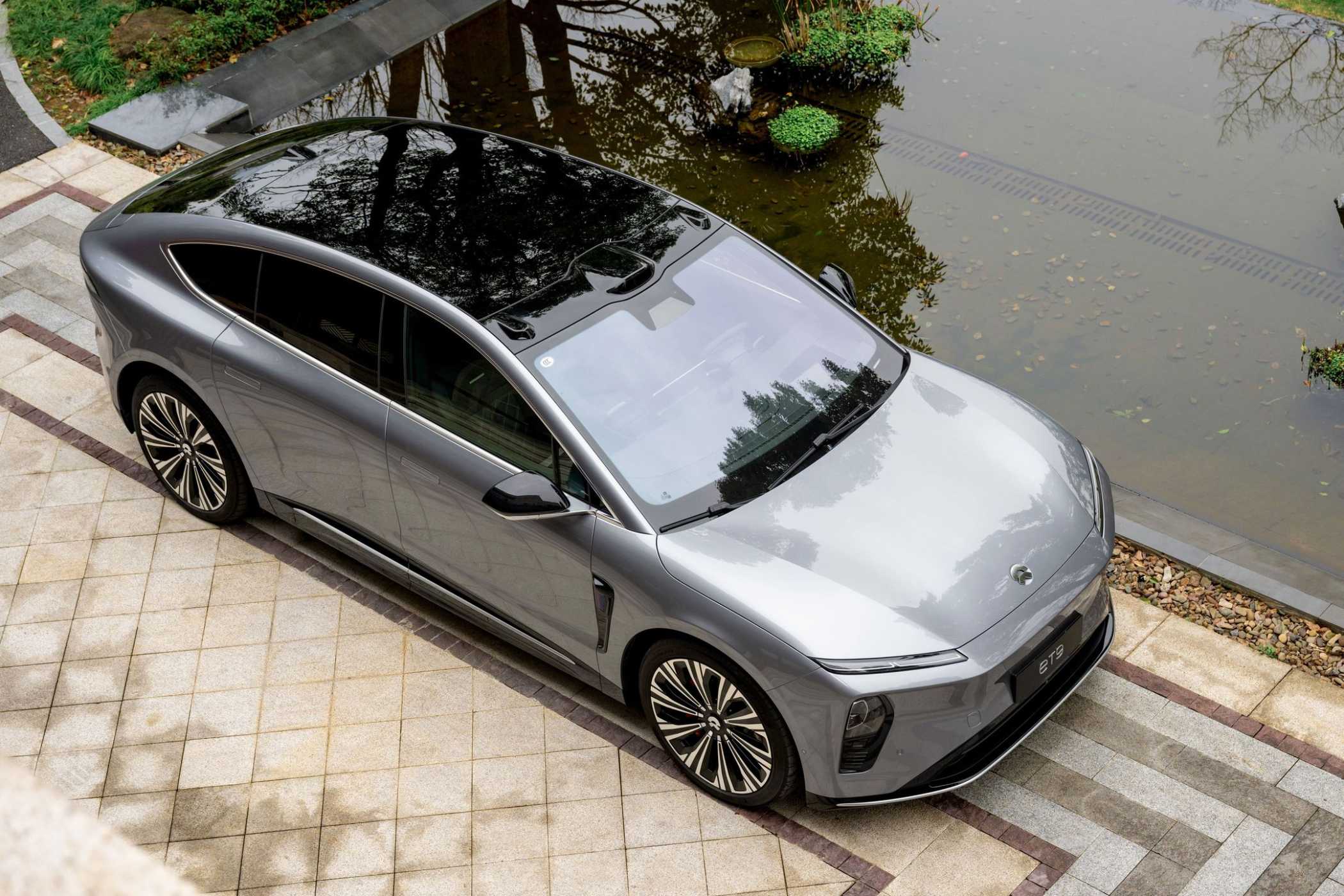



The real comfort innovation, however, lies in the Fully Active Suspension (FAS). This suspension reacts to road imperfections in milliseconds. An electric motor operates at each wheel, capable of controlling up to a thousand torque adjustments per second. Hydraulic cylinders also allow the body to be raised by 40 millimeters or lowered by 50 millimeters—each within two seconds. Nio demonstrated how it works in a highly public way: even a champagne pyramid on the hood remained intact when driving over bumps.
The technology was developed with the US start-up ClearMotion, which Nio supports financially and which now manufactures in China.






Digital control, subtle presentation
All of this is governed by a central computer system known as SkyOS. It integrates chassis control, driver assistance, cockpit, and internet connectivity. For Nio, the ET9 is less a vehicle than a rolling service platform: updates and digital add-ons are part of the concept. Beyond the chassis technology, Nio relies on familiar signature traits. The 900-volt architecture enables very fast charging – theoretically 255 kilometers of range in five minutes, even though in everyday use hardly any charging station will supply the required 600 kW. More practical is the proprietary battery-swap system, which completes a battery change in three minutes. In China there are already more than 3,100 such stations, while in Europe the offering remains sparse.
Lounge-style interior
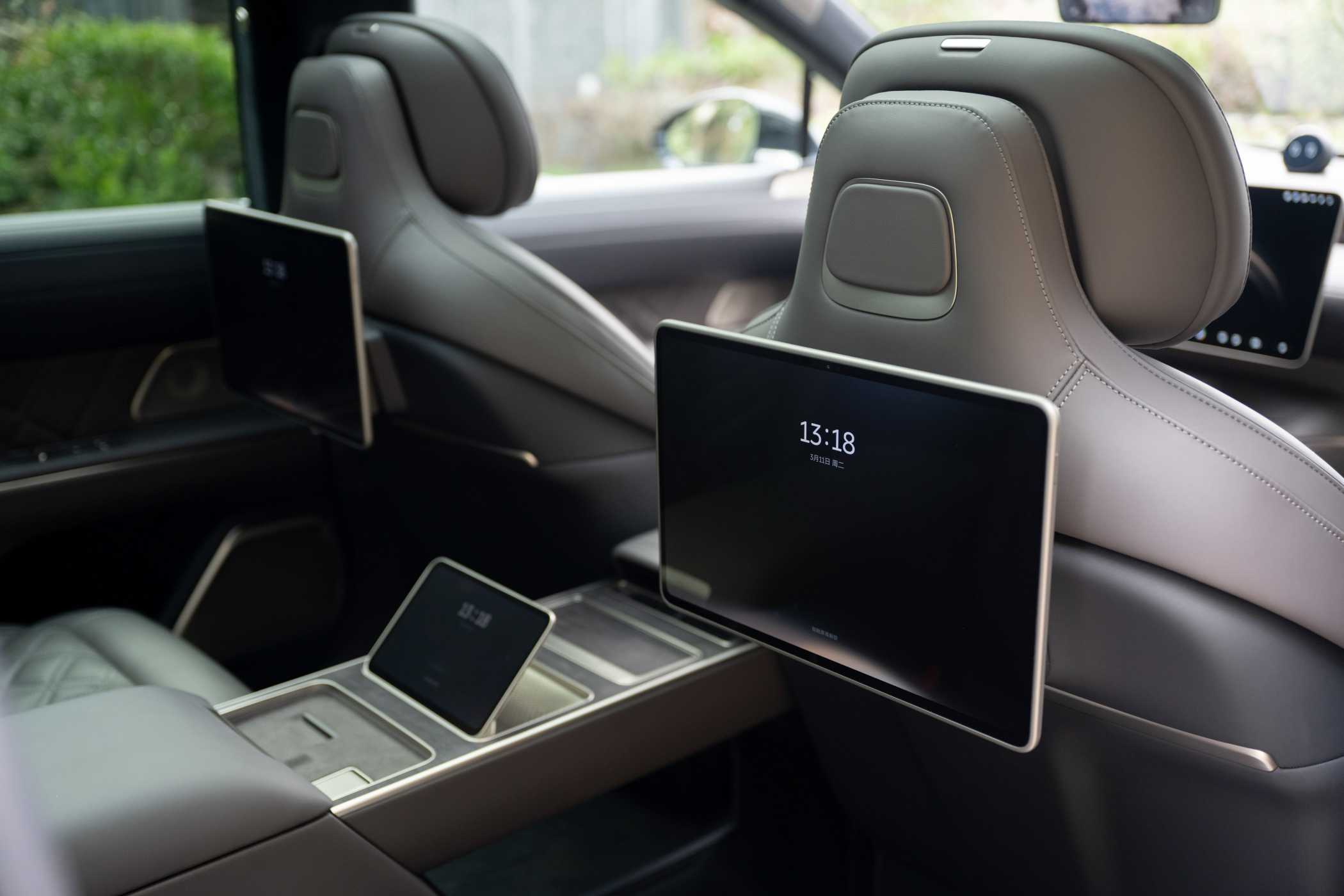
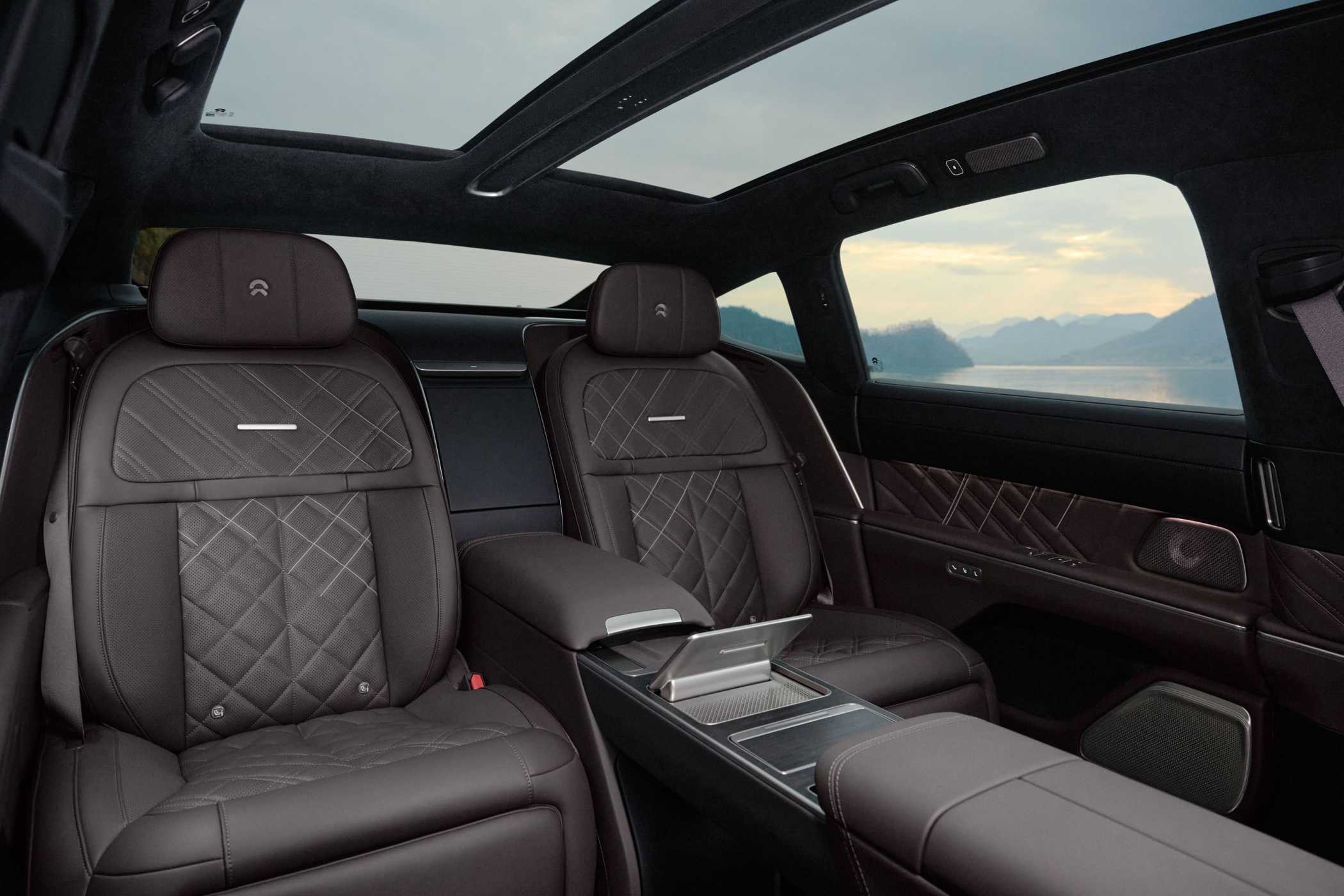
The ET9 positions itself as a grand touring sedan. Digital displays dominate the interior, while active noise cancellation enhances the calm. In the rear, seats with 16-point massage await, along with an electrically adjustable folding table and dimmable glass. While BMW, Audi and Mercedes hone refined mechanics and traditional tuning, Nio relies on computing power and hydraulics. The result is not razor-sharp sportiness, but an almost decoupled glide.
The ET9 is not a low-key challenger, but a technological statement. With it, Nio shows that ride comfort is no longer merely a question of upholstery. Whether the combination of digital control, active suspension and a flexible business model will catch on in Europe remains to be seen. The sedan is expected to arrive in Europe in 2026, with prices starting in the six-figure range.
Content automatically translated.




Taxi-Fahrzeuge (Pkw) , Taxi-Newsletter, Taxameter, Taxi-Fahrer , BZP – Deutscher Taxi- und Mietwagenverband , Straßenverkehrsordnung (StVO) , Krankenbeförderung , Weiterbildung , Taxi-Konzessionen , Verkehrspolitik , Mietwagenbranche , Taxi-Apps , Berufskraftfahrer-Qualifikations-Gesetz BKrFQG) , Taxizentralen , Personal, Gehälter, Arbeitsschutz , Wirtschaftsnachrichten , Werbung , Taxi-Folierung , Taxi-Umrüster , Straßenverkehr , Elektromobilität, Taxifuhrpark und -flottenmanagement , Taxi-Versicherungen , Hybrid, Diesel, Erdgas , Taxi-Magazin