


2 Ausgaben kostenlos für Sie

Fachmagazin taxi heute: Ihr Zugang zu exklusiven Inhalten rund um die Taxi- und Mietwagenbranche.
Aktueller Termin

Meist gelesen
Autonomous Driving as an Opportunity – Gregor Beiner Outlines the Industry's Present and Future at the VdK Annual Conference
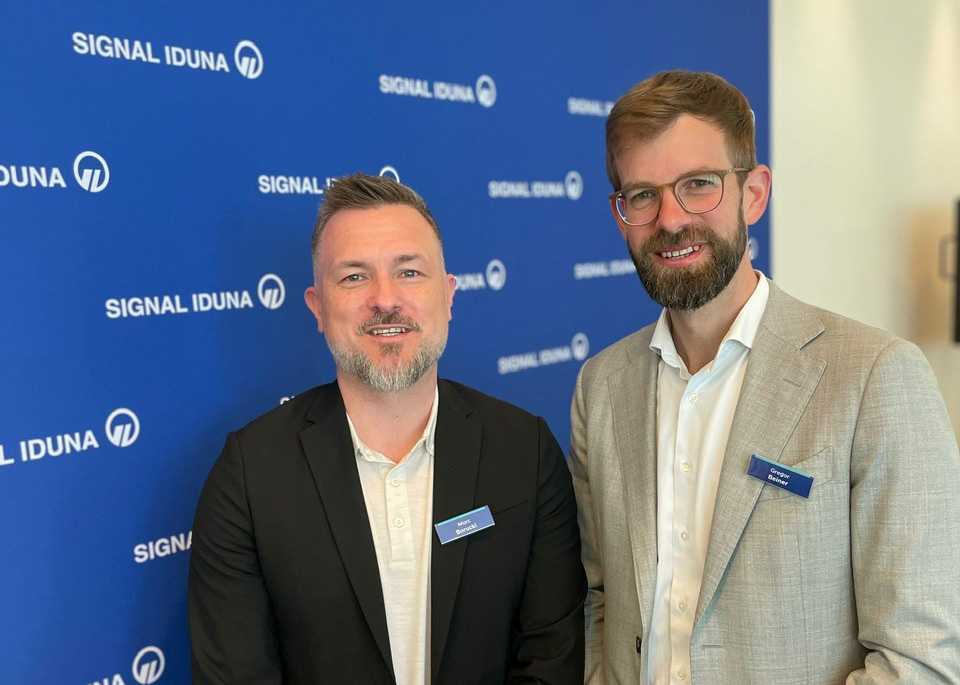
Beiner clearly formulated his central message: Autonomous driving is "no threat", but a "significant opportunity for the market" – but only if the industry actively shapes the transformation. The debate about it is by no means conducted purely theoretically anymore. It takes place at industry meetings, international conferences and in concrete projects.
The industry is edging toward the future
Beiner pointed to a series of formats in which the trade/industry engages with the development – from the German Taxi and Rental Car Day to international exchange formats. The direction is evident: The taxi should remain part of the new mobility architecture, even if the technical foundations change.
While the future is being discussed, the problems in the here and now are intensifying. Beiner brought the question of fair competitive conditions to the forefront at the conference.
"One of the most pressing challenges is the creation of fair competitive conditions, particularly in the context of minimum transport charges (MBE) for platform-based rental cars."
A Market in Imbalance
How much the market is shifting is shown by an example from Dortmund.
"While the number of taxis has declined by 6.2 percent in the past ten years, the number of rental cars alone has risen by 68 percent in the last two years."
The city has since reacted and plans to introduce minimum transport charges. Similar developments are also evident in other large cities. Municipalities are examining or deciding on interventions to limit price competition and restore the balance between taxi and rental-car traffic. The regulatory framework is thus increasingly becoming a central steering instrument.
Regulation and Risk
For insurers, this development is more than a footnote. Market conditions have an immediate impact on the risk profile of the industry. Beiner clearly established the connection:
“Unfair competitive conditions often lead to economic pressure and, in turn, to risky self-exploitation – with potential impacts on road safety.”
The sentence points to a dynamic that is tangible in the day-to-day operations of many companies. Declining margins and increasing competitive pressure can lead to extended working hours, postponed maintenance intervals, or taking on economic risks. For insurers like the VdK, the market observation thus becomes a prerequisite for a robust risk assessment.
Cooperation as a Constant
Despite the uncertainties, Beiner stressed the importance of stable partnerships. The collaboration with the VdK has proven itself and remains "a stable anchor, especially in times of profound change." As an example, he cited joint initiatives on traffic safety, for instance in the context of dooring accidents. Such collaborations show that the industry is not defined solely by regulation, but also by its own standards and projects. They are part of an effort to not only endure the change but to help shape it.
Adaptation and Ambition
The talk at the VdK annual conference makes clear how the perspective in the industry is shifting. Autonomous driving is no longer seen primarily as a disruption, but as a development that must be integrated. At the same time, the demand for clear competition rules remains. The industry thus moves in a field of tension: It must open itself technically without losing its economic base. Success depends less on individual innovations than on the framework conditions under which they are introduced.
Content automatically translated.



Taxi-Fahrzeuge (Pkw) , Taxi-Newsletter, Taxameter, Taxi-Fahrer , BZP – Deutscher Taxi- und Mietwagenverband , Straßenverkehrsordnung (StVO) , Krankenbeförderung , Weiterbildung , Taxi-Konzessionen , Verkehrspolitik , Mietwagenbranche , Taxi-Apps , Berufskraftfahrer-Qualifikations-Gesetz BKrFQG) , Taxizentralen , Personal, Gehälter, Arbeitsschutz , Wirtschaftsnachrichten , Werbung , Taxi-Folierung , Taxi-Umrüster , Straßenverkehr , Elektromobilität, Taxifuhrpark und -flottenmanagement , Taxi-Versicherungen , Hybrid, Diesel, Erdgas , Taxi-Magazin







