


2 Ausgaben kostenlos für Sie

Fachmagazin taxi heute: Ihr Zugang zu exklusiven Inhalten rund um die Taxi- und Mietwagenbranche.
Aktueller Termin

Meist gelesen
E-taxis in BW: Between Climate Goals and Practical Problems
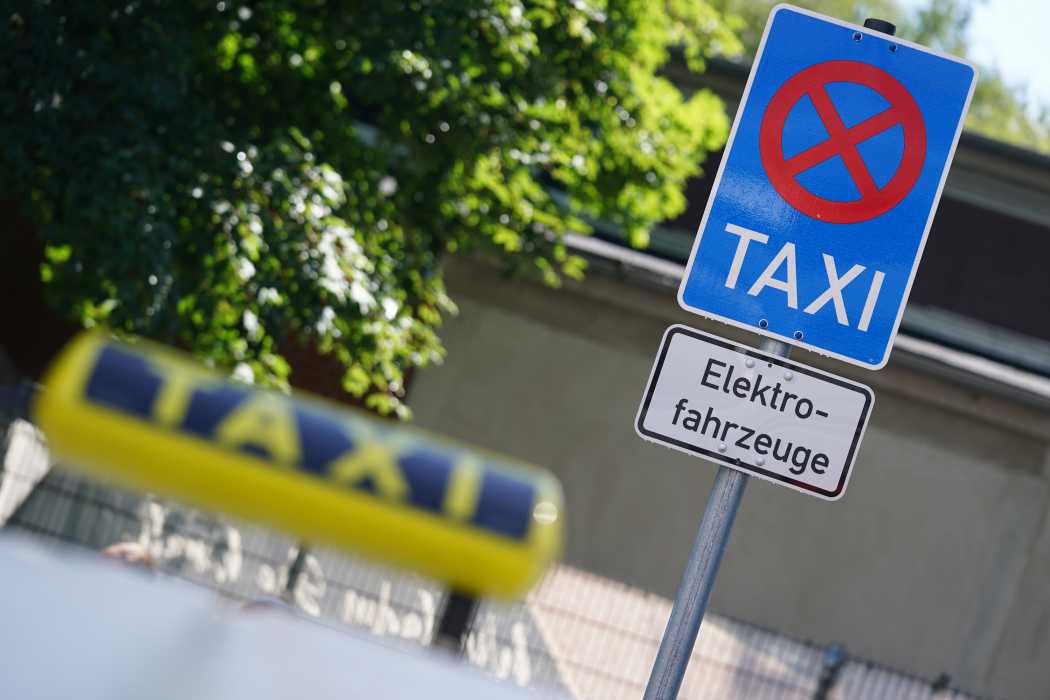
Since the beginning of 2024, a binding regulation has been in effect in Hamburg: New taxis may only be registered as emission-free vehicles. Currently, around 700 of the total 3,000 taxis in the Hanseatic city are fully electric, supplemented by a smaller number of hydrogen-powered vehicles. Large-capacity and wheelchair taxis are exempt from the regulation until 2027.
To support the transition, the city provides special infrastructure. Six fast-charging stations with a total of twelve charging points are available exclusively at taxi stands. According to the city, the program saves several thousand tons of CO₂ annually. Existing vehicles with internal combustion engines may continue to be operated.
Baden-Württemberg promotes, but does not mandate
In Baden-Württemberg, a comparable mandatory switch to emission-free taxis is not planned. Of the approximately 8,000 taxis in the state, most still run on diesel or gasoline. The green-led Ministry of Transport relies on voluntary measures and offers financial incentives: operators receive a subsidy of 3,000 euros for each e-taxi.
The city of Freiburg supports the program but considers the subsidy amount insufficient. The ministry wants to first evaluate how effective the voluntary approach is. The goal is to increase the share of emission-free vehicles through cooperation with municipalities and incentives.
Inconsistent Attitude in the Taxi Industry
There is disagreement in the taxi industry of Baden-Württemberg regarding the sense and practicality of a transition. Thomas Laschuk from the Taxi Association of Germany (State Association BW) rejects the transition. Based on his own experiences, an e-taxi is impractical in everyday work. According to him, the limited range and charging times, which are difficult to reconcile with customer demands, pose major problems.
Nuri Altun from the Taxi Association of Baden-Württemberg based in Stuttgart has a different view. He advocates for a gradual transition and points to the contribution to climate protection. In Stuttgart, Altun anticipates that by the end of 2025, around 50 to 60 of the approximately 760 taxis will be electric. However, he also points to obstacles such as a lack of information and skepticism among many companies.
Challenges in the Transition
In addition to the range of electric vehicles, the charging infrastructure is a central issue. Altun reports that many taxi companies still have little knowledge of technical possibilities and funding programs. The limited range of vehicles and long charging times are considered problematic in shift operations. For example: A diesel taxi can cover around 1000 kilometers, while an e-taxi often can only travel about 150 kilometers before a longer charging break is necessary.
The question of the number and placement of charging stations also arises, especially in cities with high vehicle density. For instance, in Karlsruhe, there are around 250 taxis – sufficient charging points would require a lot of space and be logistically demanding.
Municipal Measures and Infrastructure
Some cities in the southwest are already making their own efforts to promote e-mobility in the taxi industry. In Stuttgart, exclusive fast charging stations for taxis are available at three locations, which can be used free of charge. These are part of a municipal action plan to promote e-taxis. The locations were chosen to minimize operational interruptions and ensure reliable availability.
In Karlsruhe, there are currently four public fast charging stations with eight charging points at the south entrance of the main train station. More are planned, but the city rejects exclusive charging options for taxis to prevent selective provision of public space. Freiburg follows a similar approach. There are 561 public charging points, many of them fast chargers, but no dedicated taxi infrastructure.
In Heilbronn, where e-taxis are already in use, the industry has not yet requested special charging infrastructure from the city. The ADAC recommends taxi companies plan for their own charging points on their premises when switching to electric vehicles.
Content automatically translated.


Taxi-Fahrzeuge (Pkw) , Taxi-Newsletter, Taxameter, Taxi-Fahrer , BZP – Deutscher Taxi- und Mietwagenverband , Straßenverkehrsordnung (StVO) , Krankenbeförderung , Weiterbildung , Taxi-Konzessionen , Verkehrspolitik , Mietwagenbranche , Taxi-Apps , Berufskraftfahrer-Qualifikations-Gesetz BKrFQG) , Taxizentralen , Personal, Gehälter, Arbeitsschutz , Wirtschaftsnachrichten , Werbung , Taxi-Folierung , Taxi-Umrüster , Straßenverkehr , Elektromobilität, Taxifuhrpark und -flottenmanagement , Taxi-Versicherungen , Hybrid, Diesel, Erdgas , Taxi-Magazin







