


VISION mobility kostenlos Probelesen

Die Zeitschrift VISION mobility richtet sich an mobilitätsbegeisterte Menschen bzw. Flottenmanager und begleitet den Technologiewandel in Sachen Automotive und Mobilität.
Aktueller Termin

Meist gelesen
Poland pulls the digital handbrake – local driving bans for Chinese EVs
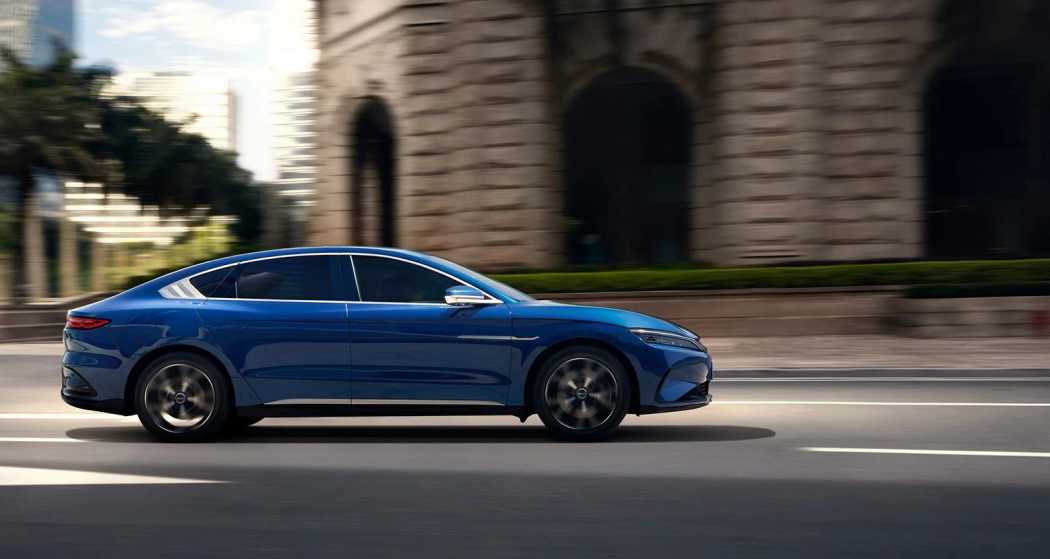
What at first glance looks like an industry-policy reflex has a tangible background. Modern vehicles are long since rolling data centers. Cameras, sensors and radar systems constantly collect data about the driver, the surroundings and driving behavior. This information increases comfort and safety, but it also opens up new attack surfaces. In Warsaw, there is growing concern that sensitive data will not stay where it is generated.
Military Exclusion Zone for Connected Vehicles
The Ministry of Defense has therefore reacted. Cars from Chinese manufacturers may no longer drive on military grounds; parking near strategically important facilities is also prohibited. Practically, this amounts to a local driving ban. In addition, it is planned that soldiers' service smartphones will no longer be allowed to pair with the onboard computers of these vehicles.
There is not yet a nationwide formal decision. Nevertheless, the measures are already being implemented. An official decision is expected in the coming days, an army spokesperson said. Polish media report that the regulations could possibly also affect vehicles from the US manufacturer Tesla.
Data as a security-policy currency
Public support for the approach comes from a report by the Warsaw Center for Eastern Studies titled “Smartphones on Wheels.” The authors warn that vehicle data could be used for espionage, cyberattacks, or military purposes. These assessments are also shared by state authorities.
It's less about the hardware itself. Sensor technology and software are found in a similar form in Western vehicles as well. The crucial point is the data flow. European manufacturers are subject to strict data protection regulations. Chinese companies, on the other hand, are legally obliged to cooperate with the security authorities of their country. Experts therefore consider it possible that driving profiles or camera images could be accessed at any time.
Asymmetry in dealing with risks
There is a certain irony to it. While Chinese carmakers are gaining market shares worldwide, Beijing has been taking a restrictive stance against foreign manufacturers domestically for years. Licenses, requirements, and bans are intended there to prevent precisely those data outflows that Europe is now beginning to shield itself against. Analyst Paulina Uznańska sees this as a shortcoming: Europe has long underestimated the security-policy dimension of connected mobility.
Sales are booming nonetheless
The debate has so far hardly slowed the market. Last year, sales of Chinese new cars in Poland quadrupled. Brands like BYD or MG convince many buyers with prices that are often 15 to 20 percent below those of European providers. For consumers, what matters most is the offering. For the state, the question now comes to the fore: what price will be paid in the long run for affordable mobility.
Also problematic for the taxi sector
If a Chinese vehicle is used as a taxi, the question arises what the driver should do in such a case if a customer wants to drive into an area designated as a restricted zone. For professional drivers, it is particularly important today to connect their car to a smartphone. If the restricted zones were to expand further and/or if the regulations were to be further tightened, the use of a Chinese vehicle as a taxi in Poland would become almost impossible.
Content automatically translated.






Taxi-Fahrzeuge (Pkw) , Taxi-Newsletter, Taxameter, Taxi-Fahrer , BZP – Deutscher Taxi- und Mietwagenverband , Straßenverkehrsordnung (StVO) , Krankenbeförderung , Weiterbildung , Taxi-Konzessionen , Verkehrspolitik , Mietwagenbranche , Taxi-Apps , Berufskraftfahrer-Qualifikations-Gesetz BKrFQG) , Taxizentralen , Personal, Gehälter, Arbeitsschutz , Wirtschaftsnachrichten , Werbung , Taxi-Folierung , Taxi-Umrüster , Straßenverkehr , Elektromobilität, Taxifuhrpark und -flottenmanagement , Taxi-Versicherungen , Hybrid, Diesel, Erdgas , Taxi-Magazin







