VISION mobility kostenlos Probelesen

Die Zeitschrift VISION mobility richtet sich an mobilitätsbegeisterte Menschen bzw. Flottenmanager und begleitet den Technologiewandel in Sachen Automotive und Mobilität.
Aktueller Termin

Meist gelesen
Compact, Innovative, Everyday-Ready — Intax presents the Kia EV3 as a taxi

The upfitter Intax now offers the Kia EV3 as a taxi and rental car solution. This is more than a mere expansion of the range; electric mobility is increasingly asserting itself where profitability and everyday practicality are closely linked: in taxi operation.
The EV3 sits below larger electric SUVs and relies on a format that brings advantages especially in urban operation: compact exterior dimensions, an elevated seating position, and an interior designed for efficient use of space. For taxi operation, that means above all one thing: flexibility. For journeys in dense urban traffic, transfers between hotel and railway station, the compact electric SUV seems predestined – but it also offers enough range for long-distance trips.





400-volt platform
Technically, the vehicle is based on Kia's E-GMP platform, which is already known from larger models. In practice, range is likely to be the main factor. Depending on the battery variant, – according to WLTP – more than 400 up to around 600 kilometers are possible. For taxi operators, this is a relevant figure because it affects deployment planning: fewer charging cycles during a shift mean more time in operation.
In addition, there is fast charging capability that makes topping up easier during breaks or between two trips. Even if charging infrastructure remains a limiting factor in everyday life, this shifts the threshold at which an electric vehicle becomes viable for commercial use.
Quiet and comfortable driving
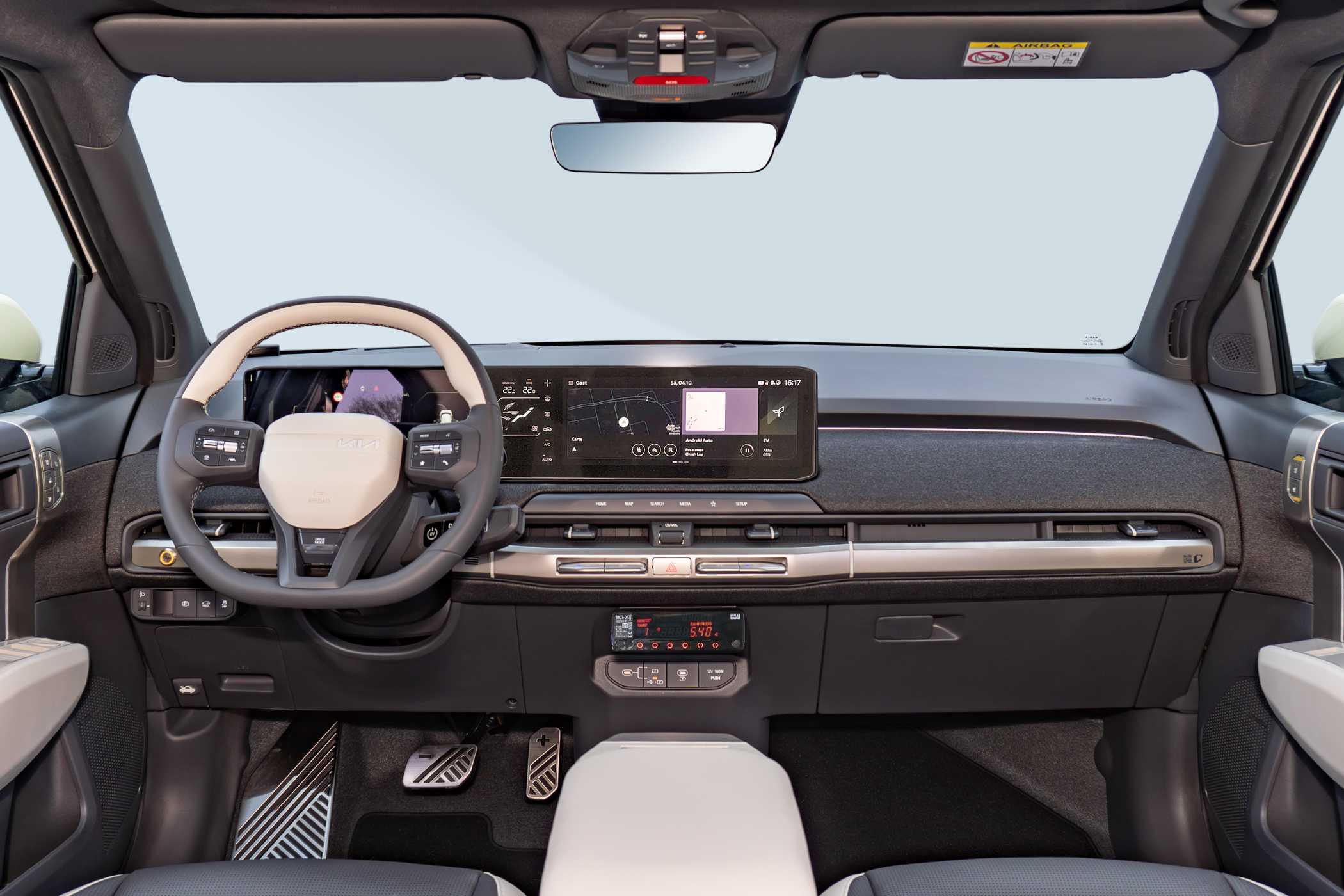
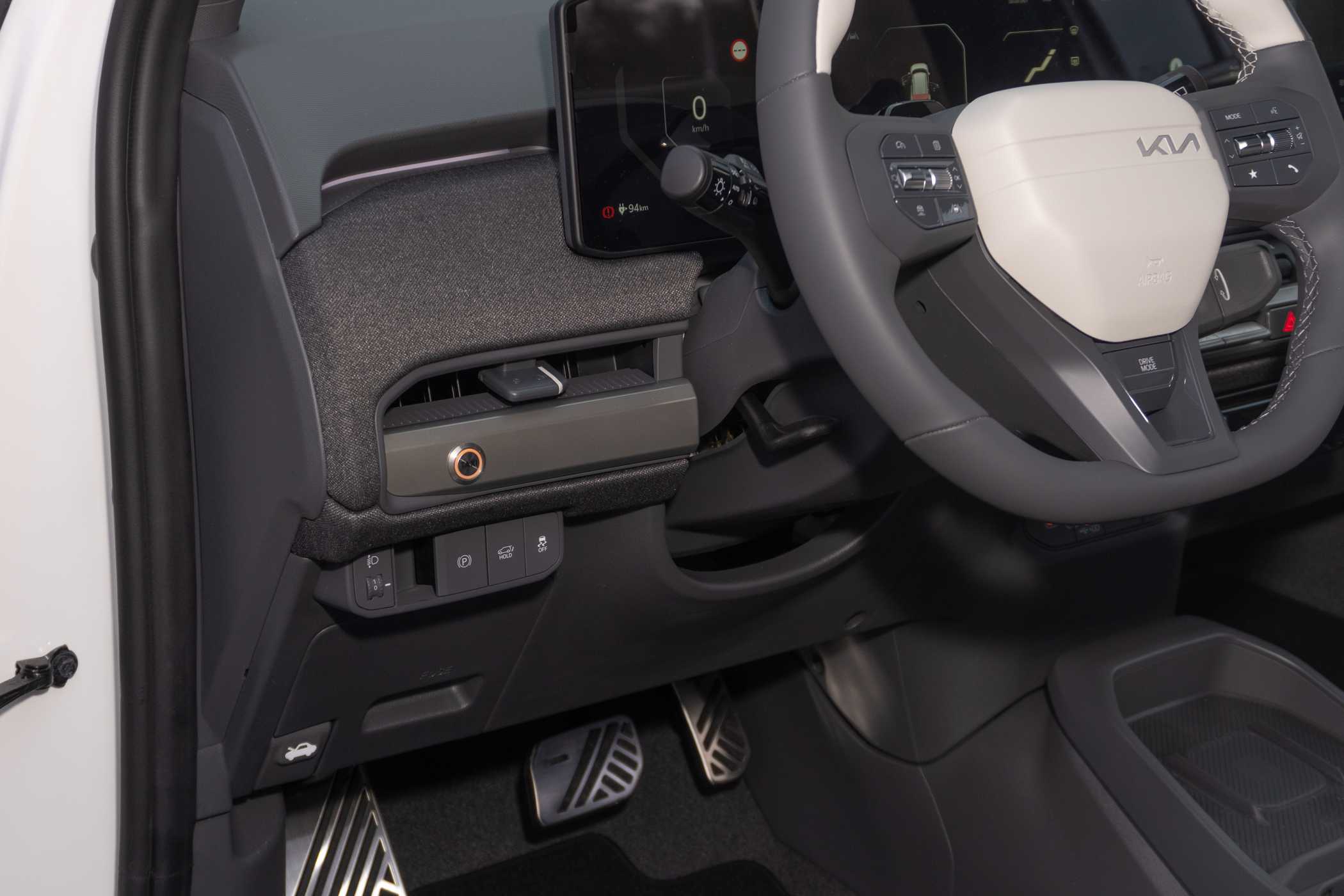
Inside the cabin, the EV3 follows a clearly digital logic. Large displays, integrated navigation systems and connectivity solutions are now standard—even in commercial use. For drivers, this means relief in route planning; for businesses, better integration into existing dispatch systems. At the same time, passenger expectations are changing: a quiet vehicle, a tidy cockpit and digital interfaces are increasingly part of the norm.
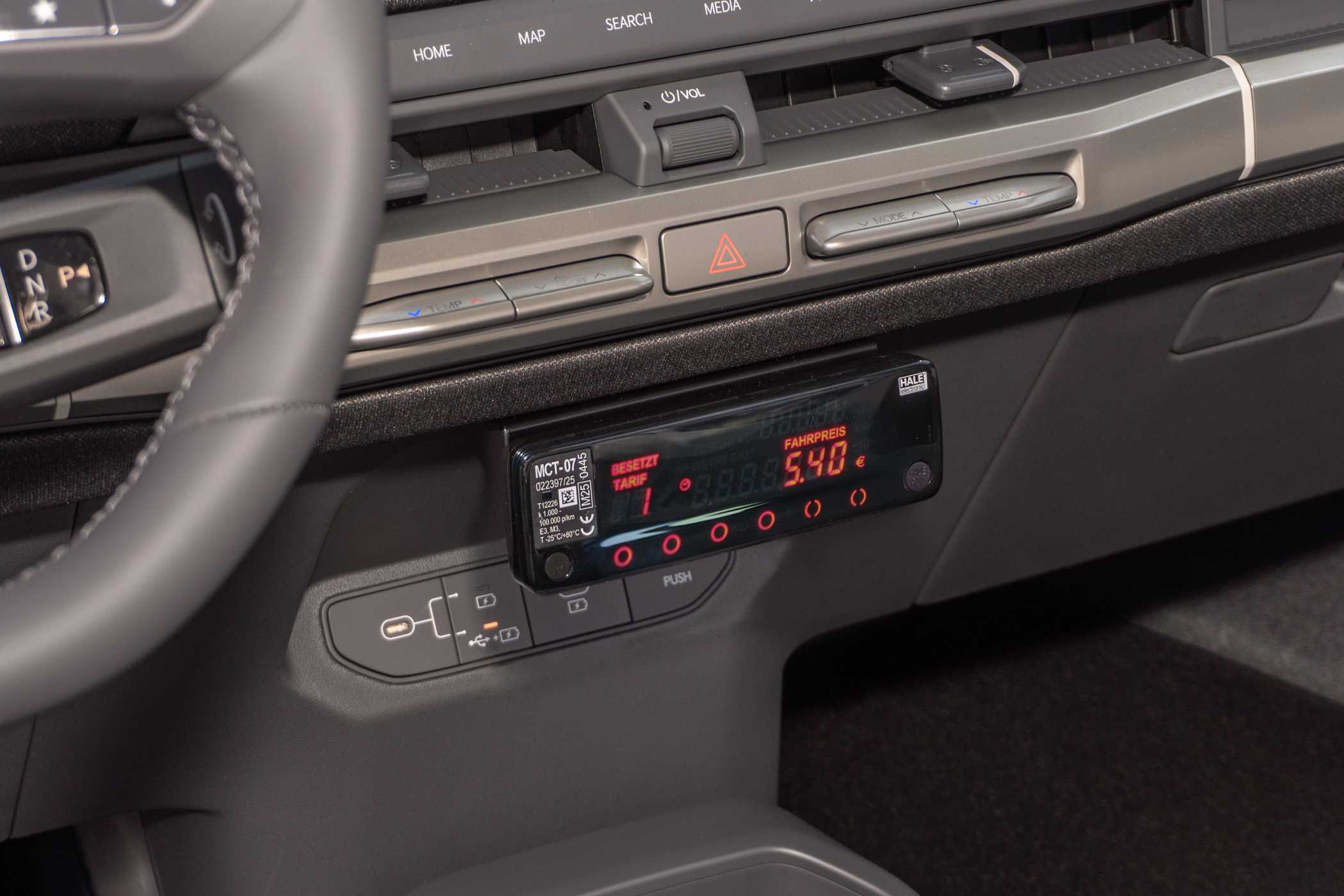
Intax complements this technical base with the classic taxi components: roof signs, calibrated distance meters, radio connection or cashless payment systems. The retrofit follows a familiar principle – the production vehicle is adapted to meet regulatory requirements and at the same time functions in daily operation.
Practical compact e-SUV
The EV3 is also interesting against the backdrop of the current debates in the commercial sector. Rising costs, political targets for emission reduction and competition with platform-based providers increase pressure on operators. Vehicles that are ecologically and economically viable thus become a central building block.
The EV3 shows the direction in which the market is moving: away from individual lighthouse projects toward a broader model range that covers different deployment profiles. For taxi and rental-car companies, that means more choice – and at the same time the need to rethink their own fleet strategically.
Electromobility in the taxi industry is becoming more concrete, tangible—and thus more economically relevant. The Kia EV3 is another step in this direction. Further information is available from a Kia dealer or on the Intax-Website.
Content automatically translated.


Taxi-Fahrzeuge (Pkw) , Taxi-Newsletter, Taxameter, Taxi-Fahrer , BZP – Deutscher Taxi- und Mietwagenverband , Straßenverkehrsordnung (StVO) , Krankenbeförderung , Weiterbildung , Taxi-Konzessionen , Verkehrspolitik , Mietwagenbranche , Taxi-Apps , Berufskraftfahrer-Qualifikations-Gesetz BKrFQG) , Taxizentralen , Personal, Gehälter, Arbeitsschutz , Wirtschaftsnachrichten , Werbung , Taxi-Folierung , Taxi-Umrüster , Straßenverkehr , Elektromobilität, Taxifuhrpark und -flottenmanagement , Taxi-Versicherungen , Hybrid, Diesel, Erdgas , Taxi-Magazin