2 Ausgaben kostenlos für Sie

Fachmagazin taxi heute: Ihr Zugang zu exklusiven Inhalten rund um die Taxi- und Mietwagenbranche.
Aktueller Termin

Meist gelesen
Calibration fees 50 percent more expensive: What lies behind the price increase for taximeters
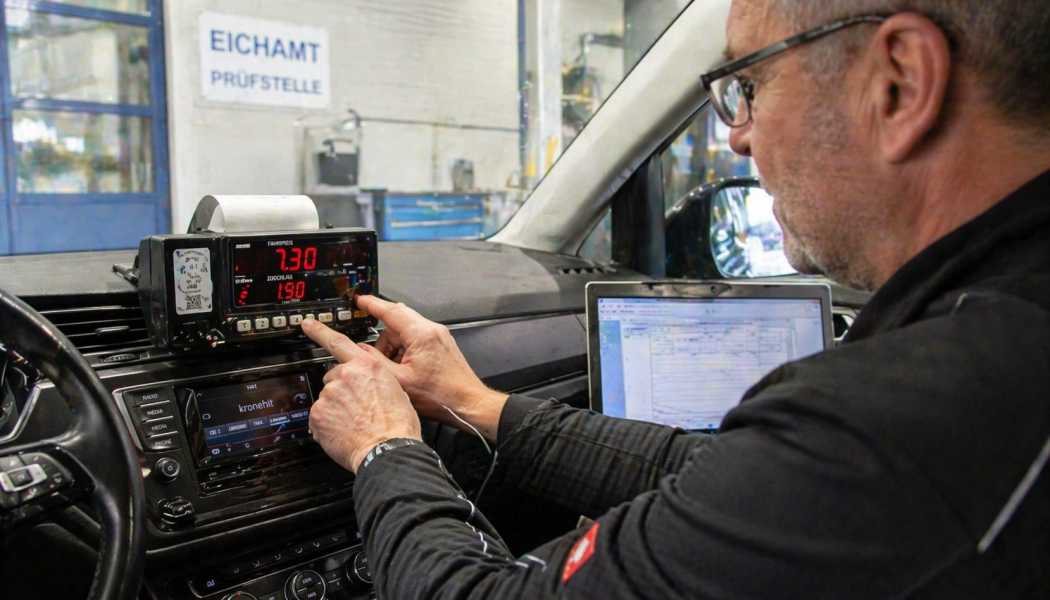
Indeed, the fee for calibrating a taximeter has thus far been around 90 euros. This magnitude is also confirmed by official figures, for example from Saxony with 90.10 euros per calibration.
However, as of the beginning of 2026, a new regulatory framework applies. The basis is the revised Measurement and Calibration Fees Regulation (MessEGebV), which sets the fees for calibration services nationwide. For taximeters, around 135 euros are now specified there. The increase is not a regional outlier, but politically intended. With the amendment, the fees are to be aligned more closely with the actual effort required by the authorities. The calculation is based on a reassessment of the inspection processes and their time requirements.
More than just “ten minutes of work”
The accusation that this is merely a short routine service is too narrow from the authorities' point of view. The fee is not based solely on the visible inspection time on site. Organizational and technical efforts are also factored into the calculation—from scheduling through documentation to quality assurance. Nevertheless, the perception in the trade remains different. For many entrepreneurs, the discrepancy between actual time spent and the fee appears significant—especially when compared with other operating cost items.
Systematic mandatory appointment
In addition, calibration is not a voluntary service. Taximeters must be inspected annually in Germany—a rarity in metrology, where two-year intervals are often the norm. For taxi companies, this creates a permanent cost item. Industry-wide, the fees and downtime add up to substantial sums. Estimates run into tens of millions of euros per year. Therefore, the annual calibration obligation has long been criticized. Associations are calling for longer intervals to reduce bureaucracy and costs.
Additional cost pressure due to new technology
Parallel zur Gebührenerhöhung verschärft sich die Lage durch weitere regulatorische Anforderungen. Seit 2026 müssen Taxameter mit einer technischen Sicherheitseinrichtung (TSE) ausgestattet sein, die Umsätze manipulationssicher speichert. Die Umrüstung kostet je nach System mehrere hundert Euro pro Fahrzeug. Für viele Betriebe entsteht damit eine doppelte Belastung: steigende Eichgebühren auf der einen Seite, Investitionen in neue Technik auf der anderen.
Uniform fees – different effects
Die Gebühren selbst sind bundeseinheitlich geregelt. Das bedeutet: Ob Großstadt oder ländlicher Raum – die Kosten sind identisch. Die wirtschaftlichen Auswirkungen unterscheiden sich jedoch deutlich. In Ballungsräumen lassen sich zusätzliche Kosten eher über höhere Umsätze kompensieren. Im ländlichen Raum hingegen schlagen sie stärker durch – insbesondere bei ohnehin knappen Margen.
Between regulation and reality
Der Fall zeigt ein bekanntes Muster im Taxi- und Mietwagengewerbe. Regulierung verfolgt legitime Ziele: Verbraucherschutz, Transparenz, Manipulationssicherheit. Gleichzeitig entstehen daraus fixe Kosten, die unabhängig von der Auslastung anfallen. Die Erhöhung der Eichgebühren reiht sich in diese Entwicklung ein. Sie ist formal begründet, praktisch aber umstritten. Für Unternehmer wie M.K. bleibt der Eindruck, dass Aufwand und Gegenleistung nicht im Verhältnis stehen.
Ob die neue Gebührenstruktur langfristig Bestand hat, ist offen. Branchenverbände drängen auf Entlastung – sei es durch längere Eichintervalle oder durch eine Überprüfung der Gebührensätze. Bis dahin gilt: Die Eichung bleibt Pflicht, die Kosten steigen.
Content automatically translated.







Taxi-Fahrzeuge (Pkw) , Taxi-Newsletter, Taxameter, Taxi-Fahrer , BZP – Deutscher Taxi- und Mietwagenverband , Straßenverkehrsordnung (StVO) , Krankenbeförderung , Weiterbildung , Taxi-Konzessionen , Verkehrspolitik , Mietwagenbranche , Taxi-Apps , Berufskraftfahrer-Qualifikations-Gesetz BKrFQG) , Taxizentralen , Personal, Gehälter, Arbeitsschutz , Wirtschaftsnachrichten , Werbung , Taxi-Folierung , Taxi-Umrüster , Straßenverkehr , Elektromobilität, Taxifuhrpark und -flottenmanagement , Taxi-Versicherungen , Hybrid, Diesel, Erdgas , Taxi-Magazin