VISION mobility kostenlos Probelesen

Die Zeitschrift VISION mobility richtet sich an mobilitätsbegeisterte Menschen bzw. Flottenmanager und begleitet den Technologiewandel in Sachen Automotive und Mobilität.
Aktueller Termin

Meist gelesen
Autobahn Pilot 2026: What drivers are really allowed to do with automated driving – and what they will still be liable for
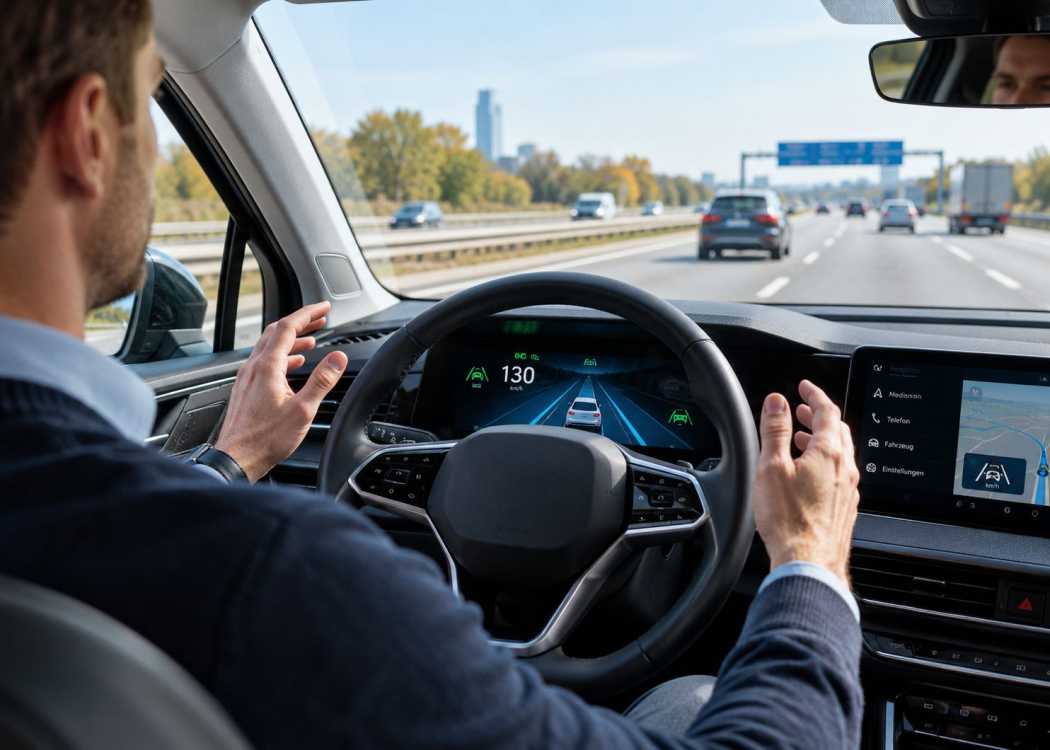
The advertising images appear enticing: The driver leans back in a relaxed posture, the car stays in its lane, maintains the distance and seemingly takes over the drive. The term 'Autobahn pilot' suggests that the human is nothing more than a passenger. The reality on German roads, however, looks significantly more sober. For although automated driving functions are technically increasingly capable, the legislature has drawn clear boundaries. Whoever believes that with an activated system they can hand responsibility over to the electronics is legally skating on thin ice.
Assistance systems or automated driving?
The first misconception already begins with the technology. Not every system that steers, brakes and accelerates is automatically considered an automated driving function. Many systems available today still lie in the realm of classic driver assistance systems. Lane-keeping assistants, adaptive cruise control or traffic jam assistants do support the driver, but do not permanently take over the driving task. The responsibility remains entirely with the human driver. Only so-called highly or fully automated systems take over the driving task temporarily. Precisely for these systems the legislature has created a dedicated legal framework with §§ 1a ff. of the Road Traffic Act (StVG). Under § 1a StVG drivers may use such systems provided they are used as intended. § 1d StVG defines vehicles with autonomous driving function, while § 1f StVG regulates the duties of owners and the technical supervision.
For practical purposes this means: Not every vehicle with an „Autopilot“ or „Pilot“ name automatically falls under these regulations.
Driver may look away – but only to a limited extent
Particularly interesting is Section 1b StVG. There the legislator regulates under which conditions a driver may turn away from the traffic scene during the use of highly or fully automated systems. In fact the law allows more than many people suspect. Whoever uses an appropriately approved system may devote themselves to other activities from time to time. This can, for example, be operating the infotainment system or reading messages.
However, the freedom ends where the so-called perceptual readiness is lost. The driver must always be able to regain control. Deep sleep, long videoconferences or other activities that prevent a quick reaction are thus excluded. Under § 1b Abs. 2 StVG the driver must immediately regain control of the vehicle when the system requests it or when the prerequisites for automated operation no longer exist. Whoever ignores warning indications or misses a takeover request violates a legal duty.
Liability does not disappear
There is a widespread misunderstanding here. Automated driving does not mean automatic liability exemption. If an accident occurs, the general liability rules still apply. These include the fault-based liability under § 823 Abs. 1 BGB as well as the owner liability under § 7 StVG. If a driver has ignored a takeover request or reacted too late, a culpable breach of duty can be charged against him. Also § 17 StVG remains relevant. There it is laid down how the responsibilities between several accident participants are distributed. A delayed intervention despite the vehicle's warning can be weighed heavily against the driver. In addition to civil claims, criminal consequences also threaten. Depending on the outcome of the accident, offenses such as negligent bodily injury or negligent homicide could be at issue.
Insurers Are Watching Closely
The insurance industry does not view automated driving features as a free pass. While motor vehicle liability insurance initially covers the damage to the other party in an accident, the insurer may seek recourse in cases of gross negligence. In comprehensive insurance, depending on the contract, reductions in benefits or even loss of coverage may occur. For drivers, this means: Those who rely on the technology without knowing its limits risk not only fines in the event of a serious incident but also substantial financial consequences.
The Smartphone Ban Still Applies
This is especially relevant for everyday situations. Many drivers assume that with activated driving assistant, different rules automatically apply — but that is not the case. Those who drive a vehicle with a pure assist system and use their smartphone at the same time still commit a traffic offense. The exception under § 1b StVG applies only to appropriately approved high- or fully automated driving functions. Even then, the distraction must not be so great that warning signals or takeover prompts are missed. Otherwise, fines, penalty points in Flensburg, or driving bans threaten.
New Responsibilities for Fleet Operators
For companies, these questions are increasingly important. Company car fleets and commercial fleets are increasingly receiving vehicles with extended automation features. This creates new organizational obligations. Drivers must be trained, operating instructions should be known, and software updates should be implemented promptly. Especially for fleet operators, the law refers to duties under § 1f StVG, which concern maintenance, security updates and proper operation of the systems. Documented instructions and clear usage guidelines can help reduce liability risks.
Between Comfort Gains and Responsibility
Automated driving functions noticeably change driving. Long motorway stints become more relaxed, traffic jams less exhausting, and many routine tasks are taken over by electronics. The legislature pursues a clear approach: technology may relieve, but not completely absolve from responsibility. Therefore, those who use a motorway pilot continue to operate within a legal framework that requires attention, willingness to intervene, and knowledge of the system limits.
The central message of the current legal situation is not “The car drives by itself,” but rather: The car helps — the responsibility remains with the human for the time being.
Content automatically translated.





Taxi-Fahrzeuge (Pkw) , Taxi-Newsletter, Taxameter, Taxi-Fahrer , BZP – Deutscher Taxi- und Mietwagenverband , Straßenverkehrsordnung (StVO) , Krankenbeförderung , Weiterbildung , Taxi-Konzessionen , Verkehrspolitik , Mietwagenbranche , Taxi-Apps , Berufskraftfahrer-Qualifikations-Gesetz BKrFQG) , Taxizentralen , Personal, Gehälter, Arbeitsschutz , Wirtschaftsnachrichten , Werbung , Taxi-Folierung , Taxi-Umrüster , Straßenverkehr , Elektromobilität, Taxifuhrpark und -flottenmanagement , Taxi-Versicherungen , Hybrid, Diesel, Erdgas , Taxi-Magazin