VISION mobility kostenlos Probelesen

Die Zeitschrift VISION mobility richtet sich an mobilitätsbegeisterte Menschen bzw. Flottenmanager und begleitet den Technologiewandel in Sachen Automotive und Mobilität.
Aktueller Termin

Meist gelesen
Tino Schopf and the Taxi: A Transportation Policymaker Shapes the Debate About the Future of Berlin's Taxi Trade.
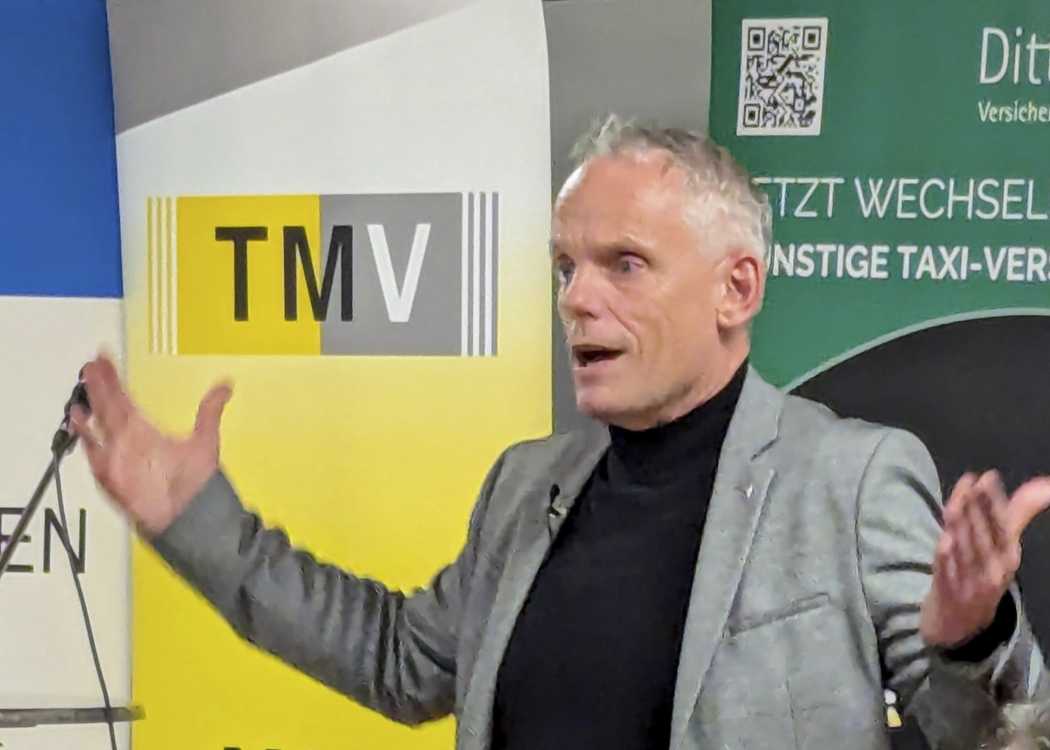
Politicians and taxi drivers traditionally maintain a rather pragmatic relationship. Some set the regulatory framework, others must operate within it. In Berlin, this has developed in recent years into a remarkable transport-policy debate. Whoever talks about Uber, Bolt, minimum fare charges, or the control of the rental-car market, regularly comes up against the name Tino Schopf.
The SPD member of parliament from Pankow has for years been among the most prominent voices of his party's parliamentary group on questions of commercial passenger transport. While other transport policy topics are often dominated by cycling, expansion of public transport, or electromobility, Schopf regularly deals with the framework conditions of the taxi and rental-car market.
Early criticism of platform models
Schopf's positions trace back to the debates on reforming the Passenger Transport Act. Even then, he expressed concern that new platform-based mobility offerings could economically pressure existing forms of transport. In the Berlin House of Representatives, he warned in 2021 of a 'cannibalization of public transport' by platform providers and spoke in favor of binding social standards in the taxi, rental car, and ride-hailing markets. He argued that taxi and public transport are part of a common mobility infrastructure and should therefore not be viewed in isolation.
Focus on market control and enforcement of the law
Schopf drew particular attention from 2024 on, as the disputes over competitive conditions in the Berlin passenger transport market intensified. Representatives of the taxi trade complained at the time, among other things, about dumping prices, violations of statutory requirements, and deficits in regulatory oversight.
In spring 2024, the SPD parliamentary group organized a specialist event titled "Securing the taxi trade in Berlin – consistently applying existing law." There, the focus was on enforcing existing regulations and the development of the rental car market. Schopf repeatedly criticized the work of the competent authorities in this regard and called for more thorough market surveillance. Thus he positioned himself as an advocate for stronger regulation and oversight of platform-mediated mobility offerings.
Minimum Fare as Central Theme
A focus of his transport policy work was the discussion on the introduction of a minimum fare for rental cars. The aim of this instrument is to prevent fares from falling below an officially set lower limit. Proponents see in it a proven means against price-cutting competition and economic distortions in the market. The platform operators, as expected, warn against additional regulation and restrictions on competition.
Schopf was among the political supporters of the proposal. He campaigned within Berlin state politics for its implementation and regularly attended events and demonstrations of the taxi trade. When the Berlin coalition moved to introduce a minimum fare at the end of 2024, he was among the supporters of the measure.
Cooperation Across State Borders
Apart from price issues, Schopf repeatedly dealt with the licensing practice in the rental car trade. In particular, he highlighted the development of company locations in the Berlin surrounding area. The background was the observation that many rental-car companies registered their business addresses in Brandenburg, but continued to use their vehicles predominantly in Berlin. Schopf therefore repeatedly called for closer cooperation between the Berlin and Brandenburg authorities and demanded closer coordination in inspections and licensing procedures.
Economic Situation of the Taxi Industry
The economic development of the taxi industry also regularly featured on his agenda. Against the backdrop of declining revenues of many taxi companies and a growing number of rental cars, Schopf advocated a so-called observation period for new taxi concessions. The aim was to first analyze the market development more closely and to assess the economic situation of the trade. The corresponding regulation was introduced in early 2026.
His engagement did not go unnoticed within the industry. The Berlin Taxi Guild awarded Schopf an honorary prize in 2024. In early 2025 he also received the "Taxi Ambassador" award from the Taxi and Hire Car Association of Germany (TMV). He also regularly appears as a discussion partner at BVTM events. This recognition reflects how many industry representatives view Schopf as a political liaison for the industry's concerns.
A Symbol for a Larger Conflict
Schopf's political work exemplifies a fundamental debate in the passenger transport market. The focus is less on whether digital platforms change mobility, but rather on under what regulatory conditions this happens. Schopf has taken a clear position on this. He advocates stronger controls, binding market rules, and the enforcement of existing regulations. His political work concentrates on a field that has gained considerable importance in recent years: the tension between traditional transport companies, digital platforms, and state regulation.
For the Berlin taxi industry, hardly any state politician in recent years was more influential. While many political debates about mobility remain abstract, Schopf dealt with an industry that is visibly on Berlin's streets every day. In an industry that had long felt neglected by politics, this has earned him an unusual status: that of a political ally. And now this taxi ally is once again standing for election.
Content automatically translated.





Taxi-Fahrzeuge (Pkw) , Taxi-Newsletter, Taxameter, Taxi-Fahrer , BZP – Deutscher Taxi- und Mietwagenverband , Straßenverkehrsordnung (StVO) , Krankenbeförderung , Weiterbildung , Taxi-Konzessionen , Verkehrspolitik , Mietwagenbranche , Taxi-Apps , Berufskraftfahrer-Qualifikations-Gesetz BKrFQG) , Taxizentralen , Personal, Gehälter, Arbeitsschutz , Wirtschaftsnachrichten , Werbung , Taxi-Folierung , Taxi-Umrüster , Straßenverkehr , Elektromobilität, Taxifuhrpark und -flottenmanagement , Taxi-Versicherungen , Hybrid, Diesel, Erdgas , Taxi-Magazin