2 Ausgaben kostenlos für Sie

Fachmagazin taxi heute: Ihr Zugang zu exklusiven Inhalten rund um die Taxi- und Mietwagenbranche.
Aktueller Termin

Meist gelesen
ACE warns of price chaos: Public charging points remain expensive and opaque
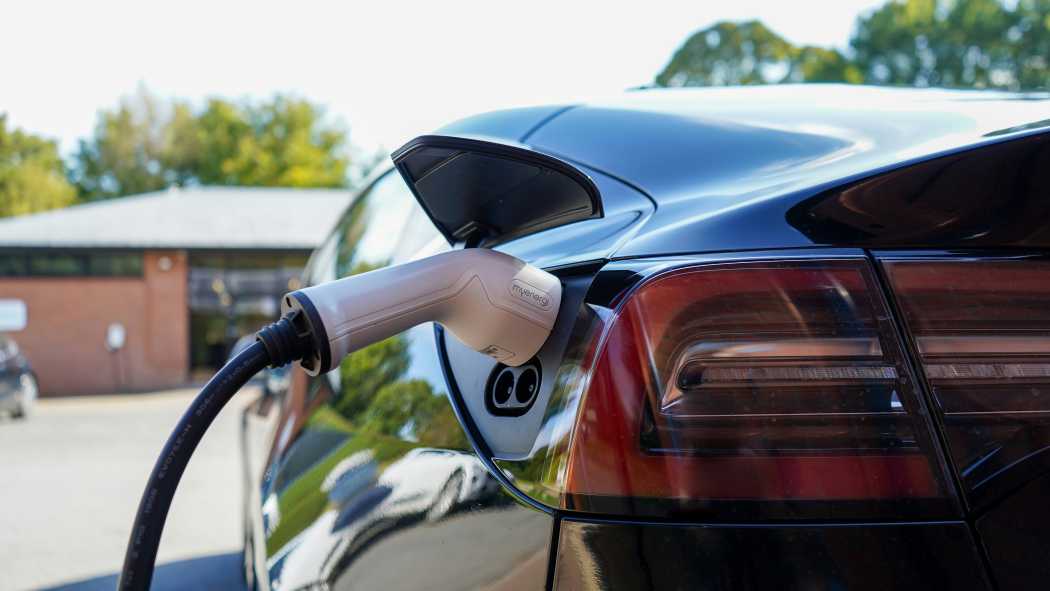
In connection with the Federal Ministry of Transport's charging infrastructure conference, the Auto Club Europe (ACE) points to significant deficits in public charging of electric vehicles. From the association's perspective, the prices at public charging stations are often too high and difficult to compare. Users who rely on publicly accessible charging points therefore frequently pay up to twice as much as charging at home or at work. To achieve 15 million all-electric cars by 2030, transparent and lower charging prices are essential. For this reason, ACE has published the position paper "Charging prices as the key to the success of electromobility."
Call for uniform tariff structures
The ACE advocates standardized tariff models that should make charging prices clearly identifiable and comparable. It is proposed to establish a market transparency platform for charging electricity that bundles all tariffs and makes them publicly accessible. In addition, the association argues that all costs – including price per kilowatt-hour as well as blocking or service fees – should be displayed no later than authentication at the charging station, analogous to the price disclosure at gas stations.
Another proposal concerns the examination of a so-called pass-through model. This would separate the electricity supply from the charging infrastructure and enable customers to “take their own electricity tariff to the charging station.” In addition, only a usage fee for operating the charging points would be payable. In addition, the association calls for reductions in government levies and charges on charging electricity, modeled after industrial electricity.
Test drive shows clear cost disadvantages on the highway
For the position paper, ACE conducted a roughly 1,400-kilometer test drive between Stuttgart and Hamburg. It revealed significant cost differences between electric vehicle and internal-combustion vehicle. With an average consumption of 22 kWh per 100 kilometers, the pure energy costs of the electric car, depending on the tariff, ranged from €10.80 to €21.10, which makes fast charging on the highway currently 44 to 94 percent more expensive than fueling a comparable ICE vehicle.
In addition, ACE documented at ten tested charging stations a total of 308 different charging tariffs; only tariffs without a base fee were considered. The analysis, according to the association, underscores the strong fragmentation and low transparency in the tariff market.
Price parity is highly dependent on the route
According to ACE's assessment, the cost parity between electric and internal-combustion vehicles depends largely on the route profile. On highways, this would only be achievable at charging prices below €0.42 per kilowatt-hour. On rural and urban routes, where electric cars operate more efficiently and internal-combustion engines consume more fuel, parity could already exist at around €0.60 per kilowatt-hour. Currently, however, the average prices are around €0.66 per kilowatt-hour for AC charging and €0.70 per kilowatt-hour for DC charging. (Source: ACE)
Content automatically translated.



Taxi-Fahrzeuge (Pkw) , Taxi-Newsletter, Taxameter, Taxi-Fahrer , BZP – Deutscher Taxi- und Mietwagenverband , Straßenverkehrsordnung (StVO) , Krankenbeförderung , Weiterbildung , Taxi-Konzessionen , Verkehrspolitik , Mietwagenbranche , Taxi-Apps , Berufskraftfahrer-Qualifikations-Gesetz BKrFQG) , Taxizentralen , Personal, Gehälter, Arbeitsschutz , Wirtschaftsnachrichten , Werbung , Taxi-Folierung , Taxi-Umrüster , Straßenverkehr , Elektromobilität, Taxifuhrpark und -flottenmanagement , Taxi-Versicherungen , Hybrid, Diesel, Erdgas , Taxi-Magazin