VISION mobility kostenlos Probelesen

Die Zeitschrift VISION mobility richtet sich an mobilitätsbegeisterte Menschen bzw. Flottenmanager und begleitet den Technologiewandel in Sachen Automotive und Mobilität.
Aktueller Termin

Meist gelesen
Taxi companies in crisis: Why more and more operators are going out of business.
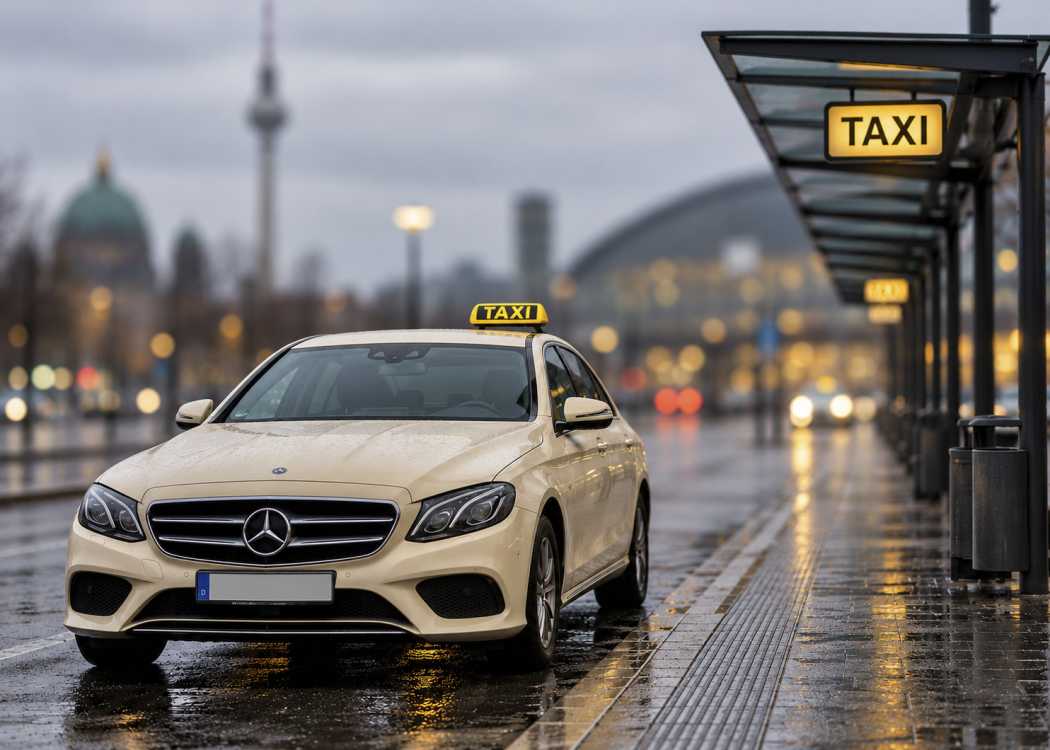
Whoever runs a taxi company has to be able to calculate. But more and more often the calculation no longer adds up. Wages are rising, workshop bills are getting more expensive, insurance costs more. At the same time, revenues in many places lag behind expectations. And those who think that long working days can close the gap will eventually realize that even a 14-hour day has only 14 hours. The economic situation in the German taxi industry is tense. How sharply the situation has worsened in recent years cannot be read from a single nationwide metric. An up-to-date official statistic that systematically records all business closures in the taxi trade does not exist. Regional data, reports from companies, and concrete decisions by municipalities, however, paint a clear picture: In many markets business models are under pressure. Some entrepreneurs give up, others reduce their fleet. And even businesses that still show black figures do not always find someone who wants to take them over.
When the numbers no longer add up
How difficult the situation can be is shown by Berlin. The capital decided in February 2026 on a one-year observation period during which no new taxi licenses will be issued. The justification from the Senate administration is unusually explicit: a large part of the trade cannot currently operate at cost recovery. Revenues per operating hour have been declining for years, while the number of vehicles has recently risen sharply. The figures make the problem tangible. At the end of 2024 there were around 5,400 taxis licensed in Berlin. At the end of January 2026 there were already more than 6,600. The supply thus grew in a phase in which, according to the administration, demand did not grow accordingly. Even the possibility of agreeing fixed prices for certain taxi rides since June 2024 has not yet brought a sustainable turning point.
More clearly still does the imbalance become when looking at turnover. According to the Berlin State Office for Citizens and Administrative Affairs (LABO), the average gross turnover in 2025 was around 20.50 euros per operating hour. For a cost-covering operation, about 32.80 euros would be required. That is a difference that cannot be closed with a few additional trips or a cheaper gas station. These are Berlin values that cannot be transferred wholesale to all of Germany. But they show how far revenues and costs can diverge in a strained taxi market.
Higher costs meet limited revenues
The causes are not solely due to fuel prices. A taxi company has numerous ongoing costs that accrue even when the vehicle is waiting at the stand. These include leasing or financing, insurance, maintenance, repairs, vehicle cleaning, radio and dispatch systems, as well as administration. If the business employs drivers, wages and employer contributions are added. Personnel costs are particularly heavy. A taxi must be available at the times when customers need it. That means shift work, night work, weekends and holidays. At the same time, revenues cannot be increased arbitrarily. Tariffs are set by the competent authorities; entrepreneurs cannot simply pass higher costs on to their customers like other service providers.
Added to this is a problem that hides easily in hourly accounting: revenue is not profit. A trip can look decent on the taximeter and yet contribute little to the operating result if the driver afterwards is on the road for a long time without a passenger. Deadhead trips, waiting times and fluctuating utilization determine, together with other factors, whether a vehicle operates economically.
The Norddeutscher Rundfunk described the situation in May 2026, using Göttingen as an example. There, a taxi operator reported rising expenses and fewer private passengers. Medical trips are important for a large part of the business, but they do not always pay off sufficiently either. The example illustrates a conflict of goals: Reliable orders can improve utilization. If the agreed charges do not keep pace with actual costs, even a well-filled order book will not automatically be a source of profit.
Patient transport: A lot of work, little room to maneuver
The conflict is particularly evident in trips for those with statutory health insurance. Dialysis patients, people undergoing chemotherapy, or mobility-impaired passengers regularly require transportation. For taxi companies, such assignments can secure a significant portion of their baseline utilization. They also bring with them special requirements: trips must be reliably planned, patients may need support, and billing must be processed correctly. How sensitive this business is to reimbursement issues was demonstrated in spring 2026 in Mecklenburg-Vorpommern. After months of negotiations about the payment for patient transport, there was no agreement between the state association of taxi and rental car trades and the health insurers. On 1 April, police reported 155 vehicles protesting in Schwerin. The associations considered the offered remuneration insufficient; the health insurers pointed out that more than half of the companies had accepted their proposal for individual contracts.
The conflict makes clear how differently the same economic situation can be evaluated. For the health insurers, the aim is to cap expenditures. For the companies, it matters whether the agreed trips are economically viable when all costs are taken into account. If neither side finds a sustainable compromise, more is at stake than a single price agreement: patients still need reliable transport, while companies must decide whether they can continue to offer this service. The Contribution Rate Stabilization Act planned for 2027 will further exacerbate the situation.
Platforms are changing the competitive landscape
At the same time, competition has changed. Ride-hailing platforms like Uber and Bolt have created additional offerings in many cities. For passengers, this means more choice and often convenient booking via app. For the traditional taxi trade, additional pressure arises, especially because rental car companies operate at prices that traditional taxi firms under their legal and operational frameworks can hardly keep up.
Rental car companies also basically have to finance vehicles, pay drivers, and execute orders economically. But many of the companies operating for the platform operators behave in a very “creative” way with the rules to be followed. It has often been shown that the return-to-base obligation was not complied with, or that hours and drivers were not billed correctly.
Where supply grows faster than demand, price pressure intensifies. Berlin provides an example. The city explicitly justifies its permit stoppage with the danger that some operators, faced with a lack of profitability, might be tempted to violate applicable law to offset revenue losses. In doing so, Berlin formulated the justification for the permit stop cautiously on purpose—as an officially worded risk assessment, not as evidence that the majority of companies are operating illegally.
The entrepreneur works – and still earns too little
Many taxi businesses are small enterprises. The owner drives himself, plans shifts, takes care of repairs, handles billing, and covers for staff when shortages occur. This structure can work economically as long as the owner's own work contributes sufficiently to the result. But it has its limits. Those who sit behind the wheel for many hours every day can save on personnel costs, while at the same time there is less time for customer care, cost calculation, staff management, and the development of new business fields. And the owner's working time does not always appear in managerial accounting as it should. On paper a business can show a small surplus, while the owner is hardly adequately compensated for his actual work.
That also explains why some businesses do not close only when they become insolvent. Entrepreneurs can deliberately decide against continuing if the income no longer fits the risk and the time commitment. A business closure is therefore not automatically bankruptcy. It can also be the result of a sober decision: it is no longer worth it.
When there is no successor
To the economic problems comes demographic change. Many taxi operators have built up their business over decades. Eventually they want to retire. In the past it was common for a family member or a long-time employee to carry the company forward. Today this step is becoming more difficult. Even a fundamentally functioning business does not automatically endure if no one is willing to assume the entrepreneurial risk.
For a successor, not only vehicles, customer contacts, and a taxi license are bought. He also takes on personnel responsibility, investment needs, legal obligations, and the uncertainty of future earnings. If one's own working time is high, the return is low, and competition is intense, the takeover quickly becomes unattractive. This threatens a creeping loss of entrepreneurial substance. Not only individual vehicles leave the stand; experience, local customer relationships, and established operating structures are also lost.
What could help the businesses
One single measure will hardly solve the problems. Where demand is actually declining, companies must improve their utilization and review their cost structure. Digital dispatching, better route planning, and the combination of different business fields can help. These include, in addition to classic taxi rides, for example medical transport, student transportation, or contracted transport services – provided the respective prerequisites are met and the orders are financially viable. Municipalities also bear responsibility. They must monitor how supply and demand develop and must not lose sight of the functioning of the local taxi industry. The Passenger Transportation Act provides, with § 13(4), a means to deny new taxi licenses if additional vehicles would endanger the functioning of the trade. Berlin is temporarily using this instrument.
Equally important are fair competitive conditions. If companies can only reduce their costs by circumventing legal requirements, a disadvantage is created for those who comply with the rules. Inspections and consistent enforcement of the law are therefore not only a matter of regulatory policy, but also of economic stability.
The taxi needs a viable business model
The taxi trade is not facing an end. The demand for spontaneous mobility, reliable rides, and barrier-free transport options remains. But demand alone does not guarantee a viable economic future. A business needs pricing, utilization, and the conditions under which vehicles, personnel, and entrepreneurial work can be financed. The reasons for business closures cannot be reduced to a single crisis. Rising costs collide with limited tariffs, fluctuating demand, and intensified competition. In medical transport, difficult reimbursement negotiations also come into play. And when the owner finally wants to stop, there may be no successor willing to take on the risk.
As more and more businesses go under, a portion of public transport services will be harder to organize in the long run.
Content automatically translated.


Taxi-Fahrzeuge (Pkw) , Taxi-Newsletter, Taxameter, Taxi-Fahrer , BZP – Deutscher Taxi- und Mietwagenverband , Straßenverkehrsordnung (StVO) , Krankenbeförderung , Weiterbildung , Taxi-Konzessionen , Verkehrspolitik , Mietwagenbranche , Taxi-Apps , Berufskraftfahrer-Qualifikations-Gesetz BKrFQG) , Taxizentralen , Personal, Gehälter, Arbeitsschutz , Wirtschaftsnachrichten , Werbung , Taxi-Folierung , Taxi-Umrüster , Straßenverkehr , Elektromobilität, Taxifuhrpark und -flottenmanagement , Taxi-Versicherungen , Hybrid, Diesel, Erdgas , Taxi-Magazin