Ihr kostenloser Branchen-Newsletter

Lassen Sie sich von unseren Fachjournalisten einmal wöchentlich über die wichtigsten aktuellen Entwicklungen der Taxi-Branche informieren, bequem direkt in Ihre Mailbox.
Aktueller Termin
Meist gelesen
These are the most important novelties and automotive trends for 2026.
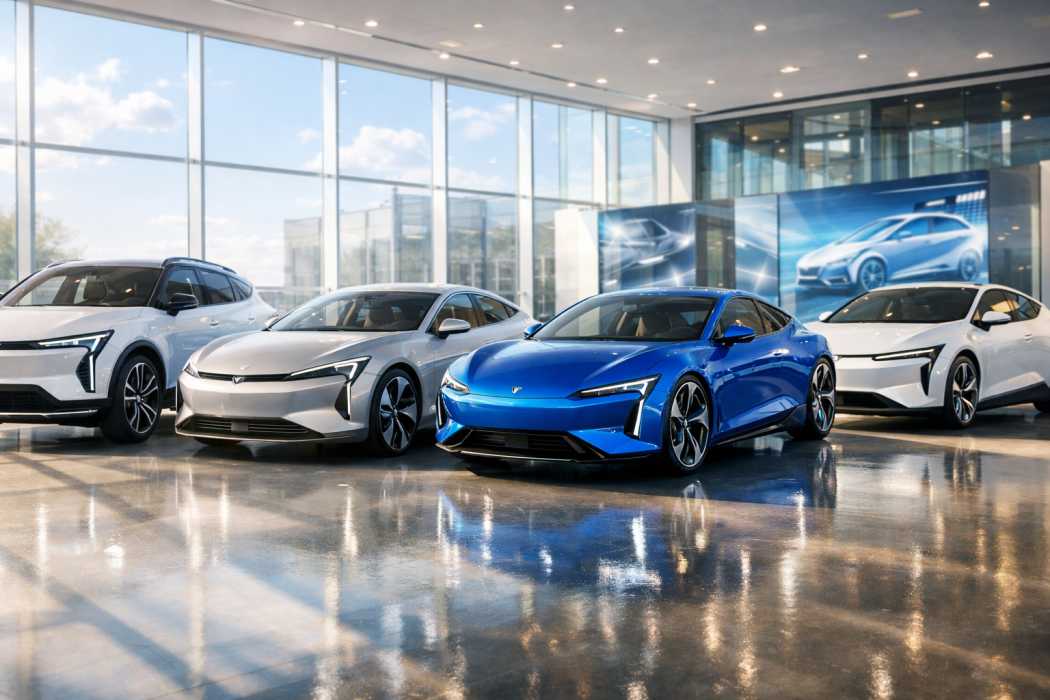
New year, new cars - although the carousel of novelties is as old as the horsepower industry itself. Yet it spins faster and more people are getting on board. Because especially since the Chinese have begun to overrun the market and have now awakened the resistance of established manufacturers, the flood of new brands and new models continues to swell.
And because with the shift into the electric era or the increasing driver assistance there is a lot happening in technology as well, it is increasingly hard to keep track. But those who watch these ten trends in 2026 will be well informed.
Dwarf Uprising in the VW Group
They come late, but forcefully: For a long time the VW Group left the lucrative business of electric subcompact cars to the competition. In the new year it will, however, step into the ring with four models and aims to lure Generation E with entry prices starting at 25,000 euros.
All about four meters long and, in the best case, with more than 400 kilometers of range, the group will offer, as largely conventional subcompact cars, a VW ID.Polo and a Cupra Raval, and as practical family vehicles the city SUVs ID.Cross and Skoda Epiq will follow.
Renault's Cult Tiny
While VW lowers the entry hurdle for electromobility to 25,000 euros, Renault is already offering Generation E its next lure: when in summer the Twingo makes its comeback at the charging station, it should start at 20,000 euros. For that there is a cute runt of 3.79 meters, which with 60 kW/82 HP reaches a maximum of 130 km/h and with its 27.5 kWh battery can travel up to 263 kilometers.
Firefly on Approach
Normally, the Chinese usually have the upper hand in the price war. But at least Nio is bucking the trend and luring small-car buyers with lifestyle, and brings as a competitor to the Fiat 500 or Mini the Firefly ('Glühwürmchen') at prices around 30,000 euros finally to us as well. For that, there is a four-door car almost exactly four meters long, which not only has charm and character—but also plenty to offer.
For a small car, it is interiorly surprisingly large thanks to its 2.62-meter wheelbase, so that even in the second row an adult sits first-class, and it also offers over 400 liters of trunk space. Not counted are the roughly 100 liters of frunk and the storage under the seats. The drive is an electric motor with 105 kW / 143 hp, and the battery has 41.2 kWh and is enough for 330 kilometers.
New from the East
We're gradually getting used to more and more new models. But the flood of new brands does not abate—and of course the vast majority come from China. For this year again at least half a dozen are on the list: besides the Nio offshoot Firefly, that is mainly Zeekr. They come, like Volvo or Polestar, from the Geely family and want to become something like Audi from Asia.
In addition, battery world champion BYD is staging its ascent and sends its premium brand Denza to the West. And Chery, already one of the largest exporters from China, is trying its luck with us with Omoda and Jaecoo. Still not enough? Then Avatr from the Changan group and Haval from Great Wall Motors are also on the list, and this list will surely grow longer month by month.
Prestige Duel in the Mid-Size Segment
If the upstarts want to spread themselves elsewhere, the mid-size class remains firmly in German hands for now. And if BMW and Mercedes have their way, it will stay that way. Because the leaders in the premium arena will bring two of their most important models to the market in 2026, both newly built on an electric platform and with ranges of over 800 kilometers: the i3 and the C-Class, and thereby not only competing with each other but also aiming to keep the Chinese brands and Tesla at a distance.
New Cars from the Old School
Yes, electrification seems unstoppable, and the choice of new models keeps growing. But the internal combustion engine is far from extinct. Even in 2026 there will be a few important novelties from the old school. At the forefront is the Renault Clio, one of Europe’s best-selling cars, now entering the next round and not venturing further into the new era, as a hybrid drive runs purely electrically.
And BMW – Neue Klasse or not – also follows the old school and shows the next generation of the X5 not only as the iX5, but also with petrol or diesel, and for all who can't decide, also as a plug-in hybrid. At the same time, the large SUV is also the basis for Bavaria's first serial fuel-cell car—and a proof of how seriously one can take the concept of technology openness.
The new (re)charging masters
Among German EVs, the new BMW iX3, with a charging power of 400 kW, is currently the champion. But in China they are already much further ahead—and in the new year the era of megawatt charging will also begin here. For when AMG presents its new four-door in the summer based on the GT XX, it is supposed to be able to charge at up to 1,000 kilowatts, making it the first European car to do so.
But the Swabians will not remain alone in this, of course. BYD has this technology already up and running in its home market China and is bringing it to us with the premium brand Denza. The only catch: there is still no infrastructure for that much power. Therefore, both manufacturers have already announced that, in addition to the cars, they will install a network of their own high-power chargers.
Comeback of the Buttons
The digital revolution seems to be waning. For even as connectivity continues and screens grow to almost immeasurable sizes, manufacturers take a step back in operation. At times they recall buttons instead of touchscreens. VW, for example, dispenses with the annoying slider bars in cars like the ID.Cross. And at Mercedes, the rollers in the steering wheel spokes return in CLA & Co. Audi also discovers the tactility of switches, only it will still take until 2027 for the controls to finally click again there.
Drive and Let Others Drive
Tesla, meanwhile, continues to wait for its Robotaxi, and Mate Rimac’s prestige project Verne has so far only a handful of prototypes. But while autonomous driving fully without a human behind the wheel is still stalling, manufacturers are pushing the support further ahead.
BMW drives the iX3 for hours on the highway and the driver only has to keep their hands on the steering wheel pro forma. And Mercedes now supports lane changes, left turns and U-turns, including into city traffic. For now, this works only in China and a few US states, but the developers are optimistic that they will soon enable this system, available down to the CLA, for us as well.
The Last Bastion Falls
All the world goes electric? So far, only a few luxury brands could afford to ignore this trend entirely. But those times are clearly over, and this year the last bastion also falls. Because even Ferrari, traditionally the icon of petrolheads, will present its first electric car in 2026. And if the Italians break the taboo, Bentley can also afford the leap into the future with an SUV in the style of the electric Porsche Cayenne. Then in the end there will only be McLaren, Lamborghini, and Aston Martin left, and they all have already signaled electric models as well, but they still need a bit more time. No problem, 2027 is also a year away. And even then there will be another lineup of debuts on the carousel of novelties. (Source: dpa/tmn)
Content automatically translated.



Taxi-Fahrzeuge (Pkw) , Taxi-Newsletter, Taxameter, Taxi-Fahrer , BZP – Deutscher Taxi- und Mietwagenverband , Straßenverkehrsordnung (StVO) , Krankenbeförderung , Weiterbildung , Taxi-Konzessionen , Verkehrspolitik , Mietwagenbranche , Taxi-Apps , Berufskraftfahrer-Qualifikations-Gesetz BKrFQG) , Taxizentralen , Personal, Gehälter, Arbeitsschutz , Wirtschaftsnachrichten , Werbung , Taxi-Folierung , Taxi-Umrüster , Straßenverkehr , Elektromobilität, Taxifuhrpark und -flottenmanagement , Taxi-Versicherungen , Hybrid, Diesel, Erdgas , Taxi-Magazin