VISION mobility kostenlos Probelesen

Die Zeitschrift VISION mobility richtet sich an mobilitätsbegeisterte Menschen bzw. Flottenmanager und begleitet den Technologiewandel in Sachen Automotive und Mobilität.
Aktueller Termin

Meist gelesen
Tesla Cybercab Ahead of Premiere: What the Manufacturer Has Planned for Its Robotaxi

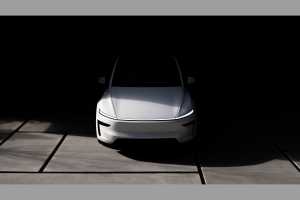
Tesla will on September 3, 2026 in Austin present its "Cybercab". The vehicle developed for robotaxi use is to do without a steering wheel and pedals. The manufacturer has, according to a report from boerse-global.de, increased the number of Cybercabs registered in Texas from seven to 45. At the same time, fleets and business areas of other robotaxi providers are growing in the United States.
Tesla plans 125,000 vehicles per year
For the Cybercab, according to the report, Tesla envisions an annual production of 125,000 units. In automated driving, the manufacturer relies on a purely camera-based system.
Regulatory prerequisites for larger robotaxi fleets are also evolving. The Nevada Transportation Authority approved up to 8,000 robotaxis for Clark County in August 2026. The largest allotment falls to Tesla, with up to 5,000 vehicles. For the first phase, the source text regards a figure of 2,500 vehicles as realistic.
Waymo as well as Uber in cooperation with Motional and Zoox reportedly have quotas of up to 1,000 vehicles each.
Waymo expands its paid service
Waymo has expanded its paid robotaxi service to Denver, San Diego, and Tampa as of September 1, 2026. The provider is thus active in a total of 14 cities in the United States, according to the report. The initially covered areas in the three new markets each cover roughly 50 to 60 square miles.
The company operates a fleet of 4,000 vehicles, which, according to the company, completes 500,000 paid rides per week. Waymo relies on LiDAR technology and cites experience from 200 million miles driven.
Zoox starts commercial operation in Las Vegas
Zoox had already begun the commercial robotaxi operation in Las Vegas in August 2026. The National Highway Traffic Safety Administration granted an exemption permit for up to 2,500 vehicles.
While rides in San Francisco and Austin at that time were still free of charge, Zoox in Nevada is adopting a commercial pricing model. The price consists of a base rate plus time- and distance-dependent fees. For Houston and San Diego, further test phases with human safety drivers are planned.
United Arab Emirates Establish Legal Framework
New regulatory frameworks are taking shape outside the United States as well. The cabinet of the United Arab Emirates approved a federal law regulating autonomous vehicles in early September 2026. The regulation supports Dubai's plan to achieve a 25 percent share of driverless trips in total traffic volume by 2030.
In parallel, according to the report, Uber plans to offer Baidu Apollo Go robotaxis in Dubai. Thus, alongside the United States, another market for commercial autonomous ride-hailing services is developing.
Robotaxi Market Expected to Reach Billions
Goldman Sachs projects for the robotaxi market in the United States to reach US$19 billion by 2030. By 2035, the market volume is expected to rise to US$48 billion, according to the forecast. The development in the coming years will thus be determined not only by the technical scaling of fleets but especially by the respective regulatory requirements for commercial operation. (Source: boerse-global.de)
Content automatically translated.





Taxi-Fahrzeuge (Pkw) , Taxi-Newsletter, Taxameter, Taxi-Fahrer , BZP – Deutscher Taxi- und Mietwagenverband , Straßenverkehrsordnung (StVO) , Krankenbeförderung , Weiterbildung , Taxi-Konzessionen , Verkehrspolitik , Mietwagenbranche , Taxi-Apps , Berufskraftfahrer-Qualifikations-Gesetz BKrFQG) , Taxizentralen , Personal, Gehälter, Arbeitsschutz , Wirtschaftsnachrichten , Werbung , Taxi-Folierung , Taxi-Umrüster , Straßenverkehr , Elektromobilität, Taxifuhrpark und -flottenmanagement , Taxi-Versicherungen , Hybrid, Diesel, Erdgas , Taxi-Magazin