


Ihr kostenloser Branchen-Newsletter

Lassen Sie sich von unseren Fachjournalisten einmal wöchentlich über die wichtigsten aktuellen Entwicklungen der Taxi-Branche informieren, bequem direkt in Ihre Mailbox.
Aktueller Termin

Meist gelesen
Parliamentary Evening of the GVN: Currywurst, Crises, and Clear Words.

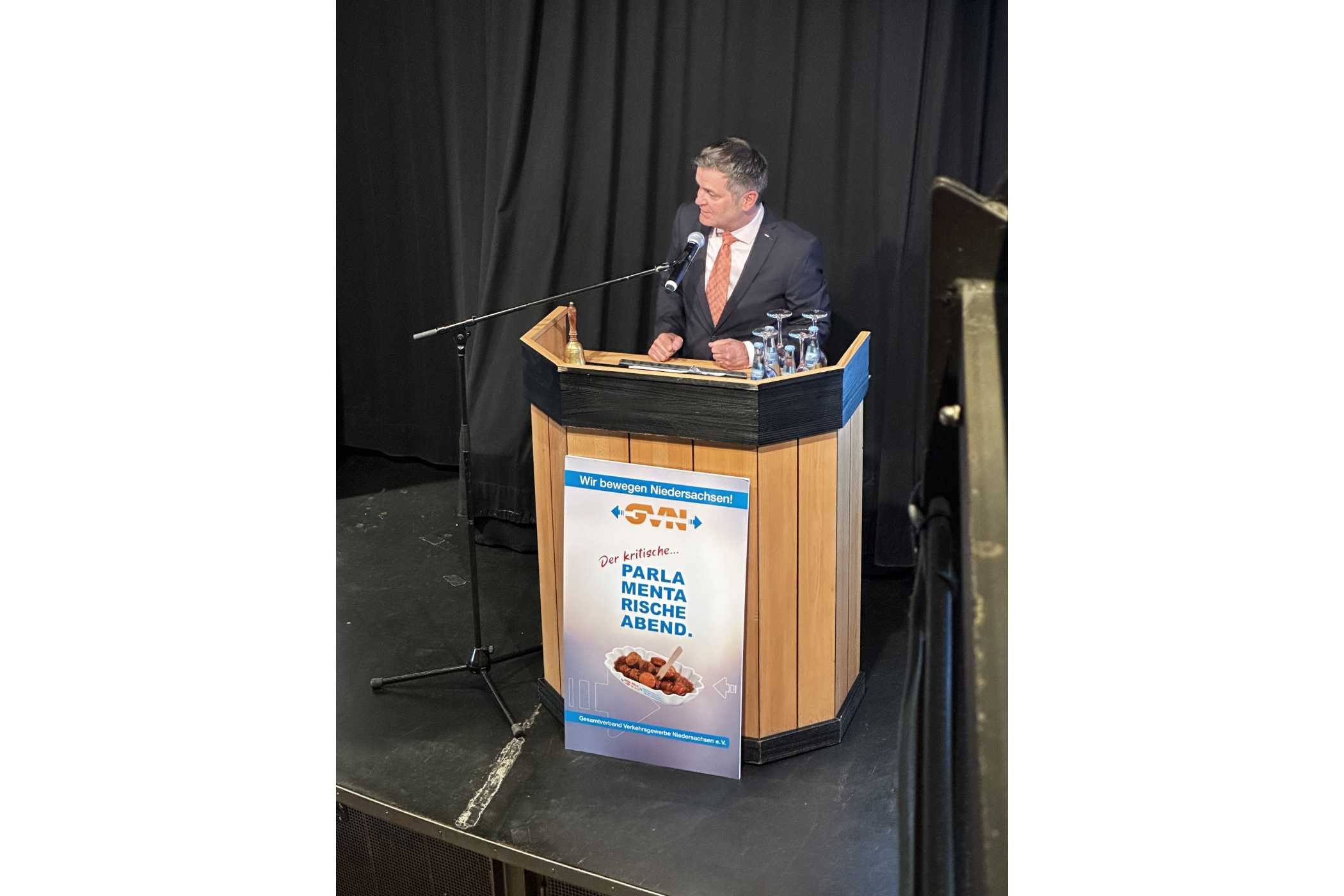
Entrepreneurs, civil servants, members of parliament, association representatives and officials crowded between wooden tables, discussing diesel prices, bureaucracy and driver shortages. The mood was remarkably good despite all the problems. Perhaps precisely because, on this evening, not only was there talk, but people were actually listening.
GVN President Heiner Koch opened the evening with a sentence that seemed to be the motto of the entire event: "Between currywurst and good conversations lies exactly what our industry needs: closeness, mutual trust, and an open dialogue." Koch, who has been on the GVN's executive board since the end of 2025, highlighted the full breadth of the association—from taxis through logistics to the bus and furniture transport trades.





Transport industry under pressure
That the situation is serious ran like a common thread through all the speeches. High energy prices, rising operating costs, new regulations and increasing competitive pressure burden almost all transport sectors. This was particularly evident in the contribution by GVN Managing Director Benjamin Sokolovic, who, in his general assessment of current transport policy, succinctly put it.
„The currywurst is a remarkably honest product“, Sokolovic said at the outset. „It is direct, it is understandable, and it gets to the point without lengthy approval procedures.“ The hall laughed. But after that, things quickly turned serious.
Lower Saxony tariff
The taxi industry was also in focus. Sokolovic sharply criticized the lengthy tariff procedures in Lower Saxony. Taxi operators still have to apply for their tariff adjustments with 52 different authorities. While other sectors could pass on price increases in the short term, taxi adjustments often took years. „For many, it's already too late,“ Sokolovic said. Insolvencies are no longer an exception.
The expectations for the planned uniform Lower Saxony tariff are correspondingly high. The GVN is pressing for speed. Minister Grant Hendrik Tonne once again clearly affirmed this goal.
“How should one explain to people in 2026 that we have to discuss tariffs on 52 different levels?”, asked the SPD politician later in the discussion with GVN Vice President Gundula Hauenstein.
Also on the issue of platform transport the association spoke clearly. Sokolovic spoke openly about distortions of competition caused by Uber and Bolt. The taxi is subject to tariff obligations, operating obligations and transport obligations; platform rental cars, by contrast, are not.
“They undercut prices and undermine social standards through pseudo self-employment. That is not fair,” he said. Therefore, the decisive factor is a consistent enforcement of the rules. “Only where there is enforcement can fairness arise.”
Double burden: CO₂ toll and CO₂ levy
In addition to the taxi industry, the GVN also targeted the problems of freight transport. Sokolovic described the double burden of CO₂ toll and CO₂ levy on fuels as a massive competitive disadvantage compared with Eastern European companies. Germany is imposing costs on its operators that other EU states would only introduce years later.
There is also increasing crime in the logistics sector. In particular, so-called “dead freight trips” worry the industry. Attackers acquire complete freight orders with false identities – and disappear with the goods.
“Not a single coffee machine, not even two tires. The entire freight disappears,” said Sokolovic. The damages have now risen to millions.
The shortage of skilled workers also occupied the association. About 110,000 professional drivers were missing nationwide. Therefore the GVN calls for cheaper driving licenses, faster recognition of foreign qualifications, and less bureaucracy in immigration.
Minister of Transport Tonne promises support
Minister Grant Hendrik Tonne appeared that evening markedly close to the association's positions. The minister spoke openly about the burdens facing the industry and acknowledged that many companies were now suffering existentially due to energy prices.
“Such eruptions on the energy market shake the stability of companies,” said Tonne.
At the same time, he promised support on several central topics: the Lower Saxony tariff, charging infrastructure for electric trucks, approval procedures, and bus funding. In 2026 alone, 41 million euros would be provided for bus funding programs. That would enable funding for 316 buses.
But Tonne also made clear that transformation cannot be achieved by political targets alone.
“The infrastructure isn’t keeping up,” Sokolovic had already said. The minister did not dispute him. Approval procedures must speed up; charging points must be created more quickly.
Factual tone, hard facts
The evening’s tone was striking above all else. Despite all criticism, the discussion remained factual. No one fundamentally questioned the transformation. The companies do not demand special treatment, but practical framework conditions. That, perhaps, was the real atmosphere of this currywurst evening: hard topics, clear demands – but no ideological trench warfare.
Later, when the official speeches were long finished, many guests still stood together between beer glasses and currywurst plates. Politicians debated with taxi operators, logisticians with association representatives, bus operators with ministry officials. At the Ernst August Brauhaus, networking, arguing and negotiating continued late into the night. Perhaps this is exactly the true value of such evenings. Not the big stage. But the good conversations afterward.
Content automatically translated.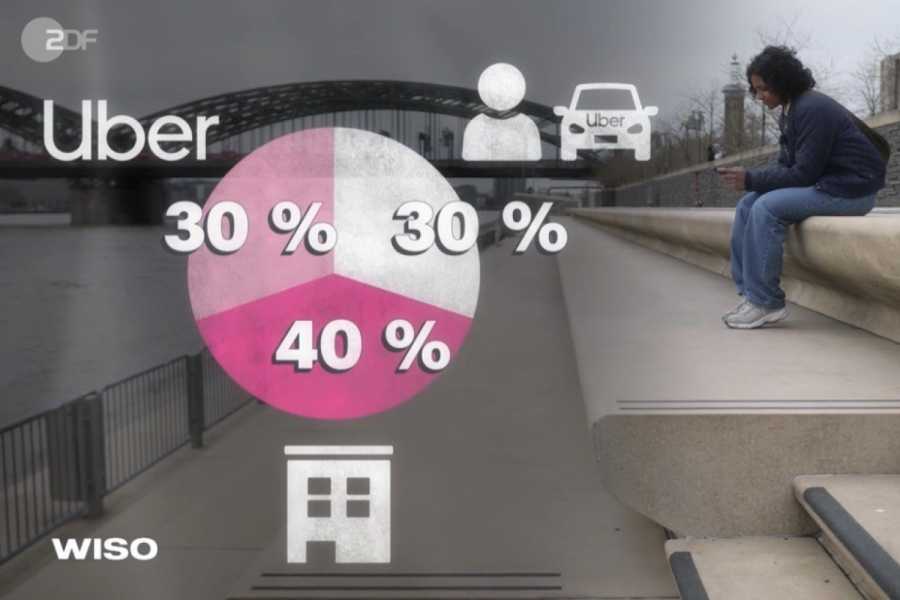





Taxi-Fahrzeuge (Pkw) , Taxi-Newsletter, Taxameter, Taxi-Fahrer , BZP – Deutscher Taxi- und Mietwagenverband , Straßenverkehrsordnung (StVO) , Krankenbeförderung , Weiterbildung , Taxi-Konzessionen , Verkehrspolitik , Mietwagenbranche , Taxi-Apps , Berufskraftfahrer-Qualifikations-Gesetz BKrFQG) , Taxizentralen , Personal, Gehälter, Arbeitsschutz , Wirtschaftsnachrichten , Werbung , Taxi-Folierung , Taxi-Umrüster , Straßenverkehr , Elektromobilität, Taxifuhrpark und -flottenmanagement , Taxi-Versicherungen , Hybrid, Diesel, Erdgas , Taxi-Magazin







