VISION mobility kostenlos Probelesen

Die Zeitschrift VISION mobility richtet sich an mobilitätsbegeisterte Menschen bzw. Flottenmanager und begleitet den Technologiewandel in Sachen Automotive und Mobilität.
Aktueller Termin

Meist gelesen
Parliamentary Evening of BVTM Takes Stock of Four Years of PBefG Amendments

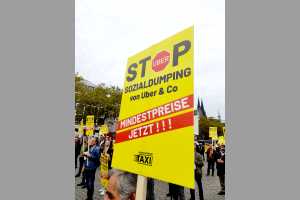
In our the first part of our coverage of the Parliamentary Taxi Evening we reported on the keynote speeches by BVTM President Herwig Kollar and by Thomas Kiel d’Aragon from the German Association of Cities. Here follows the discussion round with the respective MdBs Michael Donth (CDU), Stefan Zierke (SPD) and Victoria Broßart (Alliance 90/The Greens). Representatives of the trade had gathered together with the parliamentarians to discuss improvement potentials for the PBefG and also to assess the effectiveness of the instruments already in place. All participants agreed that despite many prior warning signs there are still gaps in the law that are skillfully exploited by Uber & Co. The relocation of the business operations of many rental car companies to the urban outskirts is one of them, as it enables them to flee from authorities.
Michael Oppermann (Managing Director of BVTM)
Welcome to our Parliamentary Taxi Evening, this time in the VW Drive Unter den Linden in Berlin. The last revision of the Passenger Transport Act (PBefG) turned four years old this year and thus provides occasion for discussion. Michael Donth, Victoria Broßart and Stefan Zierke are our guests today. How do they view the current situation?
Michael Donth (CDU)
There are no supposedly secure jobs anymore. I have a large Bosch facility in my constituency; they are laying off right now. But it also hits the small ones. You said it, 80 percent of taxi businesses are one- and two-car operations. In rural areas, probably 70 percent of the businesses in my constituency are one- and two-person enterprises—not in the taxi sector, but in general. Regarding the PBefG: Yes, I remember well when we achieved the last or major change. Pressure was applied from all directions, and in different directions. Did we find a compromise that produced the current result?
We knew we would have to evaluate it again, that's why we included it. I don't know anything yet about the process. I am also grateful to you for the contributions in the past and in the future with your ideas. But not everything will pass as is.
As I said, others will come as well. You know, we also fought hard for the taxi sector back then. That is preserved, that remains our goal. The BVTM, as you said in the introduction, should always be so discreet and factual in its conduct - I remember a few demonstrations, which were rather not discreet.Also your demands - and this is not a criticism, but just a statement – also appear rather loud and vehement. In this sense: I thank you for inviting me again today.
Michael Donth (CDU)
Mr. Zircke, you come from Brandenburg. How do you view the taxi industry there? The district in Brandenburg has said, now the ball lies suddenly with us, because many rental-car companies that operate in Berlin are licensed in Brandenburg. What is your view of the trade in your area, but also this situation with rental cars and taxis and the nearby metropolitan environment?
Stefan Zircke (SPD)
Naja, wenn meinen Wahlkreis kennt - mein Wahlkreis fängt an der Berliner Stadtgrenze an und endet an der polnischen. Also meine persönliche Blick auf Taxi wird jetzt meinen Wahlkreis betreffen. Also ich bin immer als Kaufmann glücklich, wenn alle Seiten glücklich sind – und, wenn es keine Regelungen gibt, alles per Handschlag bestimmt wird und alles läuft.
Man muss aber sagen: es läuft aber nicht. Die Mietwagenfirmen sagen: es läuft nicht. Auch die Taxiunternehmen sagen: es läuft nicht. Ich habe die Tourismusregion über Jahre geleitet und die größte Kritik war: man kommt im ländlichen Raum irgendwo am Bahnhof an - dann hat zwar der Landkreis oder der Landkreistag die Beförderung beschlossen und bezuschusst - aber die Unternehmen vor Ort kommen ihrer Beförderungspflicht nicht nach.
Das heißt, du bleibst da irgendwo am Bahnhof stehen - und wir wissen leider auch, dass eine Krankenhausfahrt anscheinend attraktiver ist als eine Taxifahrt von Dorf A zu Dorf B. Das ist eine Realität vor Ort und deswegen kann ich nicht mit dem zufrieden sein. Also ich würde gerne wollen, dass alle zufrieden sind, dass wir keine gesetzlichen Regelungen brauchen, dass wir keine regulatorischen Regelungen brauchen. Das passiert aber nicht, weil eben jeder von diesen Kuchen etwas abhaben möchte und da ist jetzt als Gesetzgeber unsere Aufgabe, die jeweiligen Interessen überein zu bringen.
Wie kriegt man das Gesetz so hin? Wie kriege ich es regulieren? Wie kriege ich es auch kontrolliert? Wenn man es vor Ort nicht hinkriegt, dann zeigen die Leute ja irgendwo mit dem Finger hin, und es ist dann immer relativ einfach, dass die Politiker schuld sind. Aber wo liegt denn der Fehler? Haben wir zu wenig Angestellte in der Kreisverwaltung in der Stadt oder so? Also der Bund wird keinen einstellen, der jetzt im Landkreis Uckermark kontrolliert, ob die Konzession alle richtig eingestellt sind.
Von daher wünsche ich mir an dieser Diskussion noch ein bisschen mehr Offenheit. Das Thema ländlicher Raum und urbane Region war schon immer ein Thema, wo ich gesagt habe, wir müssen zwei verschiedene Regelungen schaffen. Es gibt einen Bedarf im ländlichen Raum, der durch Taxiunternehmen nicht bedient wird und es gibt ein Überbedarf im städtischen Raum der zu Konkurrenzsituation führt.
Wieso dürfen zum Beispiel Berliner Taxiunternehmen zum Flughafen fahren? Ist doch eigentlich Brandenburger Terrain. Also das ist ja in der Natur der Sache, dass jeder von den Kuchen was abhaben will. Es muss halt gesetzlich geregelt werden. Dann gibt es halt immer welche, die dagegen sind und welche, die nicht zufrieden sind. Das muss ich dann als Politiker aushalten. Es kann natürlich nicht sein, dass Mietwagenunternehmen aus Brandenburg den Berliner Markt von hinten aufrollen. Denn die Brandenburger Taxiunternehmer haben genug zu tun den ländlichen Raum mit entsprechenden Möglichkeiten zu bedienen.
Da muss man nicht noch in einen Markt reinstechen, der eh schon sehr hart umkämpft ist. Zu den Arbeitsbedingungen von Fahrern: da kann man eigentlich davon ausgehen, dass die Landkreise, die die Konzession ausgeben, da schon gucken. Wem gibt man sie aus und wie reguliert man das, dass eben dieser Wettbewerb nicht noch verschärft wird?
Michael Oppermann (BVTM)
Ms. Broßart, the question to you as well: How do you view the situation in the taxi trade? Perhaps also the question following what Mr. Zirke has just stated. How can we get to a point where we can discuss this in a factual manner together and move closer to a solution?
Victoria Broßart (SPD)
As for myself: I don’t own a car myself. That means I actually like to use my bicycle or public transport, to which I also actively include taxis.
In Rosenheim, it is indeed the case that the last bus runs on Saturday afternoon and then only again on Monday, and when people like me, who are out a lot on weekends and often have luggage with them because they travel to or from Berlin or otherwise are on the road, want to be out in the city, they do that by taxi, and for me it is completely natural not to call an Uber but to use a taxi.
Because for me the taxi is part of public transport and taxis enable people to be mobile without their own car. I see Uber in a completely different way. Uber is, in my view, an American corporation that makes its money through exploitation. That also describes for your question the situation for me in the taxi trade. We have on one side the taxi trade which is subject to strict regulations, but also adheres to standards, rules and laws, part of public transport, taking on a task that, for example, bus traffic in Rosenheim does not perform and consequently also contributes to the mobility of people—and now there is massive pressure because Uber and Co. arrived.
Uber, with dumping prices, with social dumping and with poor working conditions for drivers through exploitation and misuse, now simply thinks they could displace the taxi. And that, in my view, is an absolute problem and in my view it must be regulated. And I have looked into how the debate in 2020 was when the first Passenger Transport Act (PBefG) was discussed and how the Greens behaved. We said at the time: it is good that something is being done to the law, but we immediately emphasized that it must be checked what is in this law.
It was clear: it would be very difficult—and that is what we are actually seeing at the moment. There are actually good ideas in this law. I also think it’s good that they said, I’ll re-evaluate. That’s very reasonable, but in practice we see that the control is extremely difficult and it is extremely difficult to actually ensure that such corporations as Uber and all the others comply with the rules that were set. I think it is urgently necessary to tighten there to actually create this level playing field that everyone always talks about.
Michael Oppermann (BVTM)
Mr. Kollar, you emphasized the necessity to act quickly earlier.
But could you be more concrete about what the three individuals next to you as federal lawmakers can do so that this can be implemented better on site?
Herwig Kollar (President of BVTM)
The first thing, in my view, that is necessary, is the realization that what was written into the law in 2021 with good intentions is not enough and that one must also articulate this clearly!
One must reach a consensus about what needs to be added to PBefG. I am well aware that neither Mr. Donth nor the other two in the Bundestag can personally ensure that the platforms comply with law and regulation. But we have made various proposals, for example also to the Federal Ministry of Transport. The administrative principles, the general principles for carrying out taxi and rental car traffic were last formulated in 1987. After the corresponding legal amendment at that time it took five years—but those were very important practical guidelines for the licensing authorities in the cities and districts: How can I actually deal with problems that arise in day-to-day administration?We have made many proposals, well aware that it cannot be implemented overnight. Nobody can tell me that there won't be a huge row again with PBefG because different factions have different opinions. But it's about very important, fundamental things, such as the mileage-counter obligation. This is a very important point for competition equality between taxi and rental cars!
In 90 percent of the Uber fleet there isn’t even a mileage counter, let alone any surveillance. That would be relatively easy to solve. Basically it only requires an agreement between the federal government and the states.
Also the politically active have let the Kleine Fachkunde die. It was written into law five years ago and now they just say: Oh no, we don’t want it—and then the agreement comes relatively quickly and will probably be implemented quickly as well. Exactly this is a textbook example of how politics and administration, depending on who is involved at which stage, fail spectacularly. The failure began in 2017. For at some point, in a situation that could not be verified, the Ortskundeprüfung for taxi drivers expired. The reason was that organizations like the Red Cross and rescue organizations sued that they did not need an Ortskundeprüfung. That is a damn obstacle for the Nachwuchs. We won’t get personnel. I would have understood it if they had said: okay, those who drive ambulances, do not need an Ortskundeprüfung.
Instead they simply said Mietwagen would be canceled and opened the backdoor for the platforms. Politics saw sense and said: Ortskunde we don’t need, there are Navi systems but a Taxi Driver exam. They did not implement this for five years. The scandal is that there is a legal provision and the administration and politics say: with the implementation we’ll take our time, it’s not so bad – to now after five years saying it wasn’t meant.
This is a textbook example of mismanagement for our industry. It arises from ignorance—or other circumstances I could not explain. We have repeatedly warned and cautioned—and still nothing happens and now the point has been reached where we say: it is no longer enough to simply talk and wait. We must now bring this existential struggle, which our base is fighting, into their consciousness and say: there is more at stake than just one or two businesses going bankrupt!
Michael Oppermann (BVTM)
I’m now turning to you, Ms. Broßart, you currently have the privilege of the opposition. How do you get the government to take these topics seriously? The taxi trade is calling loudly for help and also drawing attention to the societal impacts these issues can have. And at the same time we have great difficulty in conveying this or turning it into actions. How can this be achieved? So mileage-counter obligation in all vehicles. That the topic “Kleine Fachkunde” was mentioned again – i.e., the driver’s exam. How do the Greens position themselves – and how can we now, together, get the government to act?
Victoria Broßart (The Greens)
Let me say how I imagine it. I get into a taxi, and then I have—let me put it plainly—a taximeter, namely the mileage counter, which runs along. I can see exactly what it costs and can in the end trust: I will pay that and I know I won’t be cheated. How does Uber actually work? I mean, I don’t know, I haven’t taken Uber, I really don’t know. But how is an Uber price determined for them?
And how does the communication between rental cars and the tax office work? Actually I should be able to rely as a passenger that everything is above board and therefore I totally support the BVTM’s demands. And to the question of how to get this into the government? Well I can’t speak for the whole opposition, but we
write applications and legislative proposals, which we can then present to the government again and again. There are always nice debates with the Transport Committee. This is then often rejected for flimsy reasons. And then we simply keep doing it and make further improvement proposals.
You simply have to be stubbornly persistent until the two men eventually say: Okay, we’ll make our own law and put it in right away.
Michael Donth (CDU)
We first need a consensus that what is in the law is not enough. And then the question arises: what can be adjusted there? Is there this consensus that what is in the law is not enough, or is the reading of your faction more like: the law is good, there are problems in its application.
As for how my CDU/CSU faction stands on this now, I can’t say yet, because we haven’t dealt with this topic yet, because we first need the draft. We will wait to see what the evaluation says. I can tell you my opinion on it. So I really think we must adjust. If you simply consider what these consolidated transports are about. Five years ago they thought this would come with force everywhere. And Moja has already demonstrated it— that seemed like the new world. That was the mood back then to recall the work.
But the world has developed differently. And many other things as well. I think the law was already a success. I did contribute to one small thing: the Pepperle. With the sticker you can now inspect the vehicles; previously the police had almost no means; the labeling requirement is a great achievement. We must continue. For example, this data provision obligation. There is data there, whether I am in a vehicle or out on the street, whether I get a taxi now with the app or an Uber. The data is there, my payment is recorded, the ride is also documented.
These data must be legally securely transmitted, for example to the tax office. Here I see a need for post-processing problems.
A question we must look at exactly: this is the mileage counter topic, i.e., taximeter. These special devices are developed, produced and installed almost exclusively for Germany. There are indeed other possibilities. Just because it has always been this way does not mean the future has to be. We are active in many other areas and we must question standards and regulations.
Not only two taxi associations, but there are also various rental-car associations. And the drivers have their own ideas – they don’t want mileage counters. But I think that will be the task when we take up the law again, that we, as politics, who are informed by you, enter into conversations and then look at the ideas and find solutions.
Michael Oppermann (BVTM)
Now we have heard a lot about the problems of the present; in the closing round you may wish for something from the taxi sector. What would that be?
Victoria Broßart (The Greens)
In my district of Rosenheim we have a call-and-collect taxi system, and the taxi actually goes out from village to village. It is subsidized by the district and therefore works quite well! What I would wish for: I don’t know how it is here in Berlin or in Hamburg; as I said I come from a small town in Bavaria with 63,000 inhabitants. For us it used to be: if I wanted a taxi, I had to call. Since this year there is a new system. There is now a website. If I want a taxi, I can enter my phone number, then I can specify the time, and then I can click on requests and I receive an SMS whether the taxi is coming. From my point of view this is a bit 2005, and I would indeed wish from the taxi industry that we keep up a bit more with digitization. We advocate that there should be, for example, a mobility app by which you can book taxis. The ability to call a taxi needs to be digitized much better.
Stefan Zierke (SPD)
Just one thing: if it already works in Rosenheim, you can conclude that it can work.
Michael Donth (CDU)
I hope we continue to get along well, also with your suggestions—and even a bit of disagreement. I don’t take it personally; it’s always about the issue.
Michael Oppermann (BVTM)
We want to be digital, we should be constructive. All three guests want to work on it, and we are happy to do this together with the cities and counties, the government and our partners. More and more we have to notice that rental cars operate illegally in large cities and conduct over 90 percent of their business there, where they do not even have their operating base. That is a development that overwhelms municipalities in terms of staffing and organization. The introduction of minimum prices for rental cars is, in our view, an important step toward ending social dumping in the rental-car segment and toward ensuring quality in the trade.
We, as an association, are also a mediator between our members and politics; we have long talked about the challenges of the Passenger Transport Act – and it must be noted: we have not found a solution this evening.
Content automatically translated.


Taxi-Fahrzeuge (Pkw) , Taxi-Newsletter, Taxameter, Taxi-Fahrer , BZP – Deutscher Taxi- und Mietwagenverband , Straßenverkehrsordnung (StVO) , Krankenbeförderung , Weiterbildung , Taxi-Konzessionen , Verkehrspolitik , Mietwagenbranche , Taxi-Apps , Berufskraftfahrer-Qualifikations-Gesetz BKrFQG) , Taxizentralen , Personal, Gehälter, Arbeitsschutz , Wirtschaftsnachrichten , Werbung , Taxi-Folierung , Taxi-Umrüster , Straßenverkehr , Elektromobilität, Taxifuhrpark und -flottenmanagement , Taxi-Versicherungen , Hybrid, Diesel, Erdgas , Taxi-Magazin