VISION mobility kostenlos Probelesen

Die Zeitschrift VISION mobility richtet sich an mobilitätsbegeisterte Menschen bzw. Flottenmanager und begleitet den Technologiewandel in Sachen Automotive und Mobilität.
Aktueller Termin

Meist gelesen
New cars become used - China's export trick causes international unrest
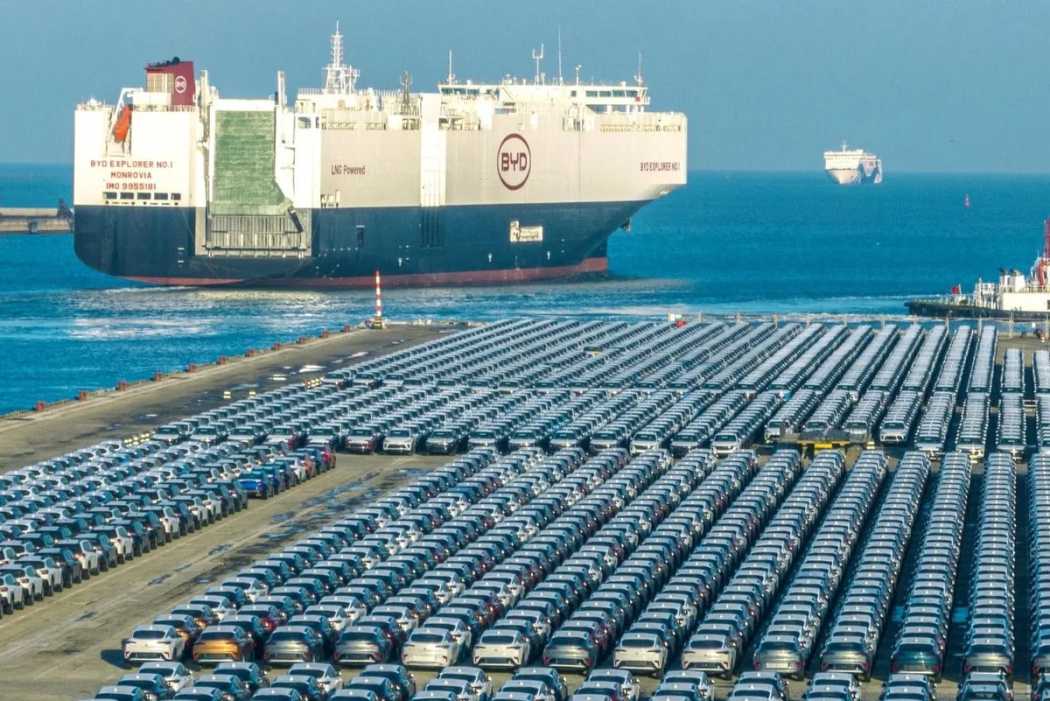
The accusation is: New cars were systematically re-labeled as used to sell them abroad at a lower price. For the Chinese automotive market, which is suffering from overcapacity, this is a questionable means of stabilizing growth. Affected are mainly cars with combustion engines, which are hardly sold domestically anymore. These vehicles are increasingly ending up in Russia, Central Asia, and the Middle East – markets where price and quick availability often weigh more than formalities. According to an advisor of the Chinese auto dealer association, about 90 percent of the exported "used" cars are actually new vehicles.
Growth Under Pressure
The scale suggests that this practice is not an isolated case: In total, around 6.41 million vehicles left the country in 2024. With the increased export – also under the label "used" – China has already surpassed Japan for the second time as the largest vehicle exporter in the world.
The pressure on manufacturers is significant. An aggressive price war has been raging in the Chinese market for almost four years.
"Companies are desperately fighting for every possible sale," says Tu Le, founder of the analysis firm Sino Auto Insights.
State subsidies are intensifying the dynamics. Vehicles are not only subsidized in production, but exports are also vigorously supported – through additional licenses, tax incentives, and targeted infrastructure investments. Local authorities apparently act in accordance with the central government: Their growth targets are ambitious, and failures result in personnel consequences.
State-sponsored, state-criticized
Noteworthy is: While local authorities apparently promote the export of supposed used cars, Beijing is becoming increasingly critical. A state newspaper, considered a mouthpiece of the government, recently called for stricter regulations – it complains that the practice further fuels the price war. International reactions have not been long in coming. The EU, for example, sees the low prices of Chinese vehicles as a distortion of competition. As early as 2023, Brussels responded with anti-dumping duties on Chinese electric cars.
Slight recovery in the new car market in Europe
Meanwhile, the new car market in Europe is seeing a slight recovery. In May, according to the European Automobile Manufacturers Association (Acea), 926,582 cars were newly registered – an increase of 1.6 percent compared to the same month last year. However, considering the current year, sales are still slightly below the previous year's level.
German car manufacturers were pleased with increased new registrations in May. The Volkswagen Group saw an increase of 4.8 percent in May, with nearly 263,800 new registrations. BMW rose by 8.1 percent to over 63,200 cars. For Mercedes-Benz, the increase was 3.9 percent to over 47,900 cars.
Electric and hybrid models are driving the market, while US manufacturers – particularly Tesla – continue to lose ground. In the first five months, Elon Musk's company faced a revenue decline of about 45 percent.
Content automatically translated.





Taxi-Fahrzeuge (Pkw) , Taxi-Newsletter, Taxameter, Taxi-Fahrer , BZP – Deutscher Taxi- und Mietwagenverband , Straßenverkehrsordnung (StVO) , Krankenbeförderung , Weiterbildung , Taxi-Konzessionen , Verkehrspolitik , Mietwagenbranche , Taxi-Apps , Berufskraftfahrer-Qualifikations-Gesetz BKrFQG) , Taxizentralen , Personal, Gehälter, Arbeitsschutz , Wirtschaftsnachrichten , Werbung , Taxi-Folierung , Taxi-Umrüster , Straßenverkehr , Elektromobilität, Taxifuhrpark und -flottenmanagement , Taxi-Versicherungen , Hybrid, Diesel, Erdgas , Taxi-Magazin