


2 Ausgaben kostenlos für Sie

Fachmagazin taxi heute: Ihr Zugang zu exklusiven Inhalten rund um die Taxi- und Mietwagenbranche.
Aktueller Termin

Meist gelesen
Network policy in Berlin: Alliance of Associations bets on mobility and the Mittelstand with VSPV
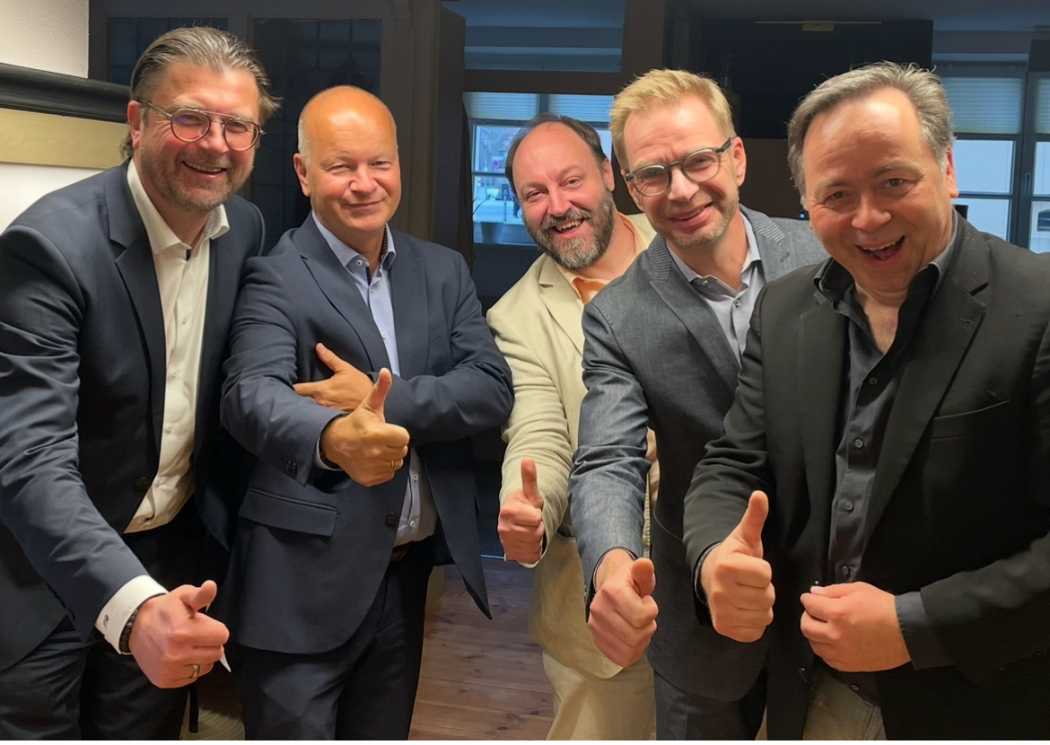
At the center is a personnel decision that also signals continuity. Patrick Meinhardt, head of the Berlin office of the Mobility Association VSPV, was unanimously elected to the board for another three years. Also Tino Barth, founder and spokesperson for the committee, remains in office. New additions are Bodo Mehrlein, managing director of the Federal Association of the Cigar Industry, and Reiner Holznagel, president of the Taxpayers' Federation, who is to strengthen the political clout of the network.
Platform for the representation of SMEs
The Alliance of Associations sees itself as a platform for the representation of SMEs. Accordingly, Barth articulates the expectation for the cooperation with the VSPV clearly: "Our collaboration runs along the shortest possible route via official channels, and for our alliance it is important that the mobility topic is increasingly at the center." The coming months should confirm this focus — for example at an expert conference in autumn and at a planned ministerial meeting, where mobility and infrastructure policy are in focus.
For the VSPV, integration into the Berlin network is more than a formal membership. Managing Director Sascha Waltemate describes the Alliance as a lever to pool political concerns:
"With the Alliance of Associations, we can bring all political topics relevant to our companies into the current discussion in Berlin."
He regards Meinhardt's reelection as a strategic advantage. The association wants to bring its expertise in particular to the sustainable redesign of public transport in Germany, for example through concepts such as the ÖPNV-Taxi. Meinhardt himself points to the logic of political operation in the capital:
„Association politics in Berlin only works through networks.“
He regards the unanimous vote as backing, at the same time he formulates a claim: associations must remain “audible” in current debates. His criticism is directed at political decision-making as well. The distance between political operation and everyday reality is growing, Meinhardt says, and it demands greater engagement by organized interests.
Relief for motorists inadequate
This is evident in his assessment of current decisions on relief amid rising fuel prices. The measures are insufficient and come too late.
"In a phase of fuel prices that are existentially threatening to the mobility sector ... approving a minimal tank discount is a world away from the swift responses of other European states," says Meinhardt.
Funding also through a possible increase in tobacco tax meets with his rejection. He describes the planned relief premium for employees, to be borne by companies, as an 'outrage.' The alliance of associations is likely to feed such positions more often into the political discourse going forward. With personnel continuity and new partners, the network is counting on visibility. In Berlin, that remains a decisive factor.
Content automatically translated.


Taxi-Fahrzeuge (Pkw) , Taxi-Newsletter, Taxameter, Taxi-Fahrer , BZP – Deutscher Taxi- und Mietwagenverband , Straßenverkehrsordnung (StVO) , Krankenbeförderung , Weiterbildung , Taxi-Konzessionen , Verkehrspolitik , Mietwagenbranche , Taxi-Apps , Berufskraftfahrer-Qualifikations-Gesetz BKrFQG) , Taxizentralen , Personal, Gehälter, Arbeitsschutz , Wirtschaftsnachrichten , Werbung , Taxi-Folierung , Taxi-Umrüster , Straßenverkehr , Elektromobilität, Taxifuhrpark und -flottenmanagement , Taxi-Versicherungen , Hybrid, Diesel, Erdgas , Taxi-Magazin







