2 Ausgaben kostenlos für Sie

Fachmagazin taxi heute: Ihr Zugang zu exklusiven Inhalten rund um die Taxi- und Mietwagenbranche.
Aktueller Termin

Meist gelesen
Hybrids instead of diesel: Controversial platform operator Bolt renews its car-sharing fleet with Toyota
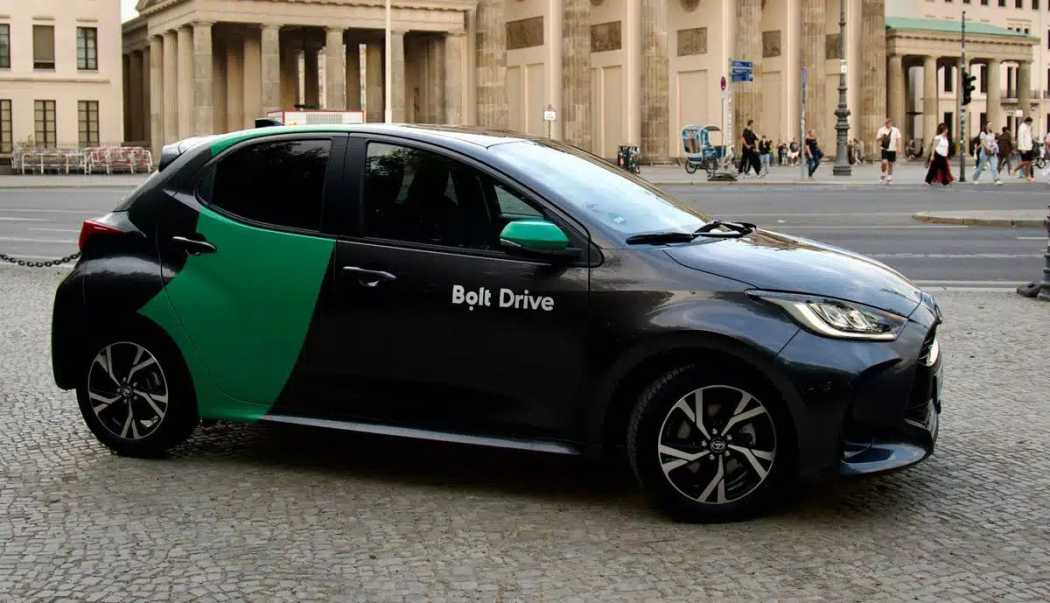
Toyota points to an average 35 percent lower fuel consumption and correspondingly reduced CO₂ emissions. The vehicles are considered robust and easy to maintain, which reduces both the environmental footprint and the operational burden. Mario Köhler, CEO of Toyota Germany, says:
"Our hybrid vehicles offer exactly what car-sharing users expect today: low fuel consumption, reduced emissions, and modern features."
The new Yaris models come standard with a winter package, heated seats and a heated steering wheel, as well as Apple CarPlay. A wireless charger keeps the smartphone ready for use at all times – important, since it serves as a digital key in car sharing. With the Yaris Cross, Bolt is expanding its offering with a compact SUV for customers who need more space. The partnership is also expected to deliver operational benefits: thanks to Toyota’s dense service network, maintenance and repairs can be carried out more quickly. As a result, vehicles are available again sooner, improving fleet utilization.
Questionable business practices in “taxi-like private-hire services”
Bolt wants to present itself as a provider of efficient and sustainable mobility by switching to hybrid vehicles. However, the company is not without controversy. In several German cities, authorities and industry representatives accuse Bolt of violating the return-to-base rule for private-hire vehicles as well as of wage dumping. It is alleged that the platform operator’s drivers work below the minimum wage or are assigned jobs without regard for existing regulations.
Regardless of these debates, Bolt is pushing ahead with its expansion. Germany is the first market in which a larger number of Toyota hybrids are being added to the fleet simultaneously. Other countries are set to follow. The company has announced additional vehicle categories for the coming months. (Source: Toyota, Bolt)
Content automatically translated.





Taxi-Fahrzeuge (Pkw) , Taxi-Newsletter, Taxameter, Taxi-Fahrer , BZP – Deutscher Taxi- und Mietwagenverband , Straßenverkehrsordnung (StVO) , Krankenbeförderung , Weiterbildung , Taxi-Konzessionen , Verkehrspolitik , Mietwagenbranche , Taxi-Apps , Berufskraftfahrer-Qualifikations-Gesetz BKrFQG) , Taxizentralen , Personal, Gehälter, Arbeitsschutz , Wirtschaftsnachrichten , Werbung , Taxi-Folierung , Taxi-Umrüster , Straßenverkehr , Elektromobilität, Taxifuhrpark und -flottenmanagement , Taxi-Versicherungen , Hybrid, Diesel, Erdgas , Taxi-Magazin