VISION mobility kostenlos Probelesen

Die Zeitschrift VISION mobility richtet sich an mobilitätsbegeisterte Menschen bzw. Flottenmanager und begleitet den Technologiewandel in Sachen Automotive und Mobilität.
Aktueller Termin

Meist gelesen
Mercedes VLE: The electric van that redefines the van segment

In Europe, for a long time the benchmark for a model was the Volkswagen Transporter. From the classic panel van to family vehicles to high-quality shuttle versions, it covered almost every use case. Mercedes-Benz was also present with the V-Class, but the segment developed further mainly outside Europe. In China, for example, large passenger carriers now compete with luxury sedans such as the Mercedes-Benz S-Class. Brands like Toyota, Lexus or Li Auto have established vans there that are used as mobile lounges.
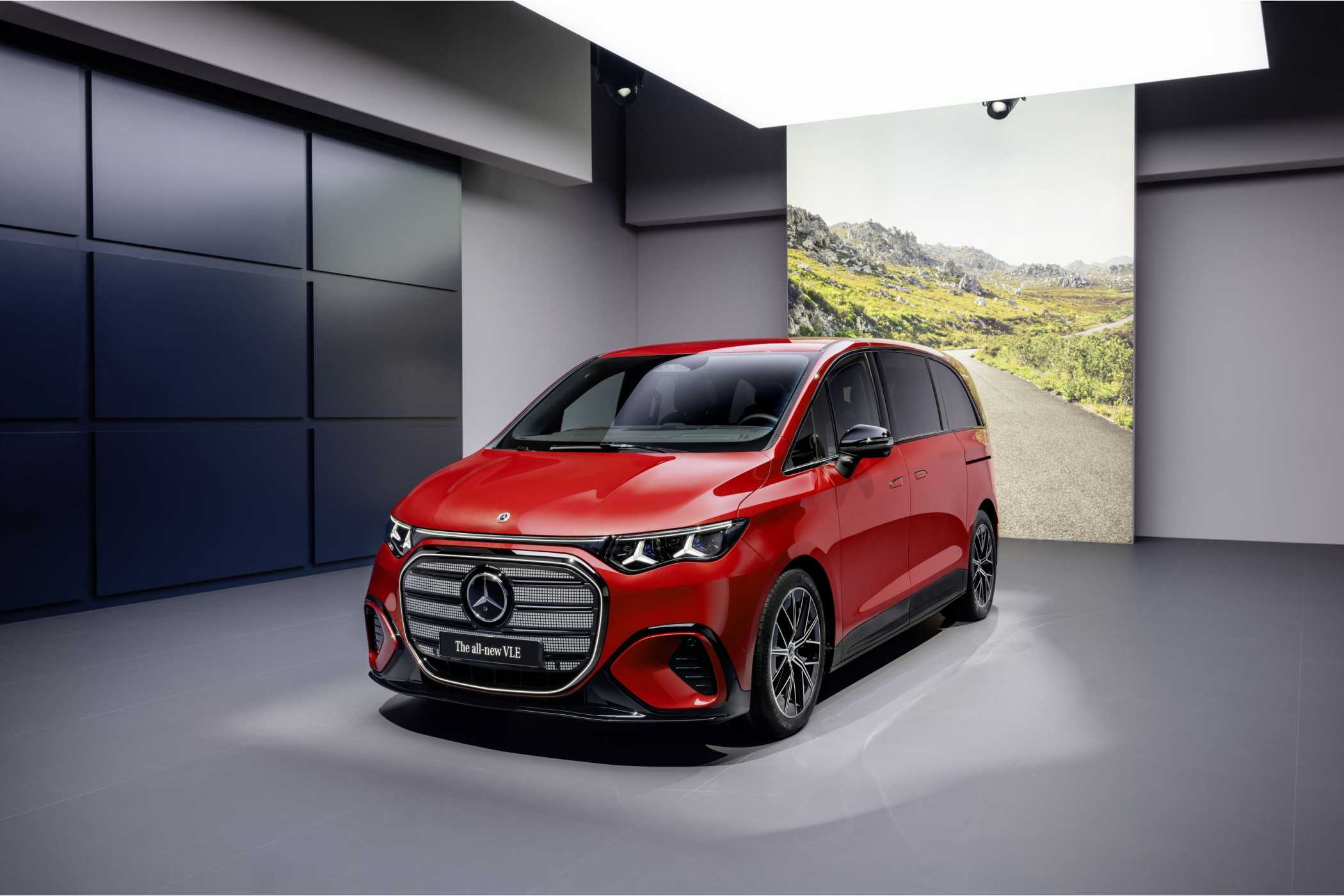
With the new VLE and VLS models, Mercedes is not only responding to this development – the Stuttgart-based company is setting new standards. Both vehicles are intended to usher in a new generation of large-capacity vehicles – designed for families, shuttle services, chauffeur services and business customers. The market launch is planned for the summer.
"We are redefining the segment. Space is the new luxury," said Mercedes chief Ola Källenius at the world premiere of the VLE in Stuttgart.













New platform for an entire van family
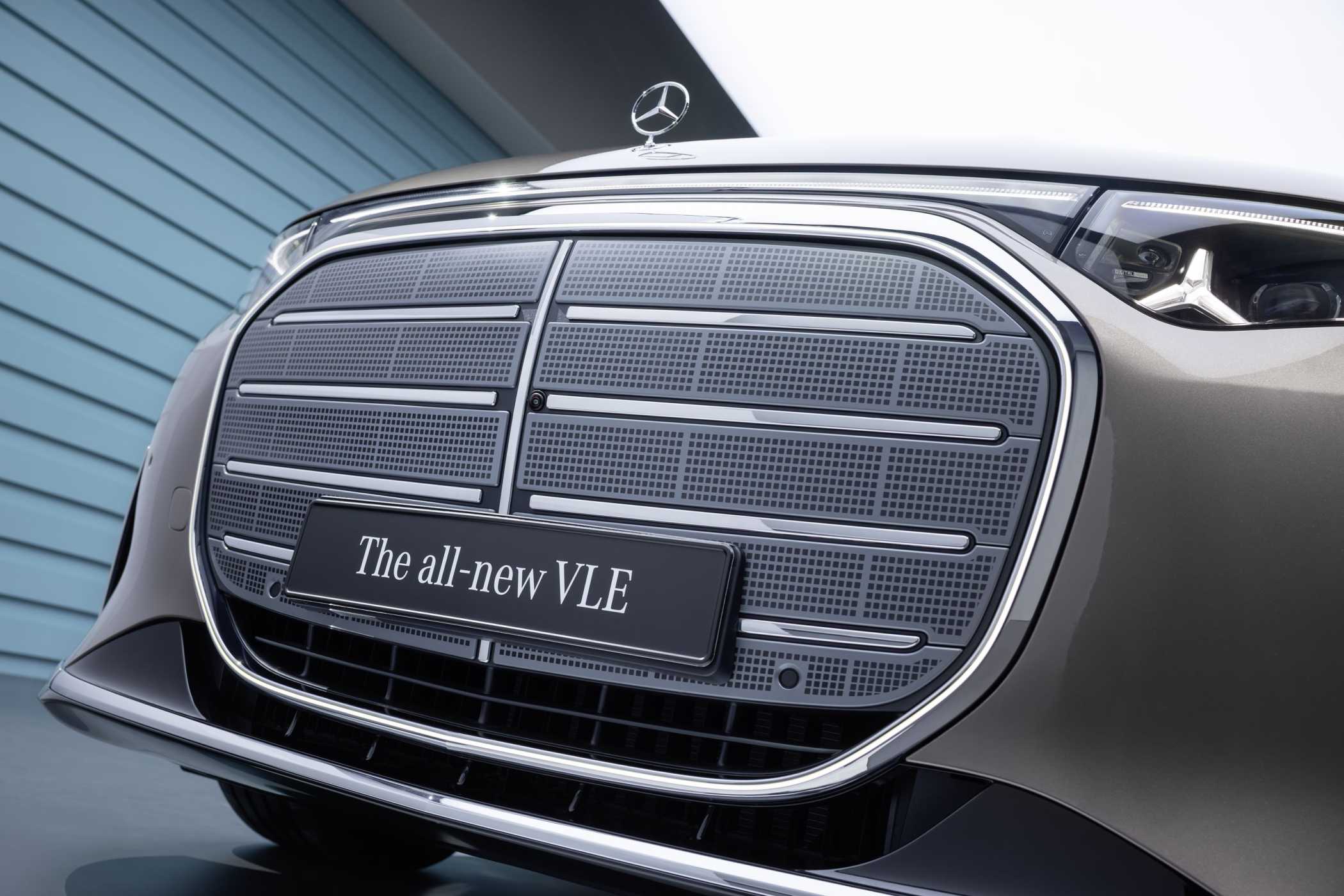
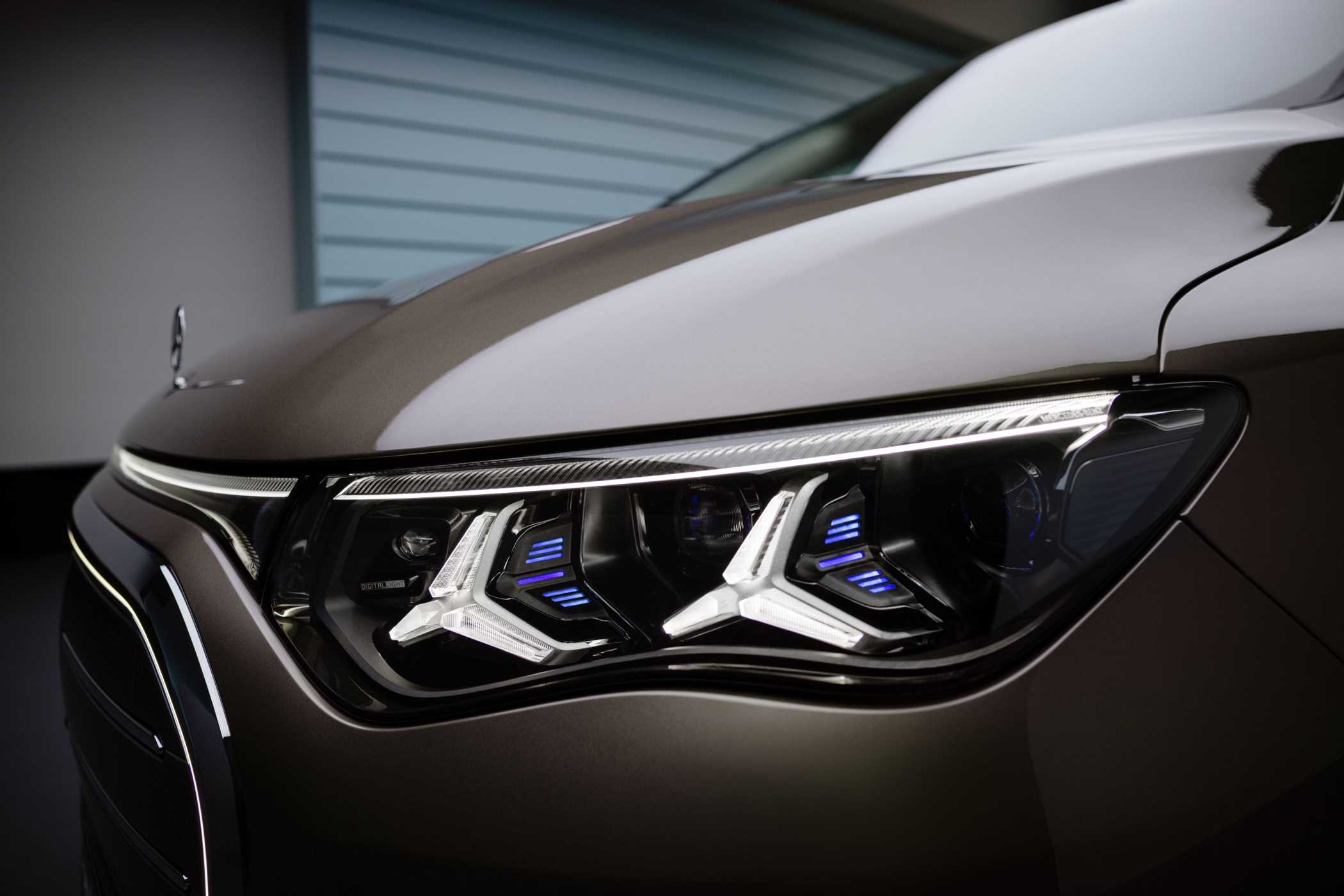
The VLE is the first representative of a new architecture called Van.EA. On this platform, in the future numerous models will be created, from luxurious passenger transporters to large commercial vehicles. Even upcoming generations of the Mercedes-Benz Sprinter are to be based on it. Mercedes pursues a clear strategy: The traditional commercial vehicles and the comfort-oriented large MPVs will in the future be more strongly separated from each other. VLE and VLS will therefore receive their own bodyshell, specifically designed for aerodynamics and dynamics.
The effort is reflected in the numbers. Despite a length of 5.30 meters, a width of 2.0 meters, a height of 1.93 meters and a wheelbase of 3.34 meters, the VLE achieves a drag coefficient (Cd) of 0.25. This makes the van appear visually more compact than it actually is. At the same time, up to eight seating places remain inside. The size, however, also has constructive reasons. Stricter safety regulations require a longer front end with a larger crash structure. In addition, the battery needs additional protection in the vehicle floor, which also affects width and weight.
Electric drive with long range
At launch, the VLE 300 will go on sale. An electric motor with 200 kW (272 hp) drives the front axle. The energy is supplied by a 115-kWh battery pack based on nickel-manganese-cobalt-based chemistry. Mercedes cites a standard consumption of 18.6 to 21 kWh per 100 kilometers. Beyond that, the VLE 400 4Matic with 305 kW (415 hp) and electric all-wheel drive is positioned. Further variants such as a VLE 250 or VLE 350 are to follow. In addition, Mercedes plans versions with a smaller battery as well as later models with an internal combustion engine.
The range of the VLE 300 is said to be up to 700 kilometers according to WLTP. Even with extensive equipment, around 600 kilometers should still be possible. Under unfavorable winter conditions, Mercedes still expects around 400 kilometers of real-world range. The manufacturer also relies on modern technology when charging. The 800-volt system enables charging power of up to 320 kW at the fast charger, and up to 300 kW for the smaller battery. The charging window from 10 to 80 percent should take about 25 minutes. In ten minutes, according to Mercedes, you can add up to 242 kilometers of range. Alternatively, 22 kW AC charging power is available for charging via alternating current. Mercedes itself has already tested the VLE on longer routes. A trip of over 1,100 kilometers from Rome to Stuttgart was reportedly possible with two charging stops.
Handling like a limousine
Despite its dimensions, the VLE should drive like a passenger car. This is achieved, among other things, by a five-link rear axle, precise steering, and an optional all-wheel steering with a seven-degree steering angle. The turning circle thus drops to 10.9 meters curb-to-curb or 11.6 meters wall-to-wall. The driver assistance systems are also extensive. A total of ten cameras, five radar sensors, and twelve ultrasonic sensors work together. The vehicle can, among other things, park itself autonomously or, if desired, automatically back the last 150 meters of a route in reverse.
Plenty of space and new ideas in the interior
Inside, it becomes clear that the VLE is not designed as a transporter. Nevertheless, the cargo volume ranges from 795 to over 4,000 liters, and up to 2.5 tons of towing capacity are possible. With front-wheel drive, the towing capacity drops to 1,000 kilograms, because heavy trailers would overly unload the front axle. The seating arrangement can be configured flexibly. A new simple system for removing and installing the seats is introduced. The seats, weighing around 34 kilograms, can be folded up and removed from the rails via a loop – without complicated latching or tools. A brilliant idea makes handling the heavy seats much easier: when seats are removed, rollers unfold at the bottom, so the individual seats can be rolled rather than carried.
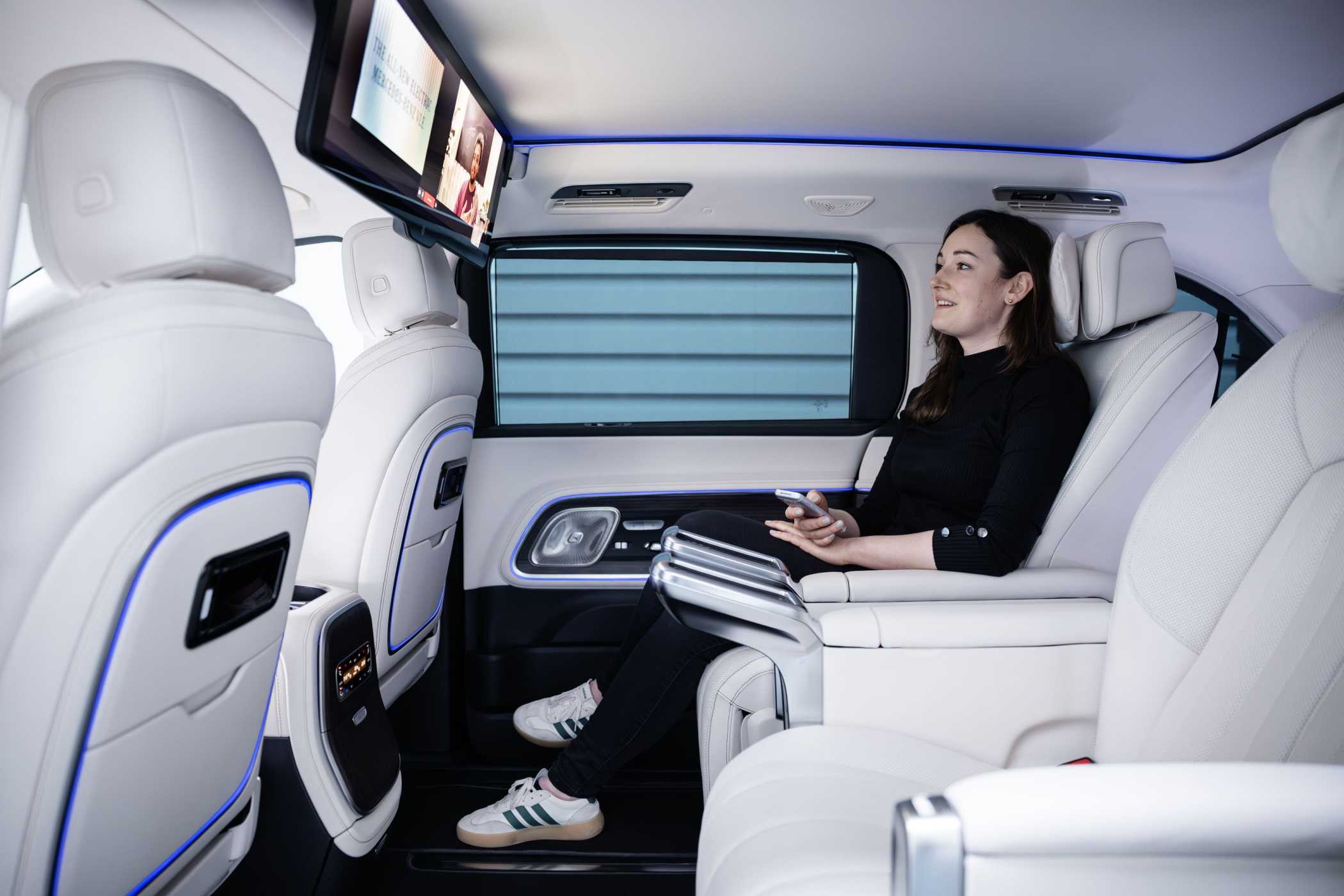
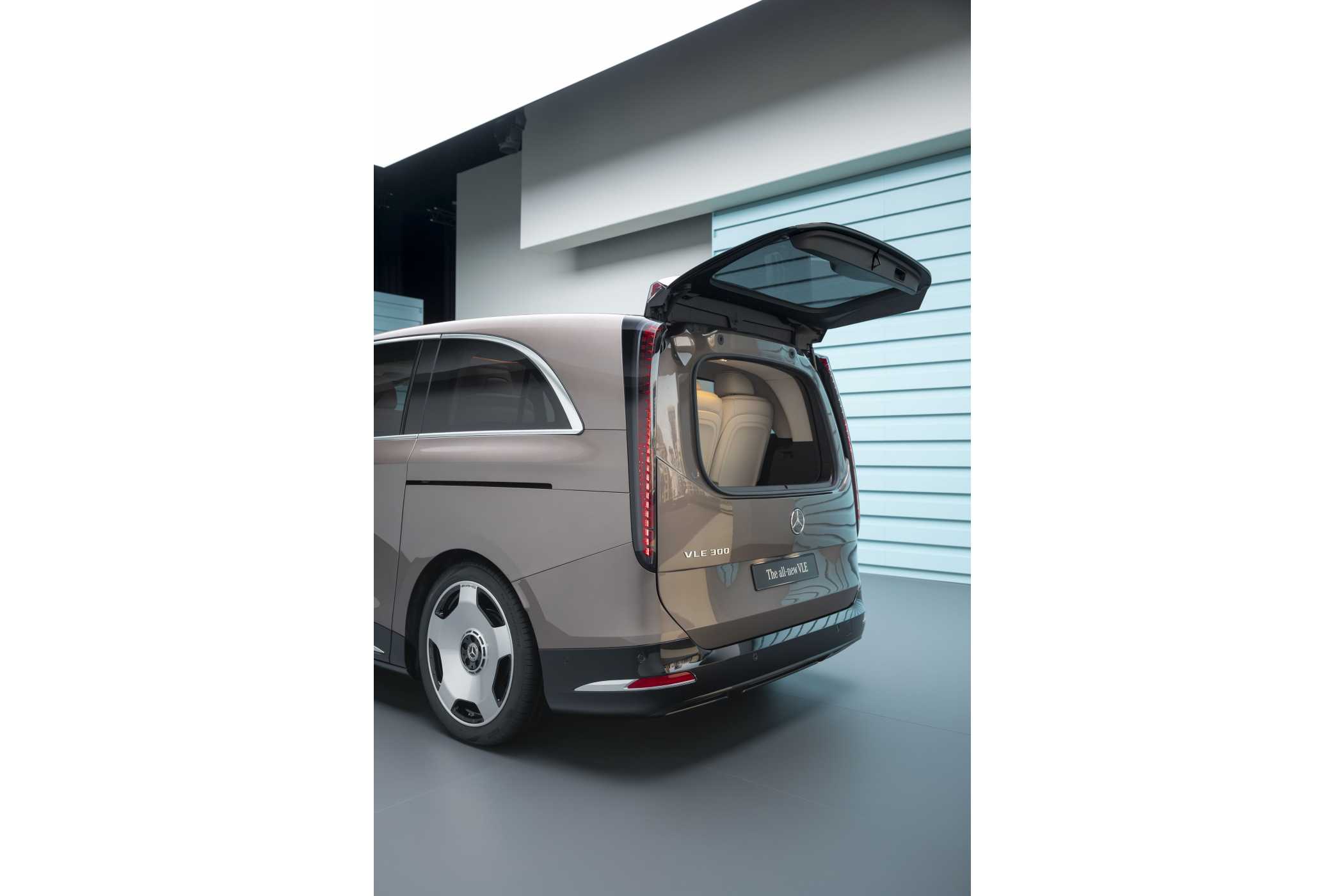
In the rear, numerous outlets are available for passengers. Each exterior seat has two USB-C ports, for a total of eight ports in the rear area. Optional climate-controlled lounge seats with massage function, heating and cooling, fold-out leg rests, and a three-section fold-out worktable are added. For entertainment, a 31-inch screen exits from the roof at the push of a button. It is complemented by a 22-speaker sound system. With the so-called cinema mode, windows can be darkened and content such as films or videoconferences displayed. Attention to detail was also given. A panoramic glass roof lets light into the interior, while in the more expensive variants high-quality materials, real wood and leather create a premium atmosphere. But even the base can hold its own. The materials used here also feel premium. For some markets, such as China, there is even an additional disinfection compartment. At the same time, the functionality of a van remains. The windows in the sliding doors can be fully recessed — a wish of many customers who would otherwise feel enclosed in the rear. The tailgate with a separate glass pane also remains.
The extensive technology comes at a price—even in weight. With the smaller 80 kWh battery, the VLE is said to start at around 2.8 tonnes curb weight. Vehicles with the larger battery weigh well over three tons in some cases. The maximum gross vehicle weight rating is 3,700 kilograms. Consequently, in the elaborately equipped version, about 500 kilograms of payload remain, while simpler variants allow around 900 kilograms. The performance figures are in the range of passenger cars. The VLE 300 accelerates to 100 km/h in 9.5 seconds, the VLE 400 in 6.5 seconds. Prices start at around 57,000 euros net. Depending on equipment, the price can rise significantly. For the especially fully equipped Exclusive Line, Mercedes is asking around 113,000 euros.
A Sneak Peek at the Even More Luxurious Brother
Mercedes will position the VLS above the VLE in its lineup. The model is even more focused on luxury. Another 18 centimeters more wheelbase and length, as well as an even more generously appointed interior, create a luxurious lounge atmosphere. We were able to tour the luxury liner in Stuttgart, but could not take photos yet, as Mercedes intends to present the premium van properly at a later date. With this model strategy, Mercedes aims to establish a new segment: electric large-capacity luxury sedans that combine the comfort and space of a van with the equipment of a luxury-class vehicle.
A van for taxi and chauffeur operations
For taxi and shuttle companies, the concept opens up interesting prospects. The generous interior with up to eight seats, the electric range and the fast charging times could bring advantages in fleet operations. At the same time, the all-wheel steering makes maneuvering in urban traffic easier. The VLE is not only a successor to the V-Class. It redefines the classic van segment — between chauffeur limousine, an electric long-distance vehicle, and a utility vehicle.
Content automatically translated.


Taxi-Fahrzeuge (Pkw) , Taxi-Newsletter, Taxameter, Taxi-Fahrer , BZP – Deutscher Taxi- und Mietwagenverband , Straßenverkehrsordnung (StVO) , Krankenbeförderung , Weiterbildung , Taxi-Konzessionen , Verkehrspolitik , Mietwagenbranche , Taxi-Apps , Berufskraftfahrer-Qualifikations-Gesetz BKrFQG) , Taxizentralen , Personal, Gehälter, Arbeitsschutz , Wirtschaftsnachrichten , Werbung , Taxi-Folierung , Taxi-Umrüster , Straßenverkehr , Elektromobilität, Taxifuhrpark und -flottenmanagement , Taxi-Versicherungen , Hybrid, Diesel, Erdgas , Taxi-Magazin