


2 Ausgaben kostenlos für Sie

Fachmagazin taxi heute: Ihr Zugang zu exklusiven Inhalten rund um die Taxi- und Mietwagenbranche.
Aktueller Termin

Meist gelesen
Hamburg Taxi Day: Intense industry dialogue on technical expertise, digitalization and electromobility.

The introduction of the small Fachkunde shaped a large part of the discussion. Michael Oppermann made clear that the federal association is sticking with the qualification instrument:
“We explicitly support the small Fachkunde, which is now being introduced first in Hamburg and Berlin. Our goal is for it to be rolled out nationwide in the major cities.”
Moderator Dirk Ritter explained the federal processes that, from his view, have led to delays. Oppermann disagreed:
“In the time when the small Fachkunde has been talked to death, the Deutschlandticket has been introduced. In federalism you can shape things if there is political will. Obviously, the small Fachkunde was, for many politicians, too inconsequential.”
At the same time, it was important to him to clarify: Hamburg is not the target of this criticism. The collaboration to introduce the Fachkunde has been close and constructive.
From TSE to tariff corridor
Besides the qualification requirement, other areas were in focus that directly affect daily work in the companies. The switch to the TSE – the technical security system for taximeters – is already 70 percent implemented in Hamburg according to the organizers. Also the tariff corridor, through which municipalities can respond more flexibly to market changes in the future, was discussed.
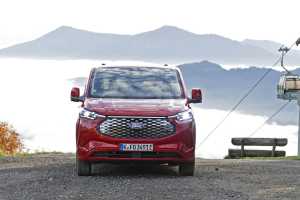
Another topic was the state of electromobility. Many business owners reported increasing demand, but also the effort involved in integrating charging infrastructure into the operation. The accompanying vehicle exhibition showed how broad the range of suitable models has now become.
Close to the day-to-day life of businesses
The Tax Day was not only a podium format. The questions from the audience were numerous, often detailed, and they showed how complex the transition to digital and low-emission business models remains for many businesses.
To wind down, participants, experts and government representatives mingled over currywurst and coffee. It is precisely these informal conversations that are important, Michael Oppermann emphasized later:
“The exchange between entrepreneurs and the administration is important; this was also clearly evident today. It concerns concrete technical questions, but also mutual expectations.”
Finally, he directed the focus to the people who carry the trade:
“The entrepreneurs shape mobility in our society day by day—flexible, reliable, and often under challenging conditions. Their commitment is the foundation for the taxi trade to continue to play a strong role in public transport.”
The Hamburg Tax Day showed that the industry is seeking dialogue—and much of what is urgent for the taxi sector is already being implemented in the Hanseatic City with energy and expertise.
Content automatically translated.





Taxi-Fahrzeuge (Pkw) , Taxi-Newsletter, Taxameter, Taxi-Fahrer , BZP – Deutscher Taxi- und Mietwagenverband , Straßenverkehrsordnung (StVO) , Krankenbeförderung , Weiterbildung , Taxi-Konzessionen , Verkehrspolitik , Mietwagenbranche , Taxi-Apps , Berufskraftfahrer-Qualifikations-Gesetz BKrFQG) , Taxizentralen , Personal, Gehälter, Arbeitsschutz , Wirtschaftsnachrichten , Werbung , Taxi-Folierung , Taxi-Umrüster , Straßenverkehr , Elektromobilität, Taxifuhrpark und -flottenmanagement , Taxi-Versicherungen , Hybrid, Diesel, Erdgas , Taxi-Magazin







