


VISION mobility kostenlos Probelesen

Die Zeitschrift VISION mobility richtet sich an mobilitätsbegeisterte Menschen bzw. Flottenmanager und begleitet den Technologiewandel in Sachen Automotive und Mobilität.
Aktueller Termin

Meist gelesen
TransnetBW CEO on electricity prices: Those who benefit should pay
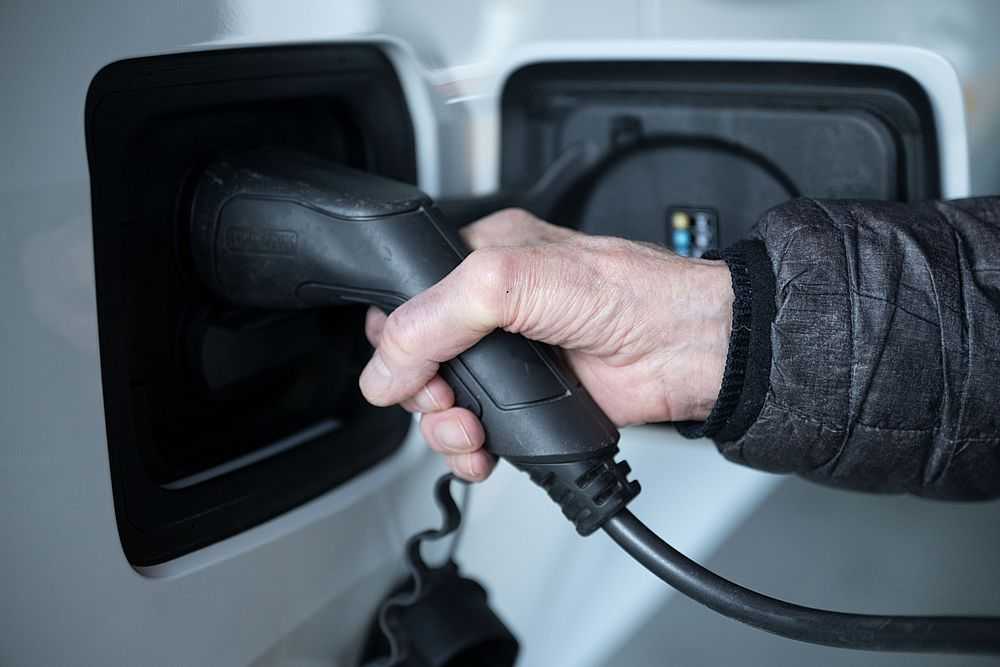
The composition of electricity prices should be fairer from the perspective of TransnetBW CEO Werner Götz.
"The cost pressure is more noticeable today than ever," the manager told the German Press Agency in Stuttgart.
A new federal government must urgently address the issue of financing and affordability of the energy transition so that acceptance neither among citizens nor companies crumbles.
"We have the time, and I believe it is also the right time," said Götz.
Costs should no longer be distributed across all shoulders through rising network charges as they currently are, said the CEO.
"We need to move away from that towards a stronger polluter pays principle." Those who want something must also pay for it.
Lieschen Müller should not have to pay the bill
From Götz's perspective, this starts with the charging point in one's own garage for the e-car, but it can also be applied to larger projects up to offshore wind farms:
"We subsidize offshore wind through a free grid connection," he explained. "If each wind farm had to pay for its own grid connection, the economics would suddenly be quite different."
This would lead to a decrease in the number of gigawatt installations.
"But then the person who benefits pays the bill," said Götz.
If Lieschen Müller in her two-room apartment pays the cost bill of an e-car owner through grid fees, it is not socially acceptable. This viewpoint does not question the fundamental pillars of the energy transition.
Potential savings in the billions
In his opinion, all democratic parties will also adhere to the overall goal and continue the energy transition after the federal election - although the priorities might be set differently.
“But I am convinced that affordability and costs will become the number one issue - regardless of who is in government.”
The transmission system operators, responsible for the large high and extra-high voltage grids, still see potential savings in cable laying: For the new power highways alone, in which TransnetBW is involved, 20 billion euros could be saved if these were hung overhead as overhead lines on towers, instead of being buried underground.
“That hurts a lot”
A major problem for the manager is that the planned power plant strategy was not implemented with the end of the traffic light coalition, and necessary tenders for new power plants are absent.
“That hurts a lot,” said Götz. “We assume that we will lose a year. That is already critical for us.” And that is an optimistic estimate.
The background is that many power plants, which today deliver electricity as a grid reserve when needed, are 40 or 50 years old.
“The fact is that reliability and availability are decreasing,” said Götz. The risk of a partial system failure (Brownout) is low - but it must not happen. “Then an economic loss would occur. And above all, we would have to fear a massive image and reputation damage.”
Götz warns of restarting the entire debate after the election
Additionally, no new employees can be found for these essentially decommissioned facilities. And training people in old power plants, who later work in new facilities that also operate with hydrogen, is not so simple.
Originally, up to four times 2.5 gigawatts of hydrogen-capable gas power plants were to be tendered as early as last year. However, this was further delayed and is now off the table for the time being due to the traffic light coalition breakdown, as the Bundestag is no longer deciding on the underlying law.
Götz assumes that a law on this will be passed at the earliest after the summer break. He hopes that the power plant strategy will then be quickly adopted. But that alone is not enough. A meaningful supplement through a capacity market must follow. In a capacity market, providers could be rewarded for maintaining power plant capacities.
Content automatically translated.


Taxi-Fahrzeuge (Pkw) , Taxi-Newsletter, Taxameter, Taxi-Fahrer , BZP – Deutscher Taxi- und Mietwagenverband , Straßenverkehrsordnung (StVO) , Krankenbeförderung , Weiterbildung , Taxi-Konzessionen , Verkehrspolitik , Mietwagenbranche , Taxi-Apps , Berufskraftfahrer-Qualifikations-Gesetz BKrFQG) , Taxizentralen , Personal, Gehälter, Arbeitsschutz , Wirtschaftsnachrichten , Werbung , Taxi-Folierung , Taxi-Umrüster , Straßenverkehr , Elektromobilität, Taxifuhrpark und -flottenmanagement , Taxi-Versicherungen , Hybrid, Diesel, Erdgas , Taxi-Magazin







