


VISION mobility kostenlos Probelesen

Die Zeitschrift VISION mobility richtet sich an mobilitätsbegeisterte Menschen bzw. Flottenmanager und begleitet den Technologiewandel in Sachen Automotive und Mobilität.
Aktueller Termin

Meist gelesen
Lyft takes over Freenow: New Impulses for the German Taxi Industry?
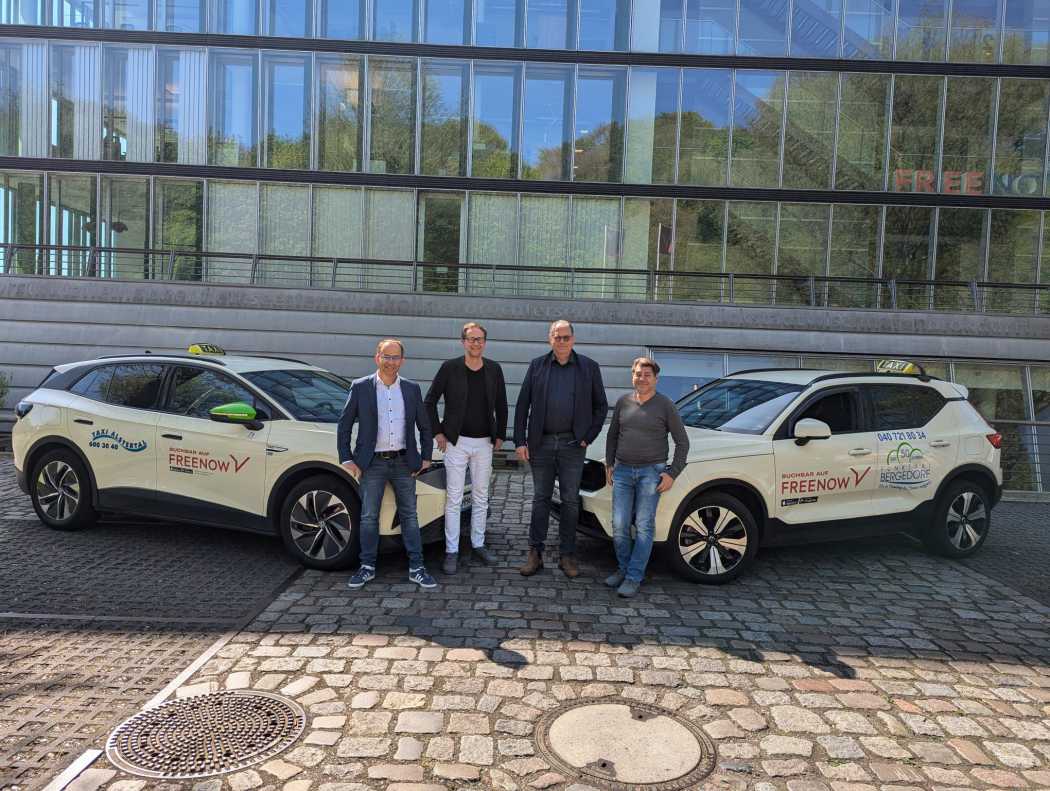
Freenow, once started as mytaxi, has established itself as a leading mobility platform in recent years. The recent acquisition by Lyft, which has been primarily active in North America until now, could bring new dynamics to the German market. We discuss the opportunities and challenges of these developments with Alexander Mönch, Germany head of Freenow, Ben Irmak (board member of the Funktaxi Bergedorf cooperative), and Jan Grupe (board member of Taxi Alstertal).
taxi today: Mr. Mönch, what does the takeover of Freenow by Lyft mean for the German taxi industry?
Alexander Mönch: Lyft clearly commits to taxis and sees Freenow as a valuable addition to the European market. We believe that we can learn from each other. Lyft brings strong US expertise, and Freenow is deeply rooted in the taxi industry. This combination can create new momentum.
th: Mr. Irmak, how do you view the collaboration with Freenow from a cooperative's perspective?
Ben Irmak: As a cooperative, it's not easy. Our cooperative was also briefly on the brink of bankruptcy, and there were takeover offers that we declined. We believe that we have found a partnership with Freenow that helps us operate economically without giving up our independence. The support among our members for the cooperation with Freenow was very high, in any case.
th: Mr. Grupe, what advantages do you see in the cooperation with Freenow?
Jan Grupe: Freenow helps us to improve our capacity utilization and reach younger, digitally affine customer groups. The app offers better payment options and a rating system that allows for direct feedback.
A. Mönch: The taxi centers still have a large area of analog business. Many customers still order their taxis by phone. Freenow can complement that digitally.
B. Irmak: Yes, we also like the rating system. Here, individual drivers can be rated – it doesn't help us if customers write a bad review about Funktaxi Bergedorf just because one driver was not good.
J. Grupe: In general, the driver shortage and sometimes lack of driver quality are difficult.
th: Shouldn't the expertise test remedy this? Hamburg wanted to introduce it themselves since there seems to be no nationwide agreement.
B. Irmak: That hasn't happened yet.
th: The quality in the taxi industry is important to you.
B. Irmak: Very important. A taxi driver should have a clean vehicle, appear well-groomed, and develop a sense of the passengers' needs. The rating system from Freenow helps us ensure quality.
th: Mr. Mönch, Freenow is also cooperating with the Techniker Krankenkasse. What is behind this?
A. Mönch: We are working together on a digital solution for medical transportation. The goal is to simplify the process from approval to billing. The pilot project will start in Hamburg and is to be rolled out nationwide later.
th: How do you see the development of the taxi industry in Hamburg compared to other cities?
A. Mönch: Hamburg is very well positioned compared to the rest of Germany. With dedicated players in politics and administration, there is a clear direction here. The "ÖPNV-Taxi" project is an example of how taxis and public transportation can work together.
th: How can we imagine that?
A. Mönch: In the outskirts, together with Taxi Alstertal and Funktaxi Bergedorf, we have applied for a taxi service from the doorstep to the public transport stop or from the public transport stop to the doorstep - but not from pub to pub. This service is to run for one year initially. It will be a learning phase, and it will take time to convince the drivers - and, of course, the passengers.
th: There is a lot of potential in this concept.
J. Gruppe: Yes, but it will probably need to be subsidized initially. Maybe it will be regulated by the city later. But they will see that it is a great service and definitely cheaper than city buses.
th: Finally, how do you see the future of the taxi industry in Hamburg?
B. Irmak: Digitalization will continue to increase. With partners like Freenow, we can actively shape this change and strengthen our position.
J. Gruppe: Fortunately, we do not have the big Uber problem like other cities. Of course, we also have some Uber, but in cooperation with taxis - there is no ruinous rental car fleet here. Luckily, Hamburg made a clear statement from the start.
A. Mönch: Freenow – and also Lyft are clearly committed to taxis. The acquisition of Freenow by Lyft brings entirely new possibilities. Up to now, it has been the case that when tourists come from the USA, they have used Uber 100 percent - because they already have the app. Lyft has a 30 percent market share in the USA. Americans know Lyft and also have the Lyft app. On their visit to Europe, they will be able to book Freenow with the Lyft app in the future. There's a lot of potential there.
th: Thank you very much for the informative conversation.
Content automatically translated.


Taxi-Fahrzeuge (Pkw) , Taxi-Newsletter, Taxameter, Taxi-Fahrer , BZP – Deutscher Taxi- und Mietwagenverband , Straßenverkehrsordnung (StVO) , Krankenbeförderung , Weiterbildung , Taxi-Konzessionen , Verkehrspolitik , Mietwagenbranche , Taxi-Apps , Berufskraftfahrer-Qualifikations-Gesetz BKrFQG) , Taxizentralen , Personal, Gehälter, Arbeitsschutz , Wirtschaftsnachrichten , Werbung , Taxi-Folierung , Taxi-Umrüster , Straßenverkehr , Elektromobilität, Taxifuhrpark und -flottenmanagement , Taxi-Versicherungen , Hybrid, Diesel, Erdgas , Taxi-Magazin







