2 Ausgaben kostenlos für Sie

Fachmagazin taxi heute: Ihr Zugang zu exklusiven Inhalten rund um die Taxi- und Mietwagenbranche.
Aktueller Termin

Meist gelesen
Autonomous on the road: Uber launches global robotaxi offensive with Baidu
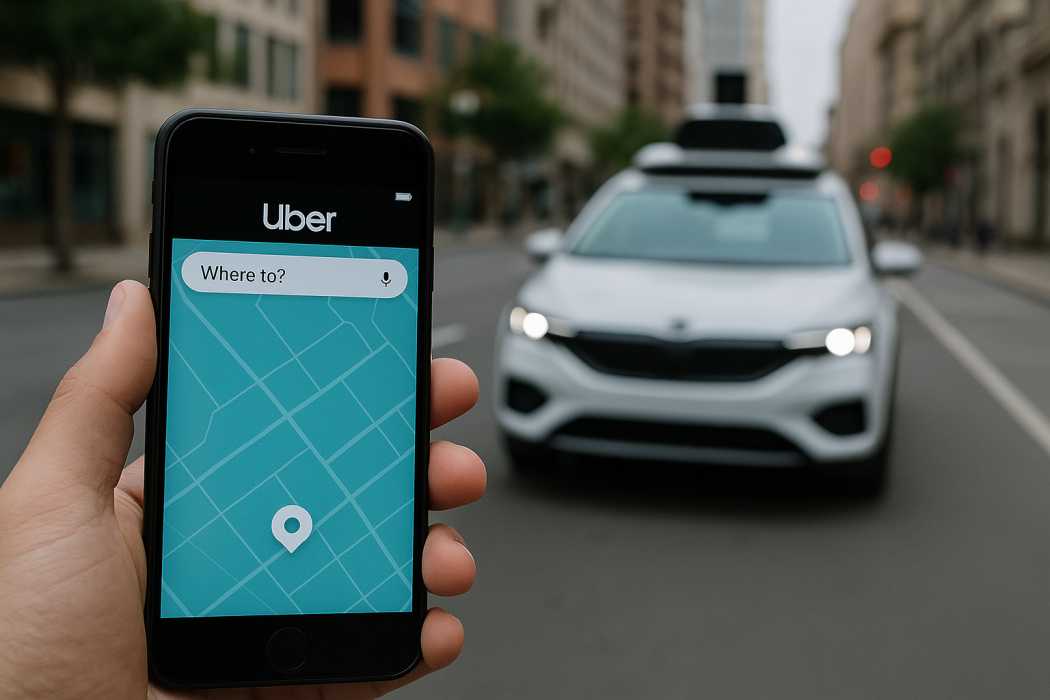
Uber has entered into a multi-year partnership with the Chinese technology conglomerate Baidu. The aim of the cooperation is to make Baidu's autonomous vehicles bookable worldwide via the Uber app. In the future, users will have the option to choose whether they want to book a ride with a human driver or a robotaxi.
Launch in Asia and Middle East – Europe in sight
The rollout of the joint services is initially planned for Asia and the Middle East and is expected to begin within the current year. In the long term, an expansion to other regions is planned, including Europe and Oceania.
Baidu's Robotaxi Service
Baidu currently operates more than 1,000 autonomous vehicles under the name “Apollo Go” in over 15 cities – including in China, Dubai, and Abu Dhabi. According to the company, more than 11 million rides have been conducted since its launch in 2021 up to May 2025. Expansion into Europe is already being prepared, with initial deployments planned in Switzerland.
Expansion of Existing Uber Partnerships
The partnership with Baidu complements Uber's existing collaborations in the field of autonomous mobility. In the USA, Uber is already working with Cruise, a subsidiary of General Motors, as well as with Waymo. The latter has allowed bookings through the Uber app since 2023. Additionally, Uber is cooperating with the Chinese company Momenta. For the US market, the integration of autonomously driven ID.Buzz models from Volkswagen is also planned.
Focus on Partners Instead of In-House Development
In the past, Uber had established its own development division for self-driving vehicles, but this was sold in 2020 to Aurora Technologies, a company supported by Amazon. Since then, Uber has been focusing on partnerships to expand its offering in the field of autonomous driving.
Tesla remains absent
A major provider in the field of autonomous mobility is missing from the list of Uber partners: Tesla. The US manufacturer is pursuing an independent strategy with its own robotaxi service. Uber CEO Dara Khosrowshahi recently publicly referred to Tesla as a smaller competitor and critically evaluated the company's camera-based system compared to Lidar technologies.
Content automatically translated.






Taxi-Fahrzeuge (Pkw) , Taxi-Newsletter, Taxameter, Taxi-Fahrer , BZP – Deutscher Taxi- und Mietwagenverband , Straßenverkehrsordnung (StVO) , Krankenbeförderung , Weiterbildung , Taxi-Konzessionen , Verkehrspolitik , Mietwagenbranche , Taxi-Apps , Berufskraftfahrer-Qualifikations-Gesetz BKrFQG) , Taxizentralen , Personal, Gehälter, Arbeitsschutz , Wirtschaftsnachrichten , Werbung , Taxi-Folierung , Taxi-Umrüster , Straßenverkehr , Elektromobilität, Taxifuhrpark und -flottenmanagement , Taxi-Versicherungen , Hybrid, Diesel, Erdgas , Taxi-Magazin