Ihr kostenloser Branchen-Newsletter

Lassen Sie sich von unseren Fachjournalisten einmal wöchentlich über die wichtigsten aktuellen Entwicklungen der Taxi-Branche informieren, bequem direkt in Ihre Mailbox.
Aktueller Termin

Meist gelesen
EU transport policy: Taxi industry calls for a say in the regulation of robotaxis

The National Association of Taxi and Hire Cars held discussions in Brussels during the last week of September with representatives from the European Parliament and the European Commission about the future of passenger transport. The discussions focused on the regulation of autonomous vehicles, the integration of robotaxis into existing mobility offerings, and the importance of local design options. In parallel, the Taxi Group of the International Road Transport Union approved its work programme for 2027.
Autonomous driving in focus at EU conference
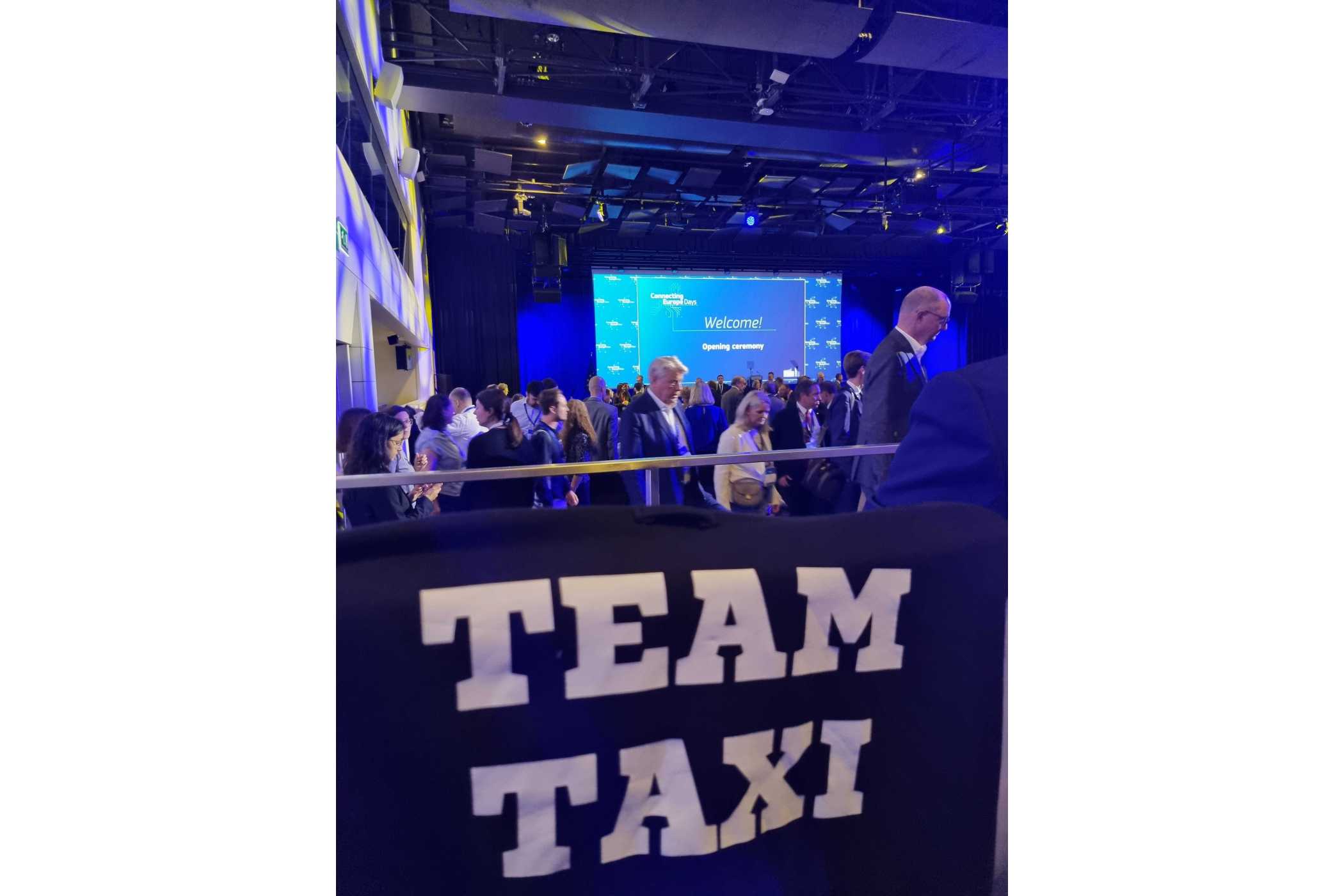
Floris Cooijmans, policy officer for mobility at the National Association of Taxi and Hire Cars, participated in the “Connecting Europe Days.” The conference, organized by the Directorate-General for Mobility and Transport of the European Commission, dealt with the transport policy priorities for the coming years. Among the speakers were Commission President Ursula von der Leyen and the European Commissioner for Sustainable Transport and Tourism, Apostolos Tzitzikostas.
A focus of the event was the development of autonomous driving. In particular, the possible introduction of robotaxis in European cities was discussed. The already advanced development of autonomous mobility offerings in the United States and China provided a frame of reference for the debate on the future framework conditions in Europe.
In the view of the National Association of Taxi and Hire Cars, the existing taxi trade should play a substantial role in the introduction of autonomous ride-hailing services. The association points to the industry's long-standing experience in commercial passenger transport, as well as its knowledge of local traffic conditions and the requirements of passengers.



Talks with the European Parliament and the Commission
In addition to the conference, association president Gregor Beiner and Armand Joseph-Oudin, head of the Paris-based taxi dispatch center G7, held talks with representatives of European institutions. The aim, according to the national association, was to bring the interests and experiences of the taxi industry early into policy consultations.
Among the interlocutors was Italian MEP Pierfrancesco Maran, who is involved in the European debate on robotaxis. In addition, the industry representatives exchanged views with Silvia Bartolini, who in the cabinet of Executive Vice-President of the European Commission, Henna Virkkunen, is responsible for questions of technological sovereignty.
The talks were connected with the growing importance of European decisions for the taxi industry. In addition to regulation of autonomous vehicles, this, according to the association, also concerns new environmental standards and other transport policy framework conditions.
International Taxi Group Sets Priorities for 2027
In parallel with the political discussions, the Taxi Group of the International Road Transport Union unanimously approved its work programme for 2027. The agreed priorities include the regulation of robotaxis, the ongoing fuel crisis, and the consideration of local circumstances in the design of regulatory provisions.
Thus, a central concern of the international industry association remains the safeguarding of local design flexibility. The regulation of passenger transport, according to the Taxi Group, should take into account the different requirements and local framework conditions on the ground.
Federal Association relies on the involvement of the taxi industry
The Federal Association of Taxi and Car Rental sees in European transport policy an increasingly important area of action for representing the industry's interests. In particular, in the regulation of autonomous driving, the association intends to bring the experiences of existing taxi companies into political decision-making processes.
Association President Gregor Beiner emphasizes in this context the importance of direct exchange with the European Parliament and the European Commission. In the association's view, a lasting transformation of transport can only be achieved with the involvement of the taxi industry. (Source: Federal Association of Taxi and Car Rental)
Content automatically translated.





Taxi-Fahrzeuge (Pkw) , Taxi-Newsletter, Taxameter, Taxi-Fahrer , BZP – Deutscher Taxi- und Mietwagenverband , Straßenverkehrsordnung (StVO) , Krankenbeförderung , Weiterbildung , Taxi-Konzessionen , Verkehrspolitik , Mietwagenbranche , Taxi-Apps , Berufskraftfahrer-Qualifikations-Gesetz BKrFQG) , Taxizentralen , Personal, Gehälter, Arbeitsschutz , Wirtschaftsnachrichten , Werbung , Taxi-Folierung , Taxi-Umrüster , Straßenverkehr , Elektromobilität, Taxifuhrpark und -flottenmanagement , Taxi-Versicherungen , Hybrid, Diesel, Erdgas , Taxi-Magazin