2 Ausgaben kostenlos für Sie

Fachmagazin taxi heute: Ihr Zugang zu exklusiven Inhalten rund um die Taxi- und Mietwagenbranche.
Aktueller Termin

Meist gelesen
Winter in the taxi: Black ice, weak batteries and range loss in electric cars.
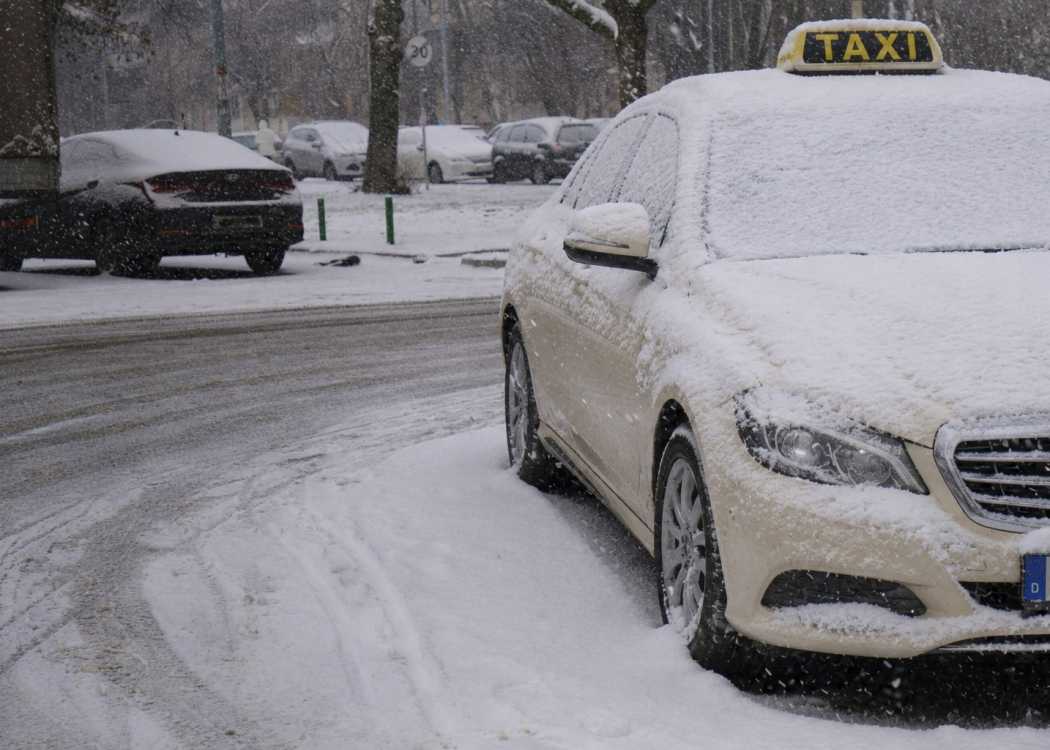
When temperatures fall, a season full of small and large challenges begins for drivers. In the morning, frosted windows have to be scraped clear, on bridges there is suddenly the risk of black ice, and not infrequently the battery refuses to start. Electric cars also provide talking points in winter: How much does the range actually drop, and how long does charging take in freezing conditions? Which topics drivers are especially concerned with during the cold season, SIXT+ car subscription studied. For this, the experts analyzed more than 250 comments from two German-language car communities on Reddit and compared the results with Google search data. The interest in the topic of winter driving is apparently high: The search queries for "Driving in winter" rose in Germany in the studied period by 74 percent.
From the discussions, five topics emerged that drivers are particularly frequently occupied with. The analysis shows not only where the difficulties lie, but also provides indications of how typical winter problems can be avoided.
1. Electric cars in winter: less range, longer charging times
Hardly any topic is discussed as intensively in online discussions as the effects of winter temperatures on electric cars. Many users report range losses of between 20 and 30 percent. The cold is noticeable especially on short trips, because the interior has to be heated up for every drive. In addition, a cold battery charges more slowly.
With some adjustments, the additional energy demand can be limited. If you preheat your vehicle while it is still plugged into the charging cable, you draw power from the grid and spare the battery. Also seat and steering wheel heating are more efficient than fully heating the interior.
It's also important not to leave the car standing in frost with an almost empty battery. A cold battery with a low state of charge can charge particularly slowly. Many newer electric cars therefore offer battery preconditioning before fast charging. On longer trips, drivers should also plan an additional charging stop.
2. Black ice: Bridges quickly become slip hazards
Many drivers associate black ice with temperatures below freezing. But the danger can arise even earlier. In online forums, users report that bridges can already be mirror-slick at three to four degrees above zero. The reason: the cold wind cools bridges faster than other road sections.
Therefore, special caution is advised on bridges, in wooded areas and in shaded curves. A glossy road surface can be a warning signal at temperatures around the freezing point.
If you encounter slippery conditions, you should steer as gently as possible, brake carefully and avoid jerky acceleration maneuvers. Tire choice also plays a decisive role. Suitable winter tires provide more grip on snow and ice than summer tires and can shorten stopping distances.
3. Adjusted speed: What does that mean in rain and snow?
“Adjusted speed” is part of the basic knowledge from driving school. In everyday life, it's not always clear what that actually means. In online discussions, a driver with more than ten years of driving experience describes, for example, that he can hardly explain how he actually adjusts his speed in bad weather.
Opinions vary. While some consider 130 km/h in heavy rain to be cautious, others point out that aquaplaning can occur at considerably lower speeds.
There is broadly one point of agreement: The safety distance should be larger in bad weather. That provides extra reaction time. It is also advisable to slow down before a curve and not only during the curve. In heavy rain, drivers should also watch out for water-filled wheel tracks.
Should aquaplaning occur nonetheless, the rule is: do not steer frantically, do not brake and do not accelerate. The steering wheel should be kept as straight as possible until the tires have contact with the roadway again. If you're unsure, you can learn in a driving safety course how your own vehicle behaves on wet or slippery roads under controlled conditions.
4. Ice and Snow: The Winter Morning Begins with the Ice Scraper
For many drivers, ice scraping is part of the morning winter ritual. Accordingly, users discuss the possibility of preheating their vehicle via an app favorably. This saves time and ensures clear windows before the drive begins.
Regardless of whether it is a combustion-engine car or an electric car: Before departure the vehicle must be completely cleared of snow and ice. This applies not only to the front and side windows but also to the roof and hood. A snow brush, a sturdy ice scraper, and a windshield cover make the work easier.
Antifreeze in the windshield washer fluid and well-maintained door seals are also part of winter preparation. To prevent fogged windows from the inside, it helps to reduce moisture in the vehicle. Wet jackets and floor mats should preferably not stay in the car. Additionally, the air conditioning can also be switched on in winter: It removes moisture from the interior air and helps keep the windows clear.
5. Weak Battery: The Most Common Cause of Breakdowns in Winter
A classic winter problem remains the starter battery. On particularly frosty mornings, some vehicles fail to start. An employee of a car dealership reports in online discussions that gasoline cars regularly require jump-starts in winter.
This is also reflected in search behavior: Google searches for the term “jump-start” rose by 35 percent in the past three months compared with the previous three months.
The importance of the problem is also underscored by ADAC's breakdown statistics. Accordingly, a defective starter battery in 2025 accounted for 45.4 percent of breakdown causes—the most frequent. This applies not only to internal combustion vehicles. Electric cars also have a separate 12-volt battery that handles the on-board electronics. In about half of the breakdowns of electric cars, it was the cause, according to ADAC.
A battery test in the workshop before the cold season can prevent unpleasant surprises. This is especially true for older batteries. If you drive a combustion-engine car predominantly on short trips, you should occasionally plan a longer drive so that the battery is sufficiently recharged. On particularly frosty days, it is also advisable to switch off unnecessary power consumers such as the heater, lights, and radio when starting.
Good Preparation Prevents Trouble
The analysis from SIXT+ car subscription shows: The challenges of winter are by no means new. While electric cars with range losses and longer charging times require additional attention, slick roads, icy windows, and weak batteries remain issues across drivetrains.
For drivers, it is therefore primarily about good preparation. Those who check tires, battery, and antifreeze in good time, keep sufficient distance, and adapt their driving style to the road conditions can reduce many winter risks. This applies to private cars as well as to vehicles used daily for work.
Content automatically translated.


Taxi-Fahrzeuge (Pkw) , Taxi-Newsletter, Taxameter, Taxi-Fahrer , BZP – Deutscher Taxi- und Mietwagenverband , Straßenverkehrsordnung (StVO) , Krankenbeförderung , Weiterbildung , Taxi-Konzessionen , Verkehrspolitik , Mietwagenbranche , Taxi-Apps , Berufskraftfahrer-Qualifikations-Gesetz BKrFQG) , Taxizentralen , Personal, Gehälter, Arbeitsschutz , Wirtschaftsnachrichten , Werbung , Taxi-Folierung , Taxi-Umrüster , Straßenverkehr , Elektromobilität, Taxifuhrpark und -flottenmanagement , Taxi-Versicherungen , Hybrid, Diesel, Erdgas , Taxi-Magazin