2 Ausgaben kostenlos für Sie

Fachmagazin taxi heute: Ihr Zugang zu exklusiven Inhalten rund um die Taxi- und Mietwagenbranche.
Aktueller Termin

Meist gelesen
Uber in Koblenz: No fear of competition as long as everyone follows the rules.
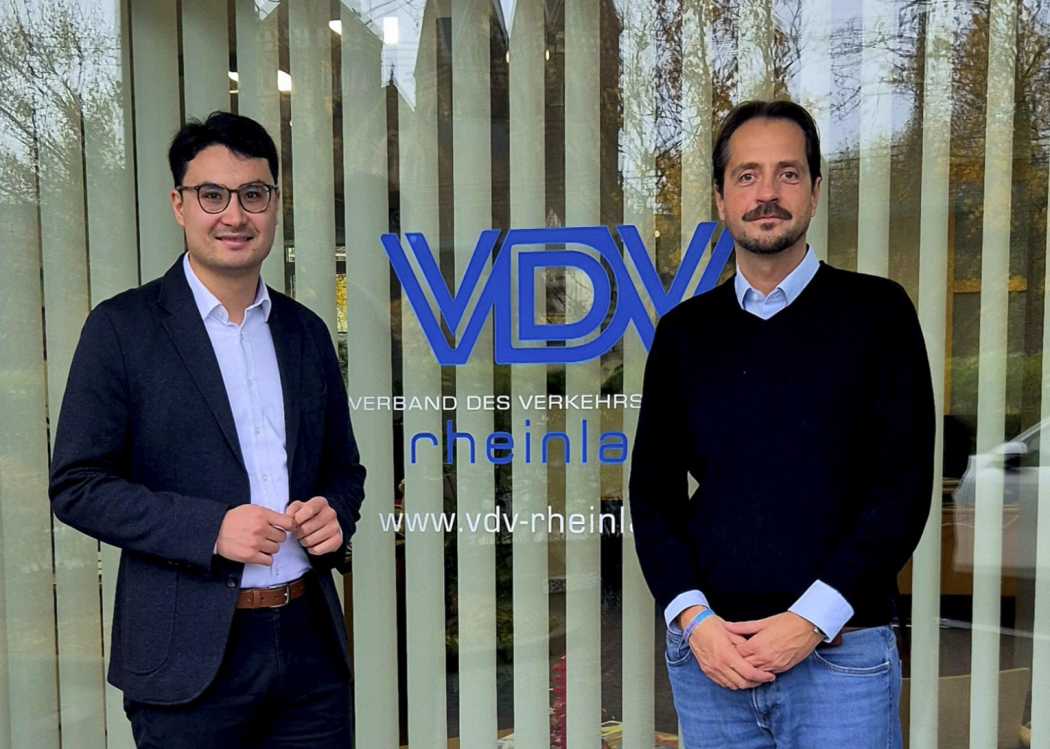
With Uber's launch in the city, a question moves to the center that the taxi industry has been dealing with for years: How can it be prevented that new providers profit from the market while legal obligations are fulfilled less consistently than their competitors? The Rhineland Transport Association (VDV Rheinland) discussed this on 20 November with the CDU member of the state parliament and Koblenz City Council. At the center of the exchange stood the market entry of the ride-service intermediary. Managing Director Guido Borning made clear that the association does not fundamentally reject competition. What is decisive is rather that the legal provisions apply equally to all market participants.
“We have nothing against new providers. But for everyone the same rules must apply. Whoever operates rental cars must accept orders through their base of operation and return there after the ride. This is not protection against competition, but binding law – and the foundation for a fair competition,” Borning said.
Permitting authority should scrutinize early
In the association's view, the approval process already matters. Authorities could, through a careful examination of the operating site and clear conditions in the permit notice, ensure that the legal requirements are met. This would help prevent potential problems before they arise in ongoing operations. Borning expressly praises the City of Koblenz in this context. The association had previously spoken about its concerns in discussions with Lord Mayor David Langner, Mayor Dr. Dagmar Kranz and the Public Order Office. According to signals the association has since received, the permitting authority has set the corresponding course.
“That is a great signal. Koblenz shows that a city can ensure order in the permitting process before problems arise. For their willingness, we would like to express our sincere thanks to the City of Koblenz, the Lord Mayor, Mrs. Dr. Kranz, and the Public Order Office.”
The association is thus adopting an approach that does not start only with violations in road traffic, but already at the licensing of the companies. Especially in view of the entry of large platform providers, this issue is likely to be relevant for other cities as well.
Policy-makers are interested in more flexible taxi tariffs
Aside from approval questions, the discussion with Rünz concerned the future of the mobility market. The CDU politician was, according to the association, particularly interested in how competition works, possible more flexible taxi tariffs, and the relationship between taxi companies and public transport. Among other things fixed prices and tariff corridors were discussed. They could give taxi companies more leeway in pricing without abandoning the fundamental tariff binding. At the same time, fair competition with public transport must be ensured.
The VDV Rheinland points in this context to a joint handout with the umbrella association MOLO Rheinland-Pfalz. The paper is addressed to licensing authorities and shows, based on current case law, what options they have to ensure fair competitive conditions already in the approval process. According to the association, the handout is now attracting nationwide interest.
Signal beyond Koblenz
The push by VDV Rheinland shows that the taxi industry does not regard platform market entry solely as economic competition. It is also about how consistently authorities enforce the legal framework. Especially for hire-car operators, the operating base and the return-to-base requirement are central prerequisites for lawful operation. Koblenz could become, for example: if the licensing authority checks the legal requirements early and imposes clear conditions, conflicts may be avoided.
For the taxi trade, this would be an important step. Because competition is part of a functioning market economy. It should, however, not depend on who can bend the rules most effectively.
Content automatically translated.




Taxi-Fahrzeuge (Pkw) , Taxi-Newsletter, Taxameter, Taxi-Fahrer , BZP – Deutscher Taxi- und Mietwagenverband , Straßenverkehrsordnung (StVO) , Krankenbeförderung , Weiterbildung , Taxi-Konzessionen , Verkehrspolitik , Mietwagenbranche , Taxi-Apps , Berufskraftfahrer-Qualifikations-Gesetz BKrFQG) , Taxizentralen , Personal, Gehälter, Arbeitsschutz , Wirtschaftsnachrichten , Werbung , Taxi-Folierung , Taxi-Umrüster , Straßenverkehr , Elektromobilität, Taxifuhrpark und -flottenmanagement , Taxi-Versicherungen , Hybrid, Diesel, Erdgas , Taxi-Magazin