Ihr kostenloser Branchen-Newsletter

Lassen Sie sich von unseren Fachjournalisten einmal wöchentlich über die wichtigsten aktuellen Entwicklungen der Taxi-Branche informieren, bequem direkt in Ihre Mailbox.
Aktueller Termin

Meist gelesen
GVN annual general meeting: Uniform taxi tariff in Lower Saxony planned for early 2027
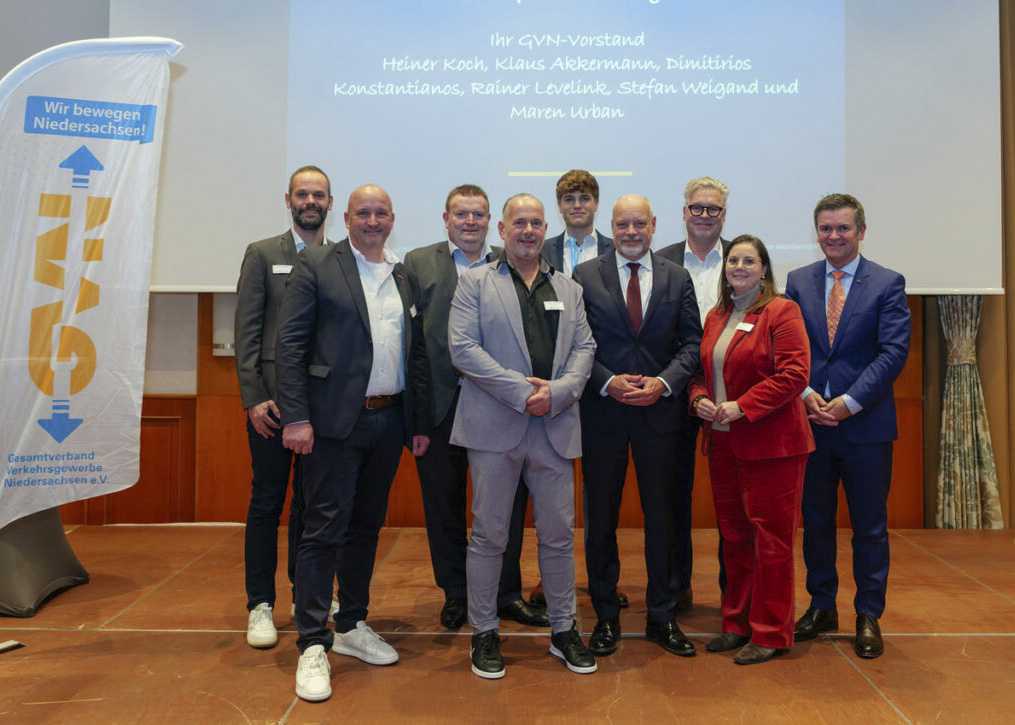
A patchwork quilt of 53 different taxi tariffs is set to become a thing of the past in Lower Saxony soon. At the annual general meeting of the Gesamtverband Verkehrsgewerbe Niedersachsen (GVN) on November 13 and 14 in Wilhelmshaven, the Lower Saxony Ministry of Economic Affairs announced the introduction of a nationwide uniform taxi tariff for the first quarter of 2027. For taxi companies this is an important prospect. However, how exactly the new tariff will look remains to be seen.
Around 300 entrepreneurs from the sectors of freight transport, waste disposal, forwarding, logistics, buses, tourism as well as taxi, rental cars and medical transports came together for the association meeting. The political greeting was delivered by Ministerial Director Dr. Christoph Wilk from the Lower Saxony Ministry for Economy, Traffic and Building. His announcement about the Lower Saxony tariff was among the most important news of the event from the taxi trade’s perspective. So far, 53 different taxi tariffs apply in Lower Saxony. A nationwide uniform tariff system could simplify the framework conditions for the companies and provide greater clarity. The GVN specialist association Taxi and Rental Cars welcomed the announced implementation, but also stressed that the concrete design matters. The tariff must be practicable and take into account the economic requirements of taxi companies. So there is still a lot to clarify before its introduction.


Taxi Companies Need Economically Viable Rules
That the industry is under pressure was also evident in the reports of the association's top management. Rising energy and fuel costs, shortage of skilled workers, bureaucracy and lack of planning security burden the transport industry. Chief Executive Benjamin Sokolovic also pointed to rising insolvency numbers and the insufficient expansion of infrastructure as a significant location risk. For the taxi sector, alongside the uniform tariff, the question of under which economic conditions the companies can offer their services in the future is decisive. The political framework conditions must be reliable, demanded Sokolovic. “Our companies do not need temporary Band-Aid patches, but permanently reliable and competitive framework conditions. Whoever calls for mobility, security of supply and climate protection must also create the prerequisites for it.”
GVN state chairman Heiner Koch also stressed the association's aim to engage early in political decision-making.
"We want to be present before decisions are made. Our task is to bring the interests of Lower Saxony's transport industry early and with a clear voice into the political debate."
Taxi and Hire-Car Specialist Association Restructures Board
Besides the tariff policy announcement there were also personnel changes in the Taxi and Hire-Car Specialist Association. At the delegates' meeting, the previously vacant board positions were filled. Dimitrios Konstantianos and Lars Bittner were elected as ordinary board members. Matthias Rudolf from Wolfsburg and Fabian Hoffmann from Gifhorn will in the future take on duties as deputy board members. Thus the body is once again fully staffed. The new board members face the task of representing the interests of Lower Saxony's taxi and rental car companies in a period of significant change. In addition to the introduction of the Lower Saxony tariff, the economic situation of the businesses and the digitization of the business are also expected to play an important role.
Card payments and digitalization in everyday business operations
On the Entrepreneurs' Day on the second day of the event, practical questions were at the center. For taxi companies, a workshop by GH-Payment, a GVN-supported member, was particularly interesting. The company demonstrated ways to reduce the costs of credit card acceptance. Cashless payments have now become part of everyday taxi operations. For the businesses, it is therefore important to keep a close eye on fees and billing models. After all, even comparatively small cost items can add up to a relevant economic factor when there are many trips.
Other workshops dealt with labor-law questions and the use of social media. A lecture by Ralf Zimmermann, a judge at the Federal Labour Court, addressed the question of under which conditions the evidentiary value of a certificate of incapacity for work can be undermined and what consequences this has for continued pay during illness.
The propulsion transition requires fair conditions
The future of vehicle fleets was also a topic in Wilhelmshaven. In a roundtable discussion, experts illuminated the perspectives of diesel, electric, CNG, and LNG propulsion systems. The focus was on the effects on fleet planning and the long-term development of the companies. The GVN state chairman Koch used the opportunity to point out what he sees as tax inequities in the electrification of goods transport. An electricity tax 41 times higher than in industry is not comprehensible. "This tax disadvantage must be ended no later than with the 2027 federal budget," demanded Koch.
The propulsion question also applies to the taxi trade. Investments in new vehicles must pay off in day-to-day operations. For this, companies need reliable political guidelines and economically viable framework conditions. The discussion in Wilhelmshaven made clear that the propulsion transition is not solely a technical decision, but is directly connected with the costs and the planning certainty of the businesses.
Next generation takes responsibility
That the association also has the next generation of entrepreneurs in view was shown by the election of the new young entrepreneur representatives. Christian Imken will assume the role of spokesperson going forward. He is supported by his deputies Neele Lüpsen and Lorenz Werther. At the same time, the GVN praised the long-time commitment of the previous representatives Hajo Agena and Carsten Siebels. The assembly also provided an occasion to honor longstanding member companies for their 100-year company anniversaries. These included Diana Kokoc of Reese Reisen GmbH from Harsefeld, Ute Frick of Meyn & Frick Handels- und Transport from Tespe, and Edo Hoofdmann from Aurich. Other honorees could not personally receive their award.
The two days in Wilhelmshaven showed how broad the challenges facing Lower Saxony's transport sector are. For taxi companies, the announced uniform state-wide tariff is now the focus. The announcement by the Ministry of Economic Affairs is a concrete step. However, what will be decisive is whether, from the political declaration of intent, by the first quarter of 2027 a regulation will emerge that meets the different operational requirements of the taxi industry.
Content automatically translated.



Taxi-Fahrzeuge (Pkw) , Taxi-Newsletter, Taxameter, Taxi-Fahrer , BZP – Deutscher Taxi- und Mietwagenverband , Straßenverkehrsordnung (StVO) , Krankenbeförderung , Weiterbildung , Taxi-Konzessionen , Verkehrspolitik , Mietwagenbranche , Taxi-Apps , Berufskraftfahrer-Qualifikations-Gesetz BKrFQG) , Taxizentralen , Personal, Gehälter, Arbeitsschutz , Wirtschaftsnachrichten , Werbung , Taxi-Folierung , Taxi-Umrüster , Straßenverkehr , Elektromobilität, Taxifuhrpark und -flottenmanagement , Taxi-Versicherungen , Hybrid, Diesel, Erdgas , Taxi-Magazin