Ihr kostenloser Branchen-Newsletter

Lassen Sie sich von unseren Fachjournalisten einmal wöchentlich über die wichtigsten aktuellen Entwicklungen der Taxi-Branche informieren, bequem direkt in Ihre Mailbox.
Aktueller Termin

Meist gelesen
Patient transports, special agreements and the PBefG: Why the transport services' action day in Ahlen is worthwhile.
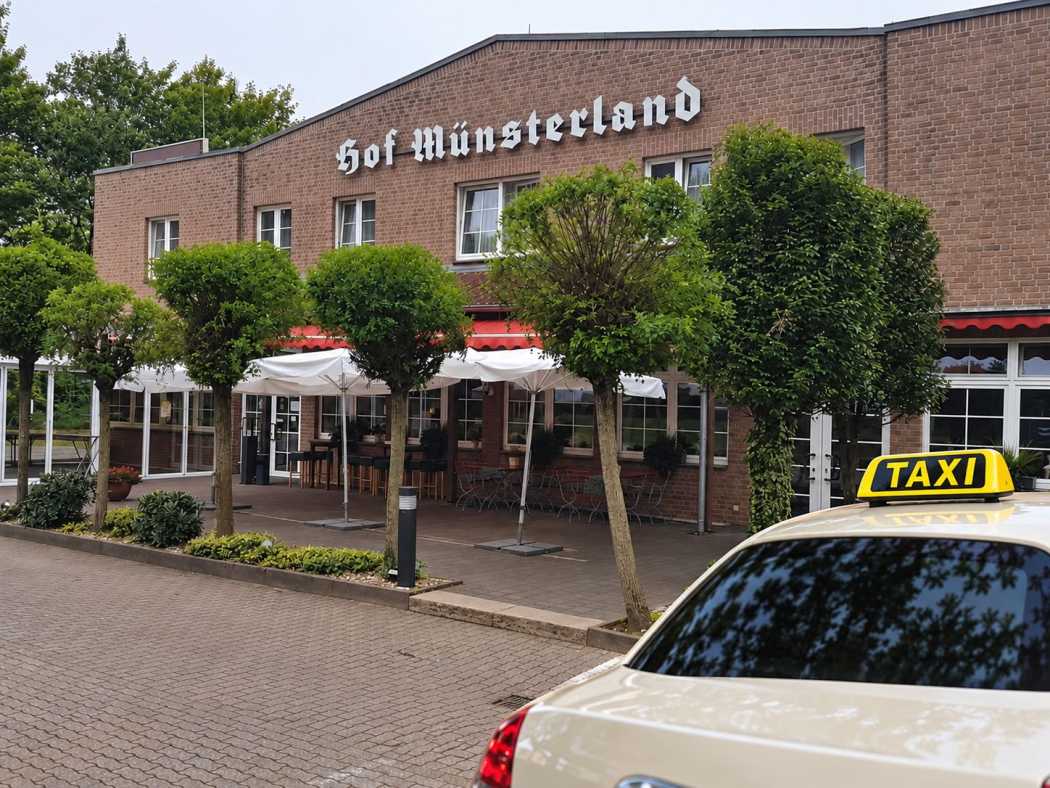
Anyone who wants to know which political and legal challenges will come to the taxi and rental car industry in the coming months should mark September 19 on their calendar. From 1:00 to 5:00 p.m., the Taxi and Rental Car Association (TMV) invites you to the Action Day of ride services at Hof Münsterland in Ahlen. The event comes at a time when many entrepreneurs are watching with concern the developments in the field of patient transport. For what at first glance appears to be a debate about health insurance finances could have significant effects on the profitability of numerous businesses.
The focus of the Action Day is therefore the highly debated GKV Contribution Rate Stabilization Act. For many taxi and rental car companies, patient transports are a fixed component of the business model. Especially in rural areas, trips to dialysis centers, radiation therapy and chemotherapy sessions, or specialist practices often secure a substantial portion of utilization.
Remuneration for patient transports in jeopardy
The planned law aims to further limit the expenditures of the statutory health insurance. Critics fear, however, that this could cause the remuneration for patient transports to lag behind actual cost developments in the future. The consequence would be economic burdens for companies that already have to cope with rising personnel, energy, and vehicle costs.
A legal opinion has therefore drawn special attention, commissioned by several industry associations. The lawyers Dr. Tim Unger and Dr. Philip-Max Krüger come to the conclusion that substantial doubts about the constitutionality of individual regulations could exist. This is precisely where the Action Day begins. With Dr. Tim Unger, one of the authors of the opinion, as the main speaker, a rare opportunity is offered for entrepreneurs to have the legal background explained to them directly from the source and to ask questions that may be important for their own operation.
But the event does not limit itself to the debate about patient transports. A second focus is a topic that taxi operators should watch closely in particular: the application of Section 51(2) of the Passenger Transport Act. The trigger is a recent decision of the Administrative Court of Munich. The court declared a DAK's special taxi agreement unlawful. The affected district has since filed an appeal, so the Bavarian Higher Administrative Court will now decide the case.
Lawyers explain the consequences of the verdict
The decision could have far-reaching consequences. If the verdict is upheld, licensing and supervisory authorities would in the future have to examine far more closely whether special agreements have an impact on the regulation of the transport market. For health insurers, authorities and taxi companies, this could bring new requirements. For this topic, lawyer Dr. Staufer from Munich will give a talk. The lawyer has been intensively dealing for years with social-law questions and their effects on the taxi and rental-car sector. If his participation is not possible at short notice, the presentation will be taken over, according to the organizers, by Mr. Linz.
What latitude do health insurers have in special agreements?
For entrepreneurs, the action day offers far more than a pure information event. The discussions touch on central questions of the future market order: How will medical transports be reimbursed in the future? What latitude do health insurers have in special agreements? What role do courts and lawmakers play in shaping competition?
Especially because many of these questions are still open at the moment, Ahlen on September 19 is likely to become an important meeting point for taxi- and rental-car entrepreneurs. Those who do not want to follow developments second-hand but want to hear the arguments of the lawyers and associations directly will find the opportunity here. For rarely do several topics appear on the agenda at the same time that affect the economic reality of many businesses as directly as the future of medical transports and the legal framework for special agreements. Therefore, looking to Ahlen pays off for the taxi- and rental-car industry.
Content automatically translated.




Taxi-Fahrzeuge (Pkw) , Taxi-Newsletter, Taxameter, Taxi-Fahrer , BZP – Deutscher Taxi- und Mietwagenverband , Straßenverkehrsordnung (StVO) , Krankenbeförderung , Weiterbildung , Taxi-Konzessionen , Verkehrspolitik , Mietwagenbranche , Taxi-Apps , Berufskraftfahrer-Qualifikations-Gesetz BKrFQG) , Taxizentralen , Personal, Gehälter, Arbeitsschutz , Wirtschaftsnachrichten , Werbung , Taxi-Folierung , Taxi-Umrüster , Straßenverkehr , Elektromobilität, Taxifuhrpark und -flottenmanagement , Taxi-Versicherungen , Hybrid, Diesel, Erdgas , Taxi-Magazin