VISION mobility kostenlos Probelesen

Die Zeitschrift VISION mobility richtet sich an mobilitätsbegeisterte Menschen bzw. Flottenmanager und begleitet den Technologiewandel in Sachen Automotive und Mobilität.
Aktueller Termin

Meist gelesen
Fuel prices: GVN calls for swift relief for taxi and car rental companies.
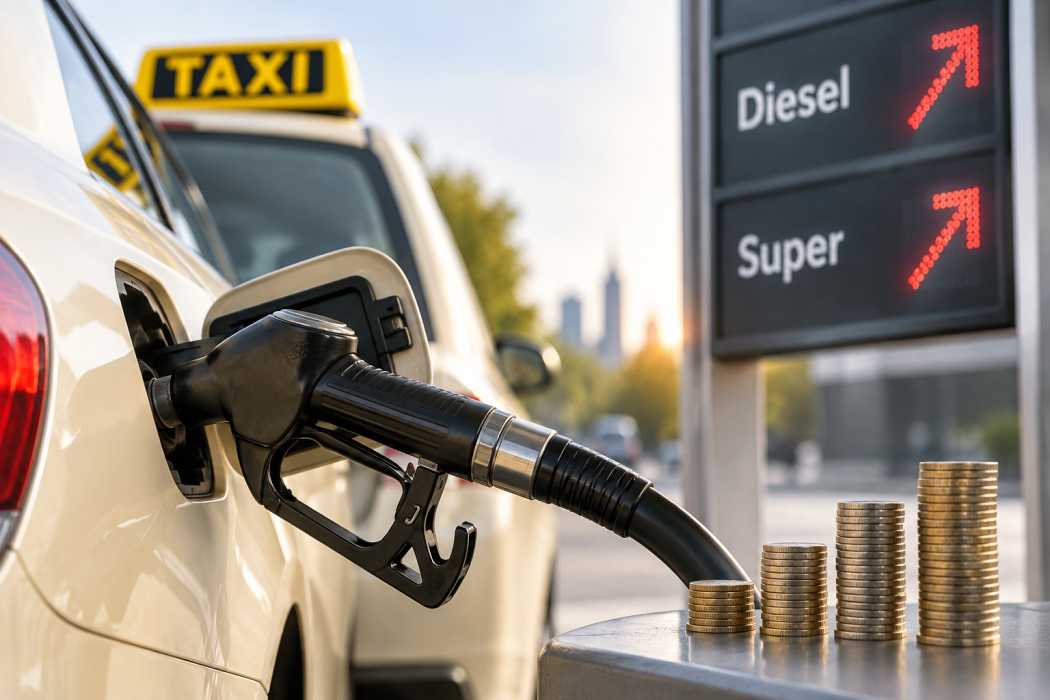
The specialized association Taxi and Rental Cars within the umbrella association of the transport trades in Lower Saxony calls for rapid relief for taxi- and rental-car companies in light of rising fuel prices. The association thus supports the corresponding demands of Lower Saxony's Minister of Economic Affairs, Grant Hendrik Tonne. According to the GVN, fuel costs in particular exacerbate the economic situation of many businesses.
The association has been highlighting rising operating costs and, in particular, the development of fuel prices since early or mid-2026 to policymakers. For taxi- and rental-car companies, the development weighs particularly heavily, because they cannot pass on higher costs in the short term through their transport fares.
Regulated tariffs delay adjustments
The association cites market regulation as a key reason. Fare tariffs would be set or approved by the competent authorities. Between significant cost increases and a corresponding fare adjustment, therefore, there could be several months. In some regions, an adjustment takes even years, according to the association.
Meanwhile, besides fuel expenditures, other operating costs rose. The GVN cites, among other things, personnel, vehicles, insurance, and repairs. Under these conditions, the tariffs currently in force are, in the association's assessment, no longer adequate in many regions.
GVN sees its economic basis endangered
If fuel prices stay at the high level or rise further and at the same time effective relief does not materialize, GVN expects a further worsening of the economic situation. According to the association, a substantial portion of companies could lose their economic basis no later than after the autumn holidays.
The GVN estimates the potentially affected share at up to 20 percent of taxi and rental car companies in Lower Saxony. This figure is an estimate by the association.
Demand for short-term relief
The trade association considers both short-term measures to limit extreme fuel-price spikes and a timely adjustment of the economic framework conditions as necessary. In the association's view, it must be taken into account that taxi and rental car companies cannot immediately pass on cost increases through higher prices.
GVN supports in this context the demands of the Lower Saxony Minister of Economic Affairs Grant Hendrik Tonne for concrete relief measures. From the association's perspective, it is decisive that concrete measures emerge promptly from the political discussion.
Impacts on Patient Transport and the Provision of Essential Services
The association points to possible impacts on the transport offering in addition to the economic consequences for the companies. Taxi and rental-car companies provide, among other things, mobility services, patient transport, and transportation in the area of essential public services.
A further deterioration of the economic conditions could, according to the GVN, lead to vehicles no longer being used and the corresponding trips no longer being offered. According to the association, transports to medical therapies could also be affected. (Source: Gesamtverband Verkehrsgewerbe Niedersachsen)
Content automatically translated.




Taxi-Fahrzeuge (Pkw) , Taxi-Newsletter, Taxameter, Taxi-Fahrer , BZP – Deutscher Taxi- und Mietwagenverband , Straßenverkehrsordnung (StVO) , Krankenbeförderung , Weiterbildung , Taxi-Konzessionen , Verkehrspolitik , Mietwagenbranche , Taxi-Apps , Berufskraftfahrer-Qualifikations-Gesetz BKrFQG) , Taxizentralen , Personal, Gehälter, Arbeitsschutz , Wirtschaftsnachrichten , Werbung , Taxi-Folierung , Taxi-Umrüster , Straßenverkehr , Elektromobilität, Taxifuhrpark und -flottenmanagement , Taxi-Versicherungen , Hybrid, Diesel, Erdgas , Taxi-Magazin