


Ihr kostenloser Branchen-Newsletter

Lassen Sie sich von unseren Fachjournalisten einmal wöchentlich über die wichtigsten aktuellen Entwicklungen der Taxi-Branche informieren, bequem direkt in Ihre Mailbox.
Aktueller Termin

Meist gelesen
Taximeter/Fiscal Taximeter News at a Glance: Facts and Frequently Asked Questions

Table of contents: Navigate effortlessly through our comprehensive news collection on taximeters / fiscal taximeters (click to jump to the relevant news item and at the end of each news item simply click to return here to the index)
This article comprises the following taximeter / fiscal taximeter news:
Taximeter / fiscal taximeter news from 2025:
- BVTM pushes for cutting red tape in taximeter calibration (21.05.2025)
- Checkmate on the taximeter – or a drama surrounding Taxi München eG (27.03.2025)
- Changes among fiscal taximeter service providers: Alternatives for Tesymex customers (12.03.2025)
Taximeter / fiscal taximeter news from 2023:
- Old HALE taximeter will no longer be calibrated in 2024 (04.12.2023)
- Kienzle Argo Taxi bids farewell to taximeters (08.11.2023)
- Taximeter expert explains implementation of the TSE mandate (06.11.2023)
- TSE mandate for taximeters: MPC Software and Digitax provide information (04.11.2023)
- HALE has revised its latest taximeter (31.10.2023)
- Taximeter manufacturer HALE celebrates two anniversaries (24.10.2023)
- Taximeters: TSE non-objection rule has been published (16.10.2023)
- Fiscal taximeter: Bosch Service provided information on TSE implementation (06.10.2023)
- Fiscal taximeter: MPC Software is working on TSE solutions (04.10.2023)
- Fiscal taximeter/TSE: Taxi umbrella association speaks of Absurdistan (19.09.2023)
- Fiscal taximeter: Federal Central Tax Office publishes interfaces (14.09.2023)
- Fiscal taximeter: TSE costs can be deducted from tax immediately (12.09.2023)
- TSE in taximeters: BMF holds out the prospect of relief (05.09.2023)
- TSE mandate: A new card in the taximeter is sufficient for the BMF (29.07.2023)
- BMF: TSE mandate starts earlier for taximeters (25.07.2023)
- BMF clarifies requirements for EU taximeters and distance recorders (11.07.2023)
- Taximeter manufacturers and dispatch providers forge connections (23.05.2023)
- HALE signing unit is also coming for new mirror taximeters (02.03.2023)









Taximeter / Fiscal taximeter news from 2022:
- HALE switches to a new mirror taximeter (02.06.2022)
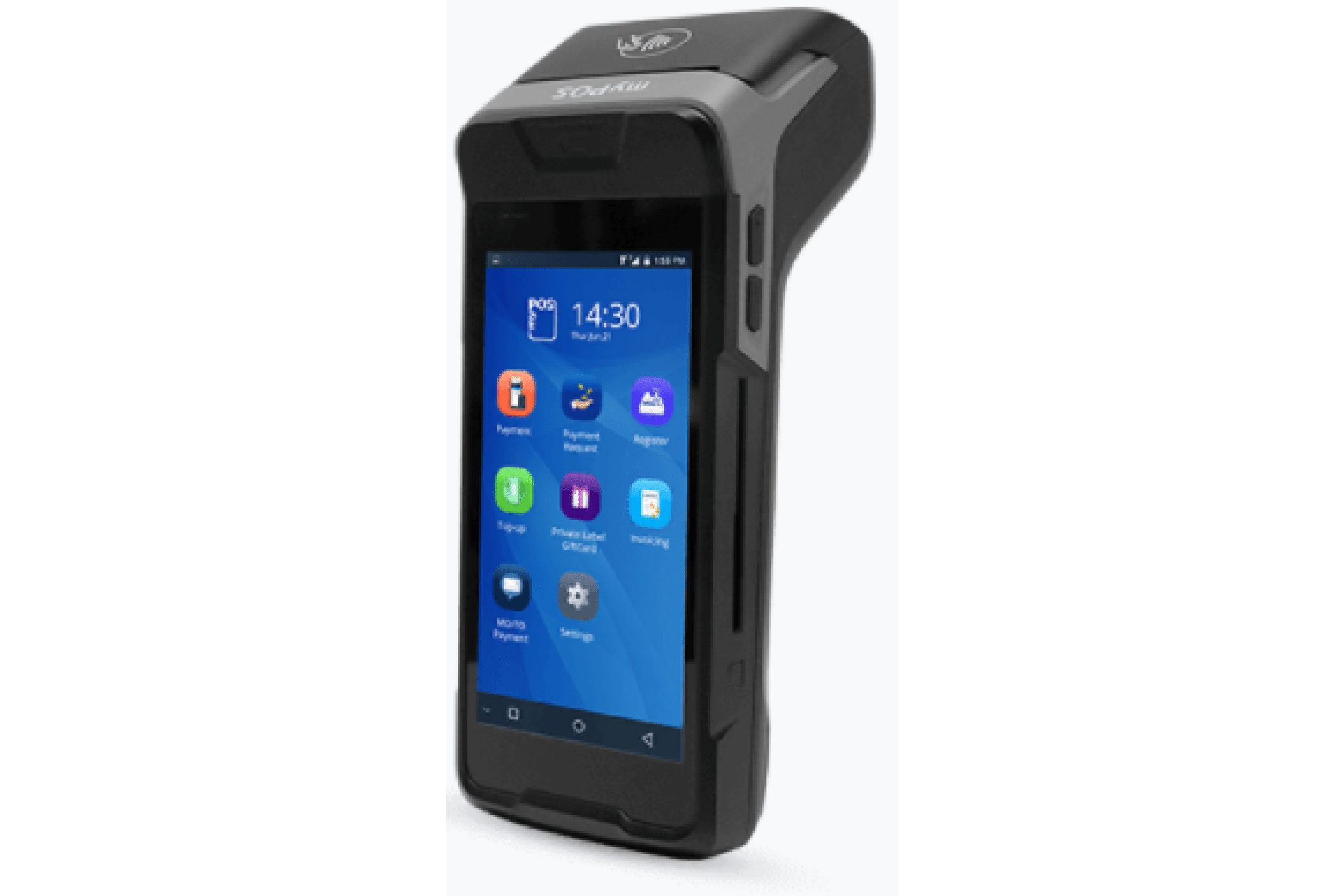
- Card terminal with taximeter connectivity (19.04.2022)
- INSIKA taximeters remain permitted until the end of 2027 (12.04.2022)
- Taximeter specialist HALE has revamped its homepage (02.03.2022)
- Taximeter specialist succumbed to a stroke (21.02.2022)
Taximeter / Fiscal taximeter news from 2021:
- Fiscal taximeter: KassenSichV is a nail in the coffin for INSIKA (23.09.2021)
- Fiscal taximeter: KassenSichV was announced (18.08.2021)
- Fiscal taximeter: Misunderstanding over the INSIKA transition (07.07.2021)
- Fiscal taximeter: Bundesrat turns INSIKA into a phase-out model (27.06.2021)
- Taximeters and distance recorders to count as cash registers from 2024 (02.05.2021)
- Federal Ministry of Finance targets taximeters and distance recorders (03.04.2021)
Taximeter / Fiscal taximeter news from 2020:
- MPC software mirrors the taximeter (18.11.2020)
- HALE mirror taximeter now frameless (21.10.2020)
- Karlsruhe tax office informs about digital taximeter data (13.05.2020)
- Fiscal taximeter seems to be taking hold in Berlin (08.01.2020)
Taximeter / Fiscal taximeter news from 2019:
- Taximeter peripherals do not require a technical security device (20.11.2019)
- B-Class taxi has only a small roof console for the taximeter (27.07.2019)
- HALE showcases frameless mirror taximeter (25.07.2019)
- HALE mirror taximeters should dim automatically (25.06.2019)
- Kienzle provides guidance on old taximeters (04.06.2019)
- A taxi day marked by taximeters and the PBefG (16.04.2019)
- Taxi sharing at a fixed price without a taximeter (10.04.2019)
Taximeter / Fiscal taximeter news from 2018:
- Mirror taximeter transmits data automatically on request (06.04.2018)
- Taximeter specialist HALE newly certified (09.03.2018)
Taximeter / Fiscal taximeter news from 2017:
- GPS module transmits trip data from taximeters (12.06.2017)
- BMF: Taximeters are not electronic cash registers (04.05.2017)
- Fiscal taximeter: Payco issues warning notice to Hamburg authorities (01.05.2017)
- Munich Chamber of Industry and Commerce: Parade in terms of fiscal taximeter (24.04.2017)
- Cologne taxi operator trains Aachen colleagues on fiscal taximeters (28.03.2017)
- Munich Chamber of Industry and Commerce lets fiscal taximeters be presented (17.03.2017)
- Hamburg puts pressure on fiscal taximeters (10.02.2017)
Taximeter / Fiscal taximeter news from 2016:
- Hamburg: Info on fiscal taximeters and on eco-taxis (07.12.2016)
- Two mirror taximeters with new features (10.11.2016)
- Berlin: Fiscal taximeter yes, INSIKA no (17.10.2016)
- Kaisersesch: Info afternoon on fiscal taximeters and metrology law (12.10.2016)
- Fiscal taximeter: Cash register law requires approval according to BZP (04.10.2016)
- Bundesrat also wants to secure taximeters and distance recorders with INSIKA (24.09.2016)
- Metrology authorities ease switch to fiscal taximeters (19.09.2016)
- New taximeter from the Netherlands (08.08.2016)
- Mirror taximeter no. 3 with integrated data box (07.08.2016)
- Kienzle T 21 taximeter soon with break regulation (07.08.2016)
- Lower Saxony hosts info day on fiscal taximeters (18.07.2016)
- Rhineland-Palatinate takes a close look at taximeters (14.07.2016)
- Fiscal taximeter: Federal cabinet adopts draft bill (13.07.2016)
- No obligation yet to evaluate taximeter data (04.07.2016)
- Fiscal taximeter: BZP also sees signals in favor of INSIKA (03.07.2016)
- Fiscal taximeter: Draft bill no longer to reject INSIKA (29.06.2016)
- Taxi-Holl does not have to rework fiscal taximeter data (03.05.2016)
- Fiscal taximeter: It gets serious on January 1, 2017 (26.04.2016)
- After installing a fiscal taximeter, verification is sufficient (14.04.2016)
- BZP adopts resolution on fiscal taximeters (12.04.2016)
- Munich Chamber of Industry and Commerce: Second info event on fiscal taximeters (31.03.2016)
- Taxi Rent Partner relies on fiscal taximeters (19.03.2016)
- Fiscal taximeter: GVN calls for regulations (01.02.2016)
- BZP: Regulation on fiscal taximeters not yet certain (24.01.2016)
Taximeter / Fiscal taximeter news from 2015:
- BZP: Taximeter metrology law stalls again (25.11.2015)
- Factory taxi packages favor new taximeter inspection (25.10.2015)
- On the safe side with the fiscal taximeter (16.10.2015)
- Information day on fiscal taximeters with further contributions (02.10.2015)
- Fiscal taximeter: BMF finds INSIKA problematic (02.09.2015)
- Chamber of Industry and Commerce for Munich and Upper Bavaria provides information on fiscal taximeters (19.08.2015)
- Thuringian taxi drivers improvise without taximeters (08.01.2015)
Taximeter / Fiscal taximeter news from 2014:
- Hamburg: Proud record on fiscal taximeters (22.12.2014)
- Kienzle and Intax reduce taximeter prices (19.05.2014)
- Fiscal taximeters sold well (14.02.2014)
Taximeter / Fiscal taximeter news from 2013:
- Grand C-MAX now again with roof console for the taximeter (18.12.2013)
- Hamburg: Support for “fiscal taximeter” also in 2014 (07.11.2013)
Taximeter / Fiscal taximeter news from 2004 - 2011:
- Berlin: Fiscal taximeter in a pilot project (24.02.2011)
- Fiscal taximeter: TVD criticizes Finance Ministry (23.12.2010)
- Fiscal taximeter through the back door (10.12.2010)
- Fiscal taximeter through the back door – first reactions (10.12.2010)
- Fiscal taximeter through the back door – legal basis (10.12.2010)
- Do German taxi operators have to install Polish fiscal taximeters? (25.11.2010)
- Mercedes qualifies restrictions on the mirror taximeter (12.11.2009)
- Taximeter reading available ex works (02.10.2008)
- Fiscal taximeter on ice? (07.08.2008)
- Federal government wants to introduce tamper-proof taximeters (12.06.2008)
- Topic of the month: Does the trade need a fiscal taximeter? (18.03.2004)
BVTM pushes for cutting red tape in taximeter verification
News from 21.05.2025 by Thomas Kanzler
The German Taxi and Hire Car Association (BVTM) has reached out directly to the new Federal Minister for Economic Affairs with a clear request. In a factual letter, the BVTM congratulates Katherina Reiche on her new role—and uses the moment to point out a regulation that the industry finds hard to comprehend: the annual verification requirement for taximeters.
Once a year, the measuring devices in taxis—the taximeters—must be checked and verified. That’s the rule. For devices in chauffeur-driven hire cars using comparable technology, however, a two-year interval applies. Both types of vehicles compete in the same market. So why the difference?
The association sees not only a distortion of competition here but also an unnecessary burden on businesses already under cost pressure. A simple change could remedy this, according to the BVTM: remove taximeters from the relevant annex of the Measurement and Calibration Ordinance—done. No law would need to be amended, no new resources required. The industry could save around 15 million euros a year in fees and downtime alone.
The letter makes it clear: cutting bureaucracy must not remain a political slogan—it must become concrete. For example, where procedures no longer seem up to date or fair. The fact that the error rate for taximeters is low anyway, according to official statistics, rounds off the argument.
Besides the verification requirement, the association also addresses a second topic on the economic and climate agenda: the drive transition. Around 100,000 taxis are in service nationwide, and roughly a quarter of the fleet is renewed each year. Switching to zero-emission vehicles offers significant potential—for the environment, cities and domestic industry alike.
E-taxis need special support
The BVTM signals willingness to cooperate: it wants to submit proposals on how to design government incentives so that they also work in the taxi sector—for example through tailored funding conditions or special programs for high-mileage fleets. Not least, German manufacturers could benefit, as they still have ground to make up in the segment of electric volume-production vehicles for commercial use.
With the letter, the association couples a request for talks—constructive, solution-oriented, not overblown. It’s about the everyday issues of a trade many people use daily but which rarely makes headlines.
The new minister will have to decide where she wants to set accents in office. An invitation is now on the table. It is politely worded—but quite concrete.
Checkmate on the taximeter—or a drama around Taxi München eG
News from 27.03.2025 by Thomas Kanzler
Big dramas still exist in our time. No Greek tragedy, no Shakespeare play can match what is currently happening at the Munich taxi cooperative. Intrigue, power struggles, betrayal—the full arsenal of political craftsmanship is on display while the real problem remains unanswered: Where is the taxi industry headed?
With raised fingers, board members Thomas Kroker and Patrick Nothhaft declare that some supervisory board members have thrown themselves into the arms of Uber and Bolt—that “world’s biggest enemy of the taxi industry,” as it is dramatically put. What at first glance looks like mere outrage, upon closer inspection appears as a deliberately placed chess piece in the game for power. The accused supervisory board members, including Sezai Curuk, Elias Ghulam and Hüsseyin Bayram, find themselves forced to respond with a counter-letter defending their honor and disputing the allegations.
But the real conflict runs deeper. While chairs are being shuffled in the boardrooms, the industry is heading straight into an uncertain future. Night-time traffic in Munich has almost completely collapsed, demand is falling, while alternative mobility models are flourishing. Meanwhile, Uber, already courted in Stuttgart, is quietly but steadily edging into Germany’s taxi industry. The platform operators’ promise sounds tempting: more rides, shorter waiting times, better digital infrastructure. But what’s the price? Is it a lifeline—or a noose?
Stuttgart serves as a testing ground. First FreeNow, then Uber—the local Taxi Auto Zentrale (TAZ) seems willing to try new avenues. They call it “pragmatic.” Opponents call it “capitulation.” For Uber, it’s a strategic coup: integrating taxis further increases its market share while the trade believes it can leverage the platform’s digital reach. But in the end, Uber holds the longer lever. Fares are set, commission rates rise, dependence grows.
The Munich taxi cooperative may be divided, but many taxi operators agree on one point: those who take Uber on board as a partner may quickly find themselves merely rowing while Uber sets the course. In Stuttgart, this may be sold as progress; in Munich, mistrust is growing. Is the Uber deal a necessity—or the gateway to the end of the traditional taxi business?
The taxi business faces its greatest challenge in decades. Demand is shrinking, platforms are poaching, cooperatives are arguing. Those who set the right course amid this chaos will set the rules in the coming years. Let’s hope the taxi trade doesn’t checkmate itself.
Change among fiscal taximeter service providers: Alternatives for Tesymex customers
News from 12.03.2025 by Thomas Kanzler
Taxi companies that have so far managed their INSIKA data via the Hamburg-based service provider Tesymex need to find a new solution by the end of March. Due to the company’s liquidation, alternatives such as Starksoft, Taxiwin and Hale are available.
The providers advertise different service packages for the legally compliant storage and management of operational data.
Starksoft: Cloud-based management solution
Berlin-based Starksoft Deutschland GmbH has been offering the storage of fiscal taximeter data since 2012. Owner Özgür Mergün describes the company’s in-house “Maxicloud” as a solution for the digital management of taxi operations. The platform also enables digital time tracking and the integration of payment receipts into the cash book.
Starksoft offers three tiers:
- Basic (14.90 euros/month/vehicle) includes, among other things, the “Alive Service,” which reports inactive taximeters, operating records after each shift, and an export function for tax offices.
- Pro (24.90 euros) adds detailed sales analyses, HR and payroll, ticket management and a shift overview to the basic functions.
- Premium (34.90 euros) additionally offers vehicle and accident management, a digital shift schedule, an internal chat function and the use of NFC technology for authentication.
Taxiwin: Affordable alternatives focused on efficiency
Also based in Berlin, Taxiwin is run by Marco and Rüdiger Kosch and provides cloud-based data management. “Data management made easy” is the motto of the family business, which positions itself with competitive pricing.
The two main plans are:
- Taxiwin Basic (8.90 euros/month/vehicle) targets sole proprietors and ensures audit-proof storage of trip data along with export for tax authorities.
- Taxiwin Premium (11.90 euros) offers, in addition to the basic functions, comprehensive time tracking and gross payroll, the integration of cashless payments from, for example, FreeNow (as well as Bolt and Uber), and live GPS tracking for certain taximeters.
Customers can also book a driver app (4.30 euros) for mobile data capture and a SIM card for data transmission (2.50 euros). A “legacy data transfer” simplifies switching from existing systems.
Hale: Three tiered packages with modular add-ons
Salzburg-based Hale Electronic positions itself as a comprehensive data management provider for taxi operations. The company is enticing former Tesymex customers with three months of free use.
Since early 2024 three plan models have been available:
- Hale Fiscal (8.90 euros/month/vehicle) is aimed at individual drivers who want to store fiscal data in an audit-proof way for ten years.
- Hale Business (13.50 euros) offers enhanced operational data management with driver billing, revenue documentation and automated reports.
- Hale Professional (17.90 euros) provides a comprehensive end-to-end solution with vehicle cost management, account rides and shift planning.
Additional modules such as a cash book, Mobilithek or direct billing of medical transport with payers can be added. An optional SIM card costs 3.40 euros per month.
Hale Managing Director Martin Leitner emphasizes: “The HALE Data Center has already proven itself under INSIKA as the optimal solution for fiscal-compliant data storage. Naturally, it now also meets all KassenSichV/TSE requirements.”
A prompt decision is required
With Tesymex’s imminent shutdown, taxi companies must act at short notice to ensure seamless fiscal data storage. Starksoft, Taxiwin and Hale offer various models suited to different operation sizes and functional needs. Pricing structures are similar, with providers differentiating through additional services. A swift decision is advisable to remain compliant with fiscal requirements.
Old HALE taximeter will no longer be verified in 2024
News from 04.12.2023 by Dietmar Fund
The Taxi and Hire Car Association of the Gesamtverband Verkehrsgewerbe Niedersachsen (GVN) has an important message for taxi operators who did not yet want to part with a certain legacy device.
Many frugal taxi operators like to use familiar taximeter models as long as they still function flawlessly. There are limits, as a notice from the Taxi and Hire Car Association of the Gesamtverband Verkehrsgewerbe Niedersachsen (GVN) makes clear. It says that, according to the Metrology and Verification Authority of Lower Saxony (MEN), the HALE MCT-05 taximeter can only be verified this year.
From 2024 onwards, this device will no longer be verified. The reason is that the calendar function in this model expires at the end of 2024. From January 1, 2025, the device will therefore no longer be able to distinguish between weekdays, public holidays and weekends. The association therefore points out that users of the MCT-05 will need a new device afterwards.
Kienzle Argo Taxi exits the taximeter business
News from 08.11.2023 by Dietmar Fund
The current EU-compliant taximeters will only be sold until the end of 2023 and will not be retrofitted for the TSE obligation, while roof signs will continue to be offered.
At the end of October 2023, Kienzle Argo sent a “discontinuation notice” for the current EU-compliant T 21 and T 21S taximeters to its sales and service partners. It states that they and their add-on products such as the INSIKA data box will no longer be produced after the introduction of the technical security device TSE. This decision applies regardless of the non-objection rule announced by the Federal Ministry of Finance.
For the duration of the transitional arrangements until 31.12.2025, however, the company will still provide tariffs for these two taximeters. The supply of spare parts is also to be ensured during this period. From 2024, in addition to the taximeters, the C 21 data box, the alarm system and the alarm control unit will no longer be available.
Kienzle Argo will, however, continue to offer roof signs with and without LED and with and without silent alarm, according to the letter. Daniel Starrach, Managing Director of Kienzle Argo Taxi GmbH in Berlin, sent it to taxi heute upon request. On 4 November 2023, taxi converter Matthias Müller from Heilbad Heiligenstadt had pointed out Kienzle Argo’s decision at the general meeting of the Fachvereinigung Personenverkehr Sachsen-Anhalt.
Taximeter expert explains implementation of the TSE obligation
News from 06.11.2023 by Dietmar Fund
The Thuringian retrofitter Matthias Müller used vivid examples at the general meeting of the Fachvereinigung Personenverkehr Sachsen-Anhalt to explain how to comply with the TSE obligation and why it should be tackled quickly.
The tax authorities now require digital data stored on a data carrier that they can run through their audit program. Unedited digital data can just as easily lead to an estimate of the tax liability as having no digital data at all. With this introductory remark, Matthias Müller caught the attention of the 22 participants at the general meeting of the Fachvereinigung Personenverkehr Sachsen-Anhalt. He gave a lecture there on 4 November 2023 at the Mühlenhotel Halle-Leipzig on implementing the TSE obligation.
Despite the non-objection rule published in early October 2023, entrepreneurs should retrofit a technical security device (TSE) as soon as possible, as installation takes time. For already installed taximeters, retrofits and software adjustments may be necessary depending on the device. You should clarify with your repair shop what measures are required for your devices, advised the retrofitter from Heilbad Heiligenstadt in Thuringia. He presented a list of taximeters, mirror taximeters and all-in-one devices from manufacturers Digitax, HALE, Semitron and Taxitronic that are already suitable for TSE now or in the near future. This does not apply to the T 21/T 21 S series taximeters from Kienzle. His list made no claim to completeness.
Holger Kampmann from MPC Software added that the signature box SEI offered by taximeter manufacturer HALE also needs new firmware. The sales manager was present with a stand, as were Uwe Rose from Taxi Rent Gera, Sven Brysch from opta data and Sabine Schunk from mobile GARANTIE.
When asked from the audience whether the driver should enter the payer directly for account rides and whether it would not be better for the entrepreneur to post-process the data recorded and signed during the day, Holger Kampmann replied that doing this afterwards was, in his view, an “indefensible effort” if you have more than one vehicle. Both Kampmann and Müller advised setting up account ride clients in advance in the HALE data center or in your own back office and informing the driver of the creditor number with the job, which he must then enter into the taximeter. The MPC Software driver app can also be configured for co-payments, Kampmann noted.
Audience members repeatedly said their drivers would be overwhelmed by this. “My practical experience is that most drivers can do it, and the few who cannot are usually those who simply don’t want to,” countered Holger Kampmann. “Minor errors may be criticized in an audit, but they do not yet lead to an estimate.”
Andreas Fricke, chairman of the association, suggested that the Thuringia State Association of the Transport Industry (LTV), in which the association is organized, should prepare a “short guide” for entrepreneurs. LTV Managing Director Martin Kammer promised such assistance by the end of the year.
At the general meeting of the Fachvereinigung Personenverkehr Thüringen on 25 November 2023 in Erfurt, Matthias Müller will again provide information on the topic.
TSE obligation for taximeters: MPC Software and Digitax provide information
News from 04.11.2023 by Dietmar Fund
The provider of dispatch and management software and the taximeter manufacturer are providing information in Rendsburg on implementing the TSE obligation.
On 17 November 2023 from 7 p.m., MPC Software and Digitax invite interested taxi and hire car operators to an information event at the Küstengarage Volkswagen dealership in Rendsburg. The provider of the TARIS dispatch and management software with its many modules and the Italian manufacturer known for its all-in-one devices aim to explain how to meet the TSE obligation vis-à-vis the tax authorities and what operational benefits can be derived from it. This was announced by Holger Kampmann of MPC Software on 4 November 2023 on the sidelines of the general meeting of the Fachvereinigung Personenverkehr Sachsen-Anhalt at the Mühlenhotel Halle-Leipzig to taxi heute.
The event was organized by Rendsburg taxi operator Matthias Callsen. He is a sales and installation partner of Digitax. Holger Kampmann will cover the MPC Software side, and Torsten Poreda, Managing Director of Digitax Deutschland in Hamburg, will represent the taximeter manufacturer. Both are well known in the industry from their appearances at the European Taxi Fair and regional taxi events.
Attendance at the event in Rendsburg is free of charge. Interested parties should register by email with Holger Kampmann (kampmann@mpc-software.de). He can also be contacted to find out whether his company will soon be offering further such information events in other regions.
HALE has updated its latest taximeter
News from 31.10.2023 by Dietmar Fund
With a faster processor and expanded functions, the MCT-07 taximeter is now said to be available again.
Following a “component-related redesign with an addendum to the approval” and a software upgrade, Salzburg electronics specialist HALE announces that its latest taximeter model MCT-07 is available again. It now features a cash/card function designed to reduce drivers’ daily settlement work and the billing workload in the office. Credit card billing via a terminal from Salzburg-based hobex AG is now also possible. Tips can now be entered as well. The panic button can now transmit signals to driver apps such as MPC Software’s Taris Driver or taxi.de without an additional box.
As before, once a TSE card is inserted, revenue data is signed directly in the taxi without the need for an additional device. Using the “extended cash register mode,” drivers can also enter trip types, payment methods and billing numbers that are signed immediately in the vehicle.
According to the manufacturer, the integrated communications module not only ensures that the signed data is sent directly to the connected server at the end of the trip, but also allows GPS tracking of the taxi. Shifts can be clocked in and out via the NFC driver card and the integrated NFC reader or automatically via Bluetooth in conjunction with data radio or a driver app.
HALE emphasizes that the MCT-07 also allows the acceptance of “pre-agreed fixed fares.”
Taximeter manufacturer HALE celebrates two anniversaries
News from 24.10.2023 by Dietmar Fund
The company was founded 50 years ago and has been supplying German customers for 40 years.
At the turn of 1972/1973, Hermann Haslauer and Martin Leitner laid the foundation for a company with a specialist workshop for automotive instruments, whose name—common at the time—was formed from the first letters of the partners’ surnames: today HALE electronic GmbH, the four capital letters stand for one of the most important manufacturers of taximeters and distance recorders as well as useful accessories around this core competence. Thus, the Salzburg team is quietly celebrating its 50th anniversary this year and, incidentally, 40 years since entering the German market.
The founders’ first link to the taxi trade was installing mechanical taximeters and providing the associated service. Electronic expertise was evidently built up through repairing small electrical appliances as well. In 1977, the first HALE taximeter came onto the market as the first fully electronic taximeter in DIN radio dimensions. In line with the naming convention by device generations that is still maintained today, it was simply called “HALE-1.”
Martin Leitner has always seen himself as a development partner and supplier to car manufacturers and therefore had to tackle ISO 9001 certification early on, which now benefits him in 35 countries. Devices are programmed in 26 languages for these markets.
The company founder regards the mirror taximeter developed in 1999 together with Mercedes-Benz as a device revolution, where the entire electronics moved into the mirror housing. This path is now being followed by the third generation in a frameless form, with housings adapted to the design of major brands.
Early on, the company also considered how to leverage the data generated in taximeters and distance recorders for operational management. The starting point here was the Hale Cey data stick, which drivers used to clock in for shifts and which is now gradually being phased out. Networking with radio dispatch systems at taxi centers and the in-house data center for fiscal data followed. Roof signs and the cash machine round off today’s product range. All of this is developed and built by a 75-strong team at the company’s headquarters on the northern edge of Salzburg, separated from the German border only by a strip of motorway. For service, HALE works with over 200 customer services in German-speaking countries.
For the future, the company founder, who is gradually stepping back from the front line, promises more interesting ideas to make life easier for the taxi and hire car industry. He shares management of the company with his son Stefan Leitner. His daughter Barbara Stering is responsible for product management.
Taximeters: TSE non-objection rule has been published
News from 16.10.2023 by Dietmar Fund
Until 31 December 2025 at the latest, EU taximeters and distance recorders may continue to be used without a certified technical security device (TSE).
The Federal Ministry of Finance has informed the supreme state tax authorities in a letter dated 13 October 2023 that the use of EU taximeters and distance recorders within the meaning of the Cash Register Security Ordinance without a certified technical security device (TSE) should not be objected to until 31 December 2025. The letter states verbatim: “The technically necessary adjustments and upgrades must be made immediately and the legal requirements met without delay. To enable implementation of a nationwide upgrade, it will not be objected to if these electronic recording systems do not have a certified technical security device until 31 December 2025 at the latest.”
The digital interface of the tax administration for EU taximeters and distance recorders should also not apply until the certified technical security device is implemented, at the latest for the period of non-objection, the letter says in fine bureaucratese. Even the reporting obligation for availing of the transitional rule for EU taximeters with INSIKA technology should not apply for this period at the latest. “The notification pursuant to section 146a (4) of the Fiscal Code is to be waived until an electronic transmission option is in use. The date of use of the electronic transmission option will be announced separately in the Federal Tax Gazette Part I,” it adds.
Interested readers can download the letter as a PDF in the download area of this report and forward it to their tax consulting office.
Jürgen Weberpals, Managing Director of the German Semitron importer Heedfeld, kindly made the letter available to taxi heute immediately.
Fiscal taximeter: Bosch Car Service informed on TSE implementation
News from 06.10.2023 by Dietmar Fund
At the Karlsruhe company Karrer & Barth und Partner GmbH, prominent representatives of HALE and MPC Software provided information on implementing the TSE obligation.
On Thursday, 5 October 2023, Mark Fischer, Managing Director of the Karlsruhe Bosch Car Service Karrer & Barth und Partner GmbH, invited taxi operators to an information event focused on the obligation to record taximeter data in a tamper-proof manner using a technical security device (TSE). The customer service and service partner of taximeter manufacturer HALE brought in two high-caliber speakers: Stefan Leitner, Managing Director of HALE Electronic, and Holger Kampmann, Sales Director of MPC Software.
Leitner provided information on the legal changes and implementation relating to taximeters and the Salzburg company’s data center, and also presented application examples. Holger Kampmann explained the TARIS dispatch system, whose modules are said to allow full integration of data from taximeters and distance recorders and their logging.
According to taxi operator Athanasios Mylonas, who pointed taxi heute to the event, around 100 entrepreneurs took part in Karlsruhe.
Fiscal taximeter: MPC Software working on TSE solutions
News from 04.10.2023 by Dietmar Fund
A solution with the Digitax X-One Plus Android all-in-one device and the TARIS Driver app is on the verge of a pilot run. Further solutions for HALE and Semitron taximeters are in the works.
A TSE solution is expected to go into live operation with selected MPC Software customers in mid-October 2023. It consists of a technical security device (TSE) for the Digitax X-One Plus all-in-one device with its Android operating system, which is to be used together with the TARIS Driver app.
The TSE signs relevant data for taximeter events such as “occupied,” “free,” “break,” and “driver clock-in and clock-out,” the software provider writes. The signed data of the electronic recording system is available for receipts and for data export according to DSFinV-TW for a tax audit.
Customers already using the Digitax device only need a software update and must purchase a TSE SD card, writes Matthias Plote, one of the three managing directors of the family company. The card can be obtained from them.
In addition to Digitax, they are also in contact with HALE and Semitron to provide a suitable solution for customers with other taximeters, the trio adds.
Fiscal taximeter/TSE: Taxi umbrella association speaks of Absurdistan
News from 19.09.2023 by Dietmar Fund
The Vice President of the Taxi and Hire Car Association Germany (TMV) considers it absurd to publish a regulation on the deductibility of TSE installation while important technical issues remain unresolved.
To this day, the framework conditions are unclear that define what taxi and hire car companies will actually have to install in their vehicles as of 1 January 2024 in order to present the required technical security device (TSE). The Federal Ministry of Finance’s statement that the costs can be written off immediately is indeed good news, but “Absurdistan pure and simple.” That is, according to a press release from the Taxi and Hire Car Association Germany (TMV) dated 18 September 2023, essentially how Markus Gossmann, one of the two vice presidents of the taxi umbrella association, put it.
Many politicians seem unaware of what it means to “constantly annoy” 32,000 companies with 100,000 affected vehicles and 250,000 drivers and their families, Gossmann writes. This powerful voice of the Mittelstand should not be underestimated at election time. “At the moment, politics is squandering all trust with us,” concludes the entrepreneur from the Bergisches Land region.
In his letter, Gossmann also explains that parts for installing a TSE are not available in sufficient quantities on the market. He puts the installation cost at around 1,000 euros per vehicle.
Fiscal taximeter: Federal Central Tax Office publishes interfaces
News from 14.09.2023 by Dietmar Fund
The Federal Central Tax Office has finally published the interface description on the basis of which the tax administration will in future be able to digitally query the data recorded by EU taximeters and distance recorders.
Manufacturers of EU taximeters and distance recorders and tax advisors to taxi and hire car companies can now finally familiarize themselves with the digital interface through which the tax administration will in future digitally query fiscally relevant data recorded by the devices. This is made possible by the “Digital Interface of the Tax Administration for EU Taximeters and Distance Recorders (DSFinV-TW),” which the Federal Central Tax Office has recently made available for download on its homepage.
The authority explains the interface verbatim as follows: “The DSFinV-TW is the description of an interface for exporting data from electronic recording systems for data provision (‘Z3 access’) in the context of external audits. It is intended to ensure a uniform structuring and naming of files and data fields regardless of the electronic recording system used by the company. The company must provide the data in accordance with the conventions of the DSFinV-TW on a suitable data carrier.”
The standardization is intended to define a structure for data “from taximeters, distance recorders and supplementary recording systems,” for which the use of the legally required uniform digital interface pursuant to Section 146 of the Fiscal Code will apply from 1 January 2024, the ministry continues. In addition to uniform data provision for tax audits and spot checks, the digital interface is intended to enable all data recorded in the respective electronic recording system to be captured in an archive system. It is also intended to enable a “simplified verification” of the structured data transferred from taximeters, distance recorders and supplementary recording systems into the financial accounting system.
The new building block ties in with the Cash Register Security Ordinance (KassenSichV) which, as reported repeatedly, under current legal status is to be applied to EU taximeters and distance recorders from 1 January 2024, although for the latter an important BMF letter is still pending, making simultaneous introduction questionable. From 2024, a technical security device (TSE) is intended to prevent manipulation of digital basic records. Taxi and hire car associations as well as retrofitters consider the 1 January 2024 introduction date completely unrealistic.
Entrepreneurs in the taxi and hire car sector should not sit back despite this assessment but prepare for the introduction. If they do not provide their fiscally relevant data in conformity with the DSFinV-TW, they face estimated assessments according to a revised Section 158 of the Fiscal Code. This is pointed out by Edo Diekmann, a tax specialist familiar with the mobile sector at the Lower Saxony State Tax Office. He works in the tax department in the external audit division and has repeatedly given lectures on audit procedures to associations and at other industry events.
Taxi and hire car companies wishing to alert their tax advisors early to the new requirements can also download the Federal Central Tax Office’s 82-page Document Version 1.0 in the download area of this report. That way, they are not dependent on a link that may change again after some time. Please note: Opening the extensive file may take a few moments.
Fiscal taximeter: TSE costs can be deducted immediately for tax purposes
News from 12.09.2023 by Dietmar Fund
The Federal Ministry of Finance has clarified that the costs for retrofitting a TSE in existing devices or newly implementing one can be deducted immediately and in full from taxable income as operating expenses.
Taxi and hire car companies that retrofit EU taximeters or distance recorders with a certified technical security device (TSE) or install them as new devices can deduct the costs in full immediately as operating expenses. The Federal Ministry of Finance (BMF) published this in a so-called BMF letter dated 30 August 2023 following discussions with the supreme state tax authorities. Edo Diekmann, a specialist familiar with the taxi and hire car industry at the Lower Saxony State Tax Office, pointed this out to taxi heute.
The most important part of the announcement for the taxi and hire car sector is a section on a simplification rule. The letter states verbatim: “For reasons of simplification, it will not be objected to if the costs for the subsequent initial equipment of existing EU taximeters or distance recorders with a TSE and the costs for the initial implementation of the uniform digital interface of an existing electronic recording system are deducted immediately in full as operating expenses.” The fact that the expenses for implementing the uniform digital interface are counted as “ancillary acquisition costs” of the “TSE asset” will interest only tax advisors.
The BMF letter is currently accessible via the ministry’s homepage under the keyword “BMF-Schreiben,” but according to the letter itself only for a limited time. It will then be published in the Federal Tax Gazette. Readers wishing to forward the BMF letter to their tax advisor can download it as a PDF from the download area of this report.
TSE in taximeters: BMF signals possible relief
News from 05.09.2023 by Dietmar Fund
A Parliamentary State Secretary explained to MP Michael Donth that the BMF letter interpreting the Fiscal Code is not directly tied to the legal regulation to which it refers.
In a letter dated 16 June 2023, the Federal Ministry of Finance (BMF) asked taximeter manufacturers and associations for a statement on the status of implementing a technical security device (TSE) “in order to be able to estimate the conversion horizon.” The BMF wanted “reliable statements for reviewing a relief rule regarding the timeline for implementation.” This is according to Parliamentary State Secretary Katja Hessel in a reply to a minor inquiry that Member of the Bundestag Michael Donth had addressed to the BMF. He wanted to know, in essence, whether the TMV’s accusation was true that the BMF had asked the associations for a statement by 30 July while already posting a BMF letter to the supreme state tax authorities on its homepage on 30 June.
The Parliamentary State Secretary wrote to the MP that the statements received are currently being evaluated and discussed with the supreme state tax authorities. The concerns expressed by associations regarding implementation deadlines would be taken into account and “a solution satisfactory to all sides” is being sought. By stating that a decision on a “relief rule” has not yet been made, Hessel holds out the prospect of one, even if she writes that the final discussion with the supreme state tax authorities is still pending.
The application decree for Section 146a of the Fiscal Code (AEAO) is to be considered separately, explains Katja Hessel. Due to the imminent entry into force of the regulation that includes EU taximeters within the scope of the Fiscal Code, early publication was necessary. She writes verbatim: “A regulation of time-limited reliefs, such as for implementing the KassenSichV, is not customary in the AEAO. Such time-limited relief rules are usually published in separate BMF letters.” Whether there will be such a separate BMF letter is currently being discussed with the supreme state tax authorities.
Patrick Meinhardt, Federal Managing Director of the TMV, had prompted Michael Donth’s minor inquiry. In view of the Parliamentary State Secretary’s reply, he said the TMV still assesses the timeline as “an absurd signal,” even if these are two separate processes. “At least the State Secretary hints in her last sentence that there could be a ‘possible relief rule’ and thus keeps open the back door that will also be necessary,” writes Meinhardt. It is regrettable that the BMF has so far not complied with the request to set up a “round table” on implementing the KassenSichV.
TSE requirement: A new card in the taximeter is enough for the BMF
News from 29.07.2023 by Dietmar Fund
To fulfill the TSE obligation, in a taximeter that has a TIM card for INSIKA, it is only necessary to replace it with a TSE card, the Federal Ministry of Finance wrote to the service provider Payco.
Manfred Schröder, Managing Director of the Hamburg-based service provider Payco GmbH, obtained important information from the Federal Ministry of Finance (BMF) on the technical implementation of introducing the TSE in EU taximeters, which the ministry is upholding. A representative of the responsible unit wrote him verbatim as follows: “A completely new taximeter with integrated TSE as of January 1, 2024 is not generally required. Replacing the TIM card in the INSIKA system with a TSE card regularly meets the requirements of the Cash Register Security Ordinance.”
Schröder had asked the BMF whether the TSE had to be located in the taximeter and whether the calibration office had to be involved, which would mean a completely new taximeter with an integrated card would be required. This is of great importance for the use of his ePOS system, which, as a separate recording system outside the taximeter, has a cash register function. It digitally signs the entire transaction including taximeter data, Schröder had written to the ministry. He made the ministry’s response of July 27, 2023 public on July 28, 2023.
Markus Gossmann, Vice President of the Taxi and Rental Car Association Germany (TMV), reacted immediately with a press release. In it, regarding the clarification obtained by Payco, he wrote that he was relieved by any “sensible signal from the Federal Ministry of Finance that does not further complicate the lives of our taxi and rental car operators.” However, it is important to enable a “legally secure design” for all systems and not only for the INSIKA systems already equipped with a TIM card, which are used only in part of the taxi fleet.
There is a risk here of introducing a two-tier society. Therefore, the TMV is trying to obtain legally secure answers for all other system solutions as well. Gossmann again reminded that his umbrella association (as does, incidentally, the older Federal Association Taxi and Rental Car e.V./BVTM) considers the introduction date of 1/1/2024 to be completely unrealistic.
BMF: TSE obligation begins earlier for taximeters
News from 25.07.2023 by Dietmar Fund
According to the Federal Ministry of Finance, the obligation to equip EU taximeters with a TSE as of 1/1/2024 remains in place, while distance recorders will be introduced later at an as yet unclear date.
The date of 1/1/2024 for the introduction of the TSE obligation for EU taximeters is completely unrealistic, and this equipment requirement should also be introduced simultaneously for distance recorders. Both federal taxi associations made this clear in statements to the specialist department of the Federal Ministry of Finance (BMF) responsible for TSE introduction and also wrote to Federal Finance Minister Christian Lindner on this matter (as reported by taxi heute).
In response to an inquiry from taxi heute on July 17, 2023, a BMF spokesperson confirmed on July 25, 2023, that the specialist department’s inquiry about the status of implementation had been answered inconsistently “by various associations and taxi manufacturers.” In some cases, the responses were based on “differing factual and legal views.” The ministry had subsequently informed the associations of the current factual and legal situation. The statements are now being evaluated and will be discussed “in due course” with the supreme tax authorities of the federal states.
Important: The BMF rejects a simultaneous introduction of the TSE equipment obligation. On this point, the ministry’s spokesperson wrote verbatim: “The obligation to equip with a TSE begins for EU taximeters with the entry into force of Article 2 of the Ordinance amending the Cash Register Security Ordinance (Federal Law Gazette I 2021, 3295) on January 1, 2024. The obligation for distance recorders is determined by Section 10 of the Cash Register Security Ordinance (as amended by Art. 2 of the Ordinance of July 30, 2021). As a result, the obligations do not come into force simultaneously.”
The question from taxi heute as to when the BMF letter on the introduction of the TSE for distance recorders, alluded to here in a roundabout way, will be published was not answered. The statement suggests there may be something to the rumor circulating in the industry that one of the taximeter manufacturers considered it possible to introduce the TSE obligation on 1/1/2024.
BMF specifies requirements for EU taximeters and distance recorders
News from 11.07.2023 by Dietmar Fund
In an application decree, the Federal Ministry of Finance (BMF) explains how it envisages the application of the Cash Register Security Ordinance to EU taximeters and distance recorders as of January 1, 2024.
An “AO application decree” has recently been available for download as a PDF on the website of the Federal Ministry of Finance (BMF). It is the “new version of the application decree to Section 146a AO” of June 30, 2023, which has been published in the Federal Tax Gazette Part I. Over a total of 41 pages, it explains how the Cash Register Security Ordinance (KassenSichV) is to be applied to EU taximeters and distance recorders. As taxi heute has repeatedly reported in recent years, the aim is to record all transactions in taxis and rental cars electronically, individually and in a tamper-proof manner without gaps.
The document describes, among other things, the Technical Security Device (TSE), which the Federal Office for Information Security (BSI) has defined in six technical guidelines listed by name. The procedure in the event of their failure and the electronic storage of records and correction options are addressed, as are requirements for receipts and their issuance in electronic or paper form.
The document also names 1/1/2024 as the effective date for EU taximeters and 1/1/2026 for EU taximeters that were equipped with INSIKA technology before 1/1/2021. As already reported, taxi operators whose devices are affected must inform their competent tax office informally in writing or electronically by 1/31/2024 if they wish to continue using them, for which five technical details are mandatory. The relevant section also states that this extended deadline does not apply if such an EU taximeter equipped with INSIKA technology is removed from one vehicle and installed in a new one.
For distance recorders, the BMF letter formulates analogous specifications. They apply to all distance recorders “that were newly placed on the market after a date published by a separate BMF letter.”
Interested taxi and rental car entrepreneurs can download the “AO application decree” as a PDF in the download area of this report and study the unwieldy regulations at their leisure.
Taximeter manufacturer and dispatchers forge connections
News from 23.05.2023 by Dietmar Fund
Taximeter manufacturer HALE and Talex mobile solutions, known for its taxi.de dispatch system, want to further simplify the work of taxi companies through a direct connection between their system worlds.
Recently, Salzburg-based taximeter specialist HALE and Talex mobile solutions established a direct connection between taximeters and the taxi.de dispatch software. This is intended to offer companies working with both systems some process simplifications.
The taxis’ occupied/free status is now transmitted automatically to the dispatch system and no longer has to be entered manually there. This is intended to make fleet control more effective.
Hospital and other account rides dispatched by taxi.de are to be recognized by the taximeter and recorded immediately as cashless revenue. This avoids operating errors by driving staff and is intended to simplify their settlement.
When logging in to taxi.de, drivers are also automatically logged in for the shift on the HALE taximeter. After each trip, all driving data from the taximeter is transmitted both to the Salzburg data center and to taxi.de. In addition, employee, customer and vehicle master data only need to be maintained in one of the two systems and will then be synchronized automatically.
With the latest MCT-07 taximeter, there is another advantage: If fixed prices are approved in the local tariff, the device recognizes the dispatch of fixed prices or flat-rate trips from the taxi.de app. However, HALE writes that this depends on the taximeter used and/or the taximeter software used.
HALE signing unit also coming for new mirror taximeters
News from 02.03.2023 by Dietmar Fund
There is a conversion campaign for the modem used to date.
Since early March 2023, the “multifunctional signing unit SEI-03M” can also be combined with the latest mirror taximeters SPT-03 and its frameless variant SPT-03R. Salzburg-based device manufacturer HALE Electronic announced this.
The signing unit is fundamentally designed for taximeters without their own signing function. It signs revenue data using the INSIKA procedure and automatically forwards fiscal data as well as operating data such as working and break times via a modem to the HALE data center. The Salzburg-based company considers its unit prepared for the Technical Security Device (TSE) required in the future by the Cash Register Security Ordinance.
Via the display and keypad, drivers—and especially female drivers with their slimmer fingers—can enter, for example, trip types, flat rates or payment methods and thus simplify post-processing in the office. The new split payment also allows trips to be settled partly in cash and partly cashless.
With the built-in GPS, vehicles can not only be located but receipts showing departure and arrival locations can also be issued. The provision of dynamic mobility data is also possible, writes the manufacturer.
The MOD 003 modem previously necessary for data transmission is now being phased out. Companies that would like to replace it with the signing unit will receive a low-cost upgrade as part of a service campaign, the Salzburg-based company promises.
HALE switches to a new mirror taximeter
News from 02.06.2022 by Dietmar Fund
The old SPT-02 model is being phased out. Its successor will be the frameless SPT-03R, representing the third generation of the mirror taximeter.
Apart from already ordered or reserved contingents, HALE’s previous mirror taximeter model SPT-02 has been discontinued. It is being replaced by the frameless successor SPT-03R, which was initially only available for certain premium vehicle models. With original mirror mounts and adapters, the current model should be installable in all vehicle models. It is priced at 698 euros (excluding VAT).
Apart from its look, the frameless mirror taximeter offers a contactless driver login via an integrated NFC reader and likewise contactless transmission to the HALE data center. This means an additional reader and around 100 euros can be saved, the Salzburg-based company reports. In addition, the new model can store significantly more tariffs than before, with up to 1,000 tariff steps.
Convenient entry of customer numbers is intended to facilitate handling of account trips. Operating data and signed fiscal data are recorded in compliance with the principles of proper accounting, i.e., GoBD-compliant. The device can be connected to data radio systems via HALE CAN or an optional Bluetooth connection. Accessories such as a receipt printer or a modem can also be connected.
The SPT-03R is the third generation of the mirror taximeter. The Salzburg-based company launched the first in 1999 to take account of the constantly shrinking installation spaces in new passenger car and van models for design reasons.
In its press release HALE also emphasizes that the new mirror taximeter adapts to the design of Tesla, Volkswagen and Volvo. At Mercedes-Benz, since 2016 the SPT-03 model has been installed in the original housing, which is why the mirror taximeter there is not frameless.
Card terminal with taximeter connection
News from 19.04.2022 by Dietmar Fund
With its all-in-one mPOS Carbon device, Payco offers the option of using data from the taximeter for the tax office and for working time accounting.
Hamburg-based company Payco GmbH offers its mPOS Carbon card terminal as an all-in-one device for taxi companies. The core function of the Android card terminal is to capture card payments and issue receipts to passengers via the integrated printer. Payments are possible both with PIN entry and contactless via NFC technology. The system is also set up for mobile payments with the most common apps.
In addition, the device has interfaces to taximeters from HALE and Kienzle as well as to taxi apps from Payco itself and the software provider SuE-Software. According to Managing Director Manfred Schröder, both have supported a fiscal solution since November 2021 with TSE signatures of all transactions including the taximeter trip data record. This is intended to ensure the device is already configured for the requirements of the new Cash Register Security Ordinance, even if the Federal Ministry of Finance has not confirmed this, because testing software is not among the ministry’s tasks. In any case, all individual transactions can be stored on the device in an unaltered form and in accordance with the principles of proper accounting (GoBD). This interface can also be used to create electronic shift slips or a cash journal. Vehicle tracking, navigation via Google Maps and a trip log function are also included.
Payco sources the mPOS Carbon from myPOS and sells it for 199 euros (prices excluding VAT). As an option, there is a Brodit mount for 25 euros. For card payments, the company charges 2.2 percent of sales and at least 30 cents per transaction as a commission; for Girocard payments, 0.95 percent. Revenues are transferred twice a month. Users do not have to commit to a fixed contract term. It simply ends when they no longer use the device.
INSIKA taximeters remain permitted until the end of 2027
News from 12.04.2022 by Editorial staff (general)
The transfer of already installed taximeters and distance recorders into a new vehicle is also to be permitted.
Taxi operators who already have INSIKA taximeters are to be granted a longer grace period for the switch to the future “technical security device.” This is provided for in the Federal Ministry of Finance’s (BMF) draft bill to amend the revised Cash Register Security Ordinance (KassenSichV) that was only adopted in summer 2021.
In principle, it remains the case that from January 1, 2024, all taxis must have a “technical security device” (TSE) that makes till manipulation impossible. However, taximeters equipped with INSIKA should be allowed to continue to be used until the end of 2027—even in the event of a vehicle change. The current ordinance stipulates the final end for INSIKA devices at the end of 2025. The prerequisite is that the devices were equipped by the end of 2021—i.e., later than previously planned: under the current ordinance, the cut-off date is December 31, 2020.
To avoid discriminating against rental cars compared with taxis, the new transitional period is also to apply to distance recorders already equipped with INSIKA. Both taxi and rental car operators are also to be spared the need to report to the tax office each time an INSIKA device is transferred to a new vehicle during the transitional period. A one-off notification by January 31, 2024 that the operator wishes to make use of the transitional arrangement will suffice.
The association consultation is currently underway. As part of this, the two federal taxi associations and the federal states are called upon to comment on the draft. On this basis, the final government draft will be drawn up, which must then be approved by the Bundesrat. With swift work, this could be achieved by the start of the parliamentary summer recess at the beginning of July. roe
Taximeter specialist HALE has revamped its homepage
News from 02.03.2022 by Dietmar Fund
The Salzburg-based taximeter and data specialist now offers quick access to its products and services.
On March 1, 2022, taximeter, distance recorder, data and roof sign specialist HALE “went live” with its revamped website. The menu structure has been simplified, allowing users to reach the products very quickly. The area for software requiring explanation, with the solutions the Salzburg-based company offers for processing the data its devices record, has been completely redesigned. Under the “Contact” navigation item, users will also find customer services and support for the data center—unfortunately without personal contacts and photos.
The software solutions grouped together in the HALE data center are now explained in detail. There you will find the operating data and fiscal data solution, a link between the two and additional modules, for example for driver’s license checks or connecting a cash machine.
Even less well known is the conformity service center, which HALE provides information about under the “Company” menu item. Under the “Contact” menu item, you will also find the roof sign shop, where you can order a roof sign online.
Taximeter specialist succumbed to a stroke
News from 21.02.2022 by Dietmar Fund
The Greek taximeter manufacturer Semitron and its German partner Jürgen Weberpals mourn the passing of Peter Heedfeld, who opened up the German market as an importer.
At the age of 76, on February 18, 2022, Peter Heedfeld from Bielefeld succumbed to a stroke, the consequences of which he could no longer overcome due to severe pre-existing conditions. He is mourned by Brigitte Heedfeld and the family, Cologne retrofitter Jürgen Weberpals, and the management of Semitron. Weberpals had met the deceased seven years ago and, at his instigation, joined the management of Heedfeld Taxameter GmbH, based in Bielefeld, six years ago.
“I came to appreciate Peter as a very straightforward and committed person,” said Jürgen Weberpals. “With his experience, Peter made it much easier for me to join the management of Heedfeld Taxameter GmbH. He was always interested in new things and developments, which he pursued with determination—even on weekends if necessary.” Heedfeld is credited with the successful market launch of Semitron products in Germany and Austria.
The deceased, as a responsible person, thought about the future of Heedfeld Taxameter GmbH at an early stage. Currently, Jürgen Weberpals is the sole managing director. Previously, Peter Heedfeld headed the management.
Fiscal taximeters: KassenSichV is a nail in the coffin for INSIKA
News from 23.09.2021 by Dietmar Fund
The Cash Register Security Ordinance, which mandates a Technical Security Device for taximeters and distance recorders, will mean the end of the INSIKA procedure. That is what tax expert Edo Diekmann said at the Taxi peer group meeting.
The Cash Register Security Ordinance (KassenSichV) is “locked in,” but the outstanding implementing provisions should still be coordinated with the few manufacturers of taximeters and distance recorders. That has not happened yet. This was reported by Edo Diekmann, an expert from the Lower Saxony tax administration and representative of the German Tax Union, on September 19, 2021, at the Taxi peer group meeting in Hamburg. Diekmann works at the Lower Saxony State Tax Office and takes part in hearings on tax legislation.
He described the KassenSichV as a “grab bag” and said it is not yet known how things will develop by the cutoff dates in 2024/2026. He was present at the hearing on the regulation. At the time, a politician made fun of the fact that the Austrians had needed 96 pages to explain their very similar new regulation. In the meantime, there are already hundreds of pages with which the Federal Office for Information Security (BSI) is attempting to specify the regulation. However, the BSI has not yet published anything on taxis and rental cars.
The planned Technical Security Device (TSE) is a “nail in the coffin” for the INSIKA procedure previously used for fiscal taximeters, Diekmann explained. The coffin is already ready. He finds it incomprehensible that this procedure is not being continued as a parallel solution, but in his view it is hopeless to “beef up” this procedure in order to possibly continue it under another name. He said this in response to a question from Dirk Ritter, who is responsible for trade supervision at the Hamburg Senate for Transport and Mobility Transition.
Fiscal taximeters: KassenSichV was promulgated
News from 18.08.2021 by Dietmar Fund
With its promulgation in the Federal Law Gazette, the end of the INSIKA procedure is sealed, which still raises many questions.
On August 9, 2021, the “Ordinance to amend the Cash Register Security Ordinance” (KassenSichV) of July 30, 2021 was promulgated in the Federal Law Gazette. This means that taximeters and distance recorders will in future be considered “electronic recording systems within the meaning of Section 146a(1) sentence 1 of the Fiscal Code.” A “security module” is to be introduced for both, which has hitherto always been referred to as a “Technical Security Device (TSE).” This is intended to ensure tamper-proof individual recording of all transactions (taxi heute has reported several times).
The ordinance itself came into force the day after its promulgation. Article 2, which concerns the changes for taximeters and distance recorders, will come into force on January 1, 2024.
The KassenSichV also formulates transitional regulations for EU taximeters that are equipped with INSIKA technology. It was previously considered a guarantor for tamper-proof recording but will no longer be permitted in the future. When this will be the case is determined by the date on which such a device was installed. Section 9 states, in essence, that if an EU taximeter was equipped with INSIKA before January 1, 2021, the data to be recorded via a security module will only be mandatory from January 1, 2026. However, the extension of the deadline from January 1, 2024 to January 1, 2026 does not apply if an EU taximeter is removed from the vehicle in which it was installed on January 1, 2021 and installed in another vehicle. Specifically, this means that the practice popular among taxi companies of transferring taximeters to a new taxi will only be possible until the end of 2023.
Incidentally, it is still unclear what the Technical Security Device should look like. Nothing concrete has yet been heard on this subject from the two federal taxi associations or the taximeter manufacturers, not to mention the calibration offices.
Interested readers can download the version promulgated in the Federal Law Gazette as a PDF in the download area of this report.
Fiscal taximeters: Misunderstanding in the INSIKA transition
News from 07.07.2021 by Dietmar Fund
The Bundesrat ignored practical suggestions from the taxi associations and nevertheless decided on several deadlines for phasing out the INSIKA procedure.
In its 1006th session on June 25, 2021, the Bundesrat approved the government draft for the revised Cash Register Security Ordinance (KassenSichV). According to the Bundesrat plenary minutes 1006, it rejected by a majority all recommendations of the lead Finance Committee and the Transport Committee. Among other things, they had recommended setting only one deadline for the planned transition from fiscal taximeters with the INSIKA procedure to devices with a (not yet defined) Technical Security Device (TSE). One consequence of this decision is that the transition is complicated by multiple deadlines.
As reported by the Federal Association Taxi and Rental Car e.V. (BVTM) in a general circular, taxi operators whose EU taximeter was already installed before January 1, 2021 do not have to switch to a TSE until January 1, 2026. They must inform the tax office by January 31, 2024 at the latest that they wish to make use of this transitional period. Those who equipped their taxi with INSIKA after January 1, 2021 and up to the promulgation of the revised KassenSichV in the Federal Law Gazette (which is still pending) must switch at the time the ordinance comes into force on January 1, 2024. For those who wish to remove a taximeter with INSIKA technology already installed between the publication date and before January 1, 2024 and install it in a new taxi, there is currently no regulation according to the BVTM.
On the evening after the Bundesrat session, taxi heute reported on the Bundesrat’s approval of the KassenSichV. As the plenary minutes were not yet available at that time, but a file with the committees’ recommendations was, the misunderstanding arose that the two committees had pushed through their more practical solution with only one transition date. We apologize for this misunderstanding, which was owed to the desire for timeliness.
The Bundesrat plenary minutes 1006 can be downloaded as a PDF in the download area of this report. The agenda item “Ordinance to amend the Cash Register Security Ordinance” can be found under item 86 on page 309.
Fiscal taximeters: Bundesrat makes INSIKA a phase-out model
News from 27.06.2021 by Dietmar Fund
The Bundesrat agrees with the Cash Register Security Ordinance, which classifies taximeters and distance recorders as electronic cash registers and brings an end to the INSIKA procedure.
In its 1006th session on June 25, 2021, the Bundesrat decided to approve the ordinance amending the Cash Register Security Ordinance. It will come into force on January 1, 2024 and stipulates that taximeters and distance recorders will in future be considered electronic cash registers and must have a certified Technical Security Device (TSE) that prevents unlogged changes and deletions of digital base records.
The chamber of the federal states thus followed the recommendations of the lead Finance Committee and the Transport Committee and also approved a few amendment proposals recommended by these committees. They concern points that are important for the taxi and rental car industry.
Rather editorial in nature is the change to now refer to a “uniform” digital interface in relation to the “certified Technical Security Device.” The technical requirements for it must first be defined by the Federal Office for Information Security and the Federal Ministry of Finance as technical guidelines and “protection profiles.”
The change to now refer, in line with the amendment to the Passenger Transportation Act (PBefG), not only to taximeters and distance recorders but also to “corresponding conformity-assessed software-based systems” has real consequences. Whereas previously “EU taximeters” were mentioned, it now simply refers to “taximeters,” because, according to the justification, it is irrelevant whether the obligations for electronic individual recording and retention are met by devices with EU or domestic type approval.
Most important and with the greatest consequences is the transitional regulation now adopted for EU taximeters and distance recorders with INSIKA technology. They may be used until the end of 2025 if the taxi or rental car company informs the competent tax office by January 31, 2024 that it uses this technology and wishes to make use of the transitional regulation. This means it is irrelevant when the respective device was installed. Previously, two different cutoff dates had been envisaged (as reported by taxi heute), which would have put companies with newer devices at a disadvantage compared to those still using older ones. In this respect, the taxi associations have been heard, of which only the Federal Association Taxi and Rental Car is mentioned by name in the Bundesrat document.
The Bundestag had already approved the ordinance on May 25, 2021. With the equal treatment of taximeters and distance recorders, at least one point has now been implemented that has been a major concern of the associations of taxi and rental car companies of all stripes.
Taximeters and distance recorders are to count as cash registers from 2024
News from 02.05.2021 by Dietmar Fund
With their inclusion in the Cash Register Security Ordinance, the devices must have a Technical Security Device that replaces the INSIKA procedure.
As of January 1, 2024, EU taximeters and distance recorders are to be considered “electronic recording systems within the meaning of Section 146a(1) sentence 1 of the Fiscal Code.” Their digital base records must be protected by a “certified Technical Security Device.” This is provided for in an “Ordinance amending the Cash Register Security Ordinance” (KassenSichV) that the Federal Ministry of Finance (BMF) submitted to the German Bundestag for a vote on April 28, 2021 as Bundestag printed matter 19/29085.
Since the requirements for taximeters and distance recorders are technically not comparable to those for electronic cash registers, technical requirements are defined for them. For taximeters they are set out in Section 7, and for distance recorders in Section 8. These sections also regulate the issuance of receipts. A receipt can be issued either in paper form, including via an external printer, or with the consent of the recipient in electronic form. It must meet certain requirements to facilitate subsequent simplified reading by the tax office and can alternatively be issued only as a QR code. Similar provisions apply for distance recorders.
Section 9 provides a transitional regulation for EU taximeters with INSIKA technology. If a taxi was equipped with such a taximeter before January 1, 2021, it will not require the Technical Security Device until January 1, 2026. However, anyone wishing to install such a device already installed in another taxi will require the new Technical Security Device from the regular conversion date of January 1, 2024.
The requirements set out in Section 8 for distance recorders must be applied from the day on which at least “three independent companies” offer devices on the market that have a suitable digital interface and have successfully undergone conformity assessment by a conformity assessment body. The BMF must announce this in the Federal Tax Gazette Part I.
Interesting: The appendix to the Bundestag printed matter states on page 28: “Filling out receipts by hand should no longer be permitted.” This is likely to herald the end of printed receipt pads.
In a statement on the draft KassenSichV, both the Federal Association Taxi and Rental Car e.V. (BVTM) and the Taxi and Rental Car Association Germany (TMV) welcomed the inclusion of taximeters and distance recorders in the regulatory framework, as this meets the taxi associations’ longstanding political demands. However, both also called for the possible exemption from compulsory installation for distance recorders to be abolished.
Taxi heute asked the BMF whether this wish could be fulfilled and how the process would continue. Here is the press department’s response: “The ordinance legislative procedure to amend the Cash Register Security Ordinance is governed by Section 146a(3) of the Fiscal Code. According to this, the ordinance requires the approval of the Bundestag and the Bundesrat. The question of abolishing the exemption option falls within the remit of the Federal Ministry of Transport and Digital Infrastructure. The Federal Ministry of Finance has suggested the abolition to the competent Federal Ministry of Transport and Digital Infrastructure.”
BMF takes aim at taximeters and distance recorders
News from 03.04.2021 by Dietmar Fund
A draft bill from the Federal Ministry of Finance (BMF) provides for the inclusion of taximeters and distance recorders in the Cash Register Security Ordinance.
The Cash Register Security Ordinance (KassenSichV) is intended to ensure the immutability of digital base records for electronic cash registers. So far, it has covered neither taximeters nor distance recorders, which the Federal Association Taxi and Rental Car e.V. (BVTM)—already under its old name and old leadership—has criticized for years. This is now set to change. This is shown by a draft bill from the Federal Ministry of Finance dated March 22, 2021, which was brought to the attention of taxi heute by Manfred Schröder, Managing Director of the Hamburg-based service provider Payco.
As the draft explains, the immutability of digital base records is also to be ensured for these two electronic recording systems to guarantee “uniform and efficient tax enforcement” for them as well. As a result, taximeters and distance recorders must also meet the requirements of Section 146a of the Fiscal Code. This means that the digital base records they generate must be protected by a certified Technical Security Device. This is intended to prevent unlogged changes or deletions of records.
Because these devices are not comparable to electronic or computer-based cash systems and cash registers, their technical requirements must be set out in Sections 6a and 6b of the KassenSichV, the preface to the draft continues. Apparently, the involvement of the Federal Office for Information Security as well as the conformity assessment body of the Physikalisch-Technische Bundesanstalt in Braunschweig (PTB) for the conformity assessment of distance recorders is envisaged.
In the week before Easter, the BVTM also addressed the issue in a working group meeting held virtually. It is not yet possible to say when the legal change could come into force.
Interested entrepreneurs can download the 25-page draft bill as a PDF in the download area of this report.
Manfred Schröder of Payco claims that his cash register system has already had the Technical Security Device (TSE) required, according to him, since April 1, 2021 for cash-paid rides. To his knowledge, this otherwise applies only to software from SuE.
MPC software mirrors the taximeter
News from 18.11.2020 by Dietmar Fund
Data from HALE’s new SPT-03 mirror taximeter can now be processed via its printer with the TARIS-Driver software.
With the latest update, the TARIS-Driver fleet management software from MPC-Software can import data from the new HALE SPT-03 mirror taximeter. The link for this is the Salzburg-based company’s TPD-02-BT thermal paper printer, which MPC Software controls via Bluetooth. The printer itself is connected directly to the mirror taximeter.
As soon as the taxi driver presses the “Occupied,” “Cash,” or “Free” buttons, this is reported to dispatch at the taxi company. At the end of the trip, trip data records are transmitted to the software, which can be used in the taxi company to create trip sheets. After payment, the driver can initiate the printing of a receipt via his driver app.
HALE mirror taximeter now comes frameless
News from 21.10.2020 by Dietmar Fund
Under the designation SPT-03R, a frameless mirror taximeter is now coming, primarily intended for installation in Tesla, Volkswagen and Volvo vehicles.
With the new frameless SPT-03R mirror taximeter, taximeter specialist HALE aims to gradually replace the predecessor SPT-02. Unlike its predecessor, the new device is frameless and is intended to blend better into the environment of so-called premium models. It is primarily intended for taxis from Tesla, Volkswagen and Volvo, but with a range of original mirror mounts, adapters and type approvals, it is also said to be suitable for other common taxi models.
The housing has capacitive, illuminated buttons on its underside that are designed to be wear-free and feature a finger recess. During the payment process, integrated LEDs are intended to ensure good visibility. From now on, it should also be possible to enter customer numbers.
An NFC reader is also built in. It is intended to enable contactless driver login and transmission of data to the HALE data center and, via an interface, to other servers as well.
Sensors are intended to provide automatic dimming and even dim the exterior mirrors in Volkswagen and Volvo vehicles. The brightness of the display is also automatically adjusted depending on ambient brightness.
The new mirror taximeter is priced at 698 euros (excluding VAT).
OFD Karlsruhe provides information on digital taximeter data
News from 13.05.2020 by Dietmar Fund
The Karlsruhe Regional Tax Office did not commit in a leaflet to linking the principles of proper accounting with digital records.
On May 5, 2020, Niels Nellisen from the road traffic department of the city administration of Baden-Baden forwarded to taxi operators a letter from the Karlsruhe Regional Tax Office dated February 25, 2020, which has already caused a stir in the mobile sector. It is entitled “Information for companies in the taxi and rental car industry on the subject of proper cash bookkeeping.”
The letter lists the laws and administrative regulations that taxi and rental car operators must observe if they wish to prove the proper nature of their bookkeeping during a cash inspection or external audit. In addition to the Fiscal Code, the Value Added Tax Act, the VAT Implementation Ordinance and the notorious BMF letter of 26.11.2010, the letter also lists principles for records and documents in electronic form.
As a regulation that has been in force since January 1, 2017, the OFD Karlsruhe cites the machine-evaluable, immutable and complete recording of tax-relevant individual data generated by taximeters and distance recorders. The plausibility of cash received not according to the taxi tariff must be proven. The legally required immutability is ensured by systems that, like the INSIKA procedure, generate a signature.
However, the OFD Karlsruhe does not thereby demand the use of a so-called fiscal taximeter with a connected data evaluation and storage system. There is still no federal legal basis for this in any case, which the taxi associations have long demanded for taxis and rental cars alike. According to case worker Torsten Englert, who wrote the leaflet, the document is intended only as information for taxi and rental car operators. It has no legal character and should not be understood to mean that the OFD Karlsruhe now generally demands the submission of digital data.
According to Englert, his authority responded to the demand to better inform the industry with the leaflet and previously with two other leaflets on the obligation to issue receipts and on cash bookkeeping. The leaflet on cash bookkeeping was first published in October 2016 and has been updated repeatedly since then. The two other documents were published at the beginning of 2020, when the need for information was particularly high. He is only aware of similar leaflets on the obligation to issue receipts from Hesse and Lower Saxony (taxi heute reported on the latter).
Interested readers can download the two most recent leaflets published on the OFD Karlsruhe website as PDFs in the download area of this report.
The letter from Rastatt was kindly forwarded to taxi heute by taxi and rental car operator Dirk Holl, who also operates in Rastatt with his headquarters in Gaggenau.
In Berlin, the fiscal taximeter seems to be taking hold
News from 08.01.2020 by Dietmar Fund
Since 2017, the tax administration has increased inspections of taxi companies and has applied for license revocation for only 38 companies.
On December 27, 2019, the Berlin tax administration presented a summary of its tax audits, which in 2019 focused on the gambling, taxi and gastronomy sectors. According to the report, a total of 6,776 taxis were inspected by November 30, 2019. The inspections focused in particular on the fiscal taximeters required since 2017.
Of 5,279 first inspections, only 2,827 vehicles—and thus just over half—were properly equipped. In the 1,497 re-inspections, by contrast, more than three-quarters, with 1,186 vehicles, were already equipped with a fiscal taximeter.
The authority did not disclose to what extent the documentation of related records by the operators was also correct. For 38 operators, license revocation had already been applied for at the State Office for Citizens’ and Regulatory Affairs (LABO), according to the press release. Tax criminal proceedings were initiated against 16 operators.
Taximeter peripheral devices do not require a Technical Security Device
News from 20.11.2019 by Dietmar Fund
The Federal Ministry of Finance has clarified this for the manufacturer Payco.
In the view of the Federal Ministry of Finance, devices mounted on taximeters that are operated by the driver, create digital receipts and digitally record transactions are not subject to an obligation to be secured by a Technical Security Device (TSE), because they do not have an independent cash register function. However, this point still requires coordination with the supreme tax authorities of the federal states. This, in essence, was how the ministry’s “citizens’ office” responded to an inquiry submitted on behalf of Manfred Schröder. The managing director of Payco GmbH was responding to a letter from the ministry to the supreme tax authorities of the federal states dated July 11, 2019.
As a manufacturer of add-on devices for the digital recording and storage of all individual transactions, Schröder wanted to know whether his devices docked onto taximeters would require a certified security device as of January 1, 2020 under the current legal situation or not. From the response, Schröder concludes that there will be no change in recording obligations as of January 1, 2020. He thus counters rumors which, according to his account, were spread by authorities, associations and authorized workshops of a taximeter manufacturer.
B-Class taxi only has a small taximeter roof console
News from 27.07.2019 by Dietmar Fund
Some taximeters do not fit in the B-Class taxi’s roof console and must then be installed in a holder on the dashboard.
It is said in the industry that the roof console for the taximeter in the B-Class does not have a DIN slot and therefore only accommodates a HALE taximeter, but not the somewhat larger and heavier one from Semitron. In addition, the B-Class taxi is delivered with an unused roof console even if a mirror taximeter is ordered. Taxi heute wanted to know from Mercedes-Benz Sales Germany in Berlin, which coordinates the brand’s taxi activities, whether these claims are true.
Its press spokeswoman Meri Todorovic replied that the brand always strives with its taxi pre-installations to allow accessories the maximum possible weight and the largest possible installation dimensions. “Of course, when updating the taxi pre-installation, we also communicate with the taxi equipment suppliers,” wrote the press spokeswoman. “However, we are subject to restrictions and must adapt to the conditions of the respective model series. For the new B-Class, the maximum possible dimensions for the pre-installed taximeter console result from the surrounding geometry of the vehicle. Specifically, we are bound to the design of the overhead control unit and the size of the holder for the glasses compartment, as this is replaced by the taximeter console.”
Another aspect is the height distance between the taximeter mount and the interior mirror. In order not to restrict the prescribed rearward field of view via the interior mirror, the taximeters installed on the console must not protrude too far down from the overhead control unit. Due to the required angle with regard to readability, there are also restrictions on the depth of the end devices.
For taximeters that do not meet the required installation dimensions, the installation space on the holder in the center console can alternatively be used instead of the storage compartment (SA code 333). Here, taximeters with a width of 180 millimeters and a weight of up to 700 grams are possible. The digital speed signal (CiA 447) is also available at this location.
The surely less important question, whether B-Class taxis with mirror taximeters are also delivered with a then non-functional taximeter roof console, remained open.
HALE shows frameless mirror taximeter
News from 25.07.2019 by Dietmar Fund
The model is initially to be introduced in a Volkswagen taxi.
On July 24, 2019, at the general meeting of Taxi Nürnberg eG, HALE’s Steffen Conrad presented the Salzburg-based company’s further developed mirror taximeter. It is frameless and works with NFC technology. It also adjusts brightness according to the time of day and dims automatically and steplessly. It also has two integrated reading lights that switch on automatically when the driver switches to cash. This function was previously only possible in the Mercedes-Benz E-Class, where the interior lighting is then switched on.
According to Conrad, the mirror taximeter designated SPT-03R will initially be used in a Volkswagen taxi. After that, it will gradually replace the previous SPT-02 model. According to the Salzburg headquarters, the “frameless” model will probably be available in the first quarter of 2020.
At the moment, the new version is still being tested by the Physikalisch-Technische Bundesanstalt (PTB) in Braunschweig. The device shares this fate with the new SPW-03 mirror distance recorder, which many rental car operators have been waiting for. To bridge this waiting period, HALE has already put a large number of loan devices on the market, Conrad reported.
The new TPD-02 thermal paper printer, which Managing Director Barbara Stering had already exhibited at the end of May 2019 at fms Austrosoft’s Eurocab meeting in Luxembourg, also does not yet have PTB approval. It is much easier to insert new paper rolls into it than into the previous TPD-01 model, as Steffen Conrad demonstrated to Nuremberg taxi drivers.
HALE mirror taximeters should dim automatically
News from 25.06.2019 by Dietmar Fund
The Salzburg taximeter specialist wants to improve glare safety during night trips.
HALE mirror taximeters are intended to detect dazzling headlights of following vehicles immediately and then dim accordingly. This is made possible by a special technology called Night Vision Safety System (NVS). The Salzburg-based manufacturer reports this.
According to this, NVS manufacturer Gentex applies an “electrochromic gel” between two glass panes. Both panes have a transparent, electrically conductive coating and one of the two additionally has a reflector. As soon as a forward-facing sensor detects low ambient light, it signals the mirror to watch out for dazzling light from behind. A second, rear-facing sensor then ensures that the mirror dims in proportion to the intensity of the light incident from behind, writes HALE.
The taximeter display is also adjusted accordingly. Currently, in vehicles from Mercedes-Benz and Audi (which can only refer to the SPW-02 mirror distance recorder, editor’s note), the exterior mirrors are also dimmed. In the future, this function will also be available in Volkswagen taxis.
Kienzle provides guidance on old taximeters
News from 04.06.2019 by Dietmar Fund
For old taximeters without MID approval, new tariffs will soon only be programmed on request for a limited time. A trade-in bonus is intended to facilitate the switch.
Taxi operator Markus Schmid, chairman of IG Taxi Ortenau e.V., recently received a notification from his Kienzle workshop that it would no longer program new tariffs for old taximeters during a tariff changeover from 2020. After the topic was recently on the agenda of a taxi regulars’ table, taxi heute asked Kienzle Argo Taxi International in Berlin what was “behind this.”
Michael Tasbach, Head of Taxi at Kienzle Argo GmbH, confirmed the discontinuation of support for taximeter types 1145/1150 as of 12/31/2020 and wrote that this had been announced to the service network with a lead time of 18 months. These device types do not meet the MID requirements that have been in force for some time and may therefore only continue to be used when already installed in the taxi. They may no longer be transferred to a new taxi. He therefore assumes that, by the end of 2020, the newest taxis in which such a taximeter might still be installed will already be four years old and due for replacement. As demand for such devices is already quite limited today, new tariffs for them will only be created from 10/01/2019 on the basis of service partners’ quote requests.
As Tasbach additionally states, Kienzle has launched a take-back program to facilitate the switch to a current T21S model for users of older devices during the annual calibration or a tariff change. For old taximeters that are still installed and calibrated, there is a bonus of 150 euros for orders placed by 06/30/2019. By 09/30/2019 the manufacturer pays 100 euros and by the end of 2019, finally, 75 euros (in each case plus VAT).
A taxi day focusing on taximeter and PBefG
News from 16.04.2019 by Dietmar Fund
Tax and calibration law issues, vehicle financing and updates on the amendment to the Passenger Transportation Act are on the agenda of the IHK Regensburg’s 2019 Taxi Day.
Klaus Frank, transport officer at the IHK Regensburg for Upper Palatinate/Kelheim, invites you to Taxi Day 2019 on Friday, May 17, 2019. The event begins at 9 a.m. and ends with a light lunch around 12:30 p.m. The moderator is management consultant Siegfried W. Kerler.
Topics related to the taximeter and calibration law had been planned for some time. First, Christian Goede-Diedering from Datev eG in Nuremberg will talk about “The taxi as a data store for the tax authorities.” Gerhard Schnappinger from the Bavarian State Office for Weights and Measures in Munich will address “Calibration law related to taximeters.” Lorenz Resch from the conformity assessment body in Bad Reichenhall will cover “What needs to be considered for conformity with calibration law.” Finally, Siegfried W. Kerler will provide information on various types of vehicle financing. Kerler will also address the planned changes to passenger transport law.
Klaus Frank asks that you register in advance by email at frank@regensburg.ihk.de. Participation in the event is free of charge.
Taxi sharing at a fixed price without a taximeter
News from 10.04.2019 by Dietmar Fund
In Hamburg, mytaxi has received approval for shared taxi rides at fixed prices.
The Free and Hanseatic City of Hamburg has approved a new special agreement for mytaxi that enables taxi sharing at previously calculated fixed prices in a large part of the Hamburg city area. Those who agree to a detour should be able to travel significantly cheaper than according to the applicable taxi tariff. Therefore, the taximeter remains switched off for rides where the customer has indicated in the app that they agree to a shared ride.
According to mytaxi, the customer is informed how much their shared taxi ride will cost. A base price, distance and travel time are parameters that go into the price calculation. Waiting time, the probability of a shared ride, and supply and demand are also taken into account. Customers who want to be driven directly to their destination alone will continue to travel according to the taxi tariff.
Senator Michael Westhagemann is allowed to say as a representative of the city in mytaxi’s press release that “more than 60 taxi companies” in Hamburg can now offer their passengers “with nearly 1,000 drivers” a new service. They are demonstrating the innovative strength of Hamburg’s taxi industry.
If a passenger states in the app that they are willing to share a ride, they also travel more cheaply than at the taxi tariff if no shared ride materializes. In this respect, a regulation agreed when mytaximatch was introduced at the end of 2017 remains in place. This was communicated by Alexander Mönch on request. He is responsible for marketing in Germany and Austria.
Mirror taximeter transmits data automatically on request
News from 06.04.2018 by Dietmar Fund
With the SPT-03 mirror taximeter, HALE offers the option of transmitting INSIKA and shift data via a built-in modem.
Recently, HALE has also been offering the installation of the MOD-003 modem for its SPT-03 mirror taximeter. It allows automatic transmission of fiscal data using the INSIKA procedure to the server in the HALE data center or another provider.
As the Salzburg-based company also reports, multi-vehicle operators who opt for this automatic data transmission can continue to use the NFC card system for driver logins and logouts. This route is also open to operators who decide against the modem and automatic data transmission.
Both automatic data transmission via the modem and via the NFC card system can also be used by operators to transmit shift and individual trip records to the data center. In this case, drivers record active and passive breaks with the taximeter. Other providers would get access to this operating data via a web API, writes HALE.
Taximeter specialist HALE has been recertified
News from 09.03.2018 by Dietmar Fund
All internal processes were scrutinized according to the latest standards of the automotive manufacturers.
The International Automotive Task Force (IATF), with representatives of well-known car manufacturers, audited Salzburg-based supplier HALE electronic GmbH in November 2017. On the basis of this audit, it was certified according to the new standards ISO 9001:2015 and IATF 16949:2016. According to HALE, this is a prerequisite for supplying the automotive industry.
All internal processes from product development to shipping were affected by the assessment. The original certification dates back to 2014. It has now been brought up to date.
The company, which for many years was led by Martin Leitner, was founded 45 years ago under the name Haslauer & Leitner. The initials of the two founders are reflected in today’s brand name. The company is currently managed by Leitner’s daughter, Barbara Stering.
GPS module transmits trip data from taximeters
News from 12.06.2017 by Dietmar Fund
With the new hardware and software solution GPSauge MI6 v.2, taxi operators are supposed not only to locate their taxis, but also to read out their trip data records.
Schweinfurt-based telematics manufacturer GPSoverIP GmbH is launching a new GPS module called GPSauge MI6 v.2, which is said to be capable of transmitting, in addition to the vehicle position, trip data records from the taximeter over the Internet to the taxi operator’s computer. This will allow the taxi operator to track all trips of their taxis equipped with it, separated into free and occupied kilometers, as well as the revenues generated. In other words, the operator will be able to keep a meaningful trip log via the module.
Other functions include a route trace editor that enables the operator to display the taxi trips retrospectively on a map. Live tracking is also possible, as is driving style analysis.
According to the hardware and software manufacturer, its system is compatible with taximeters from HALE and Kienzle Argo Taxi International as well as all taximeters that have a so-called CiA 447 interface.
BMF: Taximeters are not electronic cash registers
News from May 4, 2017 by Dietmar Fund
A draft of an important ordinance contains the words taximeter and distance recorder for the first time.
The Federal Ministry of Finance (BMF) has presented a draft ordinance on securing cash registers intended to clarify the requirements of Section 146a of the Fiscal Code (AO). It bears the title “Ordinance on the determination of the technical requirements for electronic recording and security systems in commercial transactions” (KassenSichV for short).
The draft explains in the first paragraph what electronic recording systems are within the meaning of the ordinance. It explicitly states that taximeters and distance recorders, as well as, for example, ticket machines or electronic accounting systems, are not included. The logging and storage of digital basic records regulated in the subsequent paragraphs, the requirements for the standardized digital interface, or for the certification of electronic recording systems therefore do not apply to them for the time being. However, the reasoning for the ordinance states that after a four-year evaluation period it should be examined whether taximeters and distance recorders need to be included in the scope of the cash register security ordinance to protect against manipulation.
Thomas Grätz, Managing Director of the German Taxi and Rental Car Association (BZP), regrets that the mobile trade is still being left in the dark. It could not be ruled out that federal states would follow the BMF letter from November 2010 and demand seamless digital individual records of all business transactions in taxis as well.
Fiscal taximeter: Payco serves warning notice on Hamburg officials
News from May 1, 2017 by Dietmar Fund
The software provider believes that the Hamburg authority is discriminating against its electronic cash system compared to the INSIKA procedure.
The Authority for Economic Affairs, Transport and Innovation of the Free and Hanseatic City of Hamburg is to issue a cease-and-desist and undertaking to eliminate the “anti-competitive market confusion” and the “discrimination” against Payco GmbH’s ePOS electronic cash system. This is essentially what the lawyer of Payco’s Managing Director Manfred Schröder demands in a warning letter available to the editors of taxi heute.
The demand is for a letter to all taxi operators whom the authority contacted with a specific circular. The declaration should state, among other things, that taximeters are not data processing systems subject to digital tax recording, retention and certification obligations. In addition, the authority should state that no taxi company has to fear a shortened term, withdrawal or denial of its license if it does not use a so-called fiscal taximeter and the INSIKA system for data storage.
taxi heute asked the responsible official at the Traffic Trade Supervision Authority, Dirk Ritter, for a statement on these accusations. He explained that Manfred Schröder and his lawyer were free to have their own opinions on the interpretation of tax regulations and on the content of Hamburg’s licensing procedures. The fact that there are “a great many of their own legal interpretations” in the taxi industry and its environment was nothing new. They would also “act appropriately” in this matter. He did not want to say anything more about it at this time.
IHK Munich: A showcase on the fiscal taximeter
News from April 24, 2017 by Dietmar Fund
Two agile ladies from the IHK unexpectedly offered an hour and a half of short presentations instead of purely talking at exhibition stands.
Christiane Pöge and Elke Hagg, who look after taxi operators at the Chamber of Industry and Commerce (IHK) for Munich and Upper Bavaria, organized their information event on the fiscal taximeter on April 24, 2017 quite differently than announced. They had originally planned to give visitors the opportunity between 11:00 a.m. and 2:30 p.m. to obtain information at the stands of taximeter manufacturers and data service providers.
Then, surprisingly also for the exhibitors, they scheduled ten-minute statements first by hardware and then by software providers. Attentive visitors to the 2016 European Taxi Fair were largely already familiar with their products.
Fortunately, the “catwalk” in front of around 70 visitors still brought one or two new insights. One came from Torsten Poreda. As Managing Director of Taxitech Handelsgesellschaft mbH in Hamburg, he has been the partner of Italian manufacturer Digitax for the German market since 2005. For taxi operators with their own workshop, they offer installation training to compensate for their thin workshop network. Taxi operator Andreas Haindl from Wasserburg found that very interesting as he was looking for a fiscal-compliant solution for his business.
Manfred Schröder of Payco announced that there was now a new draft of the cash register law that explicitly stated that taximeters and distance recorders were not considered electronic cash registers. Since there is no legal definition of “fiscal taximeter,” operators could just as well tap the trip data set at the taximeter interface with his CryptoSafe Box and sign it with GPS data sets. That way they could save themselves the INSIKA procedure. This concept corresponds to the Hamburg and Berlin models. He could already point to around 4,300 installations, 500 of which were in these two cities.
Michael Ströh from the data service provider tesymex reported more than 2,000 connected vehicles across Germany. He said the taximeter had now also become an instrument for time recording. Therefore, drivers could also enter breaks via the tesymex app. It should soon also be possible to use it to enter long-distance trips, rebookings from cash to account trips, or tips. In addition, the company is working on an electronic cash book.
Finally, Robert Abel from fms Austrosoft described how the terminal already in place for dispatching could be expanded by the Austrians to include data encryption and a connection to the fms Fiscal Data Center. This would minimize the need for subsequent data processing. Abel said the fms dispatch systems were installed in more than 25,000 vehicles in Germany.
Cologne taxi operator trains Aachen colleagues on the fiscal taximeter
News from March 28, 2017 by Dietmar Fund
Colleagues from the Aachen region received information on the use of fiscal taximeters at Cologne multi-vehicle operator Sascha Päffgen’s premises.
On Saturday, March 25, 2017, 18 taxi operators from the Aachen area met at the Cologne multi-vehicle operator Sascha Päffgen’s premises. From 10:00 a.m. to 5:00 p.m. he and Cologne retrofitter Jürgen Weberpals explained how to handle fiscal taximeters. Päffgen demonstrated this using fiscal taximeters from Semitron and the data service provider Stark Center and explained all the necessary steps to the colleagues. Päffgen uses these systems in his Taxi 2000 GmbH & Co. KG company.
The training came about through the Kienzle installation operation of Aachen taxi operator Christoph Rademacher. He had heard about the training there and agreed on a price for the course with Päffgen, which he then split among the participating colleagues. As Rademacher reports, the taxi dispatch Aachener Autodroschkenvereinigung w.V., Alfa Funkzentrale GmbH and Taxi Simons from Simmerath were also involved in the informative “excursion.” He organized the trip for colleagues you can talk to, the organizer told taxi heute.
Christoph Rademacher has been self-employed and a sole proprietor since 2008. He comes from a 49-year-old family business and also took his mother, who is also self-employed, to Cologne.
Munich IHK has fiscal taximeters presented
News from March 17, 2017 by Dietmar Fund
On April 24, 2017, the IHK for Munich and Upper Bavaria will give manufacturers the opportunity to exhibit their fiscal taximeters.
The Chamber of Industry and Commerce for Munich and Upper Bavaria invites taxi operators on Monday, April 24, from 11:00 a.m. to 2:30 p.m. to an event where they can learn about fiscal taximeters. Unlike two IHK events in November 2015 and April 2016, no lectures are planned this time. Instead, the manufacturers will explain their fiscal taximeters and the associated connections to storage and IT systems at their stands. With this, Elke Haag and Christiane Pöge from the IHK want to give participants the opportunity to clarify the many technical questions directly that taxi operators keep asking them.
Five manufacturers have already firmly committed: Kienzle Argo Taxi International is sending Dr. Nicole Kaspari and Michael Tasbach, HALE will be represented by senior boss and founder Martin Leitner, the Danish company Finn Frogne will be represented by Ahmed Amer, Cologne taxi retrofitter Jürgen Weberpals will come for Semitron and Dirk Tangemann will represent the Dutch provider Cabman.
Attendance at the event is free of charge. The IHK will serve a light lunch afterwards.
The event will take place at the IHK Academy at Orleansstraße 10-12, not where the previous events on the fiscal taximeter have been held. There is a short link for registration that leads directly to online registration: www.ihk-muenchen.de/fiskaltaxameter.
Hamburg turns up the heat on the fiscal taximeter
News from February 10, 2017 by Dietmar Fund
The traffic trade supervision wants to know from all taxi operators who do not yet use fiscal taximeters how they intend to comply with their single-recording obligation.
By February 28, 2017, the Traffic Trade Supervision Authority of the Free and Hanseatic City of Hamburg wants to know with “which suitable means and measures” Hamburg taxi operators who do not use fiscal taximeters intend to comply with their tax recording and retention obligations. The authority sent a corresponding letter on February 7, 2017 to all taxi operators for whom the database did not yet show the installation of a fiscal taximeter. According to the letter, fiscal taximeters have already been installed in around 2,400 of Hamburg’s 3,100 taxis.
The Traffic Trade Supervision Authority justifies this step with Sections 146 Paragraph 1 and Paragraph 4 of the Fiscal Code and with the letter from the Federal Ministry of Finance on the Principles for the proper keeping and storage of books, records and documents in electronic form as well as for data access (GoBD) dated November 14, 2014. While the Fiscal Code requires the complete and unalterable securing and retention of the tax-relevant data generated in the taximeter, the GoBD regulates that taximeters are also to be regarded as data processing systems that are subject to the tax recording and retention obligations, the Hamburg authority writes.
The taxi operators contacted are advised that the Authority for Economic Affairs, Transport and Innovation as the licensing authority and the Hamburg tax administration will in future focus their controls on taxi companies that do not use an appropriate procedure for the complete and unalterable retention of individual data. They must expect that their work will also be formally objected to. This could lead to shortened license terms, denial or revocation of a license and the estimation of tax bases by the tax administration.
It is understood that the Hamburg licensing authority regularly coordinates with its colleagues in Berlin. As is also heard in the industry, coordination talks between representatives of the federal states are currently underway. They were actually supposed to lead to a general cross-state version by the end of January. It is currently unclear whether the states can reach an agreement in a written procedure and how long it will take to arrive at a uniform view.
Hamburg: Information on fiscal taximeters and eco-taxis
News from December 7, 2016 by Dietmar Fund
On January 12, 2017, the Hamburg Chamber of Commerce wants to inform taxi operators about fiscal taximeters and eco-taxis.
On Thursday, January 12, 2017 from 10:00 a.m. to 12:00 noon, the Hamburg Chamber of Commerce would like to provide “practical information for the taxi trade” on the topics “fiscal taximeter” and “eco-taxis.” In the Innovations Campus, the chamber’s auditorium at Adolphsplatz 6, Dirk Ritter, Head of the Trade Supervision Department, will first speak about the fiscal taximeter. He is very well known in Hamburg’s taxi trade on this matter. His presentation will be supplemented by Björn Rottpeter, Head of the Tax Administration Department at the Hamburg Finance Authority.
The topic of “eco-taxi” will be addressed in the contribution by Frank Tiessen. The Hamburg Chamber of Commerce’s advisor on energy and environmental consulting will inform about the air quality partnership and the innovations it brings with it from January 2017.
The Hamburg Chamber of Commerce can accommodate a maximum of 185 participants. Therefore, Bettina Ezener, who is organizing the event for the Infrastructure division, requests binding registration no later than January 5, 2017 via the event database at www.hk24.de. The event number is 13194688.
Two mirror taximeters with new features
News from November 10, 2016 by Dietmar Fund
Taxitronic is bringing a device with an integrated printer, while Digitax is reserving a field for the dispatch system in a large housing.
As a world first, Spanish manufacturer Taxitronic presented its TX80 Skyglass mirror taximeter with an integrated printer at the 2016 European Taxi Fair in Cologne. To change the thermal paper, you open a flap on its underside and insert a new roll.
The mirror taximeter is designed as an add-on device that is attached to the standard interior mirror. The actual taximeter sits as a black box either in the glove compartment or in a roof console. This black box contains slots for the TIM card required to sign the fiscal data and for the SIM card required for data transmission. According to the brochures distributed at the trade fair, the version with an integrated printer is in the certification process at the Physikalisch-Technische Bundesanstalt (PTB).
Italian manufacturer Digitax, which serves the German market from Hamburg, showed its new large mirror taximeter in Cologne, which is designed as an “all-in-one device.” The expansive housing of the device called m1mdt has a touchscreen for a data terminal integrated on the right. A GPRS antenna and a GPS receiver are already built in, while a TIM card reader for signing the fiscal data still needs to be connected. The new device is said to already have approval in accordance with the MID directive.
Berlin: Fiscal taximeter yes, INSIKA no
News from October 17, 2016 by Dietmar Fund
From 2017, the Senate Department of Finance will make fiscal taximeters mandatory, but not the INSIKA signature and storage procedure.
From January 1, 2017, the Berlin tax administration will invariably object to the operation of a taxi without a so-called fiscal taximeter. However, this does not mean that from that date Berlin taxis must be equipped exclusively with fiscal taximeters using the INSIKA procedure. According to current knowledge, the INSIKA procedure meets the legal requirements. However, it was not ruled out that other procedures could also be suitable and permissible. This emerges from an exchange of letters that Manfred Schröder, Managing Director of the Hamburg software company Payco, conducted with the Senate Department of Finance.
Schröder’s interest is to bring the cash solution he favors into the conversation as an alternative as well. It is based on a cash journal that is also supposed to be able to provide the Berlin tax administration’s mandatory seamless single records of all cash and account trips of a taxi. It would practically run in parallel to the fiscal taximeter, which can only correctly record trips according to the taxi tariff.
Kaisersesch: Afternoon info session on the fiscal taximeter and metrology law
News from October 12, 2016 by Dietmar Fund
VDV Rhineland will provide just over two hours of information on the fiscal taximeter, tax requirements and the metrology law.
On Wednesday, November 9 starting at 2:00 p.m., VDV Rhineland is offering taxi and rental car operators around two and a half informative hours at the TGZ Technology and Start-up Center in Kaisersesch. Together with the Chambers of Industry and Commerce (IHK) Koblenz and Trier, the association will provide up-to-date information on the fiscal taximeter, tax law requirements and the implementation of the metrology law.
In Kaisersesch, Thomas Grätz, Managing Director of the German Taxi and Rental Car Association (BZP), will first give his presentation titled “Fiscal taximeter – curse or blessing?”, which he most recently held at the IHK Ulm (and which taxi heute 11/2016 reported on). Markus Busch from the Koblenz tax office will then describe the upcoming tax law requirements. Finally, a yet-to-be-named representative of the State Office for Measurement and Calibration of Rhineland-Palatinate will explain the new requirements under the metrology law.
Interested taxi and rental car operators are asked to register with the association’s office by October 25, 2016 (a.britz@vdv-rheinland.de).
Fiscal taximeter: According to BZP, the cash register law requires Bundesrat approval
News from October 4, 2016 by Dietmar Fund
According to Managing Director Thomas Grätz, the Federal Government must respond to the Bundesrat’s statement and then reintroduce the bill to the Bundestag.
The “Draft Act to protect against manipulation of digital basic records” introduced by the Federal Government must be approved by the Bundesrat before the law can enter into force. After the Bundesrat commented on it on September 23, 2016, the Federal Government must respond to its objections within eight weeks and reintroduce the law to the Bundestag. This was reported by Thomas Grätz, Managing Director of the German Taxi and Rental Car Association (BZP), on October 4, 2016 at an information event for taxi and rental car operators at the Chamber of Industry and Commerce in Ulm.
Grätz simply called the law the “cash register law” and described the objections of the upper house, which took up some of the association’s wishes. It was “very important” that the Bundesrat had demanded that taximeters and distance recorders be explicitly addressed, whereas the bill had so far only covered cash registers. It was also good that the state representatives would support the Hamburg model and the INSIKA procedure used there for data storage and vote for a receipt issuance obligation as in Austria.
The draft bill introduced by the Federal Government at least already allowed the use of the only tried-and-tested security system INSIKA, whereas the draft by the ministries had still rejected it, Grätz reported. In both stages of the draft, however, the BZP’s submissions made during the association hearing had otherwise not been taken into account.
In front of an audience of almost 200 taxi and rental car operators from the area of the five inviting chambers of industry and commerce, the BZP managing director gave tips for dealing with the so-called fiscal taximeter and dispelled the misconception that all old taximeters that do not yet comply with the MID directive have to be replaced by fiscal taximeters this year. Read more about this in taxi heute 11/2016.
Bundesrat wants to secure taximeters and distance recorders with INSIKA as well
News from September 24, 2016 by Dietmar Fund
On September 23, 2016, the Bundesrat advocated rapidly protecting the digital basic records in taxis and rental cars from manipulation.
In its 948th session on September 23, 2016, the Bundesrat expressly welcomed the “Draft Act to protect against manipulation of digital basic records.” However, it criticized the Federal Government’s bill for, firstly, not providing for a receipt issuance obligation and, secondly, not providing for central registration of the security components.
The representation of the federal states also criticized the fact that the bill did not include a “marketable secure alternative,” namely a “system already successfully tested in the taxi sector” in Hamburg. The planned process of developing, testing and integrating a security system was lengthy. The introduction of a protection system on January 1, 2020 seemed unrealistic in this way.
The Bundesrat requests the inclusion of an alternative security concept and “the introduction of the intended security procedures also for all cash register-like systems (e.g. taximeters, distance recorders, slot machines, scales with cash register function).” In its reasoning, the representation of the states expressly advocates “expanding the technical solution provided for in the bill to include a secure procedure already tried and tested in Hamburg’s taxi trade based on a protection system with standardized signature creation units” (meaning the INSIKA procedure).
The Bundesrat considers the transition period provided for in the bill until 01/01/2020 to be sufficient, by the way. It is opposed to granting a longer transition period until 12/31/2022 for cash registers purchased by 12/31/2018 that cannot be retrofitted, because their operators could then manipulate their digital basic records for two more years.
Calibration authorities make it easier to switch to fiscal taximeters
News from September 19, 2016 by Dietmar Fund
The calibration authorities of the federal states have agreed to require only verification instead of a more elaborate conformity assessment for retrofitting a vehicle already used as a taxi with a fiscal taximeter.
Taxi operators who merely retrofit a taxi with an installed taximeter to a so-called fiscal taximeter do not need to undergo a conformity assessment procedure. Verification is sufficient. The calibration authorities of the federal states agreed on this. This was announced by Adrian Bacher in response to an inquiry from taxi heute. He works in metrology and proofing in Baden-Württemberg and has been working towards a practice-oriented coordination among the states since the implementation of the new metrology law.
According to Bacher, the new taximeter installed in place of an old one can be assessed as a “measuring instrument” as a complete system consisting of the taximeter, signal path, distance calibration and tariff during verification, provided certain conditions are met. For example, the vehicle must demonstrably have been used legally in business before the retrofit, which can be evidenced by a verification fee notice, for example. The installation operation must confirm in writing that no changes were made to the signal path. In addition, the installation operation must have checked the compatibility of the distance signal and the taximeter with a positive result.
The same applies to retrofitted distance recorders.
New taximeter from the Netherlands
News from August 8, 2016 by Dietmar Fund
The fiscal-compliant all-in-one device cabman BCT was presented at the Fiscal Taximeter Info Day.
Dutch company Euphoria Software is now bringing a new fiscal-compliant taximeter to the German market. The all-in-one device cabman BCT was presented on August 6, 2016 at the Fiscal Taximeter Info Day of the Gesamtverband Verkehrsgewerbe Niedersachsen (GVN). It complies with the MID directive and stores the basic records via a security module. The data can be read either via a WLAN connection or via a USB stick and stored on a server.
Hamburg-based Dirk Tangemann, who supports sales in Germany, presented the device to around 160 listeners. He reported that cabman had been producing hardware for Dutch and Belgian taxi companies since 2007 and was the leading provider of fiscal taximeters in the Netherlands. There, every movement of the taxi must be recorded. Therefore, the cabman BCT can, for example, also manage breaks. It can also be used as a telephone. The printer integrates a magnetic card reader for cashless payments.
Like HALE, Euphoria Software also offers its own data center for storing data via a web-based browser solution. The company was, however, open to cooperation with German data storage providers.
According to Dirk Tangemann, the taximeter is currently in the verification process. It is to be tested in Braunschweig taxis shortly.
HALE and Frogne presented similar terminals at the last European Taxi Fair.
Mirror taximeter no. 3 with integrated data box
News from August 7, 2016 by Dietmar Fund
The new HALE mirror taximeter SPT-03 no longer requires a separate transmission unit for encrypted and signed data.
Martin Leitner, founder and head of taximeter specialist HALE, said on August 6, 2016 at the Fiscal Taximeter Info Day that he was speaking publicly about the third generation of the mirror taximeter for the first time. The essential feature of the SPT-03 is that the slot for the TIM card required to use the INSIKA procedure is integrated into the housing, as is the transmission unit.
Since a signature unit previously additionally installed in the taxi is now superfluous, the new system is overall cheaper than the new one, said Leitner. He also informed the approximately 160 participants that the SPT-03 in the new E-Class series W 213 had a dimming function that also controls the dimming of the exterior mirrors.
According to Leitner, the date for release for ordering the W 213 taxi is still being coordinated. It is expected to be announced on August 20, 2016.
Kienzle T 21 taximeter soon with break management
News from August 7, 2016 by Dietmar Fund
At the GVN Fiscal Taximeter Info Day, Kienzle presented a break management function and a solution for recording on-call times that will be integrated from September.
From September, break management will be programmed into Kienzle taximeters of the current T 21 type, which the taxi operator can have activated for their drivers. They can read the data records from the taximeter themselves and process them with their software. This was announced by Detlef Langberg of Kienzle Argo Taxi International on August 6, 2016 at the Fiscal Taximeter Info Day of the Gesamtverband Verkehrsgewerbe Niedersachsen (GVN) in Visselhövede.
As Kienzle writes in its latest sales information, a new solution for recording on-call times is also available to operators free of charge. Here, the operator determines whether the driver is asked after an adjustable period of inactivity whether they are on a break. They can answer this question with no. If they do nothing, the time until the next action is recorded as a “passive break.” At the operator’s request, this can become an “active break” after 15 minutes.
Also new and free of charge is a shift time regulation. It is intended to inform logged-in drivers 15 minutes before the end of their shift time that it is ending. If they are currently on a busy trip at that moment, this information will be held back until it ends.
HALE had already addressed a similar approach to breaks and on-call times at the 2014 European Taxi Fair.
Lower Saxony organizes info day on the fiscal taximeter
News from July 18, 2016 by Dietmar Fund
On Saturday, August 6, there will be up-to-date information and a discussion round in Visselhövede to clarify practical questions.
The Gesamtverband Verkehrsgewerbe Niedersachsen (GVN) invites taxi and rental car operators to a “Fiscal Taximeter Info Day” in Visselhövede on Saturday, August 6. It will take place at Peschek’s Seminarhotel Luisenhof.
The program begins at 10:00 a.m. and is scheduled to end around 3:30 p.m. After an introduction, probably by Thomas Grätz, Managing Director of the German Taxi and Rental Car Association (BZP), the keynote address by Edo Diekmann will follow. He works at the Regional Finance Directorate of Lower Saxony and contributed to some key papers that are shaping the discussion on the introduction of the so-called fiscal taximeter.
During the lunch break, participants can obtain information about software solutions and the offerings of taximeter manufacturers at the stands of some exhibitors. The latter will then have their say in a panel discussion and in short presentations. The afternoon will focus on pressing practical questions arising from a current draft bill by the Federal Ministry of Finance and one of its letters from November 2010.
Up to 250 participants can register by email to taxi@gvn.de by printing, completing and scanning the registration form available for download below this report and emailing it back. It can also be faxed (Fax: 05 11 / 96 26 -2 89). The contribution of 25 euros includes conference drinks and a lunch snack.
Rhineland-Palatinate takes a close look at taximeters
News from July 14, 2016 by Dietmar Fund
During company audits, auditors examine whether someone has actually retrofitted a taximeter that can be upgraded to meet the requirements of the MID directive of 2004.
For two years now, the auditors of the state of Rhineland-Palatinate have been instructed during audits of taxi companies to ask whether a taximeter that can be upgraded to meet the requirements of the European Measuring Instruments Directive MID of 2004 has been retrofitted. If this would be possible but the taxi operator has neglected to do so, this is considered a deficiency. The bookkeeping is then not in order, which leads to a “safety surcharge” in the estimated assessment. This was explained by Thomas Hermen of the Rhineland-Palatinate State Tax Office on July 13, 2016 at an information event held by two chambers of industry and commerce and two transport associations in Mainz.
Hermen strongly recommended to the approximately 160 participants of the event to have orderly shift records and duplicate receipts ready for the auditors. If someone has not kept them and cannot present them, this is also considered a deficiency in bookkeeping that leads to an estimation.
Moreover, the Rhineland-Palatinate auditors should insist on being allowed to read the data stored in the taximeter. The tax authorities have been allowed access since 2002. It has simply not been demanded for a long time.
Fiscal taximeter: Federal Cabinet adopts draft bill
News from July 13, 2016 by Dietmar Fund
The Federal Cabinet has adopted an amended draft bill with which the Federal Ministry of Finance wants to prevent manipulation of electronic cash registers and suddenly accepts the INSIKA procedure again.
On July 13, 2016, the Federal Cabinet decided, with a bill from the Federal Ministry of Finance (BMF), to put a stop to tax evasion via electronic recording systems. The adopted and previously revised draft bill could also have an impact on the introduction of the so-called fiscal taximeter, even if it does not name it or the distance recorder and counts them among electronic cash registers.
Two things are important compared to the last draft published in March 2016 (reported by taxi heute): On the one hand, a press release from the ministry states that the INSIKA smartcard developed by the Physikalisch-Technische Bundesanstalt already fulfills many requirements of the planned certification procedure. The INSIKA smartcard could therefore be certified as a technical security module without much effort after minor adjustments still required. In the first published draft, this procedure was still considered too complex in its entirety and therefore unsuitable. It is now planned to slightly modify the INSIKA smartcard and also subject it to the certification procedure.
On the other hand, the planned security device is mandatory from January 1, 2020. Previously, the starting date had been assumed to be January 1, 2019.
The draft bill provides that the customer may request a receipt. Unlike in Austria, however, there is no obligation to issue receipts, as tax audits are also possible without them, writes the ministry.
The Federal Office for Information Security (BSI) is to define the requirements for the security solution and certify provider solutions that meet these requirements, according to the ministry’s plans.
The current “Draft Act to protect against manipulation of digital basic records” dated July 13, 2016 can be downloaded as a PDF file from the download area below this report.
The draft ordinance for the related regulation apparently still corresponds to the status of March 2016.
Obligation to evaluate taximeter data does not yet exist
News from July 4, 2016 by Dietmar Fund
At the IHK Regensburg info day, association representative and dispatch board member Wolfgang Ziegler gave advice on dealing with the fiscal taximeter.
Those who keep proper single records of their taxi trips can continue to work without problems in 2017 with the existing technical equipment. The only binding introduction date in connection with the so-called fiscal taximeter is the implementation of the European MID metrology directive of 2004. It stipulates that from November 2016 no taximeters may be placed on the market that do not yet have an interface for transmitting taximeter data. Older taximeters, on the other hand, may not only continue to be used according to the current state of play, but may even be installed in new taxis. In this case, however, they must be subjected to a conformity assessment procedure just like new devices, whereas thereafter, like new devices, they only need to be verified annually. This was explained by Wolfgang Ziegler, Deputy Chairman of the Association of Bavarian Taxi and Rental Car Operators, on July 4, 2016 at the Taxi Day 2016 of the Chamber of Industry and Commerce of Regensburg.
Ziegler told the more than 50 participants at the event that there was not yet a 100 percent solution for dealing with the digitally kept single records urgently desired by the tax administration. He saw the “90-99 percent solution” as using the INSIKA procedure for data security in conjunction with a current taximeter. Although revenues not recorded via the taximeter would have to be post-processed in this case, one might gain advantages in billing with drivers and their working time records.
The “75-95 percent” solution for him is the complete recording of all revenues by hand and the meticulous retention of duplicate receipts in a comprehensible order. As a third route, he outlined keeping meaningful shift records and retaining all receipt duplicates. Ziegler gave further advice to the questioning participants, which taxi heute will report in issue 8-9/2016.
Fiscal taximeter: BZP also sees signals in favor of INSIKA
News from July 3, 2016 by Dietmar Fund
At the Association of the Transport Industry of South Baden, BZP Managing Director Thomas Grätz provided information on the situation regarding the so-called fiscal taximeter.
According to information from the German Taxi and Rental Car Association (BZP), the Federal Ministry of Finance has revised its draft bill “Act to protect against manipulation of digital basic records.” A cabinet proposal now recognizes the INSIKA procedure for storing cash register data after all. Taximeters or even distance recorders would still not appear in the draft. This was reported by BZP Managing Director Thomas Grätz on July 2, 2016 at the 38th Taxi and Rental Car Specialist Assembly of the Association of the Transport Industry of South Baden in Freiburg.
Grätz added that the current draft had not yet been submitted in writing to the BZP. His remarks confirmed information that was already heard at the information day for taxi and rental car operators at the IHK in Bielefeld on June 29, 2016.
Grätz advised the nearly 40 taxi and rental car operators in the hall to use taximeters and the INSIKA procedure now. This would bring relief especially to city operators who mainly perform trips at the taxi tariff in the compulsory carriage area in their operations. With a fiscal taximeter, one is on the safe side during audits. Although the BMF letter from November 2011, which demands digital basic records, only has direct effect on operators via an ordinance or law, representatives of several regional finance directorates and the Federal Ministry of Finance had assured him that future audits would subject paper-based sample records to very careful random checks. Even the slightest discrepancies would then lead to estimates. He was therefore firmly expecting that operators without fiscal taximeters would face considerable problems during audits from 2019 onwards.
A detailed report on the assembly will be published by taxi heute in issue 8-9/2016.
Fiscal taximeter: Draft bill reportedly no longer rejects INSIKA
News from June 29, 2016 by Dietmar Fund
The draft bill by the Federal Ministry of Finance, which is associated with the fiscal taximeter, apparently goes to the cabinet in a heavily revised form.
The draft bill by the Federal Ministry of Finance (BMF) on the digital recording of cash transactions published on the internet (reported by taxi heute) no longer reflects the current state of affairs. After a hearing with representatives of cash register manufacturers and associations at the ministry on May 25, 2016, it was heavily revised.
The published draft bill had still deemed the INSIKA data security procedure previously discussed in connection with the introduction of a fiscal taximeter as unsuitable. According to reports, it is now to be accepted again as an alternative, after the ministry could not explain what other procedure could be used. As heard in Bielefeld, representatives of the tax administrations of the federal states support the INSIKA procedure – also for lack of other alternatives.
A revised version of the draft bill is to go to the Federal Cabinet in July.
Taxi-Holl does not have to post-process fiscal taximeter data
News from May 3, 2016 by Dietmar Fund
The Baden taxi company links data from its taximeters with order data from dispatching and has them stored by its dispatch service provider.
Experts from the tax administration advise taxi operators to use so-called fiscal taximeters now, regardless of the still pending legal regulation, in order to be able to provide the required individual records. This opinion is shared by Gaggenau multi-vehicle operator Dirk Holl. He has equipped his entire fleet with fiscal-capable taximeters of the MCT-06 type, WSZ-06 distance recorders and printers from HALE.
The original records provided by the devices are processed and stored immutably by the external dispatcher Metropolis Service GmbH. At the same time, they are linked to the dispatch system from fms and the order data recorded and stored by the external dispatcher in Aschaffenburg. “On their server system, the individual trip data is recorded fully automatically, immutably and completely,” Holl writes. “If our taxi drivers do everything correctly, account trips, co-payments for medical trips or surcharges for call taxis are recorded without the need to manually post-process the data.” Since the drivers have to coordinate flat-rate trips outside the compulsory carriage area with the dispatch center, they are automatically recorded as well.
For billing at the end of the shift, a printer connected to the data center determines and prints the cash revenue. Writing shift records by hand becomes superfluous.
In addition to the headquarters in Gaggenau, Taxi-Holl has two other locations. There is a branch in Baden-Baden and the company operates under the name Inge’s Personenbeförderung in Rastatt.
Fiscal taximeter: It gets serious on January 1, 2017
News from April 26, 2016 by Dietmar Fund
From next year, the tax administration will require digital records from taxi operators. This was announced by a Bavarian speaker at an event of the IHK for Munich and Upper Bavaria.
According to the Federal Ministry of Finance’s letter of November 26, 2010, taxi operators must keep single records of all trips and, after a transition period expires, make them available for inspection in digital form from January 2017. The tax administration will also demand this from that date. There is no digitization requirement in Germany, but since taximeters provide digital data, the tax administration wants to see it as well. This was announced by Franz-Xaver Betz from the Audit Department of the Bavarian State Tax Office on April 26, 2016 at an information event held by the IHK for Munich and Upper Bavaria.
Betz made it clear that the data to be kept electronically from January 2017 are the same as those for which the single recording obligation has been in place for some time. The data must be machine-readable. Nothing more has yet been regulated.
According to the speaker, it is planned to get the legislative process underway before the summer recess, but he doubted this schedule. Politicians dealing with tax issues currently had more urgent issues such as the Panama Papers to deal with.
The speaker participated in working groups of the Federal Ministry of Finance on the draft bill available since March 2016. It does not prescribe the previously favored INSIKA procedure but instead a certification procedure for various approaches to data storage. Betz assumes that INSIKA will meet the standards of the required certification procedure, but will nevertheless have to be certified together with the associated taximeter models. The question of whether the data transmitted by the latest generation of taximeters may be kept on a server by taxi companies themselves or must be on an external service provider’s server has not yet been clarified, Betz said when asked by taxi heute.
The speaker could also imagine that the transition period set in the BMF letter of 2010 until the end of 2016 will be aligned with that of the draft bill. The latter provides for a transition period until December 31, 2018 and, for the first time, also contains a technical guideline. Until now, the Federal Ministry of Finance had not issued any technical specifications.
After installing a fiscal taximeter, verification is sufficient
News from April 14, 2016 by Dietmar Fund
At the initiative of Saxony, the Working Group on Measurement and Calibration has adopted a resolution that is pleasing for taxi and rental car operators.
Taxi and rental car operators who will soon retrofit a vehicle already in service as a taxi or a rental car with a fiscal taximeter and a corresponding distance recorder only have to have the new device verified. A conformity assessment is not required for this. This resolution was adopted on April 6, 2016 by the Working Group on Measurement and Calibration (AGME), in which the calibration oversight authorities of all 16 federal states coordinate their procedures. This is pointed out by Hans-Jürgen Zetzsche, one of the three board members of the Saxon Association of Taxi and Rental Car Operators. At the initiative of the association, the State Enterprise for Measurement and Calibration (SME) in Dresden had put the topic on the agenda and submitted a draft resolution.
The AGME followed the Dresden proposal, which also covers retrofits to taximeters or distance recorders with different type approvals or pattern test certificates. The resolution literally says: “With verification, the measuring instrument including the signal path used so far can be comprehensively assessed if the vehicle with the installed taximeter/distance recorder was demonstrably used legally in commercial traffic before the retrofit.”
The resolution now also opens the way for retrofits with new devices in taxis and rental cars already in service whose manufacturers have not yet been able to provide the evidence required for a conformity assessment. Especially in the case of rather rare models from importers, this proof can still be a problem. Michael Müller, President of the German Taxi and Rental Car Association (BZP), pointed this out at the spring conference in Leipzig.
A detailed description of the new metrology law was published by taxi heute in issue 1-2/2016.
BZP adopts resolution on the fiscal taximeter
News from April 12, 2016 by Dietmar Fund
The German Taxi and Rental Car Association (BZP) commented at its spring conference on a draft bill by the Federal Ministry of Finance, which in its view once again does not sufficiently address fiscal taximeters.
The Federal Ministry of Finance has submitted a draft bill to protect against manipulation of digital basic records for association consultation. The transport policy committee of the German Taxi and Rental Car Association (BZP) therefore met on March 31 and, together with the board, drafted a resolution that was largely adopted at the public part of the BZP spring event on April 11, 2016.
The resolution presented by BZP President Michael Müller criticizes that once again only retail cash registers are addressed in the draft bill. The peculiarities of taximeters and distance recorders are not sufficiently taken into account.
In its resolution, the BZP calls for comparable regulations for distance recorders, procedural security for protection against manipulation and a maximum of two years’ transition period for retrofitting devices already placed on the market in order to ensure equal treatment of all operators. Müller promised that the BZP, as an association of 36,000 taxi and rental car operators, would raise the issue offensively, as the operators finally needed clarity.
The draft bill and an associated Technical Ordinance for implementation have been published by the Federal Ministry of Finance on its website. The draft and the ordinance can be downloaded as PDF files from the download area below this report.
IHK Munich: Second information event on the fiscal taximeter
News from March 31, 2016 by Dietmar Fund
The IHK for Munich and Upper Bavaria offers information on the current status of the fiscal taximeter and on the taxi study for the city of Munich.
On Tuesday, April 26, 2016, the IHK for Munich and Upper Bavaria will host its second information day on the current status of the fiscal taximeter. It will take place at the IHK premises on Balanstraße in Munich. The information day begins at 9:30 a.m. and ends around 1:00 p.m. with lunch.
The program includes two presentations. The first will be given by Franz-Xaver Betz from the Bavarian State Tax Office, who will provide information on the current status of the fiscal taximeter. In the second presentation, either Günther Hetzel, head of the Munich District Administration Department, or his employee Wenzl, who will start in April, will present the report on the functionality of the taxi trade in the city of Munich.
Participation in the event is free of charge. However, prior registration is required due to the limited number of places (at www.muenchen.ihk.de, web code: 9494). Alternatively, you can contact the IHK contacts Elke Hagg (elke.hagg@muenchen.ihk.de) or Christiane Pöge (christiane.poege@muenchen.ihk.de) by email.
The Munich IHK organized its first, then all-day information event only on the fiscal taximeter in October. A detailed report on it was published by taxi heute in issue 12/2015.
Taxi Rent Partner relies on fiscal taximeters
News from March 19, 2016 by Dietmar Fund
Customers receive documentation of the revenues they have generated with rental taxis from the Augsburg taxi leasing company.
Augsburg taxi leasing company Taxi Rent Partner has equipped 20 of its rental taxis stationed in Hamburg with fiscal taximeters. This enables it to document for its customers the revenues they have generated with the rental taxis. Taxi operators can then prove to the opposing insurers that it was indispensable to obtain a rental taxi at their expense and not just claim loss of use. This was reported by managing partner Ulf Baufeld during an editorial visit to taxi heute.
Taxi Rent Partner works closely with HALE, has equipped all rental taxis with HALE taximeters and wants to gradually connect them to the HALE data center, Baufeld added. In his view, insurers and experts currently need to be made aware of another new development: Due to the new metrology law, the initial registration of a replacement vehicle after a total loss is significantly delayed. Previously, the experts usually assumed 14 days for replacement, to which, due to the new metrology law, for example in Schleswig-Holstein, four weeks have to be added.
Fiscal taximeter: GVN calls for regulations
News from February 1, 2016 by Dietmar Fund
The Gesamtverband Verkehrsgewerbe Niedersachsen is calling on the lead federal ministries to finally make some regulations for the introduction of the fiscal taximeter.
Although the new rules of the European Measuring Instruments Directive will come into force in Germany in November 2016, the German legislator has not yet set in motion the necessary implementing regulations. This is stated by the Gesamtverband Verkehrsgewerbe Niedersachsen (GVN) in a press release at the end of January 2016.
Secretary General Benjamin Sokolovic therefore calls on the “lead ministries in Berlin” to quickly issue implementing regulations, transitional regulations for old devices of around two years, comparable rules for distance recorders and the abolition of the possibility of being exempted from the installation of the distance recorder.
Sokolovic fears that maintaining the generous exemption practice will lead to a massive shift from taxis to rental cars. Since there is no operating and carriage obligation for the latter, this shift will greatly restrict the population’s supply in rural regions and at unfavorable times.
BZP: Regulation on the fiscal taximeter is not yet certain
News from January 24, 2016 by Dietmar Fund
The fiscal taximeter is coming, but politically there is still a lot that is unclear, reported BZP President Michael Müller at the “Glückstädter Kreis.”
By the end of 2016, the European MID directive will become applicable law in Germany, which also provides for the fiscal taximeter. Whether there will be a national implementing regulation and what will be required during tax audits thereafter is still unclear. This status was announced by Michael Müller, President of the German Taxi and Rental Car Association (BZP), on January 22, 2016 at the conference of the “Glückstädter Kreis” at the GreenLine Hotel Holst near Hamburg.
Müller expressed the fear that the Federal Ministry of Finance would not bring regulation. Whether this will be the case will be decided in the first or second quarter of 2016. So far, the question of continued use of old taximeters has also not been answered.
It is conceivable to sit down with the regional finance directorates and clarify with them whether, for example, audits of taxi operators will be postponed if they keep their data electronically available. These talks can only be conducted by the state associations.
As taxi heute 12/2015 reported, all states have spoken out in favor of introducing a fiscal taximeter. However, according to many industry representatives, the Federal Ministry of Finance is blocking an appropriate regulation by law or ordinance.
BZP: Taximeter metrology law stalls again
News from November 25, 2015 by Dietmar Fund
According to Managing Director Thomas Grätz, a personnel change at the Physikalisch-Technische Bundesanstalt is blocking an already reached compromise.
The current situation regarding the change in the metrology law, which is important for the approval of new taxis, is again extremely problematic. So far, progress had been made in bringing industry and the state authorities together, but now, after a personnel change, the Physikalisch-Technische Bundesanstalt (PTB) no longer accepts the compromise reached that vehicle manufacturers make their data required for conformity assessment accessible on a central server. This was reported by Thomas Grätz, Managing Director of the German Taxi and Rental Car Association (BZP), on November 24, 2015 at the general meeting of the Taxi and Rental Car Division of VDV Rhineland. It took place at the brewery restaurant in Koblenz.
On December 3, a working group will meet again at the BZP offices in Frankfurt am Main to discuss the next steps. Involved are the vehicle and taximeter manufacturers, the German Association of the Automotive Industry (VDA) and the Association of International Motor Vehicle Manufacturers (VDIK). He very much hoped that the working group would then be able to present a solution as a kind of Christmas present, Grätz concluded. Grätz strongly advised taxi operators wishing to purchase a new taxi in the current hot phase to consult their vehicle manufacturer and their calibration authority before placing an order.
Factory taxi packages favor the new taximeter inspection
News from October 25, 2015 by Editorial staff (general)
At the general meeting of TVD Baden-Württemberg, Deputy Chairman Dirk Holl advised against retrofitting used cars as taxis.
After the implementation of the new metrology law, installation workshops must provide a lot of evidence of the correct tapping of the distance signal. In this regard, a factory taxi package is considered reliable proof by the conformity assessment body at the calibration office. For this reason, taxi operators should now better keep their hands off retrofitting used vehicles as taxis and rather look for a demonstrator taxi. This advice was given by Gaggenau taxi operator Dirk Holl as Deputy Chairman at the general meeting of TVD Baden-Württemberg. It took place on October 24, 2015 at the Mercedes-Benz branch in Heidelberg.
Holl reported that Daimler AG had already declared that it would reject any declaration of conformity if it was not a taxi with a factory taxi package. While Volkswagen remained silent on the subject, Seat showed itself to be very open. The Spaniards also supplied declarations of conformity for the VW models Touran, Passat and Caddy. Although these were written in Spanish, they were nevertheless recognized by the Baden-Württemberg authorities.
“With a factory taxi package, you are definitely on the safe side,” Holl explained. “With exotic models, you should be careful and contact the manufacturer before buying.”
A report on the assembly and the inspection issues outlined there will be published by taxi heute in issue 12/2015.
On the safe side with the fiscal taximeter
News from October 16, 2015 by Dietmar Fund
At the Munich IHK information day, it became clear that taxi operators should already switch to taximeters that can be upgraded to a fiscal taximeter.
Taxi and rental car operators must already record their cash business transactions individually today. They can prove them during audits either with duplicate receipts, shift records and the like, or electronically through the voluntary use of taximeters that already electronically sign the data and store it largely tamper-proof on a server. Those who already use an INSIKA or a comparable solution are on the safe side. It is currently not foreseeable whether the statutory regulation with technical requirements demanded by the state tax authorities will actually come. But such a regulation will presumably not set higher technical requirements than those already fulfilled today by INSIKA or other procedures approved in the Hamburg model. These personal assessments were given by Edo Diekmann of the Regional Finance Directorate of Lower Saxony at the IHK for Munich and Upper Bavaria’s “Fiscal Taximeter” information day on October 15, 2015.
As the graduate tax official and other speakers explained, the problem that single records corresponding to the requirements are not kept correctly in many companies would be solved by electronic single recording. It is associated with synergy effects such as more efficient use of taxi drivers.
Other interesting insights were contributed by Dirk Ritter and Marco Meyenborg of the Hamburg Authority for Transport, Economic Affairs and Innovation from the fiscal taximeter project of the Hanseatic city. Representatives of the taximeter manufacturers Frogne, Kienzle and HALE as well as the data service provider tesymex described to the 70 participants how to handle fiscal-compliant taximeters and how to evaluate the data forwarded by them to a server. The participants of the fully booked event eagerly took the opportunity to ask the speakers questions directly and during the breaks.
The information day was organized by the IHK traffic and logistics specialist advisors Elke Hagg and Christiane Pöge and was moderated by Dietmar Fund, editor-in-chief of taxi heute. A detailed report on the event will be published by taxi heute in issue 12/2015. With the consent of all speakers, the IHK will provide the presentations as PDF files for download.
Information day on the fiscal taximeter with additional contributions
News from October 2, 2015 by Dietmar Fund
On October 15, 2015, two representatives of Frogne and tesymex will also provide information at the IHK for Munich and Upper Bavaria.
For the information day on the fiscal taximeter, the taximeter manufacturer Frogne and the data service provider tesymex have now also confirmed two contributions. Stefan Greulich, Managing Director of the German branch in Tübingen, and his technology and sales specialist Ahmed Amer will outline the fiscal solution that Frogne is integrating into the German version of its fiscal-capable TM3 taximeter. The Danes basically work with the same encryption technology but implement it in the device itself rather than in a separate box. They therefore work without a data card from the Federal Printing Office, which was recognized in the Hamburg pilot project.
tesymex, for its part, works with all taximeter manufacturers and focuses on data services. tesymex was involved in the development of INSIKA for the taxi trade from the very beginning. Managing Partner Michael Ströh will present the service concepts in Munich.
The information day will take place on October 15, 2015 between 11:00 a.m. and 3:00 p.m. at the IHK for Munich and Upper Bavaria. In the morning, two presentations will provide information on the current status of the introduction of the fiscal taximeter and on the experiences gained with a first concept in Hamburg.
Only a few of the 70 places remain. Interested taxi operators should therefore quickly register via the IHK’s homepage and web code 8245 with the organizers Christiane Poege and Elke Hagg.
BMF finds INSIKA problematic
News from September 2, 2015 by Dietmar Fund
According to the Federal Ministry of Finance (BMF), the federal states do not want to prescribe the previously discussed INSIKA procedure as the solution for the fiscal taximeter.
The Federal Ministry of Finance (BMF) is concerned with effectively preventing manipulation of cash register data, fiscal taximeters and distance recorders. The INSIKA procedure, which has been discussed so far in connection with the introduction of the fiscal taximeter, can make manipulation of electronic accounting and cash register data more difficult and easier to detect, but not prevent it.
Moreover, this procedure is not as simple technically and legally as previously portrayed in the media and exhibits various problems. This is essentially what the press office of the Federal Ministry of Finance writes in a statement on the status of the introduction of the fiscal taximeter requested by taxi heute. According to the BMF, at their conference on June 25, 2015, the finance ministers of the federal states did not decide to introduce the INSIKA concept as mandatory for these reasons. Instead, they decided that a technical concept should be introduced as mandatory, but that its design should not be prescribed by law.
To create a technology-neutral regulation, the law could prescribe that business transactions subject to recording must be electronically logged in such a way that each transaction is recorded individually. Changes to these records must be electronically logged. This logging must not be deletable or alterable, the ministry writes. As the BMF finally announces, the issue will be discussed with the supreme tax authorities of the federal and state governments at a meeting from September 29 to October 1, 2015. The BMF is leading this process. The press office of the involved and simultaneously contacted Federal Ministry for Economic Affairs and Energy had also pointed this out.
IHK for Munich and Upper Bavaria provides information on fiscal taximeters
News from August 19, 2015 by Dietmar Fund
At an information day in Munich, four industry experts will give presentations on the current status of the introduction of the fiscal taximeter.
On Thursday, October 15, 2015, the IHK for Munich and Upper Bavaria will hold an information day on the fiscal taximeter specifically for taxi and rental car operators at its premises at Balanstraße 55–59 in Munich. From 11:00 a.m., moderator Dietmar Fund, editor-in-chief of taxi heute, and host Sabine Lehmann will introduce the topic before Edo Diekmann from the Regional Finance Directorate of Lower Saxony outlines the tax background. The experiences that the Hamburg licensing authority has had with fiscal taximeters and the INSIKA procedure since 2012 will then be described by Dirk Ritter and Marco Meyenborg.
After a lunch snack, Steffen Conrad from taximeter manufacturer HALE will explain its hardware and software solutions, before Andreas Daubitz addresses the corresponding systems from Kienzle Argo Taxi International. In all presentations and the summary at the end, participants will be able to clarify their own questions before they head home around 3:00 p.m.
Admission to the event is free, and the Chamber of Industry and Commerce will also invite participants to coffee breaks and a lunch snack. The IHK’s taxi contacts Christiane Pöge and Elke Hagg have only around 15 of the 70 places left. Interested parties should therefore register quickly via the IHK’s homepage.
Thuringian taxi drivers improvise without taximeters
News from January 8, 2015 by Dietmar Fund
At the initiative of a young entrepreneur and his sister, the time until new tariffs come into effect in Erfurt is being bridged with fare lists.
Due to the large number of taxi fare increases at the turn of the year, Thuringian taxi drivers could no longer have the fares adjusted to the minimum wage entered in time. However, they would no longer have been allowed to operate with the old fares. They also could not earn the minimum wage payable since January with them.
Young entrepreneur Daniel Schwuchow from Erfurt and his sister Michaela therefore suggested to their regulatory authority that, until the new fares are programmed in, they should operate without taximeters and present passengers with a fare list, signed by the City of Erfurt, which the siblings had drawn up. It should specify the fare only according to distance in 100-meter steps and, of necessity, would not take into account traffic-related delays, but would take into account waiting times caused by the passenger, the prices for which should also be listed.
According to the siblings Schwuchow, the Erfurt regulatory authority accepted their proposal. The Managing Director of the Thuringian State Association of Transport (LTV), Martin Kammer, found the idea good and has since disseminated it in a press release. He calls on taxi operators from other regions of Thuringia to obtain the consent of their competent licensing authority, which, in his experience, are open to the procedure. According to Kammer, taxi operators in other regions of Thuringia already had similar ideas, for example in Gera.
Hamburg: Impressive track record for fiscal taximeters
News from December 22, 2014 by Dietmar Fund
After the funding period ended, the traffic trade supervision authority praised the mobile trade of the Hanseatic city.
By the end of the funding period for the installation of so-called fiscal taximeters on November 30, 2014, 2,104 such devices had been installed in Hamburg. With this final balance, Dirk Ritter from the Traffic Trade Supervision Authority signed off for the Christmas holidays.
Ritter sees the high number of devices installed as a “strong signal from Hamburg’s taxi trade,” which wants to ensure fair conditions, including among itself, and to work professionally. This also represents an image gain for the dedicated authority representative.
As Ritter concludes, the number of Hamburg taxis has now fallen to 3,252. For comparison: At the end of January 1966, 3,391 taxis were operating in the Hanseatic city; at the end of April 2000, there were even 4,039.
Kienzle and Intax reduce taximeter prices
News from May 19, 2014 by Dietmar Fund
Both offer price benefits for a stripped-down model.
As the Taxi Ambassadors from the southern North Sea report, Kienzle Argo has reduced the price of its T21 taximeter to 499 euros after trimming the software. Intax did not want to be outdone with this substantial price advantage of 51 euros and is not charging a cent more for installing the device now called T21 Basic.
Fiscal taximeters sold well
News from February 14, 2014 by Dietmar Fund
More than 1,500 taxis in Hamburg have already been equipped with a fiscal taximeter subsidized by the city.
With more than 2.2 million euros, the city of Hamburg has so far subsidized the installation of so-called fiscal taximeters. They are intended to prevent subsequent manipulation of the data recorded by the taximeter and thus prevent tax fiddling. They have already been installed in more than 1,500 taxis in the Hanseatic city. By mid-2014, more than 2,000 taxis are expected to be fitted. This is reported by Dirk Ritter. He is responsible for the mobile trade in the Traffic Trade Supervision Authority in the Authority for Economic Affairs, Transport and Innovation.
Ritter speaks of an overwhelming voluntary participation that could not have been expected on this scale. He sees it as a sign that large parts of Hamburg’s taxi operators continue to set a sign for a fair and honest taxi trade.
Grand C-MAX now again with taximeter roof console
News from December 18, 2013 by Tanja Schiefele
After a change to the Ford Grand C-MAX, the model could initially only be delivered with a universal mirror taximeter.
The wait is over. After a completely new mold build, Ford’s Grand C-MAX will now again be equipped with taximeter roof consoles. As taxi developer Intax told taxi heute, the proven DIN-format consoles for taximeters and distance recorders such as the Kienzle Argo T21 and for the HALE devices MTC/WSZ 04 to 06 are available again with immediate effect.
Hamburg: Funding for “fiscal taximeters” also in 2014
News from November 7, 2013 by Editorial staff (general)
According to the Authority for Economic Affairs, Transport and Innovation, Hamburg taxi operators will probably also be supported next year when purchasing taximeters that ensure tamper-proof recording, transmission, evaluation and storage of data.
However, the maximum funding amount for the taximeter, the digital signature unit including smartcard and installation will drop from the previous 1,500 euros to 1,000 euros next year and will be tied to a minimum usage period of two years. In connection with the application, the BWVi points out the following case variants:
Variant 1: The taxi company has a grant notification from 2013 for 1,500 euros funding valid until 12/31/13: The funding in the amount of 1,500 euros can be called up if the device installation takes place by 03/31/2014 at the latest. The prerequisite is that the grant notification expiring on 12/31/13 is extended until the installation date upon presentation of a written appointment confirmation for the installation (installation date at the latest on 03/31/14).
Variant 2: The taxi company does not yet have a grant notification and applies for one by 11/30/2013: Funding up to 1,500 euros is possible. However, since installation can probably only be carried out in 2014 due to workshop capacities, a written appointment confirmation for the installation (appointment again at the latest on 03/31/14) should be enclosed with the application so that the validity period of the grant notification can be set immediately until this date.
Variant 3: The grant notification expires on 12/31/13 and cannot be extended due to the lack of written confirmation from the workshop regarding installation (by 03/31/14): The company must apply for funding again for 2014 and will then receive only the funding amount of 1,000 euros.
Variant 4: Funding is applied for after 11/30/13: The grant notification will then only be processed in 2014 and will then be valid with a funding amount of 1,000 euros until 12/31/14.
According to the Authority for Economic Affairs, Transport and Innovation, 1,277 companies have so far submitted funding applications for a total of 2,436 taxis. Grant notifications have been approved for 2,271 taxis in 1,207 companies.
Around 1,100 taxis are already equipped with tamper-proof devices, and the TIM cards for device installation are ready in the workshops for around 600 more taxis.
(sk)
Berlin: Fiscal taximeter in pilot trial
News from February 24, 2011 by Editorial staff (general)
After the announcement of the Hamburg pilot project, the first tamper-proof taximeters are now also being tested in Berlin.
On Tuesday, a pilot trial started in the capital on the initiative of the Taxi Association Berlin-Brandenburg (TVB), in which taximeters are equipped with a chip that is supposed to make fraud impossible. The data is stored on it in a tamper-proof manner and transmitted to an external server. The project is supported by the Senate Department for Urban Development, the Berlin IHK and the Physikalisch-Technische Bundesanstalt (PTB).
At the start of the test, only five taxis will be equipped with this “fiscal taximeter,” but it is not intended to remain that way. TVB Chairman Detlev Freutel wants to use this first phase to prove that the new procedure is an “extremely effective means” of combating revenue suppression and moonlighting.
For further dissemination of the tamper-proof taximeters, however, it would be necessary for the city of Berlin to support the project to a similar financial extent as the Senate in Hamburg, where, according to the Berlin Tagesspiegel, five million euros were made available for equipping the taxis.
The Taxi Association Berlin-Brandenburg expects the political decision-makers and the administration to recognize the need to launch a second project phase with 500 to 600 Berlin taxis participating.
(sk)
Fiscal taximeter: TVD criticizes Finance Ministry
News from December 23, 2010 by Editorial staff (general)
With clear words of criticism, the Taxi Association Germany (TVD) reacted to the legally binding decision of the Federal Ministry of Finance. The retention obligation defined there for all types of cash registers fosters moonlighting in the rental car trade.
In principle, the approach of the Federal Ministry of Finance is a correct step in combating moonlighting and gray work in the taxi trade, emphasized TVD board member Matthias Schmidt.
However, the retention obligation makes no sense as long as it does not apply to all vehicles used in passenger transport. There is currently no obligation to enter the collected fare into the fare indicator. “Thus, the ‘fiscal taximeter’ or ‘fiscal distance recorder’ only certifies the trip that was manually recorded; flat-rate trips mostly remain outside,” Schmidt criticized. These cash revenues are not recorded. The most recent experiences with so-called minicab operators in the Ortenau district have shown that the investigative authorities are reaching their limits due to inadequate regulations.
The TVD therefore expressed the fear that irregularly operating companies would continue to conduct a ruinous price war, as they can be exempted from the obligation to install a distance recorder and report only a small proportion of revenue.
Such an approach would be possible due to the support of the Ministry of Finance. The Ministry’s decision must therefore urgently be revised in order to prevent the failure of what is in itself the right idea.
Fiscal taximeter through the back door
News from December 10, 2010 by Editorial staff (general)
In a letter dated November 26, 2010, the Federal Ministry of Finance (BMF) defined to the tax offices the retention of digital documents for cash transactions and, in doing so, also specified the requirements for taximeters and distance recorders.
Accordingly, all tax-relevant individual data must be retained in an unalterable and complete manner. This also applies to the digital documents created using a taximeter or distance recorder. These must be in an evaluable data format. The exclusive retention of documents that must be retained in printed form is not sufficient.
If complete storage of all tax-relevant data within a taximeter or distance recorder is not possible, they must be retained in an unalterable and machine-evaluable way on an external data carrier.
However, the letter also admits that taximeters and distance recorders may be used without objection until the end of 2016 at the latest, provided they do not meet the legal requirements mentioned.
The letter is an administrative decree to the tax offices and is binding for them.
We will send subscribers of taxi heute the original wording of the letter as a PDF on request. Please request at redaktion@taxi-heute.de.
Fiscal taximeter through the back door – first reactions
News from December 10, 2010 by Editorial staff (general)
The indirect introduction of the fiscal taximeter by the Federal Ministry of Finance (BMF) has already triggered initial reactions within the trade.
For example, the BZP sees in the BMF decree the introduction of “a kind of fiscal taximeter” and complains that the problem of the insufficient recording of rental car operators, with the consequence of the risk of a “flight to rental cars,” remains unresolved. However, the BZP is not yet ready for a more detailed substantive assessment. “The BZP’s committees will deal with the letter and the consequences arising from it in a timely manner,” it says in information to members.
The Taxi Association Germany (TVD) interpreted the BMF letter in such a way that it introduced the “fiscal taximeter” and the “fiscal distance recorder.” This would mean that, upon publication in the Federal Tax Gazette Part I, all German taxi and rental car companies would have to expand their existing devices accordingly or replace them by December 31, 2016 at the latest.
The two most important taximeter manufacturers Hale and Kienzle emphasized that the recording requirements formulated in the letter cannot be met by the current devices.
In such a case, the BMF letter allows further use without objection until 12/31/2016, but requires that “the taxpayer carry out technically possible software adjustments and memory expansions with the aim of meeting the statutory requirements specified in this letter.”
It remains unclear which technically possible software adjustments a taxi and rental car operator would have to carry out. In Hamburg, a pilot project is about to start in which the data – signed in a tamper-proof manner – is transmitted from the taximeter to an external trust center.
Thomas Krause, who initiated the pilot project, would have preferred the BMF to wait for these results. “In Hamburg, we are already a long way on, the Hamburg Senate relies on a trust center solution. The taximeters available today do not allow data to be stored in the device,” says Krause. “With a memory taximeter that can be dismantled in a few simple steps and disposed of in the Elbe, that doesn’t make much sense either. The linchpin is the unchangeability of the taximeter data. For this, we use an electronic signature procedure developed by the PTB. Without a reliable electronic signature, there is no fiscal taximeter. Non-signed taximeter data is worthless because it does not comply with the Principles of Proper Computerized Accounting Systems (GoBS). In Hamburg, there is experience with electronically altered taximeter data. The connected trust center is indispensable because only in this way can permissible changes (write-ups and write-downs) be cleanly logged.”
Manfred Schröder, whose company Payco has a product that also reads data directly from the taximeter (albeit unsigned), points to another passage in the BMF letter: it states that data must be read to an external data carrier in an unalterable and machine-evaluable way if the devices do not allow complete storage of all tax-relevant data. The Hamburg tax office, when asked, did not indicate that data storage must take place via an external trust center, Schröder reports. Rather, it must simply be proven that the revenue data was stored in an unalterable manner and that every change to supplementary data is marked.
Fiscal taximeter through the back door – legal basis
News from December 10, 2010 by Editorial staff (general)
Has the Federal Ministry of Finance (BMF) introduced the fiscal taximeter with its letter of November 26, 2010? Experts answer this question with a clear “yes.” In purely legal terms, this is not a new law or a draft law but a so-called “decree.”
BMF letters are decrees issued by the Federal Ministry of Finance in agreement with the federal states. These must be observed by the tax authorities and therefore have a “binding effect” for the tax administration. However, this binding effect does not apply to courts. If, for example, a tax estimate occurs due to the BMF’s directive (because the data submitted is not recognized), the affected entrepreneur has the option of filing a lawsuit against it. In turn, a judge will have to rule according to existing laws and ordinances.
The legal basis of the BMF decree of November 26, 2010 is Section 147 (2) of the Fiscal Code (AO), the Principles of proper computerized accounting systems (GoBS) of November 7, 1995 and the Principles of data access and verifiability of digital documents (GDPdU) of July 16, 2001.
According to Section 147, Paragraph 1 of the AO, all documents that are significant for taxation must be retained in an orderly manner by the entrepreneur. In addition, according to Paragraph 2 of the same section, since January 1, 2002, documents created using a data processing system must be available at any time during the retention period, immediately readable and machine-evaluable. According to the BMF, taximeters and distance recorders as well as the digital documents produced with their help must therefore comply with the GDPdU in addition to the GoBS.
GoBS is an “administrative instruction” that regulates “bookkeeping using data processing systems.” Here you can find the original wording of the GoBS.
- The invoice must bear a qualified electronic signature (facsimile signatures are not sufficient),
- The recipient must check the signature for data integrity and signature authorization and document the result,
- The recipient must store the invoice on a data carrier that no longer allows changes,
- The recipient must log the receipt of the invoice, its conversion and the further processing and archiving,
- The recipient must ensure that the transmission, archiving and conversion systems comply with the GoBS.
The GDPdU is also an administrative instruction. Here you can find the original wording.
Do German taxi operators have to install Polish fiscal taximeters?
News from November 25, 2010 by Editorial staff (general)
There is currently great uncertainty among German taxi operators in the border areas with Poland. They apparently are to be obliged to bill the Polish part of cross-border trips with the Polish tax authorities using a separate taximeter.
For half a year now, there has been a decision by the tax office in Warsaw, according to IHK information, according to which bus operators must pay a levy to the Polish tax authority per passenger for cross-border trips. As became known on Tuesday of this week at an IHK information event in Görlitz, taxi operators are now also to be asked to pay.
Apparently, from December 1, they are to be obliged to install a separate taximeter and switch it on from the Polish border. In addition, they will have to regularly submit a tax return to the tax office in Warsaw. Exactly what this regulation looks like, how it is to be implemented in practice and what penalties taxi operators can expect if they do not comply is still completely unclear at this point in time.
Neither the Saxon Association of Taxi and Rental Car Operators nor the IHK could provide detailed information to taxi heute at this time. A taxi operator from Görlitz who attended the IHK event and with whom we spoke still lacks clarity afterwards about how he will have to behave in future on trips to Poland and what additional costs this will mean for him.
(sk)
Mercedes plays down restrictions on the mirror taximeter
News from November 12, 2009 by Editorial staff (general)
The mirror taximeter can hit the cover of the light and rain sensor at extreme adjustment angles but does not cause malfunctions.
Last week we quoted from a blog reporting problems with adjusting the mirror taximeter in the new W 212. With extreme adjustments of the mirror, it hit the cover of the light and rain sensor. A spokesman for the Mercedes-Benz sales organization clarified to taxi heute that this does not cause any technical impairments or malfunctions of the light and rain sensor. However, it is possible that unusual and extreme seating positions (e.g. for small people in a very low seating position or with a pronouncedly reclined backrest) can lead to restrictions in the field of view of the rear-view mirror. This problem can, however, be quickly resolved at Mercedes-Benz partner workshops.
Taximeter readout orderable ex factory
News from October 2, 2008 by Editorial staff (general)
Intax has now integrated Cey contacts into all its taxi packages.
As the Oldenburg-based company reports, the taximeter wiring harnesses in all taxi packages have been expanded by two cores for the HALE “Cey-Contact” and the Kienzle “Key-Contact.” The corresponding systems can therefore be optionally ordered right when the vehicle is purchased.
Fiscal taximeter put on ice?
News from August 7, 2008 by Editorial staff (general)
Last week, the Federal Cabinet adopted the draft bill to combat moonlighting and illegal employment. While this brings stricter ID and reporting obligations, it apparently initially dispenses with the originally planned taximeter with cash register function.
The most important innovations, which would then come into force on January 1 of the following year after a successful legislative process, are: Employees from sectors with a lot of moonlighting such as construction or gastronomy, but also from passenger transport, must then always carry official ID documents. The social insurance card will no longer be sufficient from January 1. In addition, new employment relationships in the sectors mentioned must be reported to the pension insurance provider from the first day instead of with the first payroll as is currently the case. Furthermore, residents’ registration offices are to transmit addresses directly to the pension insurance. According to news agency Reuters, the plans to introduce cash registers with a “smart card function” have initially been put on ice. However, the chip is not off the table yet, Reuters reports further, citing the Finance Ministry. Whether the “postponement” has to do with resistance from business, which criticizes the high costs, or with technical difficulties in introducing it (taxi heute reported extensively on this in its July 2008 print edition) or what else led the ministers to drop it, could not be determined so far.
Federal Government wants to introduce tamper-proof taximeters
News from June 12, 2008 by Editorial staff (general)
With an “Action Program for Law and Order in the Labor Market,” the Federal Government wants to make taximeter data readable and controllable in its fight against moonlighting.
The draft was jointly prepared by the Ministry of Labor and Social Affairs and the Federal Ministry of Finance. The goal of this action is clearly defined: the fight against moonlighting and illegal employment is to be further intensified. For this purpose, a fineable obligation to carry ID papers is planned, for example. The original idea of introducing a chip card would then no longer be necessary, as an official ID would be sufficient to establish identification, for example to check registration status with the statutory pension insurance. In return, however, the obligation to carry the social insurance card could be waived. Only a few weeks ago it was decided to impose fines of up to 1,000 euros for not carrying the social insurance card. In addition, the draft, which is to go through the legislative process in the summer and come into force on January 1, provides for the introduction of immediate reporting. Currently, the start of an employment subject to insurance must be reported with the next payroll between the 1st and 5th of a month. With automated fill-in aids at the time of commencement of employment, the data is to be stored in a special file. The inspection service of the pension insurance companies, the customs authorities in the area of combating moonlighting (FKS) and the employers’ liability insurance associations would then have access to these data. Based on the proposals drawn up by the Federal-State working group “Cash Registers,” “cryptic safeguards of bookings in electronic cash registers, scales, taximeters and distance recorders using a smart card function” are to be introduced in future. This will make manipulations of taximeters and distance recorders, insofar as they have a cash register function, detectable. A cash register audit is also required. Those who violate the recording obligation are to be fined in future. To make it clear that the measures mentioned can be applied in the taxi and rental car trade, the provisions on the operation of motor transport companies in passenger transport are to be correspondingly supplemented in passenger transport law.
Topic of the month: Does the industry need a fiscal taximeter?
News from March 18, 2004 by Editorial staff (general)
In a resolution “for the effective combating of moonlighting in the taxi trade and the creation of fair competition” dated February 13, 2004, the Bundesrat called on the Federal Government to promptly take measures that are suitable for curbing the recognized abuses in the German taxi and rental car trade as well. The proposals of the working group of the Federal-State specialist committee “Road Passenger Transport” should be taken into account. Their proposals ultimately amount to the mandatory use of a fiscal taximeter.
Both the BZP and the Taxi Association Germany (TVD) have vehemently opposed the introduction of a fiscal taximeter in an official statement. According to the BZP, the purchase of a fiscal taximeter would cost 1,500 euros per vehicle. Both associations also doubt the effectiveness of a fiscal taximeter. For example, technical tamper protection cannot be achieved. Experience from other European countries where the fiscal taximeter is already in use has shown this. Moreover, a fiscal taximeter does not take into account flat-rate trips such as those possible in taxi operations outside the compulsory carriage area and in the rental car sector in general. Private use by sole proprietors cannot be shown separately either. Control is also possible in other ways Instead of an expensive fiscal taximeter, the two federal associations point to existing control instruments. For example, the obligatory social insurance card that must be carried is only rarely checked, the BZP accuses the authorities. The TVD refers to its own proposals, which in its opinion would curb the extent of moonlighting in the trade, such as a driver’s ID with photo visibly attached to the dashboard, with the social insurance number or other necessary data also given on the back. Wrong figures Furthermore, the federal associations criticize the amount of the “damage figures,” which, according to the states of Lower Saxony and Berlin that submitted the application, are said to be between 1 and 1.3 billion euros. In the opinion of the TVD, this figure is completely exaggerated, as hourly revenues in the taxi trade have now dropped significantly below 10 euros. “Politics is called upon to bring about positive changes instead of criminalizing an entire profession that largely works properly and, with great personal commitment, continues to provide its services to maintain the mobility of broad sections of the population.” Lack of will However, this will could not be seen in politics at present, the TVD continues in its statement and refers to point 3 of the resolution request originally submitted by the federal states of Lower Saxony and Berlin. It called for “developing measures that help improve the economic framework conditions, particularly for small taxi and rental car companies.” This point was not included in the later decision of February 13, with the bland note “Point 3 is to be deleted.” What is your opinion? Also take part in our question of the month on this topic: As a taxi operator, do you support the introduction of a fiscal taximeter to effectively combat moonlighting and create fair competition? You can vote via the homepage of www.taxi-heute.de. After voting, you can then share your opinion via the “Submit comment” field.
Taximeters and fiscal taximeters: basics
A taximeter is a device subject to verification that is used in taxis to calculate fares correctly based on distance and time. It ensures that passengers pay a transparent, comprehensible price and that billing vis-à-vis authorities and supervisory bodies is correct.
Since the introduction of the fiscalization requirement, special requirements apply to taximeters in Germany. A fiscal taximeter has a so-called technical security device (TSE). This ensures that all billing-relevant data is recorded in an unalterable manner and stored tamper-proof. This is intended to prevent tax fraud and create legally compliant documentation.
The data from the fiscal taximeter must be readable electronically, for example for tax authorities as part of a cash register audit. For taxi companies, this means investments in new technology and an obligation to retrofit on time.
FAQ: Taximeters & fiscal taximeters
What is a fiscal taximeter?
A fiscal taximeter is a taximeter with an integrated technical security device (TSE) that stores trip data in a tamper-proof manner.
Since when has the fiscal taximeter been mandatory?
The obligation to use fiscal taximeters was introduced in Germany step by step from 2021. Transition periods and regional regulations led to staggered implementation.
What data does a fiscal taximeter store?
Among other things, it stores trip distance, trip duration, start and end time, price calculation and receipt data. The TSE prevents subsequent changes.
How do the authorities carry out checks?
As part of cash register audits, tax authorities can read data from the fiscal taximeter and check it for plausibility.
Do all taxis have to be retrofitted?
Yes, in principle all taxi companies are obliged to equip their vehicles with a fiscal taximeter that complies with the legal requirements.
What costs are incurred by taxi companies?
Costs vary depending on the manufacturer and model. In addition to the fiscal taximeter itself, installation and maintenance costs are often incurred.




Taxi-Fahrzeuge (Pkw) , Taxi-Newsletter, Taxameter, Taxi-Fahrer , BZP – Deutscher Taxi- und Mietwagenverband , Straßenverkehrsordnung (StVO) , Krankenbeförderung , Weiterbildung , Taxi-Konzessionen , Verkehrspolitik , Mietwagenbranche , Taxi-Apps , Berufskraftfahrer-Qualifikations-Gesetz BKrFQG) , Taxizentralen , Personal, Gehälter, Arbeitsschutz , Wirtschaftsnachrichten , Werbung , Taxi-Folierung , Taxi-Umrüster , Straßenverkehr , Elektromobilität, Taxifuhrpark und -flottenmanagement , Taxi-Versicherungen , Hybrid, Diesel, Erdgas , Taxi-Magazin







