


Ihr kostenloser Branchen-Newsletter

Lassen Sie sich von unseren Fachjournalisten einmal wöchentlich über die wichtigsten aktuellen Entwicklungen der Taxi-Branche informieren, bequem direkt in Ihre Mailbox.
Aktueller Termin

Meist gelesen
Taxi & Winter Tires: News Overview on Safety, Tests and Law

Table of contents: Navigate effortlessly through our comprehensive news collection on the topic Winter tires (click to jump to the corresponding news item and at the end of each news item easily return here to the index with a click)
This article consists of the following Winter tires News:
- This is how to get the car ready for winter (13.11.2025)
- Safely through the cold season with winter tires (15.10.2025)
- Guide: the right tire for the electric car (07.10.2025)
- Safe driving on ice and snow (11.02.2025)
- Winter safety: Why winter tires are the better choice even without snow (21.01.2025)
- ADAC: This is how you drive safely in snow and icy conditions (15.01.2025)
- Safe travel in snow and ice – driving in winter (07.01.2025)
- Only winter tires with the Alpine symbol allowed (08.10.2024)
- Winter tires: Alpine symbol becomes mandatory in Germany (13.01.2024)
- Bavarian winter service also sprays pickle brine water (21.11.2023)
- At the ADAC winter tire test four premium tires led the field (27.09.2023)
- With winter tires, performance in wet conditions matters (25.09.2023)
- Electric taxis: Hankook's first winter tire specially for EVs (30.09.2022)
- ADAC tests winter tires in two dimensions again (27.09.2022)
- Pirelli Cinturato Winter 2: Winter tires also for EVs and plug-ins (21.10.2021)
- ADAC winter tire test with three clear winners (21.09.2021)
- Taxi tire fittings: Nokian thinks about the next winter (05.05.2021)
- Yokohama launches a new winter tire (19.10.2020)
- ADAC tests two winter tire dimensions (24.09.2020)
- Continental's new winter tire to keep rolling (21.02.2020)
- ADAC: Wide winter tires are usually at a disadvantage (30.10.2018)
- GTÜ: Wet braking becomes more important with winter tires (26.09.2018)
- ADAC: Premium does not always dominate with winter tires (26.09.2018)
- Michelin winter tire Alpin 6 should grip for a long time (26.09.2018)
- KÜS notes on the new winter tire labeling (06.10.2017)
- New winter tires should be run-in first (17.10.2016)
- Conti reshuffles passenger car winter tires (07.10.2016)
- Winter brand tires without slipping (26.09.2016)
- Bridgestone introduces winter tires with run-flat features (19.09.2016)
- Continental introduces a new winter tire this autumn (31.05.2016)
- Situational winter tire mandate to be tightened (22.04.2016)
- Bridgestone brings winter tires with run-flat features (10.03.2016)
- More economical Conti winter tires for large taxis (11.11.2015)
- Taxi today's twelve winter tires have been raffled (13.10.2015)
- Continental claims to have improved its winter tires (12.10.2015)
- Goodyear Dunlop brings two related new winter tires (12.10.2015)
- taxi heute raffles off three sets of winter tires (09.09.2015)
- Winter tires: Premium brands come together (09.09.2015)
- Nokian launches winter tires with Class-A wet grip (02.09.2015)
- TÜV SÜD: Overheated winter tires deteriorate (17.04.2015)
- Continental winter tires bite better (12.10.2014)
- Michelin with new winter tire generation (11.02.2014)
- EU tire labeling for winter tires worthless (25.10.2012)
- Winter tire tests: These are the winning tires (27.09.2011)
- The winter tire obligation is coming (30.11.2010)
- Winter tire obligation: fines to be doubled (26.10.2010)
- Taxat winter tires now available from dealers (12.10.2010)
- Chaos around the winter tire obligation (04.10.2010)
- ADAC winter tire test: Are you standing yet or still rolling? (28.09.2010)
- Winter tire obligation is unconstitutional (20.07.2010)
- Savings potential when buying winter tires (24.10.2007)


This is how to make the car winter-ready
News from 13 November 2025 by Thomas Kanzler
Frost, snow and road salt test drivers and vehicles anew each year. To ensure the vehicle reliably makes it through the winter, important components should be checked early. Auto expert Christopher Lang from the workshop chain ATU explains what drivers should watch for now – and offers practical tips.
A taxi should be carefully maintained. And of course most taxi drivers know how to make their vehicle winter-proof. Still, a "refresher" can’t hurt.
1. Check the battery – the most common cause of breakdowns in winter
Cold affects car batteries especially. Even at temperatures around freezing, their performance declines significantly.
“Starting problems are among the most frequent causes of breakdowns in winter,” explains Christopher Lang from ATU. “The condition of the battery should be checked regularly. If you already have a weak battery, you should have it checked immediately and, if necessary, replaced right away – especially if it’s older than four years.”
A free battery check at the workshop can prevent costly towing charges.
2. Install winter tires in good time
Winter or all-season tires are mandatory in Germany in icy conditions, snow and ice. They offer not only better grip but also significantly shorter braking distances.
“Many drivers wait too long to change tires,” warns Christopher Lang. “Now in November it’s high time for the switch. It’s best to stick to the rule of ‘O to O,’ i.e., from October to Easter.”
Don’t forget: Tire pressure and tread depth should also be checked. Legally, 1.6 millimeters are required, but for optimal safety a tread depth of at least 4 millimeters is recommended.
3. Check antifreeze in the radiator and in the windshield washer reservoir
Too little antifreeze in the radiator can quickly lead to costly engine damage. Equally important is antifreeze in the windshield washer, to maintain clear visibility even at subzero temperatures.
“Drivers should have antifreeze checked regularly and refilled in time,” advises expert Lang. “Modern testing devices show exactly whether there is sufficient antifreeze.”
4. Check wiper blades and lighting
Worn wiper blades or defective bulbs are a real safety risk in winter.
“If the wipers smear or streak, that’s a clear sign to replace them,” explains Lang. “In addition, you should regularly clean the headlights – road salt and slush quickly reduce the light output.”
5. Maintain rubber seals and door locks
Frost often makes doors and seals freeze shut. In the worst case, doors may no longer open or rubber seals may be damaged. With special care products such as silicone spray or a rubber care stick, the seals can be pretreated. Frozen door locks should be treated with a dedicated de-icer spray.
“Many forget to store the de-icer outside the car – in an emergency you might still be locked out,” notes Christopher Lang with a wink.
6. Do not forget winter emergency equipment
An ice scraper, gloves, a blanket, a flashlight and washer fluid for topping up should be in every car in winter. An additional windshield de-icer spray and a car charging cable for the mobile phone can also be helpful in an emergency.
Conclusion
Those who prepare their car for winter in good time drive more safely, avoid breakdown stress and prolong the life of important vehicle components.
“A short workshop visit can prevent many problems in winter,” sums up expert Christopher Lang. “Safety starts with preparation – and that should be done now.”
With winter tires safely through the cold season
News from 15 October 2025 by Thomas Kanzler
The winter is approaching—and with it snow, ice and slick roads. The GTÜ Society for Technical Inspection warns drivers about the applicable winter tire requirement and the most important safety rules. Those who prepare correctly now are not only legally on the safe side but also travel more safely.
Situational winter tire requirement: In Germany there is the so-called situational winter tire requirement. In icy, snowy, slushy or icy road conditions only vehicles with appropriate tires may be on the road. Only tires with the Alpine symbol (mountain pictogram with a snowflake) are permitted. All-season tires with the Alpine symbol are also suitable, however not tires with the M+S marking alone: their use in winter weather has not been allowed since October 2024. Those driving with unsuitable tires under winter road conditions risk a 60 euro fine and one point in Flensburg. If a hindrance or an accident occurs, higher penalties apply. Important for winter travel: if you travel abroad, you should check the tire rules applicable there.
Safety starts with tire inspection: GTÜ recommends a thorough check of the tires before winter.
- Marking: The Alpine symbol must be present.
- Tread depth: Legally, at least 1.6 millimeters. GTÜ recommends four millimeters to ensure adequate grip. Reliable analog calipers are available for a few euros. Digital variants make it more convenient.
- Age: From about six years the rubber elasticity diminishes; by eight to ten years tires should be replaced. The four-digit DOT code on the tire sidewall indicates the production week (first two digits) and the year (last two).
- Condition: Cracks, bulges, or uneven wear are warning signs – the tire or suspension components could be damaged.
- Air pressure: Regularly check when cold and set to the value recommended by the manufacturer.
- Fastening: After a tire change, have the wheel bolts retightened after a short drive.
Adjust driving style
Winter tires are a crucial safety factor in the cold season. Equally important is an adapted driving style on winter roads. So steer calmly, accelerate and brake gently, and increase the following distance. On bridges, in forest clearings, or in shaded areas you can expect particularly slick spots. In critical situations built-in assist systems can help, such as ABS and ESP. You should avoid cruise control in icy conditions.
The results of the current GTÜ winter tire test 2025 can be found here: Current Winter Tire Test 2025
Guide: the right tire for the electric car
News from 07 October 2025 by Thomas Kanzler
Tire is not just a tire – not at all for an electric car, because electric vehicles have particular requirements for material and construction so that the drive can showcase itself accordingly.
There are summer tires, winter tires and those that try to offer the best of both worlds year-round. It is clear that the tire must fit the vehicle and the requirements differ for a compact car, an off-roader or a high-performance sports car. Yet times have changed, and regardless of class, an electric vehicle or at least an electrified model has different technical specifications that the wheels must meet.
First, the weight of an electric model is higher than that of a vehicle with an internal combustion engine, and thus the tire needs a higher load capacity, expressed by the so-called HL index. The tires must withstand more weight and, despite the higher load, provide safety without lowering the level of comfort. In an electric model every kilometer counts, and thus rolling resistance is as important as noise generation. Since the sound of the combustion engine is missing during electric operation, noises from a loud air conditioning or seat ventilation matter as much as the tire with its tread and the flow of air around the vehicle. Some manufacturers equip their tires with a special EV marking to indicate suitability for electric models.
High-tech in black
Electric cars are not necessarily faster than those with combustion engines; however, especially in the lower vehicle classes they have significantly more torque, and this is what needs to be transmitted to the road. This is ensured by special profiles and corresponding rubber compounds, which must not compromise range or noise levels.
According to the requirements, tires are tested and are an essential part of every vehicle test. A prime example is the Mercedes AMG GTXX study, which in late summer, as an electric model, set numerous records on the roughly 13-kilometer high-speed track in Nardo, southern Italy. On board the prototype, which is to go into series next year: high-speed tires from Michelin of the Pilot Sport 5 Energy type. In less than eight days the prototype on the AMG-EA platform with speeds of 300 km/h and more covered over 40,000 kilometers – the equivalent of the Earth's circumference at the equator. The tire, developed over five years specifically for heavy electric cars with high weight and maximum power, in the 265/40 ZR20 107Y XL front and 295/40 ZR 20 113Y XL rear size, features a special tread architecture. On the outside, the compound reduces energy consumption, while in the middle of the tread a grip compound ensures traction on dry and wet roads.
Special requirements for E-supersport cars
Even Porsche sends its electric crossover Macan on Michelin tires of Pilot Sport EV (summer) and Pilot Alpin 5 SUV (winter) that specifically meet the demands of a heavy sport SUV. But just as the hybrid Porsche Cayenne, the Macan Electric is also available with specially developed Bridgestone tires. The Bridgestone Potenza Sport for the Porsche Macan Electric features a special tread design as well as a rubber compound tailored to the weight and high torque of the electric SUV. In addition to the driving behavior, the tire (20–22 inches) should offer comfort, maximized braking performance and optimized rolling resistance to support the range of the electric model of around 600 km.
Pirelli recently introduced its new winter tire Cinturato Winter 3; a high-performance winter tire for sedans and crossovers that provides safety and control in winter conditions. Compared to previous tires, the Cinturato Winter 3 – available from 16 to 20 inches – should offer more mileage and perform better in aquaplaning. For electrified vehicles it should bring up to ten percent more range. The tire internally includes sound-absorbing materials to reduce rolling noises.
Also relevant for E-taxis
While a tire like the Pirelli Cinturato Winter is suitable for three different drive configurations, the Pirelli P Zero Winter 2 is specifically aimed at electric cars and plug-in hybrids. The tires are made from more than 50 percent bio-based or recycled materials, which some automakers place particular value on. With Class A rolling resistance, the tire helps to extract every kilometer from the battery pack of a heavy electric sedan like the BMW i7. Pirelli released this summer the first production tire that consists of more than 70 percent bio-based and recycled materials, including FSC-certified natural rubber.
For us in the tire department: Patrick Solberg, press-inform
Safe driving on ice and snow
News from 11 February 2025 by Franziska Neuner
(dpa/tmn) The winter grips several parts of the republic. Ice and snow also make the roads slippery – tips for everyone who must still drive behind the wheel during this time.
On winter roads it is even more important to adjust your speed to the often rapidly changing conditions and to keep a safe distance from the vehicle in front.
This buys more time to react and you can get safely over slick spots. Especially with temperatures around freezing, the road surface can continuously change.
Tricky and hard to detect: black ice
If the road is completely covered with ice – for example after freezing rain or black ice – the only thing to do is to stop the car and wait for winter maintenance. Or, after warnings on the radio, not to start at all. The grip between tire and road is zero in such cases, warns ADAC. Even winter tires, ABS, ESP or chains do not help then.
Tricky: Black ice is particularly hard to detect and can occur suddenly when rain or fog meets a frozen road. Then the water freezes instantly and forms a hard, glassy, continuous layer. Especially on shady sections, for example through forests, or on bridges, the road can cool strongly in winter. Warning signs may exist at particularly dangerous spots – but not everywhere.
Braking and steering with feel
On snow-covered roads you should always brake as gently and as early as possible in normal traffic, advises ADAC Hessen-Thüringen. Abrupt steering and braking maneuvers should be avoided.
If the car starts to slide on a slick road, the rule is: ease off the gas, brake and quickly but smoothly counter-steer. In emergency braking, the pedal should always be fully and firmly pressed. In this case, electronic braking systems such as ABS or a brake assist can provide the best support.
But don’t be alarmed: Existing electronic assistance systems like ABS or ESP often have to intervene earlier in winter conditions than on dry pavement. If ABS activates, it can feel unfamiliar to the driver at first, as you feel a pulsation in the brake pedal. This prevents the tires from locking and helps maintain the lane. In this situation it’s important not to lift off the brake pedal.
Brake test only if truly safe
To test road conditions, on a straight, clear stretch and with good visibility you can gently brake occasionally – of course only at very, very low speed, says the Auto Club Europe (ACE). Because if it’s slick, you must still have full control of the car.
Those who do not adapt to the conditions not only drive more dangerously but may also pay a heavy price: Those who drive at speeds not adapted to poor visibility or weather conditions such as fog or snow can face a fine of 100 euros and a point in Flensburg. Money that would be better invested in a driving safety course.
Safety in winter: Why winter tires are the better choice even without snow
News from 21 January 2025 by Thomas Kanzler
There are many opinions about winter tires: That they are only used on snow, that they have a loud rolling noise and increase fuel consumption. So more disadvantages than advantages?
The GTÜ Society for Technical Supervision mbH examines the topic. First, a conclusion: In cool temperatures winter tires have clear advantages compared with summer tires and are highly recommended – whether or not there is snow.
1. Winter tires only work on snow? That’s not true. The rubber compounds of winter tires are designed for cold temperatures and are softer. As soon as the thermometer falls below seven degrees Celsius, they show their advantages. Because summer tires stiffen in low temperatures and grip worse, even on dry roads. Conversely: driving winter tires in summer is not a good idea. At higher temperatures they show obvious weaknesses, especially when braking on dry roads.
2. Do winter tires wear out faster? Whether winter tires are subjected to greater wear than summer tires also depends on temperatures. If the temperatures are around seven degrees Celsius or below, these tires do not wear out faster. At higher temperatures they lose tread more quickly due to the softer rubber compounds.
3. Do winter tires increase fuel consumption? The softer rubber compound and the more aggressive tread indeed increase rolling resistance a little and thus consumption. Also the sometimes higher weight of a winter tire takes a toll. But due to ongoing tire development, these factors hardly affect the fuel bill. Always important for minimizing fuel consumption is the correct tire pressure.
4. Narrow winter tires are better in snow than wide tires? It depends on the weather conditions. In lots of snow, narrow tires provide better traction because they exert more pressure on the contact area between road and vehicle. In addition, the risk of aquaplaning is reduced. But once the roads are snow-free, wider tires offer advantages in terms of stability and cornering grip. However, a set of narrow tires is considerably cheaper and also offers benefits for fuel consumption and comfort. Also caution: Snow chains cannot be mounted on all wide winter tires.
5. Can you drive at high speed with winter tires? It used to be so. Today high speeds are indeed allowed. The legally compliant maximum speed is shown on the tire sidewall. For example, with the widely used tire size 205/55 R16 91 H, the “H” indicates the maximum speed of 210 km/h. If the engine power allows a higher speed, a sticker must be placed in the driver’s field of vision reminding that the tires must not be loaded beyond their rated speed. It goes even faster: “V” winter tires are approved up to 240 km/h. If it’s a “W,” speeds up to 270 km/h are allowed.
6. Are winter tires louder? They have a coarser and deeper tread than summer tires. This structure can lead to higher rolling noises. However tire development has done a lot here as well: noise differences compared with summer tires are often barely noticeable. If you want to know exactly, you can look at the tire classification, which is shown on a colored label or in the technical data. Since 1 May 2021 there is an ABC classification. A stands for the lowest rolling noise, C for the loudest. The noise level is often given in decibels (dB).
7. Can winter tires be identified by the “M+S” marking? Some all-season or winter tires carry the “M+S” symbol. That has no legal significance. Since 2018, new winter tires and all-season tires must bear the “Alpine” symbol (mountain pictogram with a snowflake). Since 1 October 2024, older winter and all-season tires with M+S marking but without the Alpine symbol are no longer approved for ice and snow.
8. Is there a winter tire obligation between October and Easter? No, this widely spread “O to O” rule is only a recommendation. If the roads are dry or damp, summer tires may also be used during the winter months. In Germany there is a “situational winter tire obligation.” This means a weather-dependent use of winter tires. Those traveling with unsuitable tires in conditions such as black ice, snow, slush, ice or frost on the road (StVO §2(3a)) risk not only a severe accident but also a fine. Additionally, the comprehensive insurance may decline coverage in the event of an accident with summer tires on snow and ice due to gross negligence. With the “O to O” rule you are literally on the safe side.
Source: GTÜ
ADAC: How to drive safely in snow and icy conditions
News from 15 January 2025 by Editorial Staff (general)
The ADAC provides tips on how to behave during snowfall and icy danger to stay safe in the car.
The ADAC recommends checking the current weather and road conditions before starting and avoiding non-essential car trips during snowfall and icy conditions.
Mindful in traffic
Whoever must get behind the wheel despite extreme weather conditions and cannot do without the trip should generally plan longer travel times and drive particularly carefully and proactively on wet, icy or snowy roads.
This means: adjust speed to the weather conditions and keep a distance larger than the usual “half a car length.” If you want to get a sense of the changed road conditions, you can perform a short braking test if traffic conditions safely permit.
Slow speed minimizes the skid risk
Even if there is an explicit speed limit on site, drivers may only drive as fast as they can still control their vehicle during snowfall or icy roads. Depending on the circumstances, this may be slower than legally permitted. If visibility in snowfall is less than 50 meters, you must not drive faster than 50 km/h.
The ADAC in NRW also recommends watching the traffic flow ahead and in the rear-view mirror, and braking and steering gently. Abrupt maneuvers can cause the car to skid and slide.
If you suddenly start to skid despite adjusted driving, according to ADAC, do four things: take your foot off the accelerator, disengage, counter-steer gently, and brake. With a few kilometers per hour less, the car can often be controlled again. If the vehicle no longer responds, only a full emergency stop helps. In general: driving slowly reduces the skid risk.
Strict rules for winter tires
Before starting, the car must be completely cleared of snow and ice. A small peephole in the windshield is not enough. Exterior mirrors, the roof, license plate, and headlights and turn signals must also be free of snow/ice. This prevents other road users from being endangered by falling snow or ice. If you don’t clear your car roof, you will pay 25 euros; covered headlights or turn signals cost 10 euros. If the license plate is not legible, 5 euros are charged.
At temperatures around 0 degrees, snow or icy conditions, Germany has the situational winter tire obligation. Those driving with summer tires under such conditions risk not only endangering themselves and others but also a fine of at least 60 euros and one point in Flensburg. If an accident occurs, the comprehensive insurance may further reduce benefits due to gross negligence.
Since 1 October 2024 stricter rules apply for tires required for winter road conditions: Only models with the Alpine symbol are allowed. Older tires that only have the M+S marking (Mud and Snow) are no longer allowed. All-season tires are legally winter tires if they bear the Alpine symbol.
Drivers should also check the winter equipment in the vehicle before the trip and carry an ice scraper, a hand brush, jumper cables, windshield antifreeze, and a protective cover for the front window. Especially on longer trips, a wool blanket and a thermos of hot tea can be helpful.
Safely on the road in snow and ice - Driving in winter
News from 07.01.2025 by the editorial team (general)
Cold, snow, black ice and wet conditions quickly raise the risk of skidding for drivers in winter. Peter Schnitzler, automotive expert from ERGO, knows what to watch out for in order to reach the desired destination safely even in winter. Jurist Sabine Brandl reveals whether there is a duty to scrape the windshields.
Visibility is also often impaired in winter due to snow, fog and darkness. Those traveling by car in the cold and dark months should drive particularly carefully. ERGO automotive expert Peter Schnitzler explains what to watch out for to reach the desired destination safely even in winter. Sabine Brandl, jurist of ERGO Rechtsschutz Leistungs-GmbH, also clarifies whether there is a duty to scrape the windows.
Preparing the car for the cold temperatures
When the year is drawing to a close and temperatures are dropping, it’s time again: change the tires. Winter tires are mandatory at the latest in icy and snowy conditions. In addition, there are further precautions drivers should take to be prepared for the onset of winter.
“This includes, for example, checking lighting, the battery and windshield wipers,” says Peter Schnitzler, ERGO automotive expert. “Antifreeze should be topped up, and an ice scraper and a brush should be placed in the car. The best model is plastic with a rough edge and a smooth edge to optimally remove the ice layer from the windows.”
Schnitzler also recommends scraping the windows with only moderate pressure – that helps prevent damage.
Adjusting driving behavior
Proper preparation alone is not enough to stay safely on the road in winter. What matters most is adjusting driving behavior to the winter road conditions. Not only ice and snow on the roads, but also the switch between smooth, slippery and dry asphalt makes driving in winter dangerous.
“To avoid slipping in these road conditions, you should adjust your speed, drive proactively, maintain a sufficient distance from other vehicles, and allow more time for the trip,” says the automotive expert. “For better grip on the road, also drive in as high a gear as possible with a low engine speed.” Jerkiness and frantic steering movements should be avoided, and daytime running lights or low-beam lights should be used during the day. “If you want a better feel for the prevailing conditions, you can perform a short braking test on a free stretch,” adds Schnitzler.
Ice scraping – mandatory or optional?
If the car is completely buried under a white blanket of snow, clearing it can quickly become tedious and time-consuming. Especially on the way to work, it can be tempting to set off with only a small window of visibility.
“This can quickly turn against you,” warns Sabine Brandl, jurist of ERGO Rechtsschutz Leistungs-GmbH. “Because according to § 23 of the Road Traffic Regulations, drivers are obliged to ensure that their view is not impaired. The windows and also the rearview mirrors should therefore be cleared of snow and ice. Likewise, the license plates as well as according to § 17 StVO headlights, taillights and indicators must be free. The following traffic must not be endangered by snow drifts or ice pieces, for example from the car roof. Of course, these can also slide onto your own front screen when braking. Snow on the hood can quickly impair your own visibility, snow on the trunk lid can land on the windscreen of the next car. It is therefore advisable to clear the whole car of snow and ice.”
Those who omit this risk a fine and may bear partial responsibility in the event of an accident.
Especially dangerous: black ice
In winter, suddenly appearing black ice creates mirror-smooth roads and accidents. Drivers who skid cannot rely on technical aids such as ABS or ESP. The ERGO automotive expert recommends paying attention to warning signs for black ice such as quiet rolling noises of the tires, unusual steering behavior or spinning tires and adjusting driving behavior accordingly. This means watching traffic attentively, driving proactively, and keeping a distance of up to three times more from other road users. This applies especially on bridges, crests, less-traveled roads and in forested areas.
“If you can avoid driving on icy and snowy roads, you should leave the car standing — that is the safest option,” says Schnitzler.
Only Alpine-symbol winter tires allowed
News from 08.10.2024 by Thomas Kanzler
With falling temperatures, the winter tire season approaches. It is again time to replace summer tires with cold-weather specialists. New this year: Since October 1st, winter tires are subject to stricter labeling rules.
From October 1st, new rules for tires prescribed for winter road conditions must be observed.
“Only tire models bearing the so-called Alpine symbol are now permissible,” explains tire expert Sebastian Bulligan from ATU. “It is recognizable by the three-pointed mountain with a snowflake.”
From now on, tires produced up to 2017 without the Alpine symbol are no longer allowed. Anyone who has mounted winter tires with only an “M+S” marking in winter conditions must expect a fine of at least 60 euros – the same amount as for driving with summer tires.
Winter tire obligation under certain road conditions
In Germany, the situational winter tire obligation applies. This means that vehicles may participate in traffic only with appropriate tires under winter road conditions such as snow, mud or ice. Summer tires are then by no means allowed. To clarify the right time for the switch, ATU expert Sebastian Bulligan explains:
“The rule of thumb is O until O — from October to Easter.”
Tips for choosing the right tires
A wide range of different winter tires often makes the purchase decision not easier. Vehicle owners can get orientation from trade magazines or automobile clubs that regularly conduct tire tests. However, the best option remains to talk to an expert to choose the right tires for the respective needs, according to Bulligan.
“Important criteria when buying winter tires include, for example, short braking distances on snow and ice, fuel consumption and wear,” says Bulligan.
How to easily check the tread depth
Before installing existing winter tires on the car, you should examine them closely. As with summer tires, the legally required minimum tread depth for winter tires is 1.6 millimeters. For safety, they should have at least four millimeters of tread depth. Whether the tread is sufficient can be checked with a 1-euro coin. If the golden rim of the coin disappears completely into the tire tread, you can continue to drive without concern. Caution: If police officers detect worn tires in a check, a 60 euro fine and one point are due.
All-season tires as an alternative?
Those who drive little and do not stay in snow-rich areas such as the Alpine Foreland may, under certain circumstances, also consider all-season or all-weather tires as a real alternative. Because unlike summer tires, these may be used in snow and slush and are therefore also labeled with the Alpine symbol like winter tires. However, using them year-round leads to higher wear, and all-season tires wear faster.
Also the proper storage is crucial
To ensure the tires are ready for the next season after the change, they must be stored correctly.
“Before storage, it makes sense to properly dispose of worn or damaged tires and to clean, dry and mark usable tires by position on the vehicle,” explains the expert. He adds: “You should also increase the air pressure before storage by 0.5 bar above the manufacturer’s specification, as tires lose air during storage.”
If tires are stored at home, a cool, dark and especially dry place is suitable. It is certainly advisable to keep a close eye on the weather forecast and to schedule a tire change in good time.
Winter tires: Alpine-symbol becomes mandatory in Germany
News from 13.01.2024 by the editorial team (general)
For M2- and M3-buses, at least the wheels on the permanently driven axle and the front steering axle must be equipped with Alpine-symbol tires (§ 2 Abs. 3a StVZO).
From October 1, 2024, only tires bearing the “Alpine symbol” will be recognized as winter tires. It consists of a snowflake and a mountain. This also applies to all-season tires. From this date, tires with only a “M+S” marking may no longer be driven under winter road conditions. The winter tire obligation remains situational: only in icy conditions, snow glaze, snow slush, ice glaze or tire glaze must the tires be marked with the Alpine symbol (§ 36 Abs. 4 Nr. 2 StVZO). For M2- and M3-buses, at least the wheels on the permanently driven axle and the front steering axle must be equipped with Alpine-symbol tires (§ 2 Abs. 3a StVZO).
Bavarian winter service “spreads” pickle-brine water
News from 21.11.2023 by the editorial team (general)
Shortly before winter begins, the Bavarian State Building Administration equips itself with plenty of salt in storage—and uses leftover brine from the pickle production of Develey Senf & Feinkost GmbH for winter service.
The meteorological start of winter is near—and, as in the rest of Germany, the Bavarian state winter service is well prepared for it.
According to Bavaria’s Minister of Transport Christian Bernreiter, for this season 880 vehicles and 2,000 of its own staff across Bavaria are planned; in total 370,000 tons of salt are already stored. In case of a very harsh winter, supply from German salt depots is secured to remain independent of deliveries from other countries.
According to the Bavarian State Ministry for Housing, Building and Transport, Bavaria invested almost 55 million euros in the last winter 2022/23 to secure winter traffic, including 14 million euros for road salt.
Saltwater recycling
According to Bernreiter, they try to keep the burden on the environment, plants, animals and soils as low as possible and to handle the salt as efficiently as possible. To reduce salt consumption, they use liquid brine instead of loose salt grains. It adheres better to the road and provides a longer-lasting effect.
And in Lower Bavaria they continue to rely on a cooperation with Develey Senf & Feinkost GmbH: Brine water that remains from pickle production is treated and used in the road maintenance yards around Dingolfing for winter service. According to Bernreiter, this saves at least 100 tons of salt and 800,000 liters of water each year at the road maintenance yards around Dingolfing.
880 vehicles for winter service
A wintery road, however, is not comparable to a dry road in summer, says Bernreiter. Therefore, you should definitely mount winter tires and plan enough time for the journey, urges the Bavarian Minister of Transport.
64 road maintenance yards in Bavaria are responsible for a network of 20,000 kilometers of federal and state roads—with around 300 government-owned winter service vehicles and 580 trucks driven by private contractors.
ADAC winter tire test: four premium tires lead
News from 27.09.2023 by Dietmar Fund
The automobile club tested winter tires in two dimensions, which may also be suitable for some taxis and rental cars.
Following GTÜ and the automobile clubs ACE and ARBÖ, the ADAC also published the results of its latest winter tire test on 25 September 2023. It tested a total of 32 models in two dimensions for compact class vehicles and for smaller mid-size SUVs. They could also be mounted on some taxi and rental car models.
In the 205/60 R 16 dimension for the compact class, seven of the 16 tested tires were rated “good.” Another seven were rated “satisfactory” and two were rated “poor.” Among the “good” tires, the Dunlop Winter Sport 5, Michelin Alpin 6, Goodyear Ultragrip Performance+ and Continental WinterContact TS 870 P impressed in both driving safety and the newly included “environmental balance.” The tires rated as “poor” were the Lassa Snoways 4 and the Austone Athena SP 901.
In the dimension 225/45 R 17 for compact SUVs, only four tires earned the grade “good,” eleven scored “satisfactory” and one was poor. Once again the Continental WinterContact TS 870 performed well in both safety and environmental balance. Thanks to high durability and low wear, the Michelin Alpin 6 earned the best “environmental balance” score. The Goodyear Ultragrip Performance+ stood out for weight and fuel consumption. The Dunlop Winter Sport 5 still achieved an overall “good” despite weaknesses on wet roads. The Kormoran Snow was “poor.”
The new rating scheme was used by the “Traffic Club” for the second time after its summer tire test this year. For it, the safety criteria account for 70 percent of the total score and 30 percent is for the “environmental balance.” Their key criteria are wear, fuel consumption and noise development. The weight of the tire, its wear and its pollutant content also factor into the evaluation.
With winter tires, wet braking becomes crucial
News from 25.09.2023 by Dietmar Fund
In GTÜ’s winter tire test, it wasn’t the snow-covered or dry-road properties that counted, but braking and handling on wet roads.
GTÜ Gesellschaft für Technische Überwachung, the German automobile club ACE and the Austrian club ARBÖ tested seven “premium and quality tires” and three cheaper alternatives against each other in their latest winter tire test. They were mounted in the SUV-frequently used dimension 235/55 R18, which is also used on many taxis and rental cars. It is used, for example, on the current Hyundai Tucson or Volvo XC 40 Recharge. Both can be ordered with taxi or rental car equipment.
Their handling, acceleration and especially braking had to demonstrate performance on snow-covered, dry and wet roads. GTÜ experts emphasize that the moisture content in modern winters is getting longer, making behavior on wet roads increasingly important.
Under all these circumstances, driving and even braking on snow was not a problem for any of the candidates. On dry roads, results diverged more. They differed most in measurements on wet roads.
“Close to the perfect winter tire,” the testers finally saw the Bridgestone Blizzak LM 005. Close on its heels were the Hankook I´Cept Evo X and the Continental WinterContact TS 860 P. All three received the label “recommended,” as did the Goodyear Ultragrip Performance SUV, the Michelin Alpin 5 Pilot SUV, the Nokian Snow Proof 2 SUV and the Pirelli Scorpion Winter 2. Only “not recommended” do the tire experts find the Sailun. For “not recommended” the testers regard the winter tires from Austone and Fortuna.
Interested readers can download the tester results as a PDF file in the download area of this release.
Electric taxis: Hankook’s first winter tire specially for electric cars
News from 30.09.2022 by the editorial team (general)
Following formula E and summer tires, Hankook expands the iON family for electric vehicles with winter tires.
For the iON, Hankook has opened a big chapter: the official European premiere took place in Tyrol—and in the glittering world of Swarovski crystals, where Sanghoon Lee, President of Hankook Tire Europe, with Formula E CEO Jamie Reigle announced the new tire partnership for the coming seasons.
In the series tires, they used the first snow on the mountains to present the new Hankook iON Winter on or underneath—i.e., in or on the glacier—the new Hankook iON Winter. This makes it the third or fourth member of the iON family, because beside the Formula E tire there is also the summer tire Hankook iON evo and for the North American market the iON as all-season tire called Hankook iON evo AS.
Experiences with SUV tires helped
“Development help” originally came from the SUV tires, designed for high weights, speeds and sharp load points, according to Andreas Pürschel, manager of the Performance Evaluation Team. The latter moves downward for EVs due to the batteries, which simplifies development. In general, for the iON a reduced rolling resistance, an especially quiet rolling behavior and a high load capacity are also sought. These aspects, however, especially oppose the demanded grip. Not to mention the need to consider the immediate high torque of powerful electric vehicles. Not to mention the higher load capacity needed.
Enter Massimo Cialone, Chief Material Specialist, who uses two rubber balls to illustrate: equal weight, equal size, one a bit rougher than the other—he drops both to the ground and, lo and behold: while one bounces back, the other almost lies flat on the ground. So one can lay out rubber that stiff and yet grippy. Cialone then leads directly to the specially developed tread compound that must provide as low rolling resistance as possible without sacrificing performance on wet and snow-covered roads.
Plant-based oils improve not only the CO2 balance
One trick to achieve this, says Cialone, is to use plant-based oils to achieve the necessary grip even at low temperatures. The special flexibility allows adaptation to the road surface on one hand and minimizes movement in the tread on the other—demonstrated with the balls. It is not easy, however, to perfectly blend all these materials, according to Cialone.
A major topic, according to Pürschel, is rolling noise, which is a particular challenge for winter tires due to the larger empty space between tread blocks. Here the new tread design reduces noise emissions thanks to active guidance and reduction of sound waves. Aerodynamics also plays a much more important role, which is why the sidewalls are designed accordingly—without prominent markings in the upper area. This helps avoid additional air vortices. The tread pattern is also designed to reduce air resistance. These measures also positively affect achieving as low noise as possible.
And because reduction is already underway, they even removed up to a kilogram of material from the running tread, which makes up the main mass of the tires, to reduce unsprung masses and weight—a very delicate topic for heavy EVs with usually large wheels.
An extra layer reduces noise development
Nevertheless, driving comfort should not be neglected, which is why a special distribution of the blocks along the tread was used. There must be no symmetries that could cause loud noises. According to Cialone, Hankook’s Sound Absorber technology was integrated—a specially designed additional layer in the tire that reduces noise and, of course, requires great care in mixing.
With the specific profile, the interior noise level should also be noticeably reduced: in fact, none of the many test vehicles Hankook presented ever showed significant rolling noises—with we lacked measurement equipment or enough comparison options to products from market competitors for qualified statements.
Subsequently, Cialone again discussed the new tread compound, which is said to score highly for durability and wear resistance. He reminded of the nearly non-bouncing small, almost massive rubber ball and went into more detail: a high silica content provides grip on a micro level on wet roads by counteracting the formation of a dangerous water film between the road and the tire.
The Hankook iON Winter will be offered from market launch in sizes between 18 and 22 inches. As a summer tire, the Hankook iON evo is already available; in Formula E, it will start next season. Further specific product variants are in preparation.
ADAC has again tested winter tires in two dimensions
News from 27.09.2022 by Dietmar Fund
The car club focused on 15- and 16-inch tires used on smaller taxis and rental cars.
In its latest winter tire test, ADAC tested a total of 33 winter tires in the dimensions 185/65 R 15 and 215/60 R 16. The 15-inch tires suit simpler taxis and rental cars from Dacia or the seven-seat Nissan NV200 minivan, the larger ones suit compact vans and high-roof crossovers.
In the dimension 185/65 R 15, tires from Continental (WinterContact TS 870), Goodyear (Ultragrip 9+), Semperit (Speed-Grip 5) and Michelin (Alpin 6) appeared very balanced. They received the grade “good” because they performed well in wet, snow and dry roads. Behind them followed a broad middle field that is somewhat weaker in some aspects but can be cheaper. The models from Dunlop, Fulda and Barum were rated only as “sufficient.” They tend to oversteer early in evasive maneuvers.
In the dimension 215/60 R 16 for compact vans, the tire testers of the car club rate Continental (WinterContact TS 870), Dunlop (Winter Sport 5), Goodyear (Ultragrip Perform. +) and Michelin (Alpin 6) as “particularly recommended,” because they showed no weaknesses in the main criteria. The broad middle field offers good alternatives to the four top-ranked tires, because these winter tires usually lie behind the leading quartet in only one point, the testers write.
Pirelli Cinturato Winter 2: Winter tires also for E-cars and plug-ins
News from 21.10.2021 by the editorial team (general)
The new Pirelli winter tire with ELECT technology fits in selected sizes for electric cars and plug-in hybrids and should set new standards in environmental protection.
The sustainability topic is more volatile than ever among tire manufacturers: on the one hand, tires require many raw materials and energy to produce, on the other hand they are still worn on the roads and thus contribute to local fine dust in addition to brake dust. Nevertheless, they must offer a lot of safety and grip.
To untangle this Gordian knot at least a little, Pirelli introduces the new Cinturato Winter 2: its innovative, changing tread lamellae are supposed to provide grip at all times. The tires professionals developed a 3D structure in which lamellae become longer relative to wear. Their design shifts from linear to zigzag. This increases their overall area and should give the Cinturato Winter 2 additional performance in snowy, wet and dry conditions—even as tread depth decreases.
The Cinturato Winter 2 should offer more mileage
Additionally, the new Cinturato Winter 2 is said to deliver higher mileage compared to the previous generation of Pirelli winter tires. This is made possible by a new tread pattern, a new structure and, of course, a new compound. A novel system of functionalized polymers is supposed to help improve performance in wet and snowy conditions. A Pirelli-patented process based on the company’s extensive experience in motorsport was used.
And despite more grip and longer durability, the rolling resistance of the Cinturato Winter 2 is said to have been reduced compared to its predecessor. This reduces energy consumption and thus pollutant emissions. In addition, the winter tire is particularly quiet due to its special tread design, which is essential especially for EVs.
ADAC winter tire test with three clear winners
News from 21.09.2021 by Dietmar Fund
In the winter tire test of 2021 there was a balanced midfield, but two tires also failed.
ADAC again tested current winter tires for 2021/2022 on dry roads, wet and snow. This time 18 candidates in the dimension 225/70 R 17 were tested, which are also used on many taxis and rental cars.
Three tires performed best, which the club rated as “especially recommended”: the Dunlop Winter Sport 5, the Michelin Alpin 6 and the Goodyear Ultragrip Performance+. All three delivered good results in all areas and were thus very well balanced, the tire testers write. The Dunlop set the best marks in snow and fuel consumption, Michelin showed the least wear and Goodyear was somewhere in the middle.
Following the top trio is a broad midfield of tires that scored “satisfactory.” It is led by the Kléber Krisalp HP, whose performance on wet conditions is somewhat weaker than that of the top trio.
Among the four subsequent models, the Bridgestone Blizzak LM005 faltered in the wear test and showed only a satisfactory performance on snow. The Continental WinterContact TS 860 showed weaknesses on dry roads. The Nexen Winguard Sport 2 was also downgraded due to wear and was only average in other disciplines. The Vredestein Wintrac Pro was somewhat better in these aspects, but wear was the same.
In the other candidates, the tire testers gave very individual judgments. They rated the Goodride Z-507 Zuper Snow and the Linglong Green-Max Winter UHP as “poor.” Both come from Chinese production. Both showed significant weaknesses when starting, braking and handling on snow. Linglong had too many weaknesses on wet roads. Unlike other test candidates, which during a full stop from 80 km/h caused braking distances of around 37 meters, it required 6 meters more.
Taxi tire fitting: Nokian thinks ahead to next winter
News from 05.05.2021 by Dietmar Fund
The Finnish tire manufacturer introduces a new winter and a new all-season tire for vans in dimensions that also fit many taxis and rental cars.
As “premium winter tires” for vans, the Finnish tire manufacturer Nokian announces its new “Snowproof C,” which it says was developed for Central European winters. It should offer top grip on snowy, wet or muddy roads with its “Alpine Sense Grip” concept. The tire developers have, as usual, worked on tread design, rubber compound and tire structure. Like other winter tires, the tread features many sipes and numerous edges. Slush and rain should be channeled away through channels in the middle of the tread.
The tread compound has been tailored to the milder Central European winter. As a result, it is supposed to deliver good performance over a wide temperature range. The reinforced sidewalls are intended to protect the tire from impacts, cuts and potholes. Nokian also promises a low rolling resistance over a wide temperature range to keep fuel (or electricity) consumption low.
The product range includes 27 dimensions between 14 and 17 inches for speeds up to 170, 190 or 210 km/h. From autumn, these winter tires should be available.
For an all-season tread compound Nokian relies on the Seasonproof C, which is also designed for vans. The Finns call their action compound “Season Sense Concept.” It should ensure safe driving on wet roads and slush as well as good performance on dry roads in hot summer weather.
The profile of the new all-season tire is directionally oriented and V-shaped. The sidewall should also be particularly stiff thanks to embedded aramid fibers. Wear resistance under changing road conditions should be 15 percent higher than its predecessor. Slush and water grooves in the middle of the tread are also found on the Seasonproof C.
The new all-season tire will hit the market in autumn in 25 dimensions. They range from 14 to 17 inches and for speeds up to 170, 190 or 210 km/h, like the new winter tire.
Yokohama brings a new winter tire
News from 19.10.2020 by Dietmar Fund
The BlueEarth Winter V906 is initially available in four dimensions, which also fit some taxis and rental cars.
The Japanese tire manufacturer Yokohama refined its winter tire BlueEarth V 905 into the latest generation V 906. It initially comes in four highly demanded dimensions between 195/65 R 15 91 T and 225/45 R 17 91H on the market. Which two dimensions lie in between is not noted on the manufacturer's homepage.
The “new” tire is said to be further optimized in terms of wet grip and traction on snow and ice. To do this, the tread profile was designed so that the contact area with the road could be improved by about ten percent. Special 3-D lamellas are said to provide an “emphasized edge effect” on snow and ice. In addition, a seamless nylon sidewall protection, a polyester-reinforced carcass and two particularly stiff steel belts are said to give the tire construction an extremely rigid layout.
In March 2020 the tire maker had already announced the new winter tire. At that time, there were still 30 sizes to be marketed from autumn 2020. The size range given in March ranged from 185/65 R 15 88T to 225/40 R 18 92W XL.
ADAC tests two winter tire dimensions
News from 24.09.2020 by Dietmar Fund
Winter tires for the compact class and for SUVs were tested, which are also used on many taxis and rental cars.
In the latest winter tire test, ADAC tested 15 tires in the dimension 205/55 R 16 H and 13 models in the dimension 235/55 R 17 103 V. The 16-inch tires equip vehicles of the lower mid-size class, the 17-inch tires are for SUVs and vans. Both are therefore also suitable for a number of taxis and rental cars.
Their owners, as frequent drivers in the lower mid-size class, should particularly look at the Michelin Alpin 6. It is only the runner-up behind the Bridgestone Blizzak LM05 because it performs slightly weaker on dry roads. However, it has a noticeably higher mileage. Seven other makes were rated as “satisfactory.” They show weaknesses on dry roads. Evaluation always covers behavior on dry, wet, snow-covered and icy roads.
For winter tires for vans, the Michelin Alpin 6 is even the only one rated well in all four main criteria and overall “good.” Eleven other models score “satisfactory” in this dimension. The Semperit Speed-Grip 3 SUV was rated as the bottom with only “sufficient.”
The car club finally advises to ensure that all four tires have a similar production date and thus the same technical status. This is important because tire designations often stay the same for years.
Continental’s new winter tire should keep rolling
News from 21.02.2020 by Dietmar Fund
WinterContact TS 870 is the latest winter tire from the Hannover-based company
With a new rubber compound and a new tread, the tire manufacturer Continental has further developed its winter tire generation. The model WinterContact TS 870 has emerged.
The new generation is said to have five percent shorter braking distances on ice and its behavior on wet as well as dry roads should have improved. For frequent drivers like taxi and rental car operators, it is good that the mileage should have increased by seven percent. At the same time, rolling resistance should have decreased by four percent, which benefits consumption.
The new tread profile features even more block edges and lamellae than before to improve braking behavior on ice. Pronounced central grooves should drain rainwater even better.
ADAC: Wide winter tires are usually at a disadvantage
News from 30.10.2018 by Dietmar Fund
The car club found advantages for wider tire dimensions only on dry roads.
Taxi and rental car operators who prefer narrower tire dimensions for winter tires for economic reasons are also right in terms of driving behavior. If you have the option to mount a narrower dimension, you drive safer in aquaplaning, on snow slush and on snow-covered roads. Only on dry roads does a wider winter tire dimension have advantages. These results came from ADAC.
The tire testers of the club compared five tire widths of the Dunlop Winter Sport 5 on a VW Golf in the dimensions 195/65 R 15 and 225/40 R 18. They are also mounted on a whole range of taxis and rental cars.
The testers found that in an aquaplaning test with seven millimeters of standing water, the 225 tires lost road contact at 70 km/h, while the 195 tires did so only at well above 80 km/h. As a pleasant side effect of the narrower tires, the testers described the higher driving comfort, which is due to the higher sidewall.
The purchase price of the tires varied across the whole range by 85 euros per tire. This shows frequent drivers such as taxi and rental car operators a savings potential that, despite somewhat higher wear of the narrower tires, is interesting.
GTÜ: Wet braking becomes more important for winter tires
News from 26.09.2018 by Dietmar Fund
The experts and the ACE car club tested 15-inch tires that are used only on compact taxis and rental cars.
Because winters in Germany are getting milder and more frequent heavy rain is expected, winter tire developers must rethink and assign more weight to wet-road performance than before. This is stated by GTÜ Gesellschaft für Technische Überwachung after their winter tire test, which they conducted with the Auto Club Europe (ACE).
This time the two test partners took nine winter tires and three all-season tires of the dimension 185/65 R 15, which are used in taxi and rental car sectors only for compact models, for example in Dacia or Nissan. In this size, the most common tire types had no issues with snow, ice and low temperatures, while the results on wet braking showed clear differences.
On a rain-soaked road, the vehicles braking from 80 km/h with the Continental WinterContact TS 860 and the Goodyear Ultragrip 9 reach the road contact after 34 meters. With the Kenda Wintergen 2 at the front on snow, the braking distance was 41 meters. Outside the limit range, all candidates behaved inconspicuously, writes GTÜ.
The best in all disciplines was the Continental WinterContact TS 860. Second place went to the Nokian WR D4, followed by the Goodyear Ultragrip 9. The all-season Michelin Cross Climate+, Nokian Weatherproof and Continental AllSeasonContact remain compromises for lighter drivers, i.e. not exactly a hot tip for the mobile trade. On them, braking values on dry roads are too long.
ADAC: Premium does not always lead in winter tires
News from 26.09.2018 by Dietmar Fund
The club tested this time a dimension used on compact taxis and rental cars.
The ADAC tested 16 winter tires in the dimension 205/55 R 16, also used on compact taxis and rental cars. Their conclusion: premium brands are not necessarily the best in the test.
Thus the Michelin Alpin 5 and the Pirelli Cinturato Winter wandered in the middle and rear areas of the comparison table, but in terms of price they are at the top. Overall the Continental Winter Contact TS 860 performed best, followed by the Goodyear Ultragrip 9 and the Dunlop Winter Sport 5. Interestingly the Kléber Krisalp HP, Michelin’s second brand, is in fourth place ahead of the Michelin Alpin 5.
The car club recommends keeping an eye on the tires’ production date. Fresh rubber is best. Therefore a tire should not be older than three years. Because retailers increasingly value efficient storage, this can be problematic, especially with online orders.
Michelin winter tires Alpin 6 should hold up for a long time
News from 26.09.2018 by Dietmar Fund
The tire manufacturer has developed its latest winter tire generation so that it still brakes very well on snow and offers good traction at the end of its service life.
The new Michelin Alpin 6 winter tire should, up to the legally permitted wear limit, guarantee the grip needed for short braking values and good traction. At the same time, it should achieve a high mileage. The French claim to have achieved these development goals.
To achieve this, they designed their profile cuts so that they widen with increasing wear. This should allow water to drain well across almost the entire life and provide good grip edges on snow-covered roads. As another measure, the “tire bakers” worked with several layers of different rubber compounds.
Available is the improved winter tire in 32 dimensions. By mid-2019, this should expand to 58 dimensions for rims between 15 and 17 inches. These wheel sizes should cover a lot of “bread-and-butter taxis,” from compact minivans to mid-size.
KÜS notes on the new winter tire labeling
News from 06.10.2017 by Dietmar Fund
The expert organization points out that the snowflake symbol will soon replace the M+S labeling.
Since a law change in May 2017, new tires that meet winter tire requirements must be labeled with the so-called Alpine symbol. It consists of a stylized mountain peak with a snowflake and replaces the letters of the M+S labeling. This is noted by the KÜS, the expert organization.
Accordingly, winter tires already purchased that were produced by December 31, 2017 and approved with the M+S marking will continue to be considered “tires for winter conditions” in checks until September 30, 2024.
According to KÜS, the warning that the permissible maximum speed of a winter tire is below the vehicle’s permissible maximum speed can now also be shown via a vehicle display. Instead of a sticker, the driver can thus be shown via the on-board computer that he should not drive so fast.
New winter tires should be run in first
News from 17.10.2016 by Dietmar Fund
While there are no longer any break-in regulations for new cars, Pirelli advises to drive new winter tires gently at first.
Also in late autumn 2016, given the high mileage of taxis, many brand-new winter tires are mounted again. They should be broken in during the first 300 kilometers as much as possible without sudden starts, sporty cornering, high speeds or abrupt braking, the tire manufacturer Pirelli advises. He justifies this with the fact that it takes some time for new tires to fully bond to the rim after mounting. The mounting paste must dry first.
Pirelli also dispels the belief that narrower tires are better in winter than wide tires. In reality, wide winter tires with good tread design provide more traction and brake better. Only the space for mounting snow chains can favor fitting narrower tires in tight wheel arches.
Continental mixes up passenger car winter tires
News from 07.10.2016 by Dietmar Fund
With a new compound and newly shaped lamellae, the new winter tire generation Continental WinterContact TS 860 should be even better at wet braking than its predecessor.
At press presentations, tire manufacturers always like to show a “spider diagram.” It makes clear which of the tire’s important aspects the developers could improve and which not, due to conflicts of goals. This was also the case at Continental’s Winter Road Show, where on October 7, 2016, the new winter tire Continental WinterContact TS 860 was presented.
According to the diagram shown there, the tire developers focused their latest winter specialist especially on wet braking, which is one of the most important buying criteria for many German customers. He is said to have improved compared with the TS 850 on snow-covered roads and on ice. According to Continental’s global tire development head Dr. Holger Lange, 80 percent of the grip required for a quick brake is determined by the compound. Therefore development focused mainly there. In addition, this winter tire generation introduced new multi-channel lamellae. Their task is to wipe away the water film created by heat during braking on ice like a wiper and to channel the water outward.
As Lange explained, effective water drainage is important because even on the roughly palm-sized tire contact patch, a grippy ice and a water film could occur simultaneously. Smooth, damp ice requires the longest braking distance, while a rough ice surface remains the grippiest. The new winter tire is initially available in 36 sizes for rims from 14 to 17 inches in diameter.
The spider-web-like diagram, which reflects the development of the various tire criteria between the TS 850 and the TS 860, is part of a product information that can be downloaded in the download area below this release.
Winter-brand tires without slips
News from 26.09.2016 by Dietmar Fund
The GTÜ experts and Auto Zeitung tested 13 winter tires and only warn against one Chinese tire.
After testing 13 winter tires in the dimension 205/55 R 16, which also fits many taxis, GTÜ (Society for Technical Surveillance) and Auto Zeitung call out a clear winner: the brand-new Conti WinterContact TS 860. For its top rating “very recommendable,” alongside good performance on snow, wet and dry roads, the tire had the lowest rolling resistance of all tires tested.
The same rating was achieved by the Nokian WR D4, second place. Third best was the new Pirelli Cinturato Winter. It performed slightly worse on dry roads and showed a relatively high rolling resistance.
Equally close behind were the Goodyear UltraGrip 9 and the Michelin Alpin A5. While the Dunlop Winter Sport 5 and the Hankook Winter i*cept RS2 also achieved a “very recommendable,” one Chinese tire failed entirely. It was the Westlake SW 618 with long braking distances on wet surfaces and early aquaplaning tendency.
Bridgestone brings winter tires with run-flat capabilities
News from 19.09.2016 by Dietmar Fund
Vehicles with an tire pressure monitoring system can now be equipped with the new Bridgestone DriveGuard Winter.
After a loss of pressure, you can still drive up to 80 kilometers at a maximum of 80 km/h: This should now also be possible with the Bridgestone DriveGuard Winter. The tire manufacturer combines the run-flat technology already offered with summer tires with the tread of the winter tire Blizzak Winter LM001.
The run-flat features are based on reinforced sidewalls with cooling ribs that reduce the heat generated by a loss of pressure due to the added walk. The winter profile channels water and mud with horn-shaped grooves and should provide “exceptional wet grip” due to its compound. The lamella design and angled tread grooves are supposed to ensure “extraordinary” traction and good handling on frozen surfaces.
The DriveGuard Winter is available in ten sizes for 15- to 17-inch rims with 45- to 65-series cross section. It should fit most passenger car models equipped with a tire pressure monitoring system.
Continental brings a new winter tire this autumn
News from 31.05.2016 by Dietmar Fund
The ContiWinterContact TS 860 is intended for the compact and mid-size class and thus a new alternative for the next re-tire of many taxis and rental cars.
A five percent shorter braking distance on wet, cold roads and a four percent shorter braking distance on ice should distinguish the new winter tire ContiWinterContact TS 860 from its predecessor TS 850. The tire maker promises that the economically important factors of mileage and rolling resistance stay at the same level as before.
According to the EU tire label, the new TS 860 is rated in rolling resistance in category C and in wet grip in category B. It should gradually replace the TS 850.
The situational winter tire obligation should be tightened
News from 22.04.2016 by Dietmar Fund
According to an association of experts, the government plans to require an additional labeling for winter tires.
The government plans that drivers from 2018 will need tires for winter conditions that not only bear the M+S marking but also the so-called snowflake symbol. This should apply to tires manufactured from January 2018 onward. For earlier manufactured tires, there will be a transition period until September 30, 2024. This is stated by the Bundesverband öffentlich bestellter und vereidigter sowie qualifizierter Sachverständiger (BVS).
According to the expert association, this would preserve the situational winter tire obligation, which German drivers require only under appropriate weather conditions. The experts estimate that drivers without appropriately labeled tires would be fined more quickly in the future. Proving the tires’ unsuitability would then no longer be necessary.
Bridgestone brings winter tires with run-flat characteristics
News from 10.03.2016 by Dietmar Fund
The DriveGuard Winter should be good for up to 80 kilometers after a tire puncture.
Under the name DriveGuard Winter, Bridgestone transfers run-flat characteristics to winter tires. The new tire family combines the technology already offered with summer tires with the tread of the winter tire Blizzak LM001.
For good run-flat characteristics, reinforced sidewalls and special cooling ribs are supposed to prevent the tire from overheating when the pressure drops. The winter tread design channels water and mud quickly, and the tread pattern and angled grooves should provide good grip on frozen surfaces.
The DriveGuard Winter will initially be available in ten sizes for 15- to 17-inch rims in the 45- to 65-series. This should fit most passenger car models equipped with a tire pressure monitoring system.
More economical Conti winter tires for large-van taxis
News from 11.11.2015 by Dietmar Fund
Continental has reportedly improved the latest generation of the VanContact Winter, particularly in rolling resistance, for vans and their wagon variants.
The rolling resistance of the latest generation of the Conti winter tire VanContact Winter is said to have been reduced by 15 percent versus its predecessor VancoWinter 2. Continental attributes this primarily to an developed silica compound that reduces the deformation of the tire. As a second success factor, the Hanover-based tire makers see the further developed construction.
Further improvements of nine percent in wet braking and five percent in braking on snow are also attributed by Conti to an optimized lamella concept. It significantly increases the number of gripping edges in the longitudinal direction.
The VanContact Winter is currently available in twelve dimensions. More are to follow in 2016.
The twelve winter tires of taxi heute have been raffled
News from 13.10.2015 by Dietmar Fund
Three taxi operators from Dörpen, Mainz and Rhauderfehn each receive a set of winter tires donated by Bridgestone, Goodyear Dunlop and Nokian.
Manuela Kösel, editorial assistant of taxi heute, acted as the draw’s fairy godmother and, excluding any legal action, selected three winners from 80 submissions who will now receive four winter tires free of charge each. The winners were Thomas Kordes of the eponymous GmbH from Samtgemeinde Dörpen, Jens Stahlhofen, a self-employed sole proprietor from Mainz, and Gisela Bergmann, owner of Taxi Erlenborn in Rhauderfehn.
Thomas Kordes spontaneously wanted a Firestone tire for a Mercedes-Benz E-Class, which Bridgestone had offered as an alternative. Jens Stahlhofen is pleased to receive a Nokian winter tire for his Opel Insignia Sports Tourer, as he has had good experiences with this brand on his Opel. André Bergmann, responsible for technology at Taxi Erlenborn, has chosen the Dunlop brand, which he plans to fit on a Mercedes-Benz E 200 CDI T-model.
The taxi heute editorial team warmly thanks Jan Fröhlich of Bridgestone, Jürgen Wiedemann of Goodyear Dunlop and Dr. Falk Köhler of Nokian. They supported the campaign as spokespeople for their brands.
Continental claims to have improved its winter tires
News from 12.10.2015 by Dietmar Fund
The latest generation of WinterContact is said to be better on snow and on dry roads than its predecessor.
For the upper mid-range and luxury class and thus also for many taxi models, Continental has further developed its winter tire Continental WinterContact. Its latest generation carries the suffix TS 850 P.
On its tread, tire developers have placed more blocks, increasing the number of grip edges in the transverse direction significantly. Compared with the predecessor, the tire is said to have improved handling on snow by five percent.
For better performance on dry roads, the developers stiffened the tread blocks on the tire’s outer shoulder. A shortened sidewall is said to support the rapid build-up of lateral forces.
For shorter braking distances, a modified central area of the contact patch is supposed to provide the improvement. Up to five percent, the new winter tire is said to have improved versus its predecessor.
Goodyear Dunlop brings two related new winter tires
News from 12.10.2015 by Dietmar Fund
The two newcomers use the same core technologies.
Self-stabilizing locking hybrid sipes are intended to give two new Goodyear and Dunlop winter tires enough stability and flexibility to offer a good balance of snow as well as wet and dry roads at every tread depth. Both the new Goodyear UltraGrip Performance and the Dunlop Winter Sport 5 are said to maximize the length of the grip edges in the tread by means of a high number of tread blocks. This is said to lead to better power transmission on snow.
For the Goodyear winter tire, the contact area has been enlarged compared with its predecessor, allowing more sipes and aiming to increase performance on ice and snow. By contrast, the Dunlop winter tire has been optimized for better lateral guidance with more grip edges in the transverse direction. Deep tread grooves are said to drain water well.
Both tires are offered in sizes from 15 to 19 inches. More than 80 percent of the tire sizes achieve, according to the tire label, a B rating for wet grip and a C rating for rolling resistance.
taxi heute raffles off three sets of winter tires
News from 09.09.2015 by Dietmar Fund
Subscribers to the trade magazine can win four winter or all-season tires each from Bridgestone, Goodyear and Nokian with a bit of luck in the drawing.
Jan Fröhlich, Bridgestone spokesperson, offers for the raffle his current winter tire Blizzak LM001, whose size range was expanded in 2015 to 38 dimensions. It now covers rims from 14 to 18 inches, cross-sections from 40 to 70 and speed classes T, H and V. It is also available in six dimensions with Run-Flat technology. Alternatively, the winner can also choose a tire from the Firestone brand.
Goodyear/Dunlop enters this season with the Goodyear UltraGrip Performance winter tire, designed for high-performance mid- and upper-class models. The group’s Dunlop brand currently focuses on the Dunlop Winter Sport 5. Traditionally, Goodyear also offers all-season tires. For its latest Vector 4Seasons generation, a winner could also opt, writes spokesperson Jürgen Wiedemann.
Like Goodyear, Nokian also offers both winter and all-season tires for upcoming re-tire. The new Weatherproof All-weather tire is a true winter tire and also has good summer properties, promises spokesperson Dr. Falk Köhler. Nokian calls its new WR D4 the world’s first premium winter tire with Class A wet grip. The new winter tire will be released in sizes from 14 to 20 inches and in speed classes from Q to 160 km/h and W to 270 km/h. With this and special models for flat-run technology, the Nokian WR D4 covers many taxis and rental cars as well.
Finally, Nokian would also supply the winner with Nokian WR SUV3 winter tires for heavy SUVs or the new WR C3 transporter winter tires on request. The transporter winter tire is available in 22 dimensions from 14 to 17 inches.
Taxi and rental car operators aged 18 and over who subscribe to taxi heute can apply for the raffled tire sets using the coupon downloadable as a pdf by mail or by e-mail to redaktion@taxi-heute.de. Participants must have their business address in Germany. Editorial assistant Manuela Kösel will select the winners after the submission deadline of 9 October 2015, excluding recourse to legal action. They will be asked promptly for their desired tire dimension. By making a phone call and receiving an e-mail, participants agree.
The tire manufacturers will send the desired tires to a tire dealer or a car dealership near the winner. The rims and mounting are not included in the prize. Cash payout is excluded. Employees of HUSS-VERLAG GmbH and their relatives are excluded from the raffle. Participation via sweepstakes portals or sweepstakes centers and/or sweepstakes forums or automated sweepstakes online services is also excluded.
Winter tires: Premium brands come closer together
News from 09.09.2015 by Dietmar Fund
The current test by GTÜ and ACE has shown that six of eight winter tires from premium manufacturers are very closely matched, except for price.
The performance differences among premium-brand winter tires are small. Their main field is becoming increasingly narrow. This conclusion is drawn by the GTÜ Technische Überwachungs-Verein and the ACE Auto Club Europa after their latest test of eight winter tires in the size 225/40 R 17, which are used by many taxis and rental cars.
With a "Very Recommendable" rating, the Continental WinterContact TS 850 and the Goodyear Ultragrip Performance Gen-1 performed, with Conti just narrowly ahead of Goodyear. Five brands are rated "Recommended": the Dunlop Winter Sport 5, the Michelin Alpin 5, the Nokian WR D4, the Pirelli Sottozero3 and the Semperit Speed-Grip 2. The only one with a "Conditionally recommended" rating was the Vredestein Winter Xtreme S. Besides it, the Semperit falls back somewhat due to weakness on wet roads, the testers write.
They highlight Nokian as the cheapest tire in the test, yet still achieving a respectable fifth place overall in its combination of technical properties. Because of its price, it even edged ahead of Michelin.
Nokian brings winter tires with Class-A wet grip
News from 02.09.2015 by Dietmar Fund
The Nokian WR D4 is said to achieve the best Class A wet grip and thus be especially good on snow slush.
As the world’s first premium winter tire with Class A wet grip of the tire label, Nokian calls its new winter tire WR D4. Its optimized lamella blocks are said to act as snow-melt ejectors and thus effectively combat aquaplaning on snow slush and on wet roads. The silica compound is also said to provide high wear resistance and low fuel consumption. The new winter tire will be launched in sizes from 14 to 20 inches and in speed classes from Q to 160 km/h and W to 270 km/h. With this and with special models for Flat-Run technology, the Nokian WR D4 should cover many taxis and rental cars as well.
TÜV SÜD: Overheated winter tires deteriorate
News from 17.04.2015 by Dietmar Fund
The experts advise not to drive winter tires for too long.
If a winter tire has been on the road in summer temperatures and has had to bear heavy loads, its rubber ages and becomes brittle. As a result, its winter performance suffers. For this reason, winter tires should not be mounted for too long. This is pointed out by the tire experts of TÜV SÜD. They therefore recommend following the rule of thumb when remounting: drive winter tires only from October to Easter.
The experts also advise against simply leaving winter tires on longer if their tread no longer covers the next winter. If the rubber becomes too soft, this leads not only to increased wear and to higher rolling resistance but also to longer braking distances.
TÜV SÜD also notes that when performing the common front-to-back axle swap, one should follow the vehicle manufacturer's specifications. Some manufacturers advise against this swap. Because of the increased yaw stability, tires with the best tread should in any case be mounted on the rear axle.
Continental winter tires bite better
News from 12.10.2014 by Dietmar Fund
The new WinterContact TS 850 P for mid- and upper-class cars should outperform its predecessor on both snow and dry roads.
With the asymmetric tread of the new WinterContact TS 850 P, Continental aims to defuse the trade-off between good snow performance on one hand and dry road performance on the other when braking. To achieve good engagement with a dry or wet road during braking, many lamellas are arranged in blocks in the middle of the tread and on the inward-facing side of the tire. The blocks brace against each other and stiffen on dry roads. A shortened sidewall is said to increase lateral stiffness.
According to Dr. Holger Lange, head of winter tire development, the shortened sidewall should not make the tires more prone to curb contact. His statements indicate that the fuel-consumption-relevant rolling resistance should have further decreased versus the predecessor.
The new winter tire now goes on sale in 20 sizes from 16 to 20 inches, with widths from 205 to 275 millimeters. The three-step market launch should cover up to 80 dimensions by 2016. There is a separate variant for SUV called WinterContact TS 850 P SUV.
Michelin with a new winter tire generation
News from 11.02.2014 by editorial staff (general)
For the next winter, the French have developed the fifth generation of the Alpine winter tire.
Tire manufacturers do not tire of telling their customers about ever-improving compromises in conflicting goals. Michelin is no exception in announcing the winter tire Alpin 5. The fifth generation of this line should be better especially on wet and dry winter roads.
The Alpin 5 differs mainly in its tread pattern and tread compound from its predecessor Alpin A4. The more V-shaped, directionally oriented tread should discharge water to the side very well. The tread blocks with a higher negative fraction and 16 percent more lamellas than before should interlock more with snow, while the tread compound with a higher silica content should provide better grip on cold, wet roads.
The Michelin Alpin5 is available in 27 dimensions for wheels from 15 to 17 inches in diameter. Accordingly to the trend toward larger wheel diameters, there are only two 15-inch variants among them.
EU tire label for winter tires worthless
News from 25.10.2012 by editorial staff (general)
From November 1, a new EU-wide tire labeling system becomes law. However, experts criticize that the new label says nothing about a tire’s safety in winter driving conditions.
The EU label, which will be mandatory from November for all tires manufactured after July 1, looks visually similar to the labeling of electrical devices. It provides ratings for rolling resistance and wet grip from A to G or A to F, and for external noise a symbol in the form of a speaker, where three bars indicate whether the tire rolls particularly quietly or loudly.
These criteria, however, mainly concern summer tires – for winter tires, important disciplines such as braking, traction, and cornering grip on snow and ice are not captured, experts criticize.
Many experts also agree that some label values contradict each other. For example, the better the wet grip, the higher the rolling resistance tends to be – top marks in both disciplines are therefore hardly attainable even for the best tires.
Another critique: the testing and determination of the respective values for rolling resistance and wet grip as well as for the rolling noise is performed only by the manufacturers themselves and not by a neutral testing institute.
The Auto- und Reiseclub Deutschland (ARCD) fears that this could allow unsafe cheap imports to enter the market. The ARCD notes that the M+S designation on winter tires is not protected and can be assigned by manufacturers at their own discretion. The club therefore recommends buying winter tires only with the snowflake symbol on the sidewall, as only the awarding of this symbol depends on meeting standardized test criteria.
Editorial note: Several relevant car magazines have already tested the current winter tire generation. Which tires performed best in which test can be read in taxi heute’s November issue, which will be published on October 29.
Here is the order page for the issue
Here is the article order for subscribers
(sk)
Winter tire tests: These are the winning tires
News from 27.09.2011 by editorial staff (general)
The current late-summer weather should not mislead: winter is just around the corner and with it the switch to winter tires. ACE, GTÜ, ADAC and Stiftung Warentest have examined the current models.
In the latest test by ADAC and Stiftung Warentest, eight tires of size 195/65 R15 T were tested. Only one failed: the Trayal Arctica caused the highest fuel consumption, produced a loud noise, and showed clear weaknesses on snow and ice. It also performed very poorly on wet roads – resulting in a rating of "poor."
Six winter tires of this size are rated by ADAC and Stiftung Warentest as "recommended." The Continental ContiWinterContact TS830 and the Semperit Speed-Grip2 impressed with the lowest consumption. Best notes for wet grip went to the Goodyear UltraGrip8. The Dunlop SP Winter Sport 4D impressed in many individual criteria and thus is overall at a high level of quality. Michelin Alpin A4 has the lowest wear values. The Pirelli Winter 190 Snowcontrol Serie 3 earns a good rating in part because of its performance on ice.
Nearly identical tire types had previously also been recommended by ACE Auto Club Europa and GTÜ. The organizations tested tires in size 205/55 R 16 91 on a harsh trial in the Alps and on a dedicated tire test track.
As the test winner on points, the Goodyear Ultra Grip 8 finished first, followed by the price-performance winner Semperit Speed Grip2. Also rated "very recommendable" were the Continental WinterContact TS 830, the Dunlop SP Winter Sport 4D and the Pirelli Snowcontrol Serie3. The Nokian WR D3 and Michelin Alpin A4 tires received a rating of "recommended." The only one rated "conditionally recommended" was the Fulda Kristall Control HP, which performed poorly in several disciplines.
Editorial note: In taxi heute print edition 11/2011 you will find a large special with everything you need to know about winter tires and a market overview of the sizes most common for taxi models. taxi heute 11/2011 will be published on October 17.
Here is the order page for the issue
(sk)
The winter tire obligation is coming
News from 30.11.2010 by editorial staff (general)
The Bundesrat approved last Friday the traffic ministry’s bill to reform the StVO regarding winter tires. Those traveling on winter roads with summer tires in future risk heavy fines.
The new regulation is expected to come into force toward the end of this week with publication in the Federal Gazette and does not refer to a specific season; it requires that tires with the M+S marking be fitted in conditions of icy, snowy, slushy, glazed, or icy roads. All-season tires that bear this mark are also allowed.
Who, however, is caught with summer tires in the above weather conditions will pay 40 euros instead of 20 euros, and if they also hinder traffic, will be charged 80 euros instead of 40 euros in the future. In addition, one point will be added to the Flensburg registry.
(sk)
Winter tire obligation: fines to be doubled
News from 26.10.2010 by editorial staff (general)
Those traveling with summer tires in snow, ice, and slush after the new winter tire regulation comes into effect should pay double the fines compared with before.
According to a draft from the Federal Ministry of Transport, still subject to approval by the Federal Council, the new winter tire regulation will also include higher fines. 40 euros instead of the current 20 euros is the proposed penalty for drivers who travel in winter without appropriate tires. In case of a traffic hazard caused thereby, the fine would also double (80 instead of 40 euros). As before, a point would be added to the Flensburg register in case of danger. The new penalties thus seem set, but it is still unclear how the final wording of the regulation will look and when it will come into effect. According to the Auto- und Reiseclub Deutschland (ARCD), the ministry intends to amend § 2 Absatz 3a of the Straßenverkehrsordnung as follows: “In icy conditions, slush, frost, or black ice a motor vehicle may only be driven with tires whose tread pattern, tread compound, or construction are designed for the specified weather conditions (winter tires).” A seasonal specification is not planned. The ARCD misses in the draft a visible qualitative designation of a winter tire. For the non-protected and not tested designation “M+S,” which is not backed by test criteria, the label provides almost no information about the tire’s actual winter qualities. The Snowflake symbol, used in the USA by most brands, is considered more informative but is not legally protected and could be copied easily by cheap imports without proper approval requirements—as is already the case today. Automobile clubs ARCD, ACE and ADAC unanimously criticize the lack of a defined minimum tread depth, which all experts say must be at least four millimeters to guarantee winter suitability. Whether the Ministry of Transport will respond to the criticism and improve the regulation regarding tread depth remains unclear. The discussion around winter tires was sparked by a ruling of the Oldenburg Higher Regional Court (OLG Oldenburg) that found the existing rule for “suitable winter tires” in the StVO to be too vague and unconstitutional. Our October topic also deals with winter tires.
Taxat winter tires now available from dealers
News from 12.10.2010 by editorial staff (general)
The winter tire “Taxat,” developed by Mercedes specifically for taxi use, is now available to order from dealers – albeit not for the newest W- or S 212-series.
Mercedes-Benz Vertrieb Deutschland (MBVD) offers its taxi customers Michelin winter complete wheels in the size 225/55 R 16 99 H with an original Mercedes-Benz light alloy wheel “9 Speichen Classic.” For the predecessor range, the W 211, Taxat is available but only as a winter complete wheel in sizes 205/55 R 16 and 205/60 R 16. The tires are also available for taxis of the B-, C- and E-class in the ranges 204, 211 and 245. For all other ranges (202 to 245) of the B-, C- and E-class, Taxat winter tires are available in sizes 205/55 R 16 91 H, 195/65 R15 91T and 215/55 R16 93H even without rims. Taxat winter tires and rims offer high ride comfort due to low rolling noise and balanced suspension characteristics. In addition, the low rolling-resistance profile reduces fuel costs. The special rubber compound additionally enables uniform wear and thus increases mileage. Editorial note: Since a judgment by the Oldenburg Higher Regional Court in July of this year, in which the previously applicable so-called situational winter tire obligation of the Road Traffic Regulations was declared unconstitutional, there is great uncertainty about when winter tires must be mounted in Germany. Our October topic provides answers. Photo: Daimler AG
Chaos around the winter tire obligation
News from 04.10.2010 by editorial staff (general)
After the Oldenburg Higher Regional Court decision declaring the “situational winter tire obligation” in the StVO inadmissible, confusion is high. Our October topic deals with the legal and safety aspects of winter tires.
Can fines still be imposed after the court knocked out the winter tire regulation? What does the legislator say, what does the casco insurance say? Winter tires or all-season tires? Answers to these and other questions are provided by our current topic of the month. In line with this, our question of the month also deals with proper winter tire fitting. We’d like to hear from you what you value most when buying tires. You can vote here. Photo: Pixelio / Rainer Stur
ADAC winter tire test: Are you standing now or still rolling?
News from 28.09.2010 by editorial staff (general)
Of the 28 models in the current test by ADAC and Stiftung Warentest, none achieved the top overall rating, but in each of the two tested sizes there are three tires rated “good.”
In the small dimension (185/65 R15 88T) the Dunlop SP Winter Sport 3D MO has the top rating for wet grip (2.1) and is praised, the Goodyear UltraGrip 7+ is said to provide decent grip on ice, and the Esa-Tecar Super Grip 7 also scores well. In the larger tires (225/45 R 17 91&94 H) the Michelin Alpin A4, which also shows low wear yet earns top marks for wet grip, the snow-strong Continental WinterContact TS830P, and the very balanced Dunlop SP Winter Sport 3D lead the field. The three tires with the lowest performance (mangelhaft) all come from China and show catastrophic results in several sub-disciplines. In a hard braking from 100 km/h on wet asphalt, the Star Performer Winter and the Westlake SW601 Snowmaster 18 or 22 meters later came to a stop than the best comparison tire, at which time the cars with Chinese tires were still traveling at incredible speeds of 46.5 and 52.2 km/h. ADAC’s conclusion: price should be only a minor buying argument when choosing winter tires. However, comparison shopping is worthwhile. For the same model, price ranges of up to 34 euros per tire for the 185-series and up to 81 euros for the more expensive 225-series were observed. Photo: ADAC
Winter tire requirement unconstitutional
News from 20.07.2010 by editorial staff (general)
Despite current summer temperatures: taxi drivers should take note of this ruling: The OLG Oldenburg has declared the penalty provision for a “winter tire obligation” in the Road Traffic Regulations unconstitutional.
According to the OLG Oldenburg ruling, driving with summer tires in winter, as long as it does not lead to a concrete traffic hazard, must not be penalized. The court holds the respective provision in the StVO to be unconstitutional in its concrete form. The legislature is obliged by the Basic Law to describe the conditions for criminal liability or administrative offense so concretely that the scope of application is recognizable to the individual or can be determined by interpretation. This is not the case with the provision in question. Neither legal nor technical provisions explain which tire properties are required for certain weather conditions. The same applies to winter tires. OLG Oldenburg, decision of July 9, 2010, Az.: 2 SsRs 220/09 Photo: German Road Safety Council (DVR)
Potential savings when buying winter tires
News from 24.10.2007 by editorial staff (general)
In line with our focus on winter tires in the recently released print edition of taxi heute, a study has now been published showing that you can save a lot of money buying tires online.
In the framework of a representative study, the E-Commerce Center (ECC) Handels at the Institute for Trade Research (IfH) of the University of Cologne found that winter tires are offered cheapest in the online shop at www.reifendirekt.de. The IfH thus used 21 randomly selected, different winter tires as the basis for its survey, tested the prices at 20 randomly selected brick-and-mortar tire retailers – including ATU, Euromaster and Vergölst – and compared them with those of the Delticom platform. The sizes tested ranged from 175/65 R14 T to 225/45 R17 V XL for brands Bridgestone, Continental, Dunlop, Fulda, Goodyear, Michelin and Pirelli, and the cheapest offer for each size was recorded. The result: If a customer searches for a specific brand tire, he can save on average 24.95 euros per tire at Delticom. If a tire of a particular size is requested independent of brand, the lowest Delticom price is on average 42.95 euros cheaper than the cheapest price at brick-and-mortar retailers. And: ADAC members receive an additional 3 percent discount on all car tires at ReifenDirekt.de. Tires are usually shipped free of charge within two to three business days. ReifenDirekt.de has about 4,800 mounting workshops in Germany that mount the tires at the fixed online price. Many partner workshops also store summer tires for customers.
Content automatically translated.


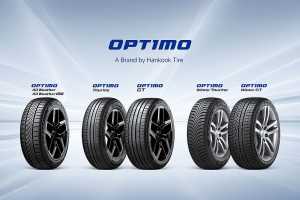


Taxi-Fahrzeuge (Pkw) , Taxi-Newsletter, Taxameter, Taxi-Fahrer , BZP – Deutscher Taxi- und Mietwagenverband , Straßenverkehrsordnung (StVO) , Krankenbeförderung , Weiterbildung , Taxi-Konzessionen , Verkehrspolitik , Mietwagenbranche , Taxi-Apps , Berufskraftfahrer-Qualifikations-Gesetz BKrFQG) , Taxizentralen , Personal, Gehälter, Arbeitsschutz , Wirtschaftsnachrichten , Werbung , Taxi-Folierung , Taxi-Umrüster , Straßenverkehr , Elektromobilität, Taxifuhrpark und -flottenmanagement , Taxi-Versicherungen , Hybrid, Diesel, Erdgas , Taxi-Magazin







