2 Ausgaben kostenlos für Sie

Fachmagazin taxi heute: Ihr Zugang zu exklusiven Inhalten rund um die Taxi- und Mietwagenbranche.
Aktueller Termin

Meist gelesen
Taxi Today - Test Drive Hyundai Staria Electric: Comfort in Abundance
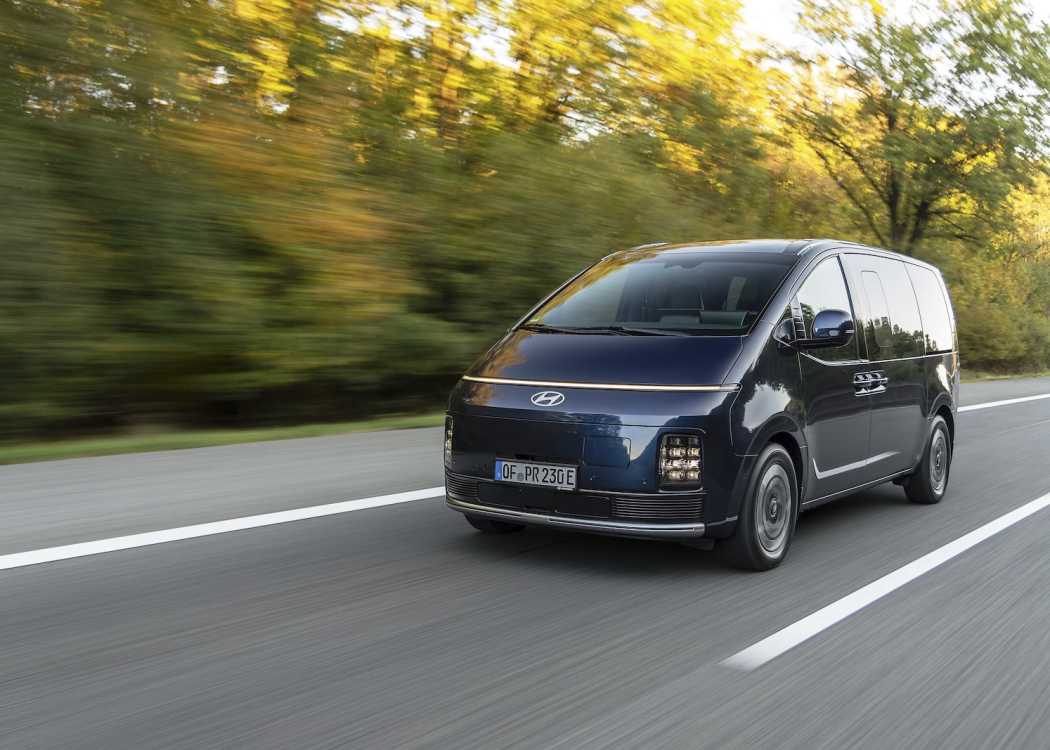
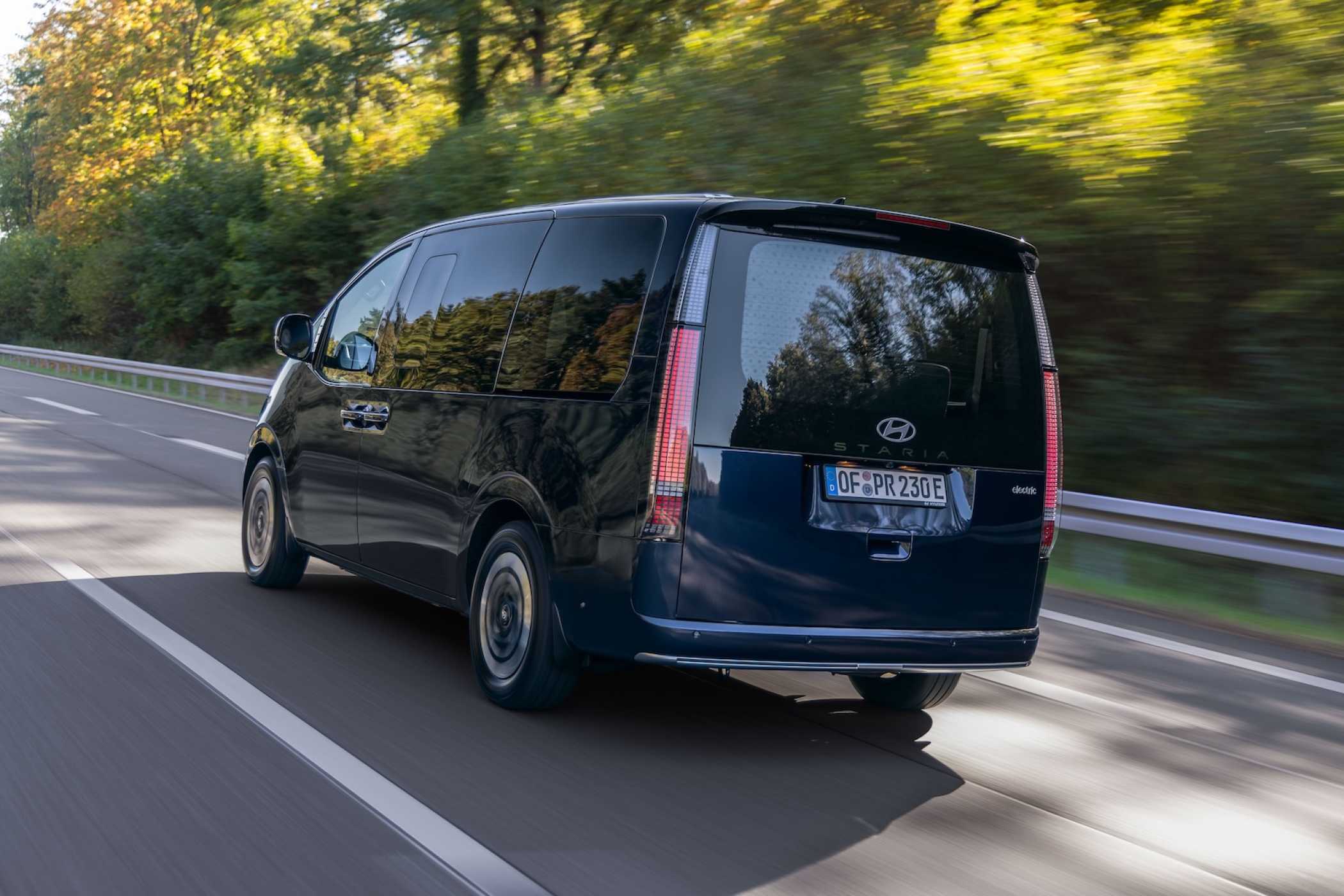
Large corporations, which once dominated the van business, have bungled with a few loveless models and thus the gap that Volkswagen, Stellantis or Ford are currently leaving offers new opportunities for the second tier from Asia. In addition to pressure from models from China, the two South Korean manufacturers Hyundai and Kia are putting significant pressure. This becomes particularly evident not only with the van duo from Kia PV5 and PV7, but also the Hyundai Staria. It is now available not only as an internal combustion engine but also with a suitable electric drive. Thus, likely even more taxi drivers, hotels and shuttle services will opt for the 5.25-meter-long van, which is also offered as a transporter for tradespeople and delivery services.
The design polarizes – and that's a good thing!
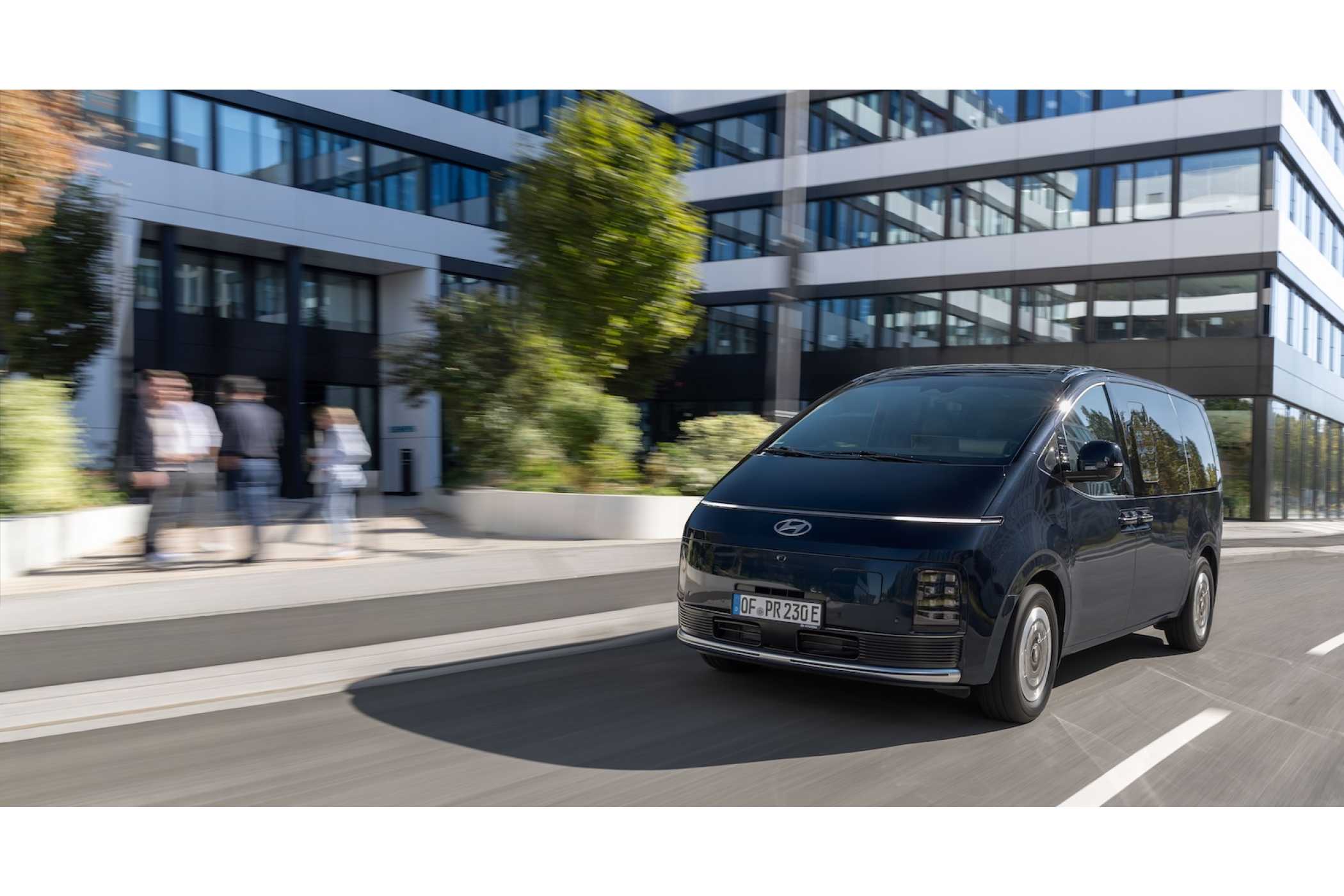
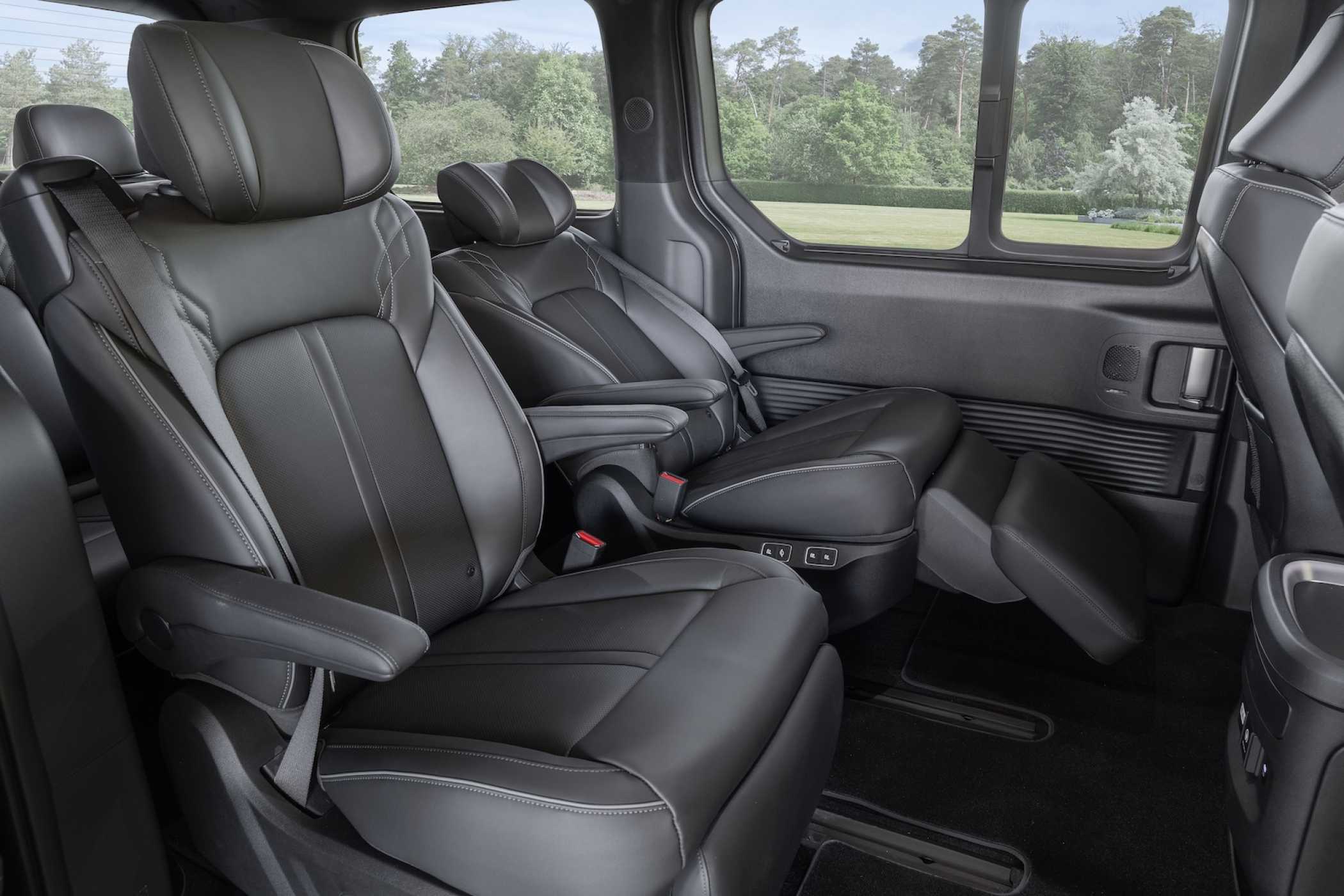
From the outside, the Hyundai Staria Electric is not different from the models with gasoline or previously diesel engines. The low-set LED headlights in the whale design are still a matter of taste, but when it comes to practicality, the Staria is hard to beat. If you opt for the upscale Calligraphy version, you not only get electric and climate-controlled seats up front, but especially in the second row you can travel very comfortably on longer trips. The two individual seats – upholstered in Nappa leather – can be extensively electrically adjusted, heated, cooled, and an extendable calf-support element provides for a relaxed sleeping position.










Lots of space in the rear thanks to the giant wheelbase
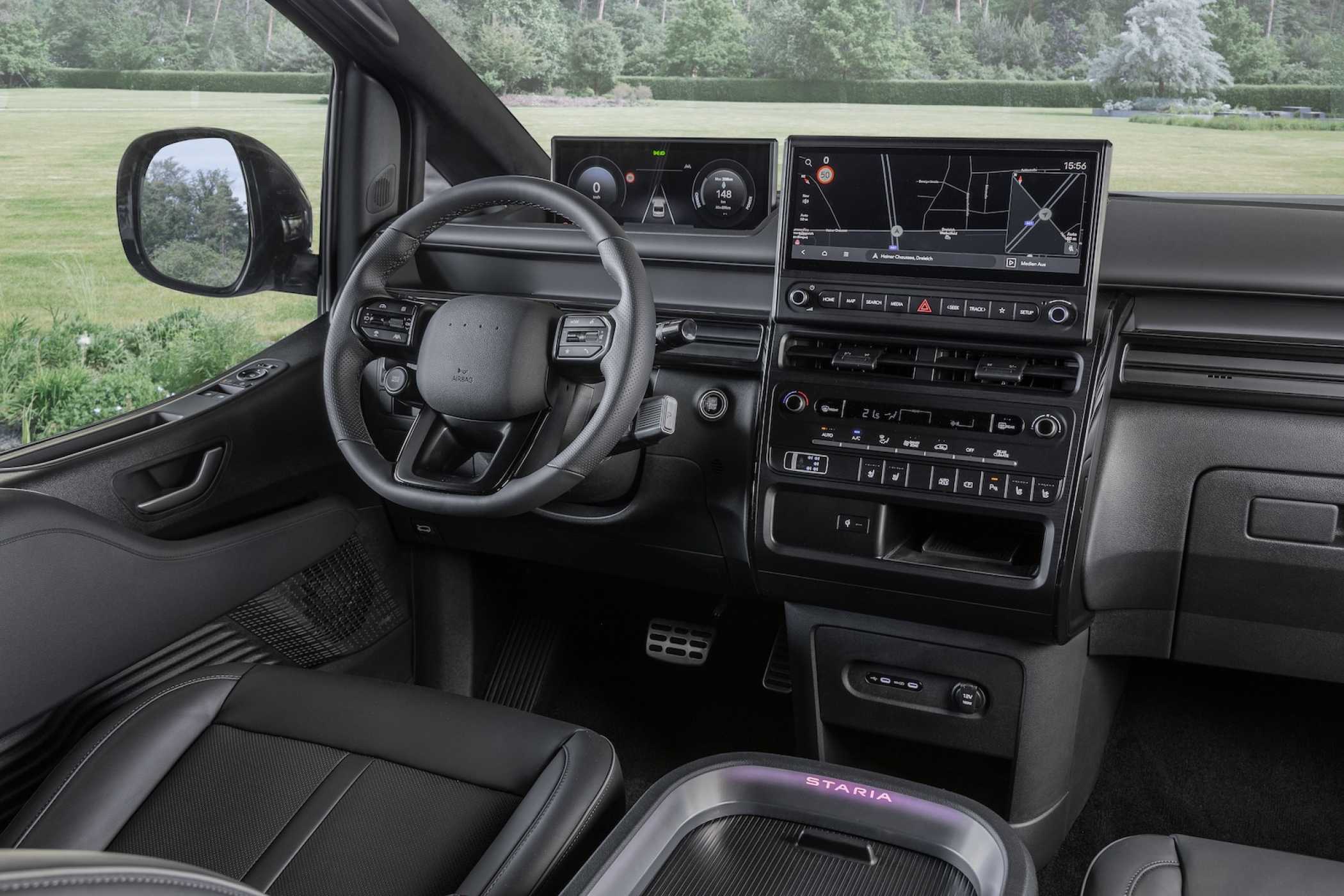
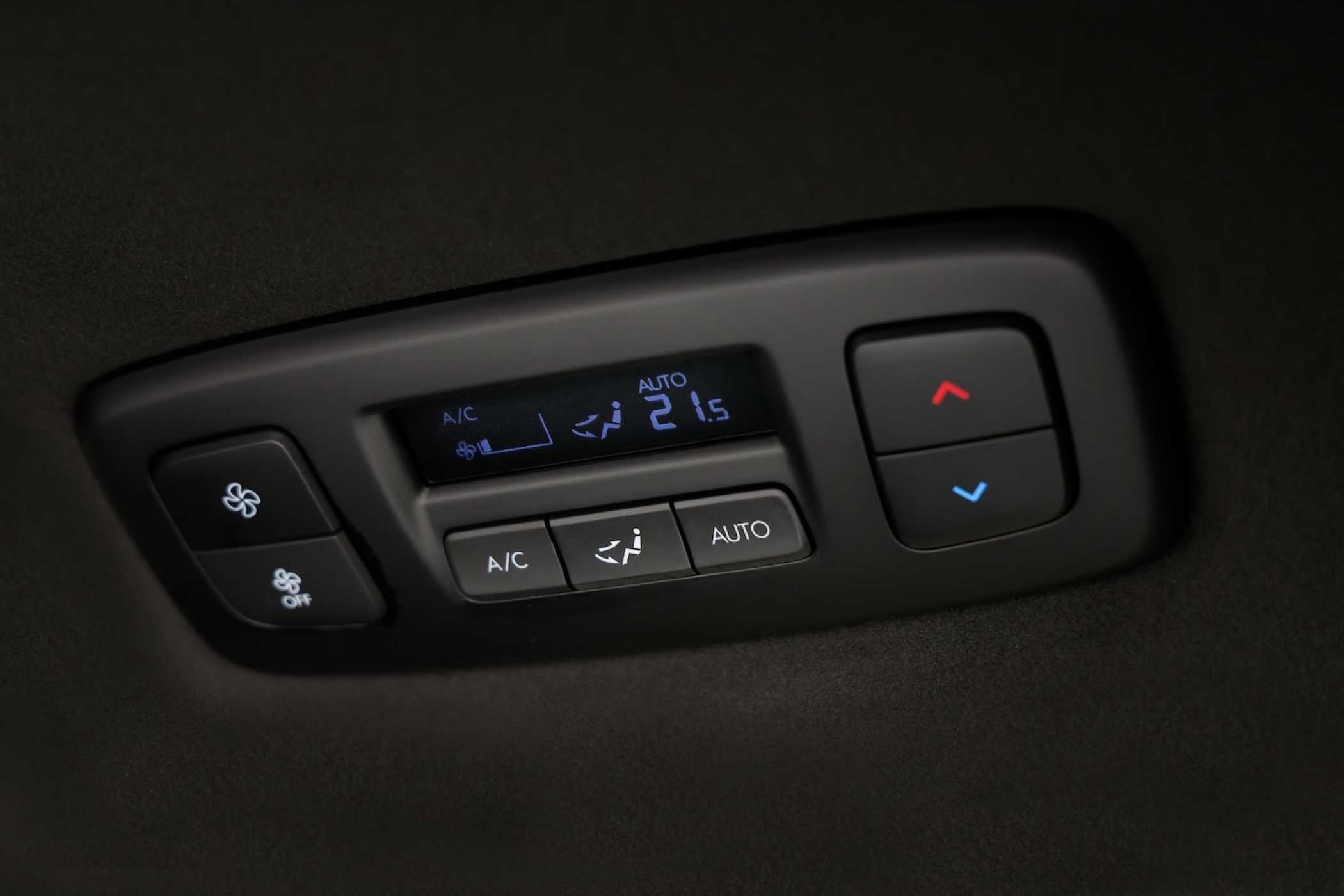
Plenty of space on offer thanks to the 3.27-meter-long wheelbase is more than generous, the storage options are extensive and a panoramic roof brings a lot of light inside at the push of a button. While other manufacturers have long since bungled this, the roof of the €66,950 premium Calligraphy edition can be shaded at the push of a button with a blind – that adds comfort on rainy and cool days. The front glass roof has, somewhat outdated, a manually operated shade, but it can be opened electrically – nowadays no longer a given. The individual seats can be folded completely, removed or moved, while in the third row a bench provides space for officially three, practically two more people. Depending on the position of the rear seats the cargo capacity lies between 831 and more than 1,300 liters – of course more when seats are removed. In addition, the Staria offers separate climate control in the rear, which on the right roof side is difficult to see, and numerous USB ports so that fellow passengers in the rear can operate devices during the trip. If you do not want individual seats in the rear, the Staria can also be ordered as a nine-seater with a bench and three individual seats in the front. That the sliding doors and tailgate can be operated electrically goes without saying in the higher-spec versions, while the tradespeople with a light touch open and close the entry points. The frunk is small, a modest 24 liters, and can be neglected.
Drives briskly – charges briskly
The big difference to the well-known Staria Hybrid, however, is the motor, because the electric drive fits perfectly into the Korea van. The motor output of 160 kW / 218 hp and a maximum torque of 350 Nm at the front axle is anything but lavish, yet more than enough to move the transporter briskly in the city center and on rural roads. Even on the highway, the nearly 2.7-tonne Staria can impress, because unlike some competitors, the Korean is limited only at 184 km/h – while the speedometer almost hits sporty 191 km/h in the digital instrument cluster. The 84 kWh large battery provides a standard range of 430 kilometers. The 800-volt onboard network guarantees shorter charging times, because from 10 to 80 percent the battery pack can surge up to 256 kW in 20 minutes.
All-wheel drive is the only thing missing
The heavy battery pack not only stores the energy for the operation of the electric motor, but also endows the Hyundai Staria with a pleasantly low center of gravity, which is noticeable in driving. It's a pity that the Electric Staria does not come with all-wheel drive, because many shuttle services want their vehicles to be particularly winter-capable. That the steering provides little feedback from the road and the suspension could be a bit more sensitive in supporting the tall body is unlikely to bother most customers.
In the driver's seat for us: Stefan Grundhoff; press-inform
Technical data: Hyundai Staria Electric
Motor: Electric, front
Power: 160 kW / 218 HP
Top speed: 184 km/h
0 – 100 km/h acceleration: 9.5 seconds
Max torque: 350 Nm
Drive: Front
Battery pack: 84 kWh
Max charging power: 256 kW
WLTP consumption: 21.8 kWh / 100 km
Range: 430 km
Curb weight: 2,660 kg / payload 610 kg
Trunk volume: 831 – 1,303 liters
Price: from 57,450 euros


Taxi-Fahrzeuge (Pkw) , Taxi-Newsletter, Taxameter, Taxi-Fahrer , BZP – Deutscher Taxi- und Mietwagenverband , Straßenverkehrsordnung (StVO) , Krankenbeförderung , Weiterbildung , Taxi-Konzessionen , Verkehrspolitik , Mietwagenbranche , Taxi-Apps , Berufskraftfahrer-Qualifikations-Gesetz BKrFQG) , Taxizentralen , Personal, Gehälter, Arbeitsschutz , Wirtschaftsnachrichten , Werbung , Taxi-Folierung , Taxi-Umrüster , Straßenverkehr , Elektromobilität, Taxifuhrpark und -flottenmanagement , Taxi-Versicherungen , Hybrid, Diesel, Erdgas , Taxi-Magazin