


Ihr kostenloser Branchen-Newsletter

Lassen Sie sich von unseren Fachjournalisten einmal wöchentlich über die wichtigsten aktuellen Entwicklungen der Taxi-Branche informieren, bequem direkt in Ihre Mailbox.
Aktueller Termin

Meist gelesen
Speed limit on motorways: electric-car drivers are more likely to support it.
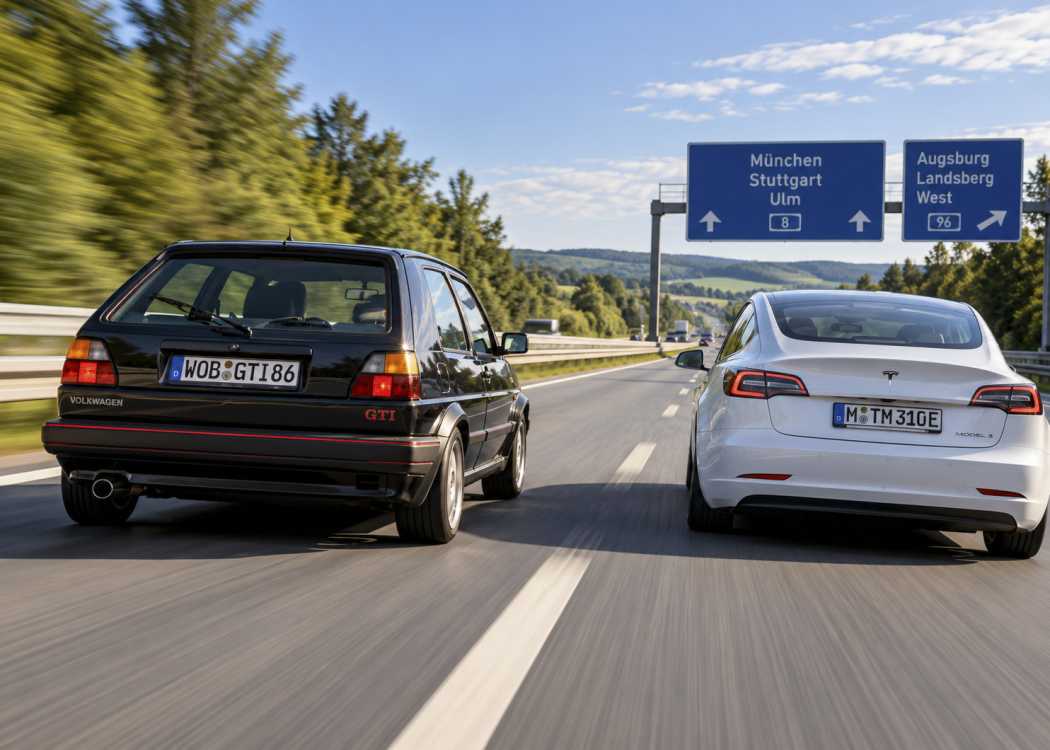
Electric cars are often quiet, accelerate briskly and lose range noticeably at high speeds. Whether this changes the attitudes of their drivers toward speed cannot be definitively said. The correlation is nonetheless noticeable: According to a representative Civey poll commissioned by the ACV Automobil-Club Verkehr, 68 percent of electric-car drivers evaluate a general speed limit on German autobahns positively. Among drivers of internal-combustion engines it is 57 percent. Across all respondents, 58 percent favor a speed limit, 29 percent against. 13 percent are undecided. Also a ACV members' survey from 2026 yielded a narrow majority for a concrete limit of 130 km/h: 51.9 percent of the 6,831 participants voted for it.
Range as an Argument
The ACV suspects that experiences with energy consumption could influence attitudes toward the speed limit. In electric cars, power consumption rises markedly with increasing speed. Those who drive slower can go further on a single charge. However, the survey does not establish a causal link.
“In an electric car, high speed immediately becomes a range issue. Those who experience this connection in everyday life may weigh the benefits of fast driving differently. The greater approval among electric-car drivers is therefore an interesting indication of how electrified mobility could also change the view on speed and speed limits,” says ACV managing director Holger Küster.
Women more often support limits
Differences also exist between the genders. 64 percent of women view a general speed limit positively, while 54 percent of men do. While 35 percent of men reject a limit, the share among women is 21 percent. Women also more often cite traffic safety and climate protection as arguments. Men, however, feel safer on motorways more often: 82 percent report this, while for women it is 68 percent. Differences also appear in driving behavior. 18 percent of male drivers, according to their own statements, typically drive faster than 150 km/h on an open highway. Among women, 8 percent.
Sense of safety and accident statistics
Overall, 74 percent of respondents feel safe on German motorways. When asked where they feel safest, 29 percent name the motorway. Country roads account for 21 percent, federal roads for 17 percent and urban streets for 13 percent. The accident statistics paint a different picture: According to the Federal Statistical Office, in 2025 a total of 56 percent of road fatalities occurred on country roads, ten percent on motorways. For the ACV, this shows that the traffic safety debate should not solely aim at motorway speed.
The automobile club advocates for an objective assessment of possible measures. In its transport policy position paper, it advocates data-based, stretch-specific and variable speed limits. Speed limits should apply where they demonstrably prevent accidents or reduce burdens. Intelligent systems that adjust speed to traffic, weather and accident conditions should have priority over a blanket limit.
"Support for a speed limit deserves as objective a consideration as the concerns against it. The decisive factor is which measures demonstrably create safety. We need transparent criteria and speed limits that fit the road section and the traffic situation," says Holger Küster.
About the survey: Civey surveyed online on behalf of ACV from August 27 to September 3, 2026, 2,500 German citizens aged 18 and over and 2,500 drivers. The results are, according to the client, representative through quotas and weighting. The statistical error of the overall results lies between 3.2 and 3.5 percentage points. The survey can be accessed here.
Content automatically translated.




Taxi-Fahrzeuge (Pkw) , Taxi-Newsletter, Taxameter, Taxi-Fahrer , BZP – Deutscher Taxi- und Mietwagenverband , Straßenverkehrsordnung (StVO) , Krankenbeförderung , Weiterbildung , Taxi-Konzessionen , Verkehrspolitik , Mietwagenbranche , Taxi-Apps , Berufskraftfahrer-Qualifikations-Gesetz BKrFQG) , Taxizentralen , Personal, Gehälter, Arbeitsschutz , Wirtschaftsnachrichten , Werbung , Taxi-Folierung , Taxi-Umrüster , Straßenverkehr , Elektromobilität, Taxifuhrpark und -flottenmanagement , Taxi-Versicherungen , Hybrid, Diesel, Erdgas , Taxi-Magazin





